






Written by
Jim Blaze, Contributing Editor
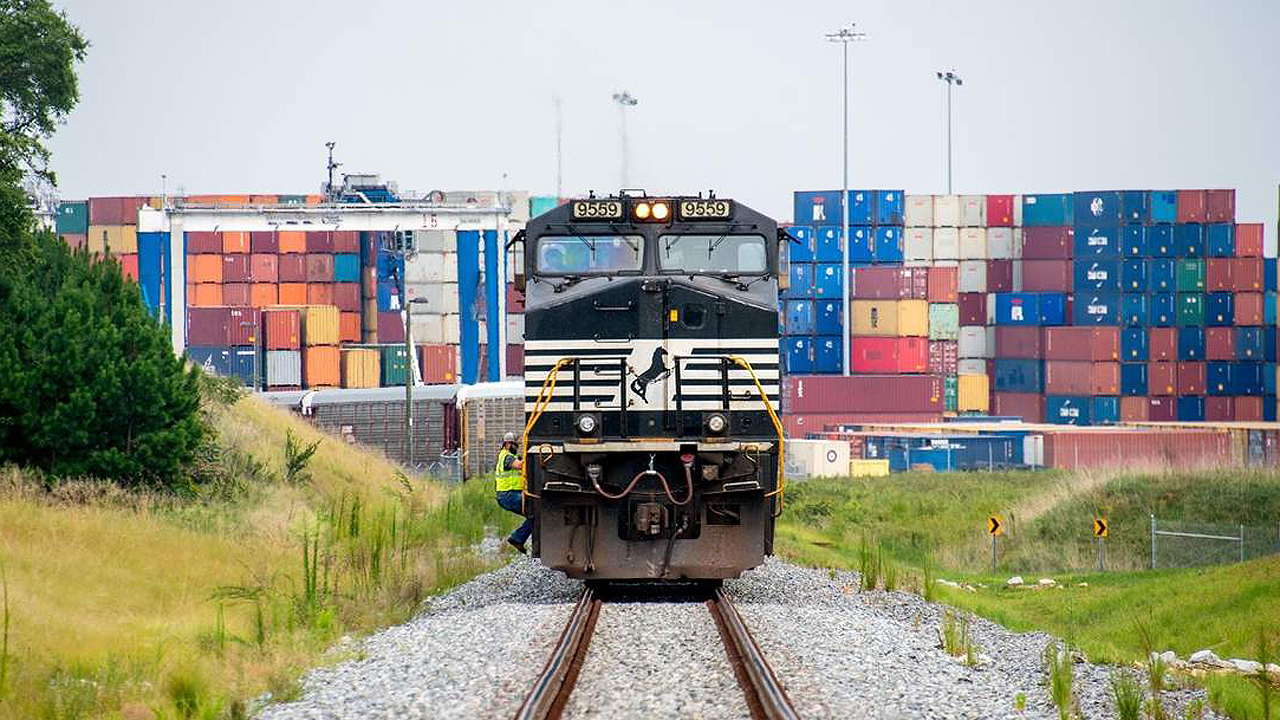
Norfolk Southern photo
Premise: The golden age of railroads taking trucks off of the highways might be over. Why? Because the low-hanging fruit may already have been harvested. Translation: Most rail intermodal traffic may be in fewer than two-dozen origin-destination lanes across the United States. That was the low-hanging fruit. Now, It’s mostly in growth hypostasis.
Reading the footnotes behind railroad market
literature, “Intermodal does best in high-density traffic lanes over long
distances.” Intermodal marketing, public relations and advertisements admit to
this.
The growth hurdle is that there just aren’t many
high-traffic volume lanes left to exploit. Growth year-over-year can continue.
But it likely will not seize chunks of trucking’s share from the highways.
Where is the
traffic?
If rail intermodal is going to take trucks
off the highway network and simultaneously provide traffic relief to the road
network, two maps illustrate where this geographically should occur.
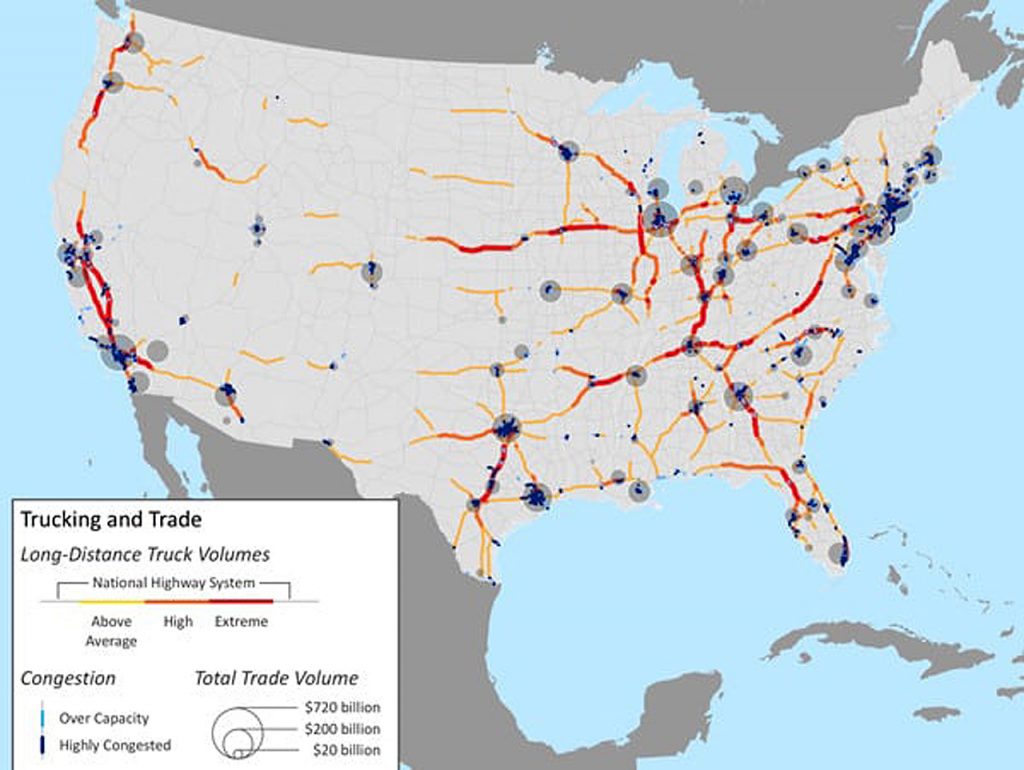
Most of the truck and traffic congestion is
east of the Mississippi River. Figure 1 identifies where the truck and auto
highway congestion is located. Most market-to-market freight flows not yet
using rail intermodal are nestled between these short-distance business
clusters in the eastern part of the nation. This map is from a Brookings
Institute Freight Analysis report. Federal highway studies by U.S. Department
of Transportation and Federal Highway Administration planners project this
concentration of traffic lane congestion will grow out largely in the eastern U.S.
toward 2040. Much of the freight moves as smaller packaged shipments in
100-mile to less than 300-mile stretches.
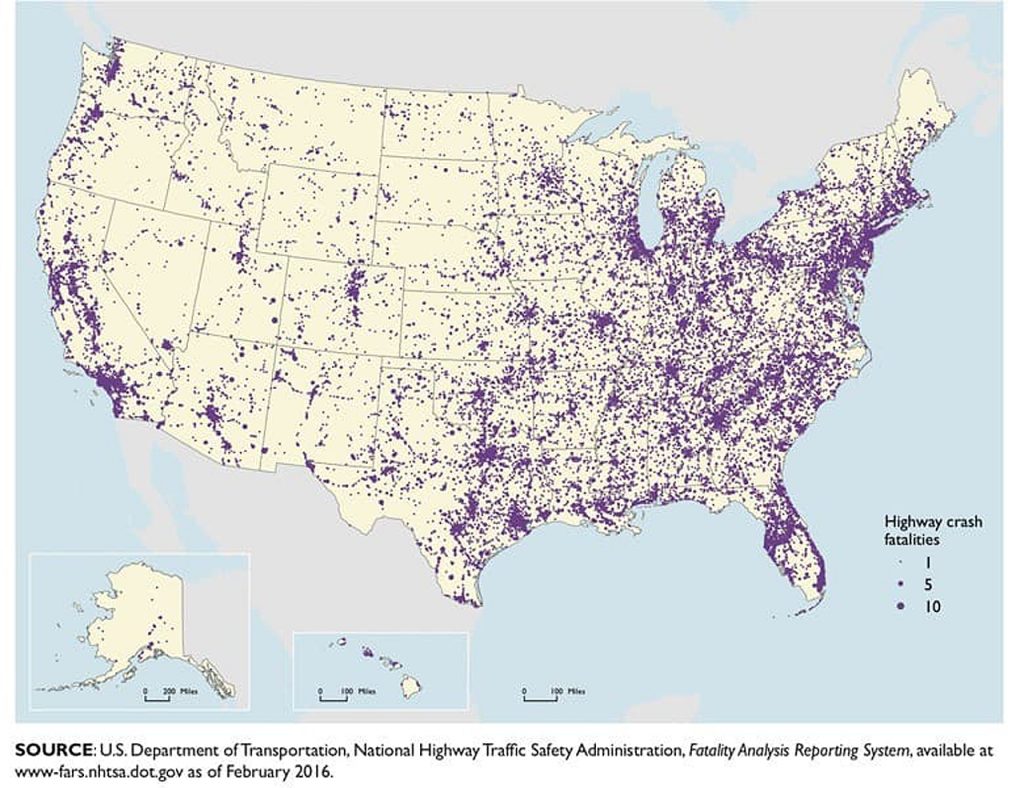
From a public policy point of view,
intermodal services that might be redirected from long-haul corridors to the
much shorter, closely clustered markets in the eastern U.S. could help reduce
local road accidents (Figure 2)—but only if a new intermodal business model
evolved.
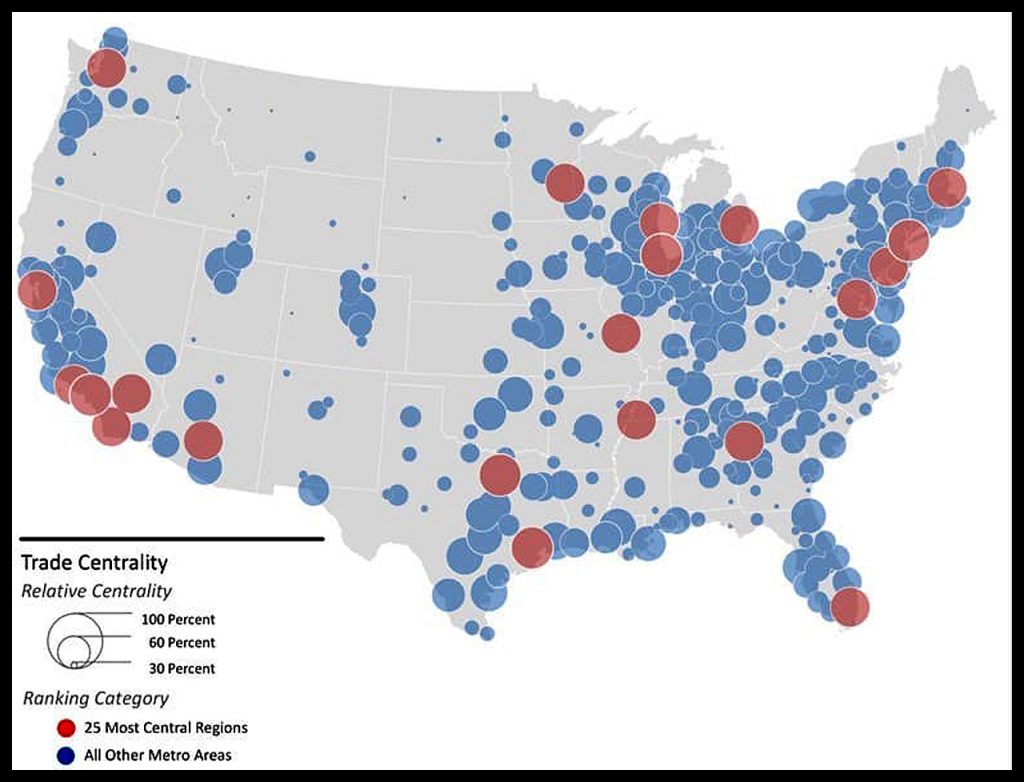
Figure 3 helps visualize where the short- to
medium-distance freight markets are as a series of concentric market circles.
Overwhelmingly, the nation’s markets are a series of short origin-to-destination
locations. This concentric short-distance market pattern doesn’t fit the
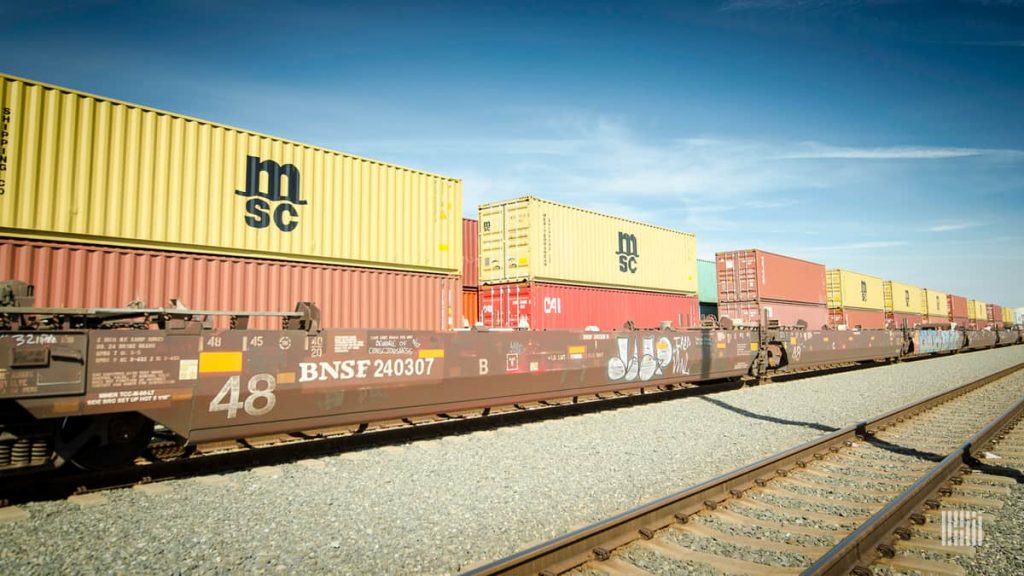
rail model because that rail model relies on double-stack container trains,
which doesn’t cater to hauling semi-trailer trucks. It has to move
containers. Not every shipper’s supply chain uses containers. Not every
shipment can fit into a container.
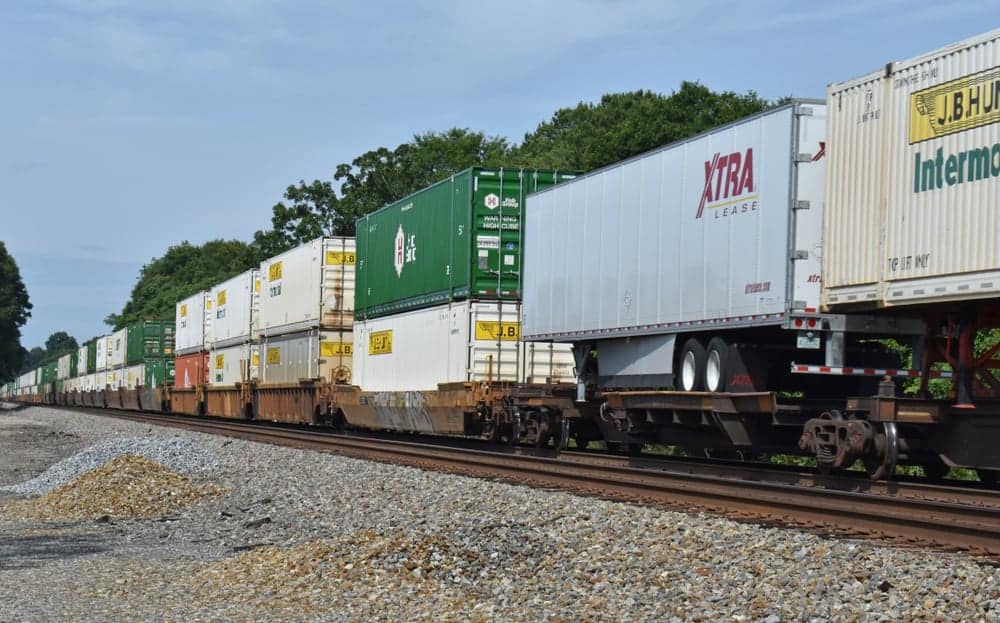
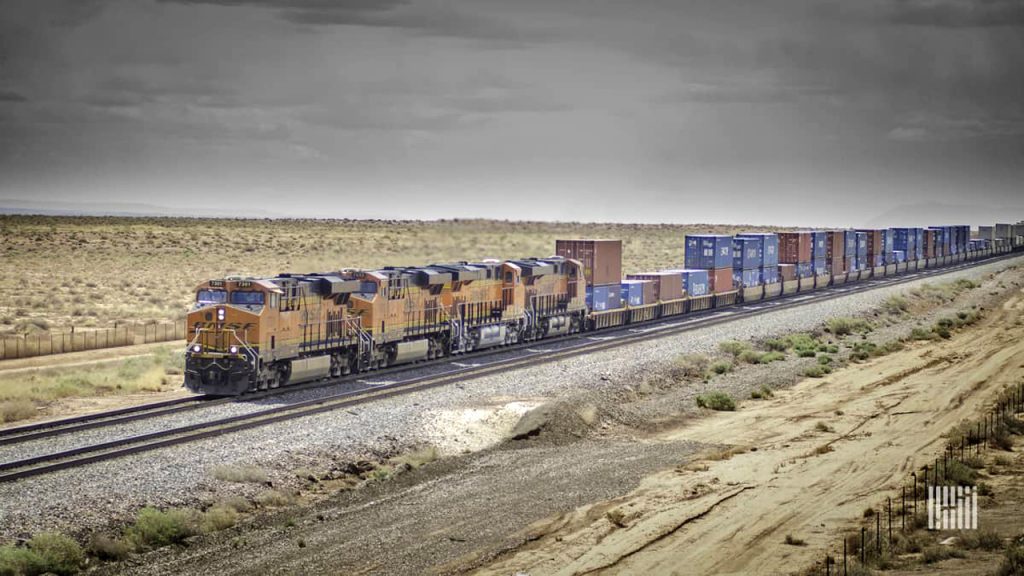
The double-stack railcar does fit well as the
engineering solution across the long western railroad routes. That’s where
large day-to-day volumes of containers move between the western U.S. ports and
the Midwest markets. This stacked intermodal carrying capability dates
back to 1977, when the Southern Pacific and American Car & Foundry designed
the first true double-stack railcar, capable of handling two 40-foot
containers. Ocean carrier APL Lines initiated double-stack container trains
around 1984 as a means to avoid the much longer transit times via the Panama
Canal in order to deliver containers from Japan, Korea and China to the U.S.
Midwest and East Coast markets. For the railroads, the long-distance stack
train was indeed a market breakthrough. It offered exceptional economic
improvement to the ocean carriers, the railroads and their customers.
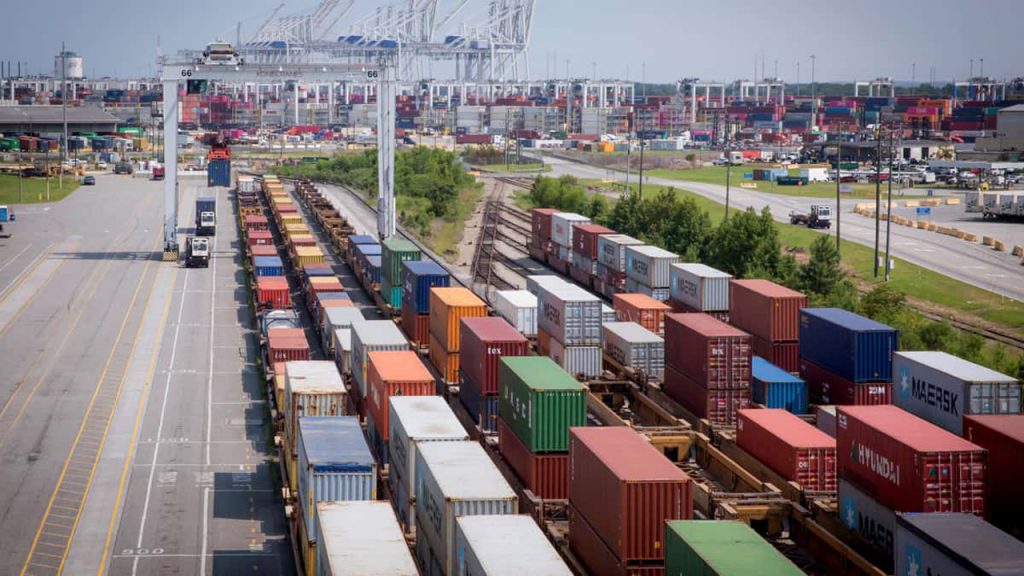
A study for Burlington Northern Railroad by
ZETA-TECH Associates in 1990 calculated a cost-to-move savings of 45% on the
rail route from Seattle to Chicago. Other consultants later confirmed that
estimate. And so, double-stack container trains became the primary intermodal
model.
Primary SWOT
(Strengths/Weaknesses & Opportunities/Threats) Intermodal Analytics
The strengths of stack trains:
- Greatly improves net-to-tare ratio, since a single
double-stack “intermodal well car weighs only 17 tons, compared to 35 tons for
a conventional flatcar carrying the same two containers. - A long stack train carries more containers per foot of
train length, thus avoiding the capital investment otherwise needed to lengthen
main line passing sidings. - Each stacked container train can move nearly 250
highway 40-foot trailer truck units along selected high density corridors–-now
expanded to well over 340 or more 53-foot-long North American highway trucks.
This SWOT opportunity made it possible to
almost entirely reverse the trucking-dominated traffic flows between the
Southern California markets and the Chicago/Midwest markets in the years
between 1980 and 1990.
What are the apparent SWOT weaknesses? The biggest
disadvantage is that the engineering advancements could only move containers,
not trailers. The trucking market is largely semi-trailers. Another weakness is
that stack trains require high volumes, as well as big terminals with expensive
loading cranes. Not every railroad yard is easily converted to stack train
service.
A SWOT threat is that the early units were
fitted best toward moving the international maritime containers that are
denominated in TEUs (twenty-foot equivalent units) and FEUs (forty-foot
equivalent units). The threat to railroad business growth was that
semi-trailers offered greater cubic capacity with 45-foot and 48-foot lengths.
Then 53-foot-long trailers appeared.
The SWOT opportunity to build the market
occurred in 1990, when the Burlington Northern purchased its first order of
domestic 53-foot containers. The railroad acquired about 25,000 of these
containers. The other railroads followed by adopting the 53-foot stackable
containers as the new intermodal model.
By about 1996, it became clear that, with
high volume lanes, the competitive distance favoring rail intermodal was in the
750-mile range. A few markets might have presented a 500-mile or so competitive
distance opportunity.
The problem child for intermodal became the old
TOFC (trailer on flat car) semi-trailer market segment. Moving trailers on
intermodal trains has been in an unquestionable long-term decline. In periods
of extreme high traffic demand and low supplies of drivers or trucks, we see
occasional spikes in TOFC volumes. This happened at times in 2018. However, the
TOFC spike fades and the loss of TOFC volume reappears. If there is a SWOT
opportunity for a return of TOFC volume to the railways, it probably requires
the invention of an affordable new rapid load/unload mechanical railcar.
Another strategic opportunity could be
short-distance inland port hubs. A 2003 study suggested that dedicated shuttle
trains might be viable for moving maritime containers between the Port of New
York/New Jersey and as many as 10 inland port terminal depots. Among these were
three proposed hubs in New York State and one in Pennsylvania: Albany (150
miles), Syracuse (284 miles) Buffalo (437 miles), and Pittsburgh (427 miles).
None of this happened. Yet, there are rumors
of a possible hub near Syracuse as CN acquires the CSX Syracuse-Montreal branch
line. Time will tell if this works.
So far, the evidence is clear that CSX and Norfolk Southern couldn’t make
short-haul intermodal a profitable business model. Neither could the port authorities.
However, there are a few exceptions that might suggest short-haul
optimism.
Virginia and West Virginia started two inland
ports. The one in West Virginia is closing. The Virginia hub continues but
hasn’t really expanded. Georgia, North Carolina and South Carolina are
operating or proposing several inland container port depots.
Research suggests that there is some form of
subsidy required to make the current inland port model work. There is no
published information that shows that these short-haul patterns are
independently sustainable as a pure private business capital and operating
investment. In contrast, the long-haul intermodal lanes are sustainable
and privately financed.
The
good news is that the Florida East Coast (FEC) does operate a short-haul
service between Miami and the Atlanta market (in interchange with Norfolk
Southern). That appears to be the most successful current short-haul intermodal
operation during the 2000 to 2019 period. But note: It’s not being widely
adopted by other railroads. And previous sprint-like short-distance routes
along the Chicago-St Louis and Chicago-Minneapolis lanes were tested. But they
were then shut down. The Canadian Pacific Railway TOFC trailer-focused market
in eastern Canada was also tested, but as the trainset equipment aged, it too
was shut down (in the summer of 2018). The conclusion is that whatever its
profit margin, it didn’t fit with today’s often investor-centric business
return expectations.
Railroad
Market View Conclusions
The
short-distance deal killer aspects of rail intermodal center on the following
business fundamentals:
- The
cost of the required local trucking drayage movement to reach a rail intermodal
terminal is a hurdle. Furthermore, driver shortage issues that impact
long-distance truckers also impact rail intermodal drayage. - The
cost to lift-on and then lift-off an intermodal unit also affects the rate
differential vs. direct trucking shipper-to-receiver short-distance
competition. - Those
two drayage movements and the “lift” factors can negate as much as one-third of
the cheaper rail rate assumption. - There
often is one-quarter to one-half day or longer train departure delay to factor
into a shipper’s logistics cost model if they select short-haul intermodal.
These
don’t add up to an overwhelming intermodal advantage. Something basic is
missing. Few shippers or Class I railroads are saying, “I have to get one of
these short-haul routes!”
A
2004 analysis offered by Dr. Edward K. Morlok (University of Pennsylvania),
showed evidence, by using a regression analysis, that “the drayage cost clearly
dominates as a limiting intermodal service factor.” At a haul distance of 200
miles, drayage can be about 75 % of the total rail intermodal cost. At 500
miles, it drops arguably to about two-thirds of the total cost—but is still a
large inhibiting factor.
Unfortunately,
depending upon market timing, drayage costs can actually be as much as $300 or
more per dray movement. That is a really a big wildcard in any supply chain
model. Add to these drayage costs some uncertainty of time to dray, time to
load, and time that containers might be held for the next departing long train—and
the short-haul intermodal model is risky.
Intermodal
often has too many organizers and “doers” involved. Complexity breeds uncertainty.
Coordination among multiple players is more complex than is a direct single
truck origin-to-destination movement.
Upside? Yes, there are possible solutions. But short-haul intermodal is mostly still a working theory as we begin 2020.
References
- Adie Tomer and Joseph Kane, joint market study by Brookings Institute and JP Morgan: Mapping Freight: The Highly Concentrated Nature of Goods Trade in the United States.
- Ted Prince, an independent intermodal expert with hands-on operating experience.
- Chris Rooney, CFA, Vannesco, Jacksonville, Fla. Independent expert on the use of unique semi-trailer mechanical platforms for intermodal rail cargo.
- Larry Gross, independent intermodal business analyst and author.
- John C. Spychalski, Professor of Logistics; and Professor Evelyn Thomchick, Penn State University: Drivers of Intermodal Rail Freight Growth in North America, EJTIR report, March 2009.
- Randolph Resor and J. R. Blaze, ZETA-TECH Associates, Inc.: Short-Haul Rail Intermodal: Can It Compete With Truck? (2004).

Independent railway economist, Railway Age Contributing Editor and FreightWaves author Jim Blaze has been in the railroad industry for more than 40 years. Trained in logistics, he served seven years with the Illinois DOT as a Chicago long-range freight planner and almost two years with the USRA technical staff in Washington, D.C. Jim then spent 21 years with Conrail in cross-functional strategic roles from branch line economics to mergers, IT, logistics, and corporate change. He followed this with 20 years of international consulting at rail engineering firm Zeta-Tech Associated. Jim is a Magna cum Laude Graduate of St Anselm’s College with a master’s degree from the University of Chicago. Married with six children, he lives outside of Philadelphia. “This column reflects my continued passion for the future of railroading as a competitive industry,” says Jim. “Only by occasionally challenging our institutions can we probe for better quality and performance. My opinions are my own, independent of Railway Age and FreightWaves. As always, contrary business opinions are welcome.”










