
• Latest
  • Trending
  • All
Trade deal unlikely to result in rapid return of cargo volumes

Commentary: Drone use by ports to increase in 2020

January 6, 2020
Last Mile Delivery Market Worth Observing Growth | UPS, FedEx, SF Express

Last Mile Delivery Market Worth Observing Growth | UPS, FedEx, SF Express

April 23, 2024
Top 5 Spend Analysis Software ranked in 2024

Top 5 Spend Analysis Software ranked in 2024

March 1, 2024
How Tesla And BMW Are Leading A Supply Chain Renaissance With Blockchain

How Tesla And BMW Are Leading A Supply Chain Renaissance With Blockchain

January 19, 2024
LATAM Cargo strengthens European cargo links

LATAM Cargo strengthens European cargo links

April 14, 2020
Ford making reusable hospital gowns from airbag materials as efforts against coronavirus expand

Ford making reusable hospital gowns from airbag materials as efforts against coronavirus expand

April 14, 2020
Don’t Sweat NBC’s Decision to Cut Back on Television Ad Inventory

Don’t Sweat NBC’s Decision to Cut Back on Television Ad Inventory

April 14, 2020
Software firms sharpen focus on AI, big data as IT spending drops

Software firms sharpen focus on AI, big data as IT spending drops

April 14, 2020
Navigating turbulent times in your supply chain (TL:DR version)

Navigating turbulent times in your supply chain (TL:DR version)

April 14, 2020
Last Mile Delivery by Drones Market is Booming Worldwide

Last Mile Delivery by Drones Market is Booming Worldwide

April 14, 2020
AIR CARGO MARKET SIZE, SHARE, DEMAND, TREND, LATEST INNOVATIONS & APPLICATION ANALYSIS AND INDUSTRY GROWTH FORECAST 2027 – Science In Me

AIR CARGO MARKET SIZE, SHARE, DEMAND, TREND, LATEST INNOVATIONS & APPLICATION ANALYSIS AND INDUSTRY GROWTH FORECAST 2027 – Science In Me

April 14, 2020
Wheat procurement in Patiala: 6,500 coupons issued to farmers – cities

Wheat procurement in Patiala: 6,500 coupons issued to farmers – cities

April 14, 2020
Pandemic, Plastics And The Continuing Quest For Sustainability

Pandemic, Plastics And The Continuing Quest For Sustainability

April 14, 2020
  • Supply Chain
  • Logistics
  • Warehousing
  • Procurement
  • Shipping
  • More
    • Strategic Sourcing
    • Spend Analysis
    • Inventory
    • Contact Us
No Result
View All Result
United States International Supply Chain Commission
Home Logistics

Commentary: Drone use by ports to increase in 2020

by usiscc
January 6, 2020
in Logistics
0
Trade deal unlikely to result in rapid return of cargo volumes
498
SHARES
1.4k
VIEWS
Share on FacebookShare on Twitter

The views expressed here are solely those of the author and do not necessarily represent the views of FreightWaves or its affiliates.

Until the advent of drones, helicopters were the only option for aerial tasks that required remaining stationary in midair or called for low-flying flexibility not offered by airplanes. But the use of helicopters has occasionally resulted in fatal crashes like a 2017 crash at the Port of Los Angeles that killed both the pilot and a photographer who was taking pictures of cruise ships.
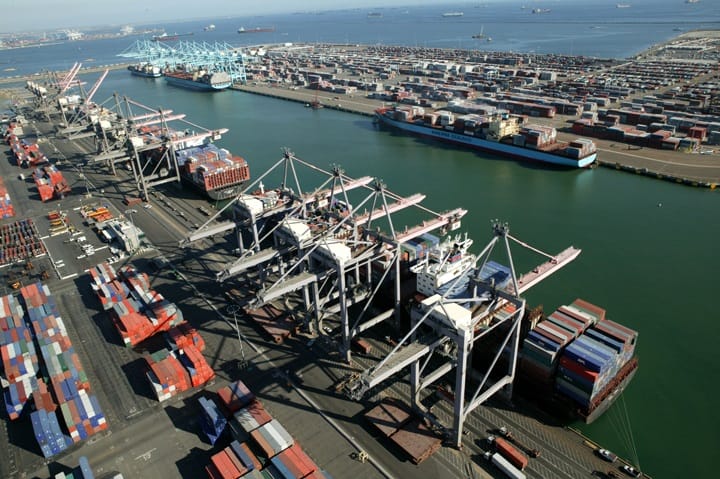
(Photo credit: The Port of Los Angeles)

In response to the accident and to technical innovation in general, the Los Angeles Port Police recently gave a presentation to the Los Angeles Harbor Department, extolling the benefits of drones for mapping and photography assignments that would otherwise require a helicopter with a human pilot.

The December 19, 2019 meeting was the final step in an ongoing plan to deploy the drones. The Port Police and Harbor Department already have seven such drones and have been conducting training exercises.

Technology use by ports increase

Drone use is just part of a larger picture of the technological bonanza occurring at ports around the globe right now, with new technologies and integrations that have been spurred by the rise of globalization and ecommerce. The technologies range from blockchain-enabled record-keeping to automated operations made possible by the internet of things (IoT). But drones are having a particularly immediate and potent impact.
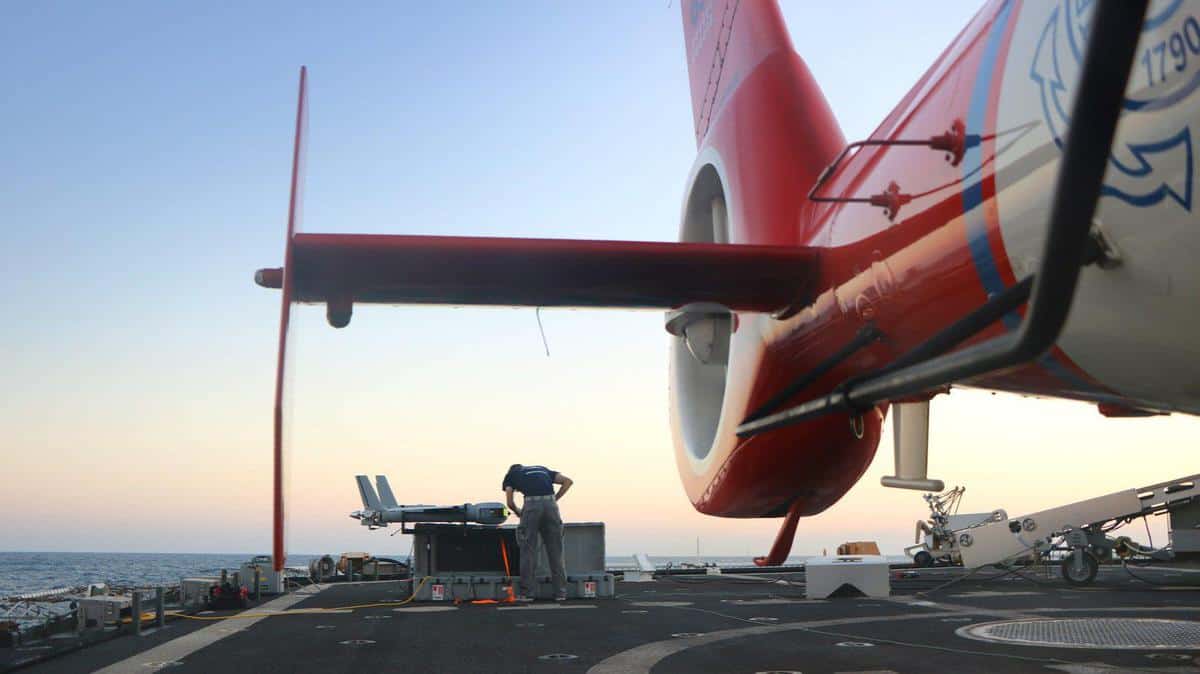
An unmanned aerial vehicle on the deck of the U.S. Coast Guard Cutter Stratton.
(Photo credit: PRNEWSFOTO/Insitu)

The U.S. Coast Guard has already started deploying drones to inspect hard-to-access navigation markers, along with equipping its cutters with intercept drones that will aid the cause of slowing the proliferation of drugs into the U.S. One such drone, the ScanEagle, has already assisted in seizing almost 1,700 kilograms of contraband valued at $55 million and contributed to the arrest of 10 major drug traffickers.

In addition to mapping/photography assignments and security and surveillance, the port drones will be useful in search-and-rescue missions that could imperil a human crew. Port authorities have even contemplated their use in thwarting suicide attempts by delivering phones to individuals who are about to jump from a bridge into the waves below, which sadly is a somewhat common port tragedy.
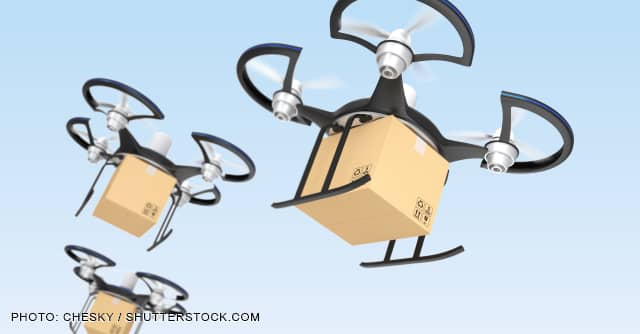
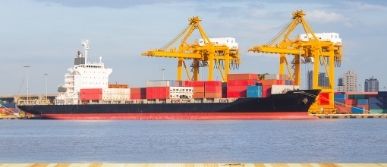
(Photo credit: Shutterstock)

Another useful service provided by drones will be the deployment of small timely items needed onboard vessels anchored in port. These drone-drops are already in use in Singapore, which uses Skyways drones made by Airbus to deliver goods to nearby ships. Though currently these drone-drops are limited to 4 kilograms of material within a few kilometers, they speed up shore-to-ship deliveries as much as six times and reduce costs by as much as 90% – while eliminating the risks of human-manned launch-boat deliveries.

Sniffing out violators of IMO 2020

But with the start of IMO 2020 – the new low-sulfur fuel mandate that began on January 1st – another area where port drones will now be utilized is in the attempt to sniff-out environmental violators. These sniffer-drones will likely prove the most efficient way to enforce increasingly tight standards focused on shipping-based pollution. The sniffer-drones do their work by flying through the smoke plume of a ship and analyzing how much sulfur is in the fuel in a scan that can take as little as two minutes.

Bulker refueling operations are about to radically change. (Photo credit: Shutterstock)

Port authorities in Denmark, Hong Kong, the Netherlands and Norway have already been testing drones that travel as far as 10 miles out to sea in order to catch offenders. With tens of thousands of container ships and tankers coming and going, these drones can alert port authorities to those ships might need to be boarded for a manual inspection. The findings of the drones are not admissible in court, but they can lead to collecting fuel samples that are. In some locations like Singapore violators could be grounded for up to two years, under arrest for violating IMO regulations.


Share199Tweet125
usiscc

usiscc

  • Trending
  • Comments
  • Latest
Escape From Tarkov – How to Rotate Items

Escape From Tarkov – How to Rotate Items

February 5, 2020
Supply chain examination: Planning for vulnerabilities you can’t control

Supply chain examination: Planning for vulnerabilities you can’t control

December 7, 2019
Procurement Project Manager job with Camden London Borough Council

Procurement Project Manager job with Camden London Borough Council

February 17, 2020
Art Battle Wichita Falls III at The Warehouse, 1401 Lamar.

Art Battle Wichita Falls III at The Warehouse, 1401 Lamar.

0
Global Industry Analysis, Size, Share, Growth, Trends, and Forecasts 2016–2024 – ZMR News Reports

Global Industry Analysis, Size, Share, Growth, Trends, and Forecasts 2016–2024 – ZMR News Reports

0
PHOTOS: Ottawa firefighters respond to warehouse fire

PHOTOS: Ottawa firefighters respond to warehouse fire

0
Last Mile Delivery Market Worth Observing Growth | UPS, FedEx, SF Express

Last Mile Delivery Market Worth Observing Growth | UPS, FedEx, SF Express

April 23, 2024
Top 5 Spend Analysis Software ranked in 2024

Top 5 Spend Analysis Software ranked in 2024

March 1, 2024
How Tesla And BMW Are Leading A Supply Chain Renaissance With Blockchain

How Tesla And BMW Are Leading A Supply Chain Renaissance With Blockchain

January 19, 2024
  • Privacy Policy
  • Terms of Use
  • Disclaimer
  • DMCA
  • Contact Us

Copyright © 2024 United States International Supply Chain Commission (usiscc.org)

This website uses cookies to improve your experience. We'll assume you're ok with this, but you can opt-out if you wish. Cookie settingsACCEPT
Privacy & Cookies Policy

Privacy Overview

This website uses cookies to improve your experience while you navigate through the website. Out of these cookies, the cookies that are categorized as necessary are stored on your browser as they are essential for the working of basic functionalities of the website. We also use third-party cookies that help us analyze and understand how you use this website. These cookies will be stored in your browser only with your consent. You also have the option to opt-out of these cookies. But opting out of some of these cookies may have an effect on your browsing experience.
Necessary
Always Enabled

Necessary cookies are absolutely essential for the website to function properly. This category only includes cookies that ensures basic functionalities and security features of the website. These cookies do not store any personal information.

Non-necessary

Any cookies that may not be particularly necessary for the website to function and is used specifically to collect user personal data via analytics, ads, other embedded contents are termed as non-necessary cookies. It is mandatory to procure user consent prior to running these cookies on your website.

SAVE & ACCEPT
No Result
View All Result
  • Supply Chain
  • Logistics
  • Warehousing
  • Procurement
  • Shipping
  • More
    • Strategic Sourcing
    • Spend Analysis
    • Inventory
    • Contact Us

Copyright © 2024 United States International Supply Chain Commission (usiscc.org)