






As this
article points out 65% of lithium reserves are in Bolivia and Chile, and most of the mines in these countries are owned by China. China has a near monopoly on lithium ion batteries, which accounts for 70% of the cost of two wheelers and 50% of cars.
With initiatives such as “Faster Adoption and Manufacturing of Electric and Hybrid Vehicles in India”, popularly known as FAME India, the Indian government looks determined to give a push to electric mobility across its cities.
“An EV policy for India must be tailor-made to India’s particular needs,” says the government think-tank Niti Aayog. The national policymaking body also forecasts that the country can create a $300 billion domestic market for EV batteries by 2030 and it requires a minimum of 10 GWh of cells by 2022, which would need to be expanded to about 50 GWh by 2025. However, for that to happen, it is imperative the country finds alternate to lithium ion batteries.
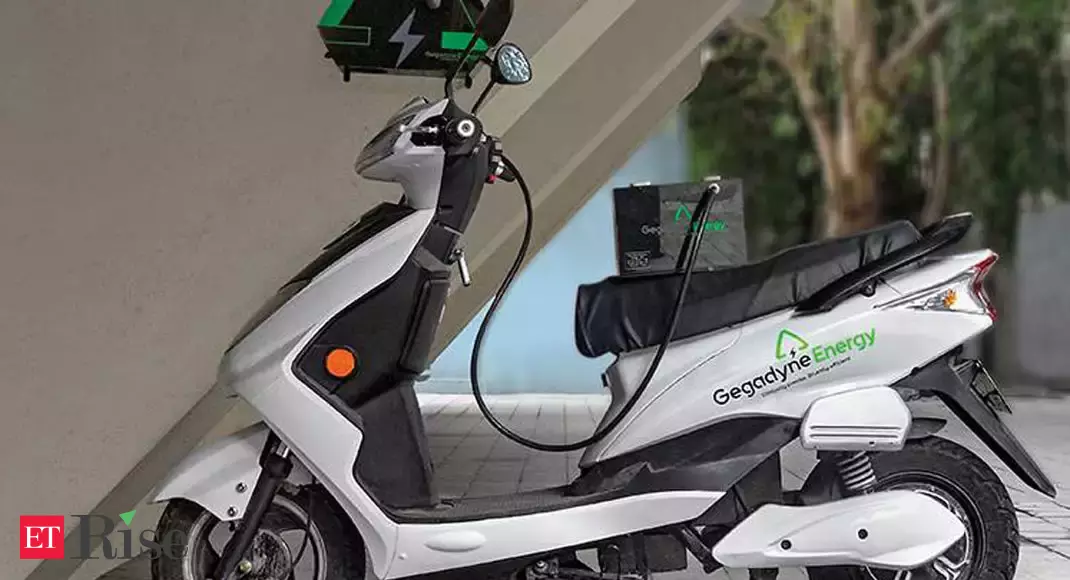
Betting big on the EV landscape, Mumbai-based energy startup Gegadyne Energy is one startup whose innovative technology ticks all the right boxes when it comes to offering a substitute.
Founded in 2015 by Jubin Varghese and Ameya Gadiwan, the startup uses non-lithium based proprietary battery technology that can charge EVs from 0-100% in under 15 minutes and produces higher cycle life compared to any other battery technology in the market, claims Varghese.
“We use carbon and its derivatives as our active materials. Since carbon is highly conductive we are also able to charge these batteries from 0-100% under 15 minutes, with the same efficiency of that of any other conventional battery, thereby giving customers the convenience of charging their EV just like refuelling any petrol vehicle,” remarks Varghese, 25.
The boost
However, a battery that can charge electric vehicles (EVs) in under 15 minutes is not its only USP. Varghese further claims that his offerings are cheaper and lighter too.
Unlike Lithium ion-based batteries where Indian players still lack competitive prowess and largely depend on cheaper imports, what seems to be working in favour of the energy startup is the fact that India is home to abundant reserves of carbon, which incidentally is the primary raw material in the firm’s case.
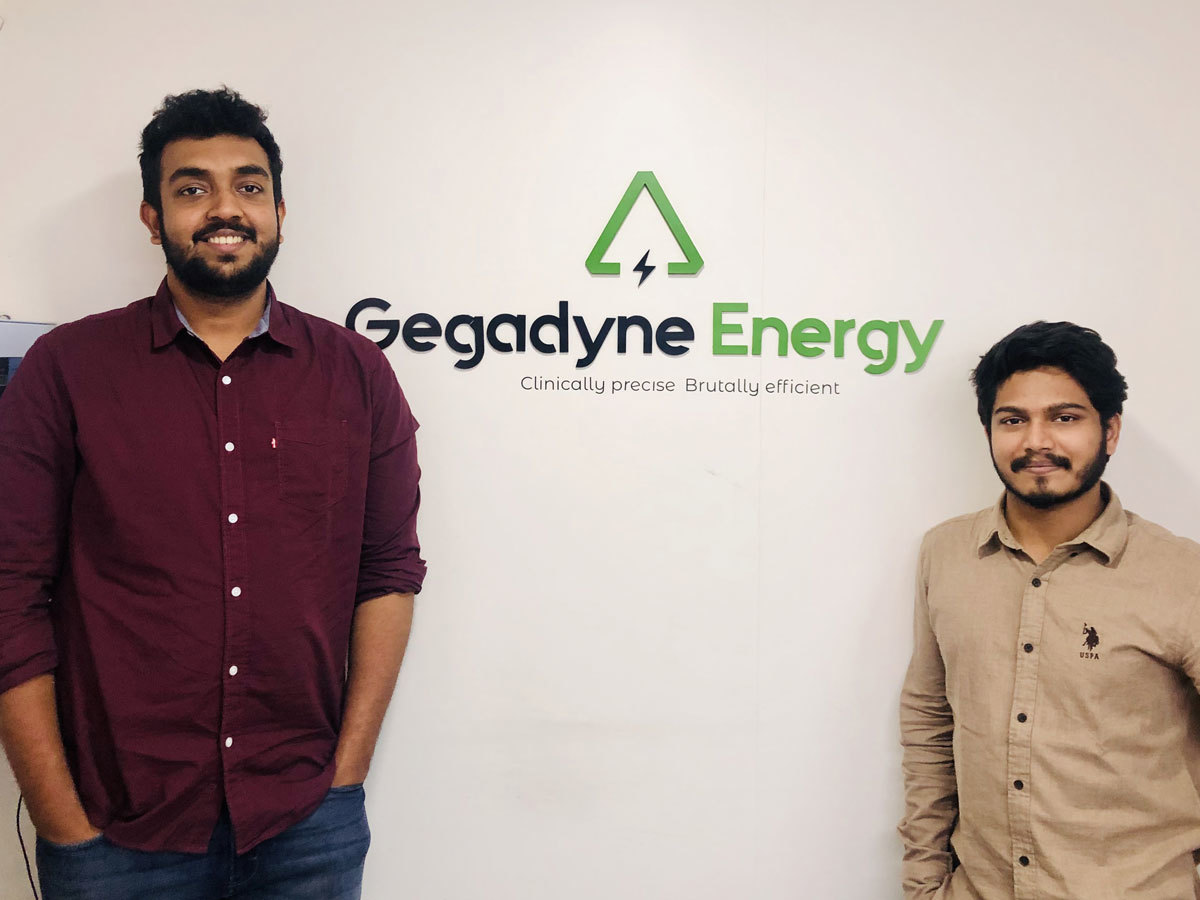
“Today, China practically controls the lithium-ion battery market, and it’s impossible for India to win this race if we are going to be dependent on lithium-based battery technology,” Varghese argues, adding since carbon is locally sourced, the firm is able to significantly reduce the overall cost of the battery pack. “This means lower total cost of ownership for the end-user, enabling us [Indians] to have a faster transition to an all-electric economy,” underlines the founder at the 5-year old, 8-employee-strong firm.
Gegadyne batteries are free from lithium and cobalt electrodes, hence the cost to manufacture these batteries are 1.3X cheaper than lithium ion batteries. On the other hand the range of the batteries is similar to lithium ion. “The range of the vehicle is also dependent on the size of the motor used and the capacity of the battery pack supplied to the vehicle. If we make an apple to apple comparison for our batteries vs lithium ion batteries, the range will be similar to them, but the overall cycle life and cost will be cheaper. This means the customer will not need to change batteries for that much longer time, compared to lithium ion batteries at least for five years,” says Varghese.
Teamed on a common goal
While Varghese was always fascinated by the idea of an all-electric economy and how batteries would play a pivotal role in the transition to the all-electric economy, Gadiwan had prior experience in building conductive inks and had a brief stint with modifying nanoparticles.
The duo, who initially met while doing an engineering course at Narsee Monjee Institute of Management Studies, realised that EV’s at the end of the day is nothing, but a battery pack on four wheels.
Though artificial intelligence and self-driving are cool features to have in a vehicle, Indians need an EV that is not just value for money, but is also practical for Indian conditions, the two strongly believed.
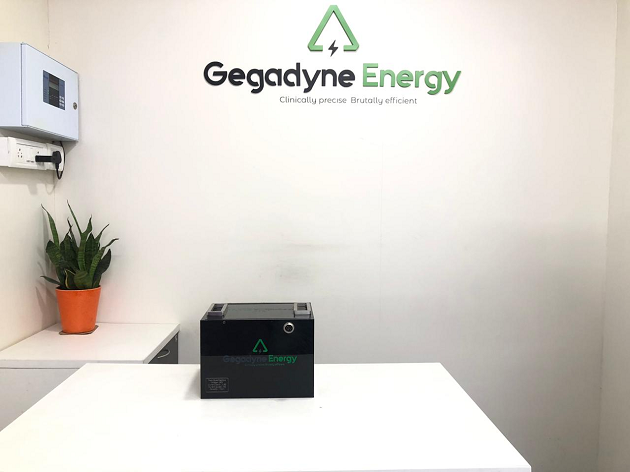
Gegadyne’s current focus is on batteries, battery management system (BMS), battery materials and analytic tools, and it has also been working with leading OEM’s to integrate the battery technology into their current and future product lines.
India, as a country, has multiple use-cases of the batteries, feels Varghese, adding the startup’s batteries can be used in all the products where any existing batteries are used, i.e. can be used as an alternative to li-ion batteries and lead-acid batteries.
“The Gegadyne batteries can be used in electric vehicles, which are expected to be a $4 billion industry in India by FY22. Additionally, the batteries can be used in telecom towers (a segment set to be worth $1.3 billion by FY22 in India), UPS /stabiliser business (a segment to be worth $1.8 billion by FY23 in India). The batteries can further be utilised in places like forklifts, storage grids, consumer devices including smartphones, laptops,” he adds.
Tackling speed breakers
With the current high cost of EV due to high battery price and an inferior charging infrastructure, EVs are not being popularised enough in India. The existing EV market is heavily dependent on government incentives for growth, he rues. According to Varghese, the prevailing scenario in the EV market is akin to ‘a chicken and egg situation’.
“We believe no business can sustain in the long run on the hope of subsidies. Gegadyne Energy believes that localised battery production is the only option to decrease the overall cost of the batteries,” he emphasises.
On a mission to enhance penetration of EVs across the country by making cheaper, lighter, and environment-friendly battery packs, the company currently boasts of double-digit overall growth.
“Reducing the overall cost of the batteries, which today constitutes 40% of the cost of the EV itself, is one of our main goals,” Varghese asserts, adding Gegadyne’s technology enables them to leapfrog battery technologies to the next stage and thereby “change the unit dynamics of everything else associated with it”.
The entrepreneur adds that the firm is beginning the pilot production of the battery by early 2020. He contends that the goal here is to supply Gegadyne’s channel partners with the initial battery pack for them to integrate with their existing products.
“We will begin full-scale commercialisation in India, post the pilot run with our channel partners. We are also in talks with various international battery manufacturers for licensing the technology for our International expansion plans. Our ultimate goal is to create an entire ecosystem for EV’s,” he optimistically concludes.










