

• Latest
  • Trending
  • All
Iran and the U.S. Avoid War for Now

Iran and the U.S. Avoid War for Now

January 10, 2020
Last Mile Delivery Market Worth Observing Growth | UPS, FedEx, SF Express

Last Mile Delivery Market Worth Observing Growth | UPS, FedEx, SF Express

April 23, 2024
Top 5 Spend Analysis Software ranked in 2024

Top 5 Spend Analysis Software ranked in 2024

March 1, 2024
How Tesla And BMW Are Leading A Supply Chain Renaissance With Blockchain

How Tesla And BMW Are Leading A Supply Chain Renaissance With Blockchain

January 19, 2024
LATAM Cargo strengthens European cargo links

LATAM Cargo strengthens European cargo links

April 14, 2020
Ford making reusable hospital gowns from airbag materials as efforts against coronavirus expand

Ford making reusable hospital gowns from airbag materials as efforts against coronavirus expand

April 14, 2020
Don’t Sweat NBC’s Decision to Cut Back on Television Ad Inventory

Don’t Sweat NBC’s Decision to Cut Back on Television Ad Inventory

April 14, 2020
Software firms sharpen focus on AI, big data as IT spending drops

Software firms sharpen focus on AI, big data as IT spending drops

April 14, 2020
Navigating turbulent times in your supply chain (TL:DR version)

Navigating turbulent times in your supply chain (TL:DR version)

April 14, 2020
Last Mile Delivery by Drones Market is Booming Worldwide

Last Mile Delivery by Drones Market is Booming Worldwide

April 14, 2020
AIR CARGO MARKET SIZE, SHARE, DEMAND, TREND, LATEST INNOVATIONS & APPLICATION ANALYSIS AND INDUSTRY GROWTH FORECAST 2027 – Science In Me

AIR CARGO MARKET SIZE, SHARE, DEMAND, TREND, LATEST INNOVATIONS & APPLICATION ANALYSIS AND INDUSTRY GROWTH FORECAST 2027 – Science In Me

April 14, 2020
Wheat procurement in Patiala: 6,500 coupons issued to farmers – cities

Wheat procurement in Patiala: 6,500 coupons issued to farmers – cities

April 14, 2020
Pandemic, Plastics And The Continuing Quest For Sustainability

Pandemic, Plastics And The Continuing Quest For Sustainability

April 14, 2020
  • Supply Chain
  • Logistics
  • Warehousing
  • Procurement
  • Shipping
  • More
    • Strategic Sourcing
    • Spend Analysis
    • Inventory
    • Contact Us
No Result
View All Result
United States International Supply Chain Commission
Home Logistics

Iran and the U.S. Avoid War for Now

by usiscc
January 10, 2020
in Logistics
0
Iran and the U.S. Avoid War for Now
492
SHARES
1.4k
VIEWS
Share on FacebookShare on Twitter

alt
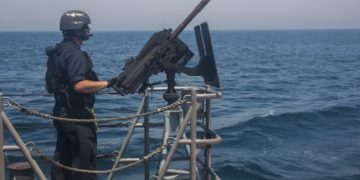
U.S. Navy servicemember aboard the patrol boat USS Whirlwind in the Strait of Hormuz (file image courtesy USN)

By


The Strategist


01-09-2020 07:26:00

[By Ian Dudgeon]


President Donald Trump’s public response to Iranian missile strikes on two U.S. airbases in Iraq suggests that he and Iran’s supreme leader, Ayatollah Ali Khamenei, have reached a mutual ‘no war’ agreement. Barring any miscalculation by either side that triggers military escalation, the confrontation will continue to be played out politically, with the U.S. maintaining its ‘maximum pressure’ campaign that seeks to force regime change through severe economic sanctions. There will be a lot of bruising ahead for Iran, but Trump will not win politically.


The absence of any U.S. casualties or significant equipment damage from the strikes at the Al Asad and Erbil air bases in Iraq yesterday, and Trump’s decision not to retaliate as threatened, suggest the no-war agreement was reached through intensive back-channel negotiations.


By capping military escalation at this point, Trump can still boast that he’s tough and decisive. He can claim Iran that has backed down to U.S. threats, and that his commitment to countering terrorism is well demonstrated by the killing of the commander of the Islamic Revolutionary Guards Corps’ Quds Force. Trump’s branding of Qassem Soleimani as the world’s ‘number one terrorist’ not only ‘justified’ his assassination but also implicitly matches his predecessor Barack Obama’s resolve in killing Osama bin Laden.


Iran’s missile attacks against the two U.S. bases will go some way to necessarily demonstrating Khamenei’s vow of ‘severe revenge’ for Soleimani’s killing. Tehran may be planning a longer-term response that goes further, but not so far that it precipitates a much stronger U.S military reaction. To achieve this, Iran will need to be able to control the actions of its proxies. That can’t be guaranteed, and Trump has made it clear he will hold Iran accountable for proxy actions.


Who initiated the negotiations is not known, but clearly Iran understood that it couldn’t win an all-out military confrontation with the U.S. Iran’s assessments of Trump’s possible responses to retaliatory military action by Iran and/or its proxies would have included a controlled, proportional tit-for-tat escalation. Iran also would have planned for a scenario in which Trump ignored proportionality and ordered strikes against Iranian and proxy command-and-control centres, missile and drone facilities, and other military and strategic facilities.


Nuclear facilities would almost certainly have been included in any such strike—especially given Iran’s announcement on January 5 that it is now disregarding all uranium enrichment controls under the nuclear deal. Trump’s morally indefensible threat to destroy Iranian cultural sites, however, was always unlikely to come to pass.


Trump’s frustration and ego suggest that there would have been a higher likelihood of large-scale U.S. strikes if Iran’s action had incurred any American casualties. Trump could have achieved all his targeted outcomes within 24 hours, before conceding to an inevitable urgent UN ceasefire resolution.


Although Iran, as the underdog, could be expected to acquit itself credibly through conventional and asymmetric means, Khamenei could not afford the threat of such carnage to his country or regime. For Iran, softer, largely political, action will remain its preferred option.


Although Trump can boast military superiority, he will not win politically. U.S. influence in the region is diminishing, and while Trump has largely blamed Iran for this, there are other reasons for America’s waning power. For its part, Iran will want to exploit Soleimani’s assassination through political action, including promoting condemnation of Trump and U.S. policies in the UN and other international forums, and at the parliamentary and party levels in individual countries, as well as through non-violent street demonstrations and social media. This is already happening regionally, especially among Shia communities, and in India through demonstrations outside the U.S. embassy in New Delhi.


Iraq will continue to be a major arena for Iran–U.S. confrontation. Its sovereignty was blatantly breached in the attack on Soleimani assassination, which also killed Abu Mahdi al-Muhandis, deputy commander of Iraq’s Popular Mobilisation Forces. The Iraqi parliament has passed a non-binding motion rejecting the presence of US and coalition, including Australian, forces in Iraq. While this does not require the immediate expulsion of these forces, it does impose restrictions on the activities of those forces and anticipates their eventual withdrawal.


Trump threatened to impose severe economic sanctions on Iraq if U.S. forces are expelled. The insensitivity of this will resonate with other countries hosting U.S. forces. Iran will be hoping other countries (especially those in the region) hosting U.S. and allied forces will expel them or impose similar restrictions.


There are clear implications for Australia’s military deployments in Iraq, and for our deployments elsewhere in the Middle East. While it’s unlikely Australia or other U.S. non-regional allies would be deliberately targeted if the situation re-escalates, the possibility of those integrated with U.S. forces becoming unintentional collateral damage cannot be dismissed.


The latest events also send a very timely message to the Australian government about the need to carefully consider its response, consider why and whether the Australian Defence Force should remain in Iraq, and re-evaluate other and future commitments in the region.


Ian Dudgeon is a presidential associate of the Australian Institute of International Affairs. 

The opinions expressed herein are the author’s and not necessarily those of The Maritime Executive.


Share197Tweet123
usiscc

usiscc

  • Trending
  • Comments
  • Latest
Escape From Tarkov – How to Rotate Items

Escape From Tarkov – How to Rotate Items

February 5, 2020
Supply chain examination: Planning for vulnerabilities you can’t control

Supply chain examination: Planning for vulnerabilities you can’t control

December 7, 2019
Procurement Project Manager job with Camden London Borough Council

Procurement Project Manager job with Camden London Borough Council

February 17, 2020
Art Battle Wichita Falls III at The Warehouse, 1401 Lamar.

Art Battle Wichita Falls III at The Warehouse, 1401 Lamar.

0
Global Industry Analysis, Size, Share, Growth, Trends, and Forecasts 2016–2024 – ZMR News Reports

Global Industry Analysis, Size, Share, Growth, Trends, and Forecasts 2016–2024 – ZMR News Reports

0
PHOTOS: Ottawa firefighters respond to warehouse fire

PHOTOS: Ottawa firefighters respond to warehouse fire

0
Last Mile Delivery Market Worth Observing Growth | UPS, FedEx, SF Express

Last Mile Delivery Market Worth Observing Growth | UPS, FedEx, SF Express

April 23, 2024
Top 5 Spend Analysis Software ranked in 2024

Top 5 Spend Analysis Software ranked in 2024

March 1, 2024
How Tesla And BMW Are Leading A Supply Chain Renaissance With Blockchain

How Tesla And BMW Are Leading A Supply Chain Renaissance With Blockchain

January 19, 2024
  • Privacy Policy
  • Terms of Use
  • Disclaimer
  • DMCA
  • Contact Us

Copyright © 2024 United States International Supply Chain Commission (usiscc.org)

This website uses cookies to improve your experience. We'll assume you're ok with this, but you can opt-out if you wish. Cookie settingsACCEPT
Privacy & Cookies Policy

Privacy Overview

This website uses cookies to improve your experience while you navigate through the website. Out of these cookies, the cookies that are categorized as necessary are stored on your browser as they are essential for the working of basic functionalities of the website. We also use third-party cookies that help us analyze and understand how you use this website. These cookies will be stored in your browser only with your consent. You also have the option to opt-out of these cookies. But opting out of some of these cookies may have an effect on your browsing experience.
Necessary
Always Enabled

Necessary cookies are absolutely essential for the website to function properly. This category only includes cookies that ensures basic functionalities and security features of the website. These cookies do not store any personal information.

Non-necessary

Any cookies that may not be particularly necessary for the website to function and is used specifically to collect user personal data via analytics, ads, other embedded contents are termed as non-necessary cookies. It is mandatory to procure user consent prior to running these cookies on your website.

SAVE & ACCEPT
No Result
View All Result
  • Supply Chain
  • Logistics
  • Warehousing
  • Procurement
  • Shipping
  • More
    • Strategic Sourcing
    • Spend Analysis
    • Inventory
    • Contact Us

Copyright © 2024 United States International Supply Chain Commission (usiscc.org)






