







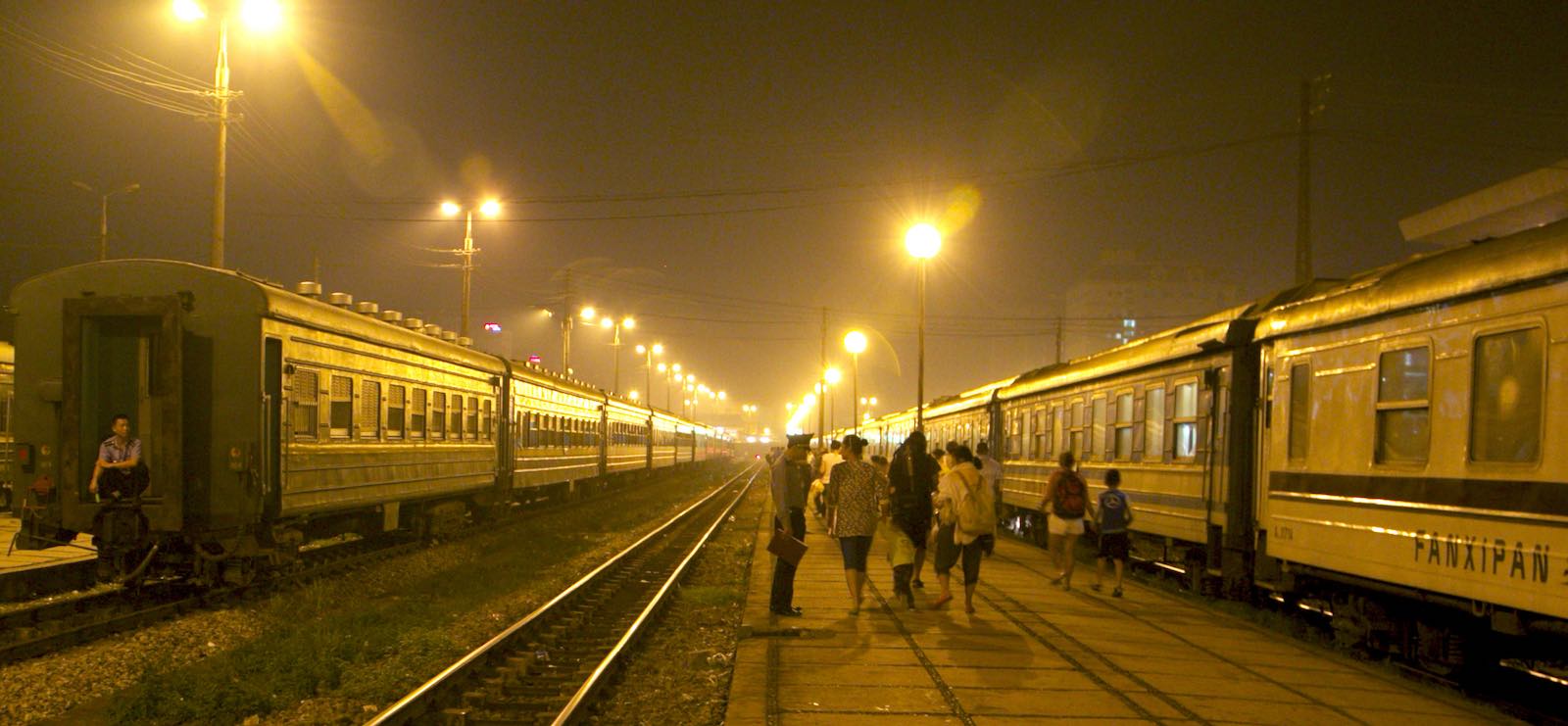
Last year, China and Vietnam unveiled plans to refurbish a colonial-era railway between the two countries. It was an attempt to update a historical legacy – and also signified new bilateral dynamics in a consequential and sometimes fraught regional relationship.
Announced on 25 November, the Vietnamese government has proposed a rail project from Hai Phong through Hanoi to Lao Cai, on the border with China, for both freight and passenger trains. Vietnamese officials have said the project has been in planning since at least 2008, and a Chinese rail consultant completed a survey of the route between 2015 and 2019, delivering a blueprint of a 392-kilometre rail line with 38 stations, at an estimated cost of US $4.3 billion. Yet despite the new plan, it is not, in fact, a new route.
The relationship between these neighbouring countries has often been unsettled, whether by maritime territorial disputes in the South China Sea/East Sea or other strife. Although both sides usually constrain such confrontation, accidental escalation can never be ruled out.
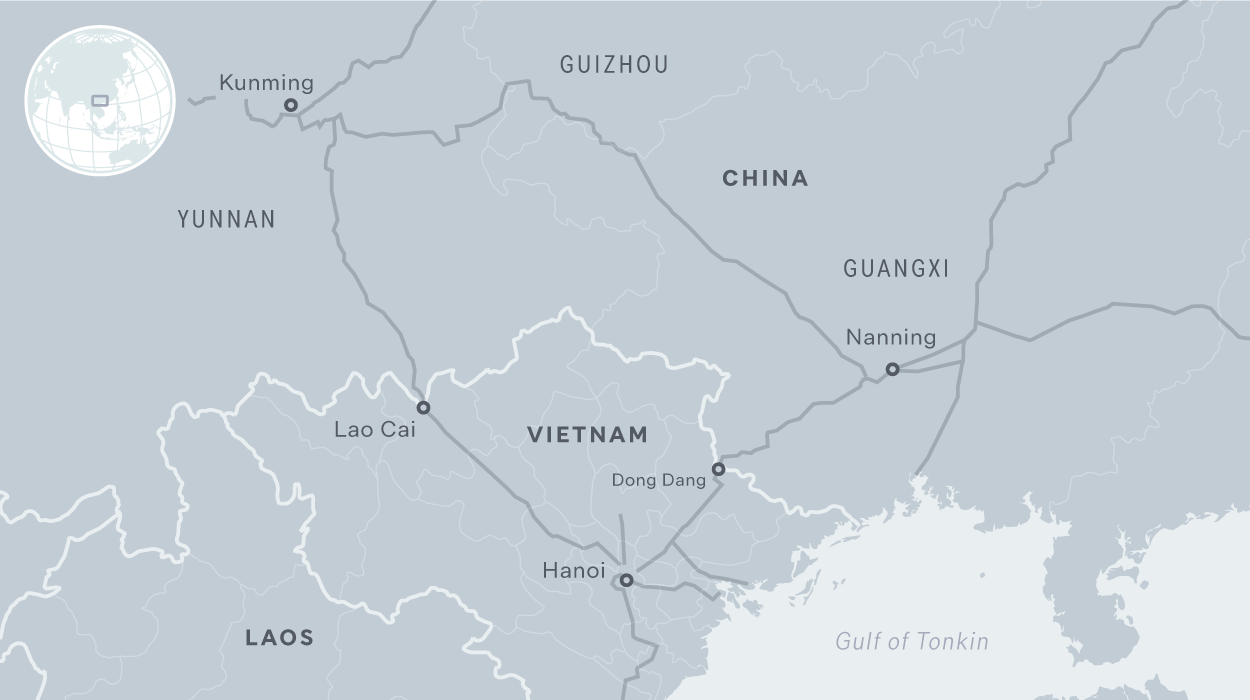
The rail line from Hanoi through Lao Cai to Kunming, the capital of China’s Yunnan province, was built by the French in the 1900s, the final decade of the Chinese (Qing) Empire. At that time, Beijing had difficulty retaining sovereignty over territory which the colonial powers claimed for their respective areas of interests, and France sought control in Yunnan and Guangxi provinces. The rail line from Hanoi to Kunming, along with another to Guangxi, allowed France to exert its influence in Southern China from its Indochina colony. The rail line has remained through the momentous political changes and wars in the years since.
But the proposed update is intriguing.
From Beijing’s perspective, the metre gauge (1.0 metre) rail line typically used in Vietnam is incompatible with its network of standard gauge (1.435 metre) lines, so the upgade will allow for direct services into Vietnam. China had already gradually completed a newer standard gauge line alongside an older narrow gauge one in southern Yunnan to the border town Hekou, across from Lao Cai. Allowing for an extension of this line into Vietnam will provide a smoother connection – which, in more than one sense, is a goal of the Belt and Road Initiative (BRI). The rail connection was even mentioned during Xi Jinping’s visit to Hanoi in 2017.
Vietnam, like other Southeast Asian nations, is reluctant to modernise its narrow gauge network. Upgrading the existing rail network is cheaper, requiring less land and less time for construction, but with a lower ceiling for top speed and capacity than would be available by building brand-new standard gauge lines.
Hanoi has previously proposed shifting to standard gauge in two sections of railway, and a standard gauge rail line does already run from China’s Guangxi Zhuang Autonomous Region (GZAR) to Hanoi. As Hanoi has become a way point on the Sino-Europe rail network, adding another standard gauge line from China would not be unimaginable. Domestically, a standard gauge rail line would mean faster and larger capacity, helping the development of Vietnam’s north-west provinces.
However, bringing a standard rail connection all the way to Hai Phong, the most important port in Northern Vietnam, reveals an additional geopolitical and economic impact. As there are various harbours along the Chinese coastline, including the GZAR, Hai Phong does not present a clear shortcut for China to connect with sea transport. It also would mean dealing with a foreign customs system, which may delay the flow of trade.

From Vietnam’s perspective, trade with China through land transport may not need a harbour. The connection to Hai Phong may be merely for convenience. But it also suggests the potential for cross-border production chains, somewhat similar to the economic integration between Thailand and Malaysia, where the railway plays an important role. Such cross-border production chains would contribute to the two Sino-Vietnam economic corridors towards Yunnan and GZAR.
As such, the rail project announcement reveals an improving atmosphere between Hanoi and Beijing. Not only will the rail connection be significantly funded by Chinese investment, but it also presents an opportunity for greater economic integration. As China is a major funder, its rail technology – such as rolling stocks and signals – is expected to be adopted. This follows Vietnam’s previous procurement of Chinese locomotives and signal systems.
Moreover, the prospect of cross-border economic corridors signifies further economic integration, which may lower the probability of conflicts. From Beijing’s perspective, this project also strengthens Hanoi’s involvement in the BRI.
Despite such hopes, financial, security, and construction factors lie ahead for the project. For any economic corridor to succeed, it must carry advantages over other means and locations. Vietnam still has coastal areas adjacent to harbours that coul be developed for manufacturing and other industries, so inland economic corridors away from harbours, even though connected with rail, may not be economically attractive.
China’s investment of capital and technology in economic corridors may present another niche, but the extent could be uncertain. The relatively slow development of Yunnan and GZAR among China’s provinces may also have an effect.
And security concerns sit above all. The relationship between these neighbouring countries has often been unsettled, whether by maritime territorial disputes in the South China Sea/East Sea or other strife. Although both sides usually constrain such confrontation, accidental escalation can never be ruled out. Even a limited crisis could shift public opinion and produce social dynamics, such as nationalist protests, that would disrupt bilateral economic corridors. Vietnam has previously shown concern about economic dependence on China.
Finally, the Vietnamese media has raised doubts about the financial feasibility of the proposed rail project. Amid rising governmental debt and various other rail projects, including an urban line in Hanoi, already facing difficulties, an additional project with Chinese funding inevitably arouses questions.
If this rail project really does get rolling, it might not be a game-changer for either Beijing or Hanoi. But the effort does indicate a warming bilateral atmosphere, despite some uncertainties.










