

• Latest
  • Trending
  • All
Bioplastics continue to blossom—are they really better for the environment?

Bioplastics continue to blossom—are they really better for the environment?

January 20, 2020
Last Mile Delivery Market Worth Observing Growth | UPS, FedEx, SF Express

Last Mile Delivery Market Worth Observing Growth | UPS, FedEx, SF Express

April 23, 2024
Top 5 Spend Analysis Software ranked in 2024

Top 5 Spend Analysis Software ranked in 2024

March 1, 2024
How Tesla And BMW Are Leading A Supply Chain Renaissance With Blockchain

How Tesla And BMW Are Leading A Supply Chain Renaissance With Blockchain

January 19, 2024
LATAM Cargo strengthens European cargo links

LATAM Cargo strengthens European cargo links

April 14, 2020
Ford making reusable hospital gowns from airbag materials as efforts against coronavirus expand

Ford making reusable hospital gowns from airbag materials as efforts against coronavirus expand

April 14, 2020
Don’t Sweat NBC’s Decision to Cut Back on Television Ad Inventory

Don’t Sweat NBC’s Decision to Cut Back on Television Ad Inventory

April 14, 2020
Software firms sharpen focus on AI, big data as IT spending drops

Software firms sharpen focus on AI, big data as IT spending drops

April 14, 2020
Navigating turbulent times in your supply chain (TL:DR version)

Navigating turbulent times in your supply chain (TL:DR version)

April 14, 2020
Last Mile Delivery by Drones Market is Booming Worldwide

Last Mile Delivery by Drones Market is Booming Worldwide

April 14, 2020
AIR CARGO MARKET SIZE, SHARE, DEMAND, TREND, LATEST INNOVATIONS & APPLICATION ANALYSIS AND INDUSTRY GROWTH FORECAST 2027 – Science In Me

AIR CARGO MARKET SIZE, SHARE, DEMAND, TREND, LATEST INNOVATIONS & APPLICATION ANALYSIS AND INDUSTRY GROWTH FORECAST 2027 – Science In Me

April 14, 2020
Wheat procurement in Patiala: 6,500 coupons issued to farmers – cities

Wheat procurement in Patiala: 6,500 coupons issued to farmers – cities

April 14, 2020
Pandemic, Plastics And The Continuing Quest For Sustainability

Pandemic, Plastics And The Continuing Quest For Sustainability

April 14, 2020
  • Supply Chain
  • Logistics
  • Warehousing
  • Procurement
  • Shipping
  • More
    • Strategic Sourcing
    • Spend Analysis
    • Inventory
    • Contact Us
No Result
View All Result
United States International Supply Chain Commission
Home Procurement

Bioplastics continue to blossom—are they really better for the environment?

by usiscc
January 20, 2020
in Procurement
0
Bioplastics continue to blossom—are they really better for the environment?
491
SHARES
1.4k
VIEWS
Share on FacebookShare on Twitter

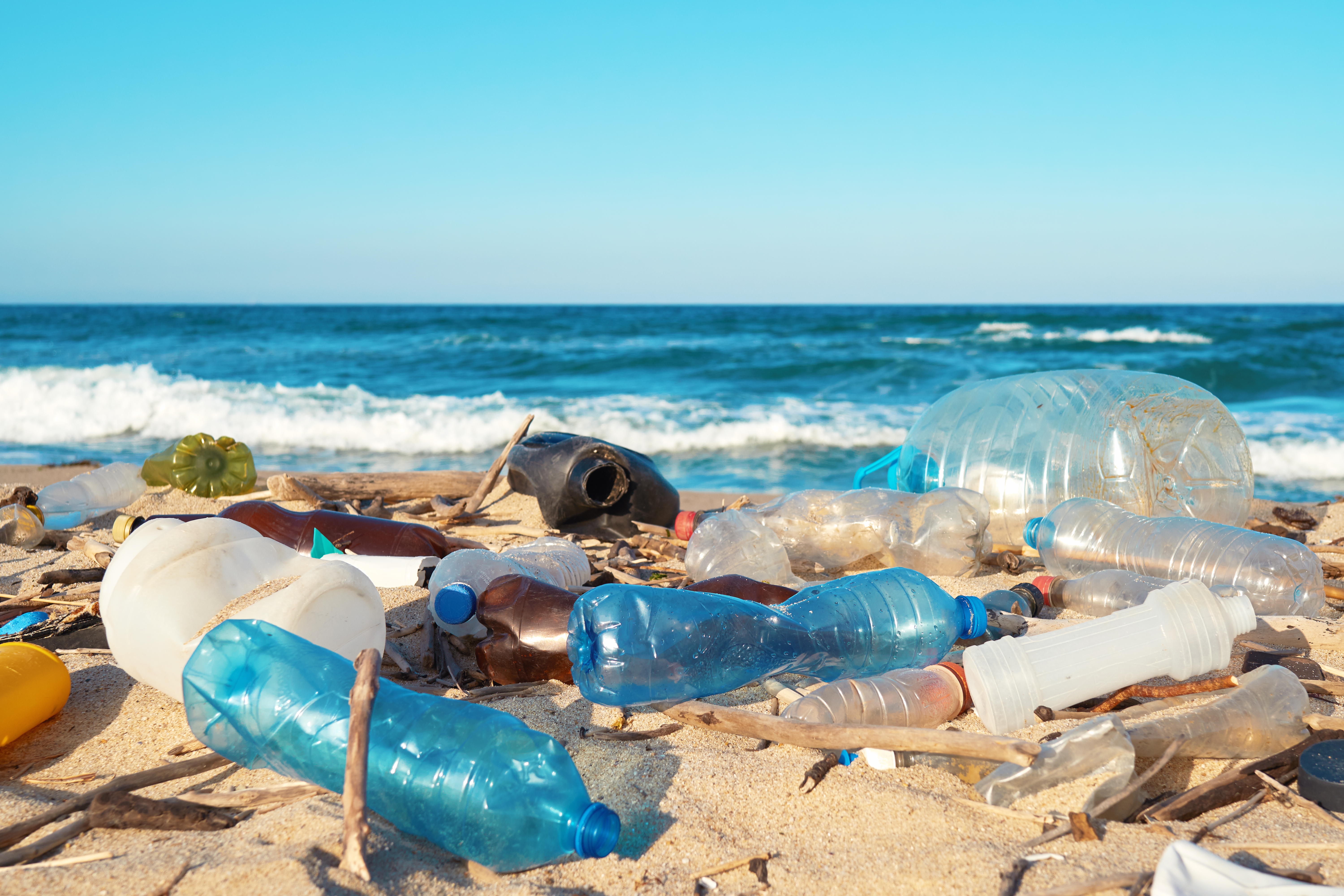
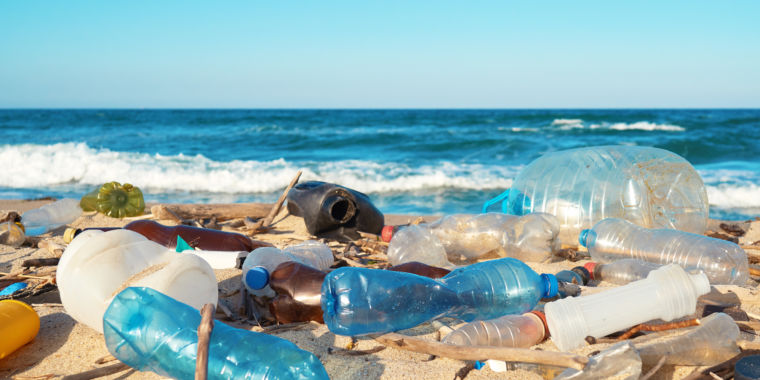
Spilled garbage on the beach off the Black Sea in Bulgaria.
Enlarge / Spilled garbage on the beach off the Black Sea in Bulgaria.

iStock / Getty Images Plus

The English metallurgist Alexander Parkes never saw the widespread realization of his spectacular 19th-century invention, celluloid, the first plastic. While a revolutionary breakthrough, Parkesine, as it was called, was expensive and brittle. It was used in objects like buttons and combs, but ultimately quality control issues led Parkes’ company to bankruptcy in 1868 just 12 years after the discovery.

Parkesine, however, was also the first bioplastic—a plastic made from renewable plant material instead of fossil fuels. And today with the environmental impact of plastics increasingly on the public mind, bioplastics are making a big comeback. They’re proposed by some as the solution to beaches deluged with plastic and fish bellies stuffed with bottle caps. And perhaps bioplastics can replace oil-based polymers that commonly trash oceans with materials that can break down more easily and would protect a planet already smothered in these resilient substances.

Bioplastic items already exist, of course, but whether they’re actually better for the environment or can truly compete with traditional plastics is complicated. Some bioplastics aren’t much better than fossil fuel-based polymers. And for the few that are less injurious to the planet, cost and social acceptance may stand in the way. Even if widespread adoption of bioplastics occurs down the line, it won’t be a quick or cheap fix. In the meantime, there is also some pollution caused by bioplastics themselves to consider. Even if bioplastics are often less damaging than the status quo, they aren’t a flawless solution.

So, could saving the planet simply come down to some design decisions? We may soon find out. Market demand for bioplastics is ballooning, with global industrial output predicted to reach 2.62 million tonnes annually by 2023, according to the Berlin-based trade association European Bioplastics. Currently, that’s only one percent of the 335 million tonnes of conventional plastics produced every year. But the European Commission, in its 2018 Circular Economy Action Plan, detailed bioplastics research as part of their strategy to drive investment in a climate-neutral economy.

“Sometimes we like to see the word ‘green,’ but we always should have appropriate awareness about the material we are dealing with,” says Federica Ruggero, an environmental engineer at the University of Florence, Italy. “It’s a very good starting point in the production chain to have these new materials that can substitute plastics … but it’s also important to consider the waste that comes from this material.”

To put it plainly: not all bioplastics are created equal. So which ones may be key to a genuinely “greener” future? In 2020, five candidates seem to be rising to the eco-friendly top.

Bioplastic basics

Bioplastics have come a long way since the days of Alexander Parkes. Today, these materials can be made from many renewable resources: cornstarch, beet sugar, kiwi skins, shrimp shells, wood pulp, even mangos and seaweed. They can function approximately the same as materials like vinyl or PET, the plastic most commonly used in drink bottles.

But if these polymers don’t actually have a smaller carbon footprint than plastics refined from petroleum, they may only be another example of greenwashing, a misleading marketing tactic more about image than outcomes. That’s one of the problems with the fact that there isn’t yet a universal definition of “bioplastic.”

“Bioplastic is basically anything that people like to call bioplastic,” says Dr. Frederik Wurm, a chemist at the Max Planck Institute for Polymer Research in Mainz, Germany. The term can currently mean a material made from fossil fuels that can biodegrade, such as PCL, a plastic used in packaging and drug delivery.

Bioplastics can also be biobased and not biodegradable, like the PET bottles Coca-Cola made entirely from plants. But their end product is chemically identical to PET made from oil, so it can still take centuries to fully break down. In 2013, the Coca-Cola Company (considered by one environmental advocacy group as the “most polluting brand”) pledged to make all their bottles this way by 2020, but it later backpedaled to focus more on recycling, according to the The W all Street Journal. Greenpeace, the pro-environment non-profit, has said, “Plant bottles are not the answer.”

Additives mixed with conventional plastics to speed up biodegradation don’t seem to help either. Oxo-degradable products are standard plastics that are chemically treated to quickly fragment when exposed to sunlight and oxygen—but they don’t break down entirely. And because these plastics are otherwise no different from untreated versions, the microplastics they produce can still pose environmental hazards. The European Union is currently working to ban oxo-degradable plastics.

Generally, it appears the starting material is less important than what it’s turned into, making the ideal plastic both biobased and biodegradable. A few of these polymers do exist, but they disintegrate only under certain conditions.


Share196Tweet123
usiscc

usiscc

  • Trending
  • Comments
  • Latest
Escape From Tarkov – How to Rotate Items

Escape From Tarkov – How to Rotate Items

February 5, 2020
Supply chain examination: Planning for vulnerabilities you can’t control

Supply chain examination: Planning for vulnerabilities you can’t control

December 7, 2019
Procurement Project Manager job with Camden London Borough Council

Procurement Project Manager job with Camden London Borough Council

February 17, 2020
Art Battle Wichita Falls III at The Warehouse, 1401 Lamar.

Art Battle Wichita Falls III at The Warehouse, 1401 Lamar.

0
Global Industry Analysis, Size, Share, Growth, Trends, and Forecasts 2016–2024 – ZMR News Reports

Global Industry Analysis, Size, Share, Growth, Trends, and Forecasts 2016–2024 – ZMR News Reports

0
PHOTOS: Ottawa firefighters respond to warehouse fire

PHOTOS: Ottawa firefighters respond to warehouse fire

0
Last Mile Delivery Market Worth Observing Growth | UPS, FedEx, SF Express

Last Mile Delivery Market Worth Observing Growth | UPS, FedEx, SF Express

April 23, 2024
Top 5 Spend Analysis Software ranked in 2024

Top 5 Spend Analysis Software ranked in 2024

March 1, 2024
How Tesla And BMW Are Leading A Supply Chain Renaissance With Blockchain

How Tesla And BMW Are Leading A Supply Chain Renaissance With Blockchain

January 19, 2024
  • Privacy Policy
  • Terms of Use
  • Disclaimer
  • DMCA
  • Contact Us

Copyright © 2024 United States International Supply Chain Commission (usiscc.org)

This website uses cookies to improve your experience. We'll assume you're ok with this, but you can opt-out if you wish. Cookie settingsACCEPT
Privacy & Cookies Policy

Privacy Overview

This website uses cookies to improve your experience while you navigate through the website. Out of these cookies, the cookies that are categorized as necessary are stored on your browser as they are essential for the working of basic functionalities of the website. We also use third-party cookies that help us analyze and understand how you use this website. These cookies will be stored in your browser only with your consent. You also have the option to opt-out of these cookies. But opting out of some of these cookies may have an effect on your browsing experience.
Necessary
Always Enabled

Necessary cookies are absolutely essential for the website to function properly. This category only includes cookies that ensures basic functionalities and security features of the website. These cookies do not store any personal information.

Non-necessary

Any cookies that may not be particularly necessary for the website to function and is used specifically to collect user personal data via analytics, ads, other embedded contents are termed as non-necessary cookies. It is mandatory to procure user consent prior to running these cookies on your website.

SAVE & ACCEPT
No Result
View All Result
  • Supply Chain
  • Logistics
  • Warehousing
  • Procurement
  • Shipping
  • More
    • Strategic Sourcing
    • Spend Analysis
    • Inventory
    • Contact Us

Copyright © 2024 United States International Supply Chain Commission (usiscc.org)