






In the seventies, Gren prospected for copper and rare-earth metals near Yellowknife, in Canada’s wild Northwest Territories. When Eira, his first child, turned six, she began joining him during her summer vacations. Gren and his team had to be constantly on the lookout to insure that little Eira was not eaten by a bear. Like her father, Eira was bright, curious, and outdoorsy. In college, she abandoned a plan to pursue medicine and got a geology degree instead. In 1991, when she was twenty-two, Gren asked her to cut short her post-graduation travels, in Africa, to help him look for diamonds in Canada.
Eira told her father, “Dad, there’s no diamonds in Canada—everyone knows that.”
In 1991, the industry was still dominated by De Beers, which sold nearly four billion dollars’ worth of rough diamonds that year—about eighty per cent of the global supply. Most of that “rough” originated in the company’s own mines, in southern Africa. There were also productive diamond mines in Russia and Australia. Canada did not feature on the diamantaire’s map of the world.
However, for at least a decade there had been promising signs that significant diamond deposits might lie in the far north of the country. Diamonds were created billions of years ago, hundreds of kilometres below the surface of the earth, when carbon-bearing fluid was formed into crystals under intense heat and pressure. Over time, many of the stones were brought to the surface by subterranean volcanoes. The remains of these eruptions took the form of kimberlite “pipes”—cylinders of diamond-rich ore. Around Kimberley, South Africa, such pipes became known as “blue ground,” on account of their bluish tinge, but in other countries kimberlite deposits are often a grayish green.
Finding evidence of a pipe is a good start to finding a diamond. In the early nineteen-eighties, several geologists, including some from De Beers, discovered “indicator minerals” suggesting that such pipes existed in significant numbers in Canada. Among the minerals were lilac-colored, magnesium-rich garnets—stones, found in soil and rivers, that were formed at the same time as kimberlite, and that indicate the presence of a pipe nearby.
In 1991, two geologists, Chuck Fipke and Stu Blusson, used indicator chemistry to discover a pipe that later became known as the Ekati mine, near Lac de Gras, in the Slave Craton, an area about two hundred miles northeast of Yellowknife. It is a tough environment for exploration; in winter, temperatures regularly drop to minus thirty degrees Fahrenheit. Nevertheless, the discovery prompted a staking rush, with rival companies claiming ground near Fipke and Blusson’s site. By the end of 1991, Gren Thomas’s small company, Aber, had staked about a million acres of claims. Other firms staked even more ground.
In the summer of 1992, Eira Thomas travelled to the region with an exploration team, taking along her northern sled dog, Thor, which was part wolf, to protect the group from bears. The animal was not as helpful as Thomas had hoped: when a grizzly approached, the dog whined for its owner. On another occasion, Thor ran off, and was picked up by a rival exploration team, sixty miles away, whose members suspected that the dog was part of a convoluted espionage mission. The rivals sent Thor, by plane, to Yellowknife, rather than allow Thomas to retrieve the animal in person.
That summer, Aber and other mining companies found evidence of several kimberlite pipes. All of the prospectors were looking for what is known as an “economic” deposit: one rich enough in diamonds to merit the vast expense of mining in the desolate landscape of northern Canada. In the spring of 1994, Eira Thomas returned to Lac de Gras, as Aber’s chief geologist. She was particularly interested in a prospect that lay beneath the ice-covered lake. Drilling vertically into the earth underneath a lake is problematic. In summer, the ice that the drilling equipment rests upon melts. Heavy rigs need to be moved before they sink into the water.
At the time, Aber was in some financial trouble, and Gren Thomas was negotiating a merger with a larger firm. Tests of the mineral chemistry of the lake convinced Eira Thomas that a rich deposit was buried beneath the water. She and her team drilled for samples, and the results were promising: the kind of kimberlite that augurs a plentiful supply of diamonds. But they hadn’t yet identified an economic pipe.
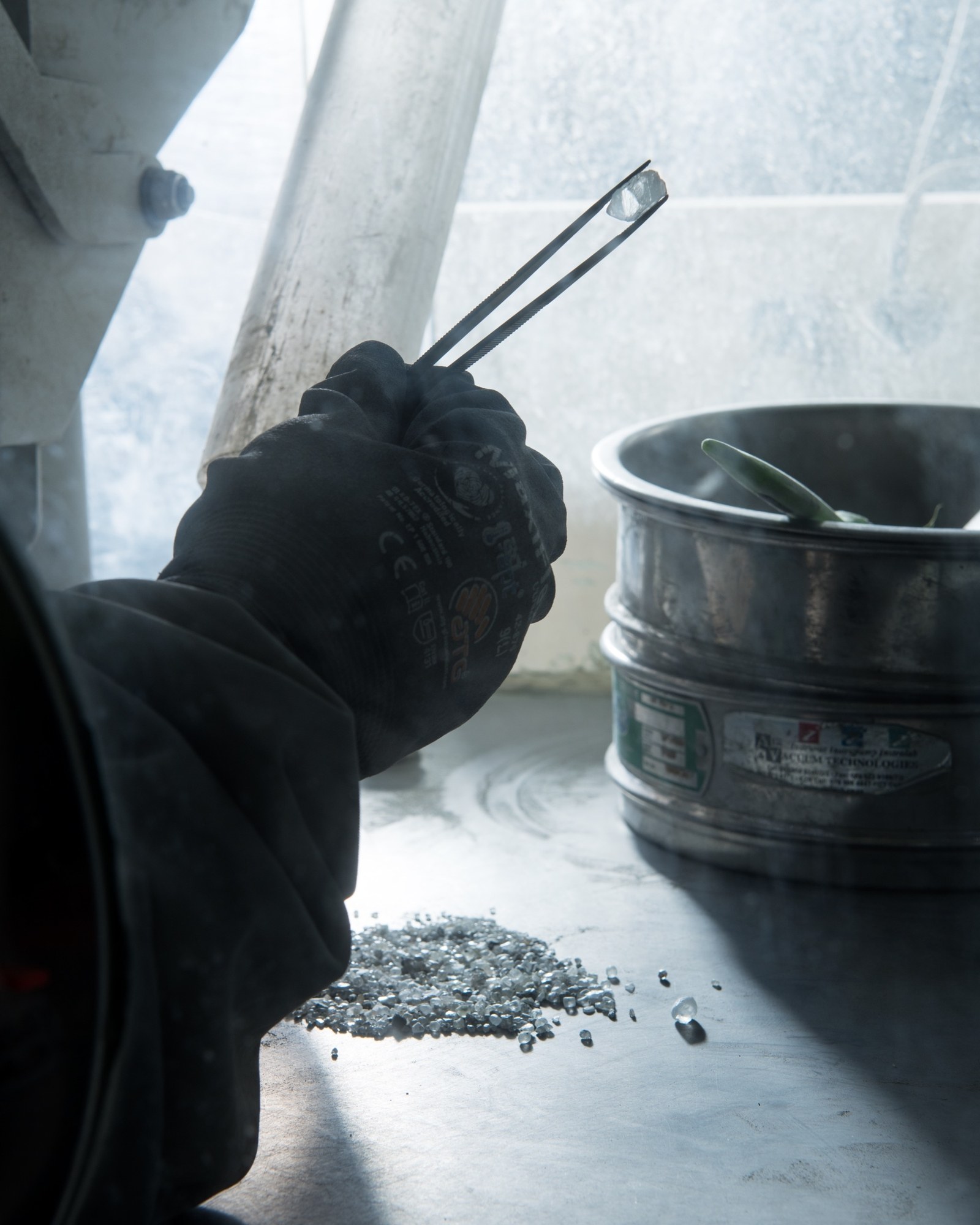
By late May, 1994, the ice was starting to melt. The drilling crew needed to move their equipment off the lake. But Thomas, seeking a sample of kimberlite from a prospect called A154 South, asked the miners to keep drilling. They worked with water sloshing up to their knees. On the last possible day of drilling, the team retrieved a sample. A two-carat diamond was embedded in one part of it. It’s almost unheard of to find an actual diamond within a core—a tiny sample of the total material in a pipe. As soon as Thomas and the Aber team saw the glittering stone, which was the size of an M&M, they knew they’d struck pay dirt. That night, Thomas slept with the diamond under her pillow. She then flew to Vancouver. When she met with her father, she said nothing, and simply showed him the sparkling rock in her hand.
“Is this for real?” Gren said.
The pipes that Eira Thomas discovered became one of the world’s richest diamond mines. By 2016, the deposit, now known as Diavik, had produced more than a hundred million carats. After the Thomases’ breakthrough, other firms developed their own assets in Canada. Within a decade, Canada was producing sixteen per cent of the world’s supply of gem-quality stones by volume, and Eira was known as the Queen of Diamonds. (Gren, who still works in the business, and retains his Welsh accent, says that he now asks Eira for advice, rather than the other way around.) The Canadian discoveries were part of a series of events in the nineties that loosened De Beers’s stranglehold on the industry.
After that first success, Thomas and McLeod-Seltzer, who met through a mutual friend, formed a new company, Stornoway, which went on to develop Quebec’s first diamond mine, Renard. But they longed to mine diamonds in southern Africa—particularly in Botswana, a stable democracy where the stones are plentiful and of high quality. Thomas recalls that Stornoway’s mostly North American backers were wary about investing, believing that southern Africa was a high-risk area. So, in 2007, she and McLeod-Seltzer formed Lucara with Lukas Lundin, and began to raise money for an African diamond play.
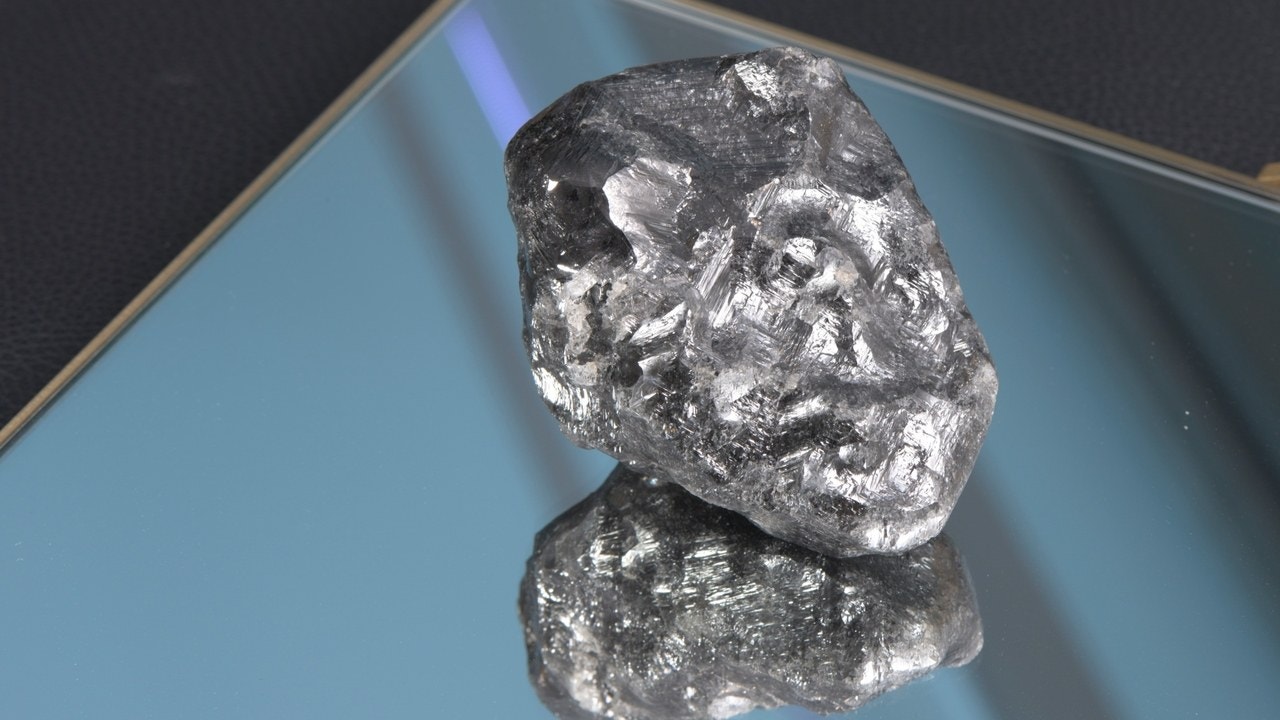
Lucara had a bumpy start: it bid unsuccessfully on several sites. Then, in 2009, a site called AK6, about an hour’s flight north of Botswana’s capital, Gaborone, became available. AK6 was near a famously productive diamond mine called Orapa. De Beers had discovered AK6 in the seventies but had not developed it, concluding that it would cost too much money to extract too few diamonds. When Lucara’s team examined samples that had been extracted in the seventies, they noticed evidence that many diamonds had been damaged in the sampling process, and that De Beers’s statistical models had discounted these larger, broken stones.
William Lamb, a lean, energetic South African, had been appointed the general manager of Lucara. Lamb and his team believed that the less sophisticated processing methods of the seventies had crushed any stone larger than ten millimetres in width. Lucara’s geologists knew from studying the AK6 samples that larger diamonds existed in the deposit, and they wondered whether the mine might be a good investment after all.










