


• Latest
  • Trending
  • All
Building timber cities to protect the climate

Building timber cities to protect the climate

January 27, 2020
Last Mile Delivery Market Worth Observing Growth | UPS, FedEx, SF Express

Last Mile Delivery Market Worth Observing Growth | UPS, FedEx, SF Express

April 23, 2024
Top 5 Spend Analysis Software ranked in 2024

Top 5 Spend Analysis Software ranked in 2024

March 1, 2024
How Tesla And BMW Are Leading A Supply Chain Renaissance With Blockchain

How Tesla And BMW Are Leading A Supply Chain Renaissance With Blockchain

January 19, 2024
LATAM Cargo strengthens European cargo links

LATAM Cargo strengthens European cargo links

April 14, 2020
Ford making reusable hospital gowns from airbag materials as efforts against coronavirus expand

Ford making reusable hospital gowns from airbag materials as efforts against coronavirus expand

April 14, 2020
Don’t Sweat NBC’s Decision to Cut Back on Television Ad Inventory

Don’t Sweat NBC’s Decision to Cut Back on Television Ad Inventory

April 14, 2020
Software firms sharpen focus on AI, big data as IT spending drops

Software firms sharpen focus on AI, big data as IT spending drops

April 14, 2020
Navigating turbulent times in your supply chain (TL:DR version)

Navigating turbulent times in your supply chain (TL:DR version)

April 14, 2020
Last Mile Delivery by Drones Market is Booming Worldwide

Last Mile Delivery by Drones Market is Booming Worldwide

April 14, 2020
AIR CARGO MARKET SIZE, SHARE, DEMAND, TREND, LATEST INNOVATIONS & APPLICATION ANALYSIS AND INDUSTRY GROWTH FORECAST 2027 – Science In Me

AIR CARGO MARKET SIZE, SHARE, DEMAND, TREND, LATEST INNOVATIONS & APPLICATION ANALYSIS AND INDUSTRY GROWTH FORECAST 2027 – Science In Me

April 14, 2020
Wheat procurement in Patiala: 6,500 coupons issued to farmers – cities

Wheat procurement in Patiala: 6,500 coupons issued to farmers – cities

April 14, 2020
Pandemic, Plastics And The Continuing Quest For Sustainability

Pandemic, Plastics And The Continuing Quest For Sustainability

April 14, 2020
  • Supply Chain
  • Logistics
  • Warehousing
  • Procurement
  • Shipping
  • More
    • Strategic Sourcing
    • Spend Analysis
    • Inventory
    • Contact Us
No Result
View All Result
United States International Supply Chain Commission
Home Procurement

Building timber cities to protect the climate

by usiscc
January 27, 2020
in Procurement
0
Building timber cities to protect the climate
494
SHARES
1.4k
VIEWS
Share on FacebookShare on Twitter

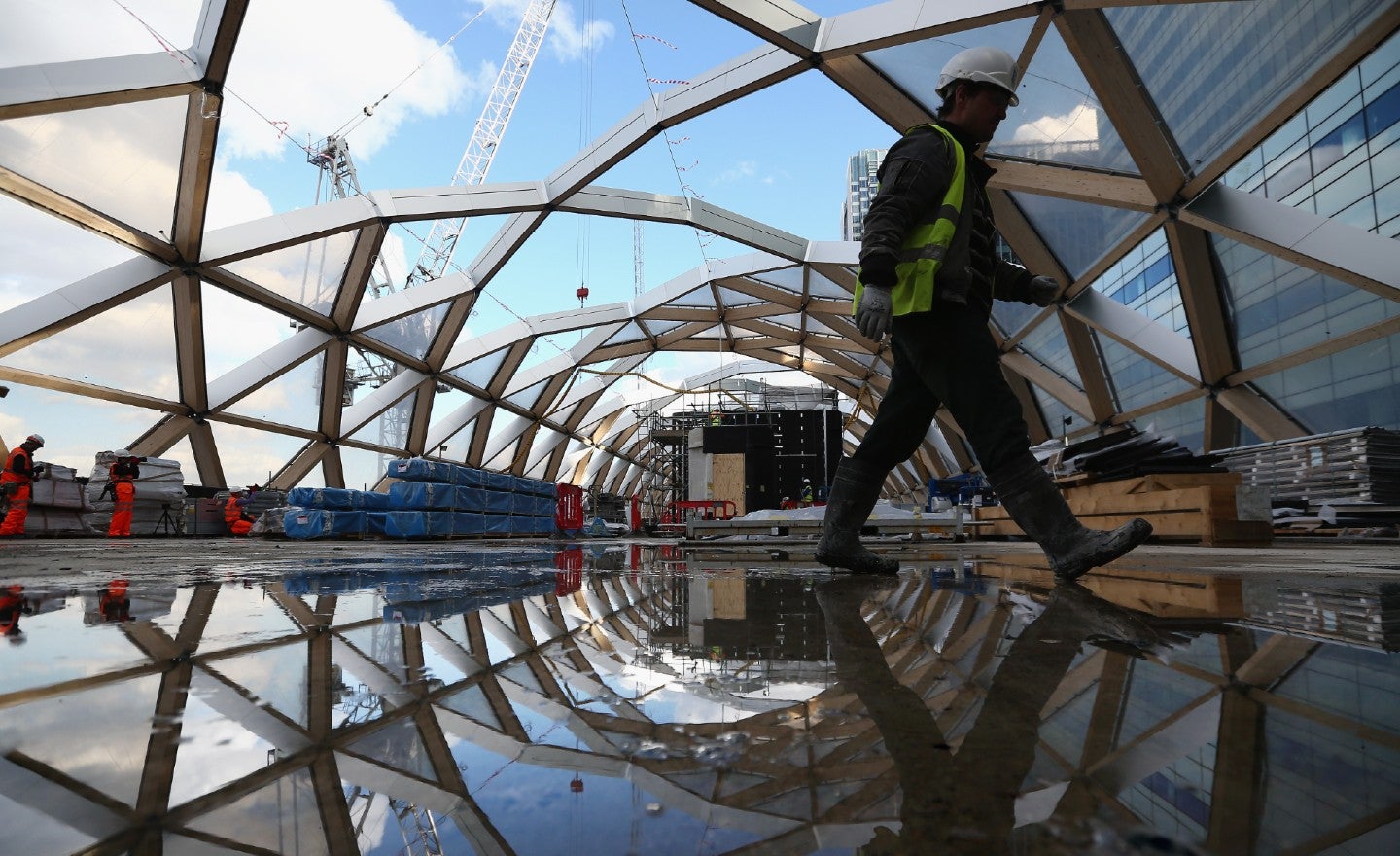
An 18-story apartment building in Brumunddal, Norway is not only the world’s tallest timber building, it’s also the world’s tallest carbon dioxide sink. The building’s timber structure, including elevator shafts, are made entirely from cross-laminated timber with columns made from glued-laminated timber. The same materials will be used for a massive 500,000 square-foot timber office complex on the waterfront of Newark, New Jersey. In Sweden, a new development in Stockholm will see 31 timber towers rise 25 to 35 stories from the waterfront to house 3,000 apartments and 30 shops and restaurants.

Wood, or more specifically cross-laminated timber (CLT), is the hot new building material due to its high strength to weight ratio, precise pre-fabrication in a factory, and ease and speed of assembly on building sites. Designers also say timber buildings can be a powerful tool in the struggle to reduce global carbon dioxide (CO2) emissions.

Double benefits for climate protection

Trees absorb CO2 from the atmosphere as they grow and will release it if the tree decays or is burned. However, if the wood is used in a building that CO2 could be locked away for many decades, or even hundreds of years, said Galina Churkina of the Yale School of Forestry and Environmental Studies. Such timber buildings are carbon sinks — a place that keeps CO2 from getting into the air. A second benefit from using wood as a building material is that it reduces the amount of cement and steel production, both of which are large CO2 emitters. 

This matters because an enormous number of new buildings will be built as there will be 2.3 billion more people living in urban areas by 2050, according to UN estimates. If these future buildings are made of concrete and steel they may use up 20 percent of our remaining carbon budget to keep global warming below 2 degrees C, according to a study by Churkina and colleagues published January 27 in the journal Nature.

However, if most of these new buildings are made from wood they could store close to 700 million tons of CO2 every year. In addition, this would reduce cumulative emissions from steel and cement manufacturing by half.

“We need to keep CO2 on the land and out of the air. Building timber cities can help,” Churkina said in an interview.

CLT is an engineered wood product that is sometimes called mass timber. It’s prefabricated using several layers of kiln-dried lumber, laid flat-wise, and glued together in alternating layers which makes it far stronger while being light. Not only is CLT a better insulator, it is more fire resistant — rather than burning, it chars.

Keeping climate change under 2 degrees C means there can be no CO2 emissions by 2050 without ways to remove it. “We can’t get rid of most of the CO2 from concrete and steel production,” she said. That makes reducing the need for such materials and finding ways to remove CO2 from the air extremely important.

A five-story residential building structured in laminated timber can store up to 180 kilograms of carbon per square meter, according to the study. That’s three times more than trees in a similar sized area of forest would naturally store. So that 500,000 square-foot timber office complex in Newark, New Jersey may end up being a permanent storage site for around 8.4 million kilograms (18.5 million pounds) of CO2.

Impressive as this might be, the world’s forests store thousands of times more CO2 than buildings are ever likely too. Existing forests must be protected to avoid dangerous climate change, a coalition of forest scientists warned in a statement. The world’s forests contain more carbon than exploitable oil, gas and coal deposits, they note. 

“Our planet’s future climate is inextricably tied to the future of its forests,” the scientists wrote.

How to prevent timber cities from increasing deforestation

“Protecting forests from unsustainable logging and a wide range of other threats is thus key if timber use was to be substantially increased,” agrees Churkina’s co-author, Christopher Reyer of Potsdam Institute for Climate Impact Research in Germany.

“Our vision for sustainable forest management and governance could indeed improve the situation for forests worldwide as they are valued more,” said Reyer in a statement.

The study used complex simulation modeling to determine that there is enough wood resources available with plantations and the cultivation of fast-growing bamboo by small-scale landowners to construct 90 percent of future buildings out of timber.

Deforestation is almost entirely driven by clearing land for agriculture and for fuel, said Mark Wishnie, global forestry and wood products director at the Nature Conservancy. Very little deforestation globally is for wood products like building material or furniture, according to data from Global Forest Watch, Wishnie said.

“Done right, building future cities out of timber has the potential to cut CO2 emissions and create more forests,” he said in an interview.

Doing it right means managing forests on a landscape scale to ensure they continue to provide habitat for a diversity of species and maintain and clean water flows, among other ecological functions. “To make a significant impact on the climate, timber construction will be needed to be done on a mass scale and there is the potential for large impacts on existing forests,” he said.

Research into the potential impacts of a shift to timber cities is ongoing so that safeguards and appropriate policies can be put in place to protect forests and encourage the use of timber. “These are beautiful buildings with wide open spaces that are wonderful to live or work in.”


Share198Tweet124
usiscc

usiscc

  • Trending
  • Comments
  • Latest
Escape From Tarkov – How to Rotate Items

Escape From Tarkov – How to Rotate Items

February 5, 2020
Supply chain examination: Planning for vulnerabilities you can’t control

Supply chain examination: Planning for vulnerabilities you can’t control

December 7, 2019
Procurement Project Manager job with Camden London Borough Council

Procurement Project Manager job with Camden London Borough Council

February 17, 2020
Art Battle Wichita Falls III at The Warehouse, 1401 Lamar.

Art Battle Wichita Falls III at The Warehouse, 1401 Lamar.

0
Global Industry Analysis, Size, Share, Growth, Trends, and Forecasts 2016–2024 – ZMR News Reports

Global Industry Analysis, Size, Share, Growth, Trends, and Forecasts 2016–2024 – ZMR News Reports

0
PHOTOS: Ottawa firefighters respond to warehouse fire

PHOTOS: Ottawa firefighters respond to warehouse fire

0
Last Mile Delivery Market Worth Observing Growth | UPS, FedEx, SF Express

Last Mile Delivery Market Worth Observing Growth | UPS, FedEx, SF Express

April 23, 2024
Top 5 Spend Analysis Software ranked in 2024

Top 5 Spend Analysis Software ranked in 2024

March 1, 2024
How Tesla And BMW Are Leading A Supply Chain Renaissance With Blockchain

How Tesla And BMW Are Leading A Supply Chain Renaissance With Blockchain

January 19, 2024
  • Privacy Policy
  • Terms of Use
  • Disclaimer
  • DMCA
  • Contact Us

Copyright © 2024 United States International Supply Chain Commission (usiscc.org)

This website uses cookies to improve your experience. We'll assume you're ok with this, but you can opt-out if you wish. Cookie settingsACCEPT
Privacy & Cookies Policy

Privacy Overview

This website uses cookies to improve your experience while you navigate through the website. Out of these cookies, the cookies that are categorized as necessary are stored on your browser as they are essential for the working of basic functionalities of the website. We also use third-party cookies that help us analyze and understand how you use this website. These cookies will be stored in your browser only with your consent. You also have the option to opt-out of these cookies. But opting out of some of these cookies may have an effect on your browsing experience.
Necessary
Always Enabled

Necessary cookies are absolutely essential for the website to function properly. This category only includes cookies that ensures basic functionalities and security features of the website. These cookies do not store any personal information.

Non-necessary

Any cookies that may not be particularly necessary for the website to function and is used specifically to collect user personal data via analytics, ads, other embedded contents are termed as non-necessary cookies. It is mandatory to procure user consent prior to running these cookies on your website.

SAVE & ACCEPT
No Result
View All Result
  • Supply Chain
  • Logistics
  • Warehousing
  • Procurement
  • Shipping
  • More
    • Strategic Sourcing
    • Spend Analysis
    • Inventory
    • Contact Us

Copyright © 2024 United States International Supply Chain Commission (usiscc.org)






