

• Latest
  • Trending
  • All
Recycling wrong: Kiwis dispose of 97 million plastic containers in rubbish bins each year

Recycling wrong: Kiwis dispose of 97 million plastic containers in rubbish bins each year

January 28, 2020
Last Mile Delivery Market Worth Observing Growth | UPS, FedEx, SF Express

Last Mile Delivery Market Worth Observing Growth | UPS, FedEx, SF Express

April 23, 2024
Top 5 Spend Analysis Software ranked in 2024

Top 5 Spend Analysis Software ranked in 2024

March 1, 2024
How Tesla And BMW Are Leading A Supply Chain Renaissance With Blockchain

How Tesla And BMW Are Leading A Supply Chain Renaissance With Blockchain

January 19, 2024
LATAM Cargo strengthens European cargo links

LATAM Cargo strengthens European cargo links

April 14, 2020
Ford making reusable hospital gowns from airbag materials as efforts against coronavirus expand

Ford making reusable hospital gowns from airbag materials as efforts against coronavirus expand

April 14, 2020
Don’t Sweat NBC’s Decision to Cut Back on Television Ad Inventory

Don’t Sweat NBC’s Decision to Cut Back on Television Ad Inventory

April 14, 2020
Software firms sharpen focus on AI, big data as IT spending drops

Software firms sharpen focus on AI, big data as IT spending drops

April 14, 2020
Navigating turbulent times in your supply chain (TL:DR version)

Navigating turbulent times in your supply chain (TL:DR version)

April 14, 2020
Last Mile Delivery by Drones Market is Booming Worldwide

Last Mile Delivery by Drones Market is Booming Worldwide

April 14, 2020
AIR CARGO MARKET SIZE, SHARE, DEMAND, TREND, LATEST INNOVATIONS & APPLICATION ANALYSIS AND INDUSTRY GROWTH FORECAST 2027 – Science In Me

AIR CARGO MARKET SIZE, SHARE, DEMAND, TREND, LATEST INNOVATIONS & APPLICATION ANALYSIS AND INDUSTRY GROWTH FORECAST 2027 – Science In Me

April 14, 2020
Wheat procurement in Patiala: 6,500 coupons issued to farmers – cities

Wheat procurement in Patiala: 6,500 coupons issued to farmers – cities

April 14, 2020
Pandemic, Plastics And The Continuing Quest For Sustainability

Pandemic, Plastics And The Continuing Quest For Sustainability

April 14, 2020
  • Supply Chain
  • Logistics
  • Warehousing
  • Procurement
  • Shipping
  • More
    • Strategic Sourcing
    • Spend Analysis
    • Inventory
    • Contact Us
No Result
View All Result
United States International Supply Chain Commission
Home Procurement

Recycling wrong: Kiwis dispose of 97 million plastic containers in rubbish bins each year

by usiscc
January 28, 2020
in Procurement
0
Recycling wrong: Kiwis dispose of 97 million plastic containers in rubbish bins each year
492
SHARES
1.4k
VIEWS
Share on FacebookShare on Twitter

Kiwi households are churning through nearly two billions plastic containers a year with over a third of it by weight ending up in landfill.

New Zealand’s unhealthy addiction to plastic has been laid bare in a report that found households also putting nearly 100 million plastic drink and milk bottles in their rubbish bins – instead of recycling them.

Waste Management Institute of New Zealand (WasteMINZ), behind the in-depth audit of our household rubbish and recycling, says poor labelling and confusing rules across regions are largely to blame.

Sorting through kerbside rubbish and recycling bins of 867 New Zealand households from eight areas the report estimated 1.76 billion plastic containers were being disposed of across the country each year – more than metal (767m) and glass (854m) combined.

Kiwi households use 188 plastic bottles a year, but 36 of them are ending up in landfill. Image / WasteMINZ

The report also found 39 per cent – by weight – of household plastic bottles and containers that could recycled were going to landfill, and 97 million plastic drink and milk bottles went directly into rubbish instead of recycling bins.

READ MORE:
• Polystyrene food containers next targets in the war on plastic
• Countdown goes plastic-free in trial in Auckland supermarkets
• Could ‘plastic shaming’ help NZ’s waste woes?
• Expert: How to keep leached plastic out of your body

WasteMINZ TAO Forum chairs Parul Sood said the findings highlighted issues with household sorting, collecting, and design of packaging.

An estimated 181 million containers showed no plastic identification code or recycling information.

Almost 26m plastic containers were likely not recycled by the processor due to a container’s plastic shrink sleeve.

Triggers and pumps – such as those on spray bottles – could also often not be recycled.

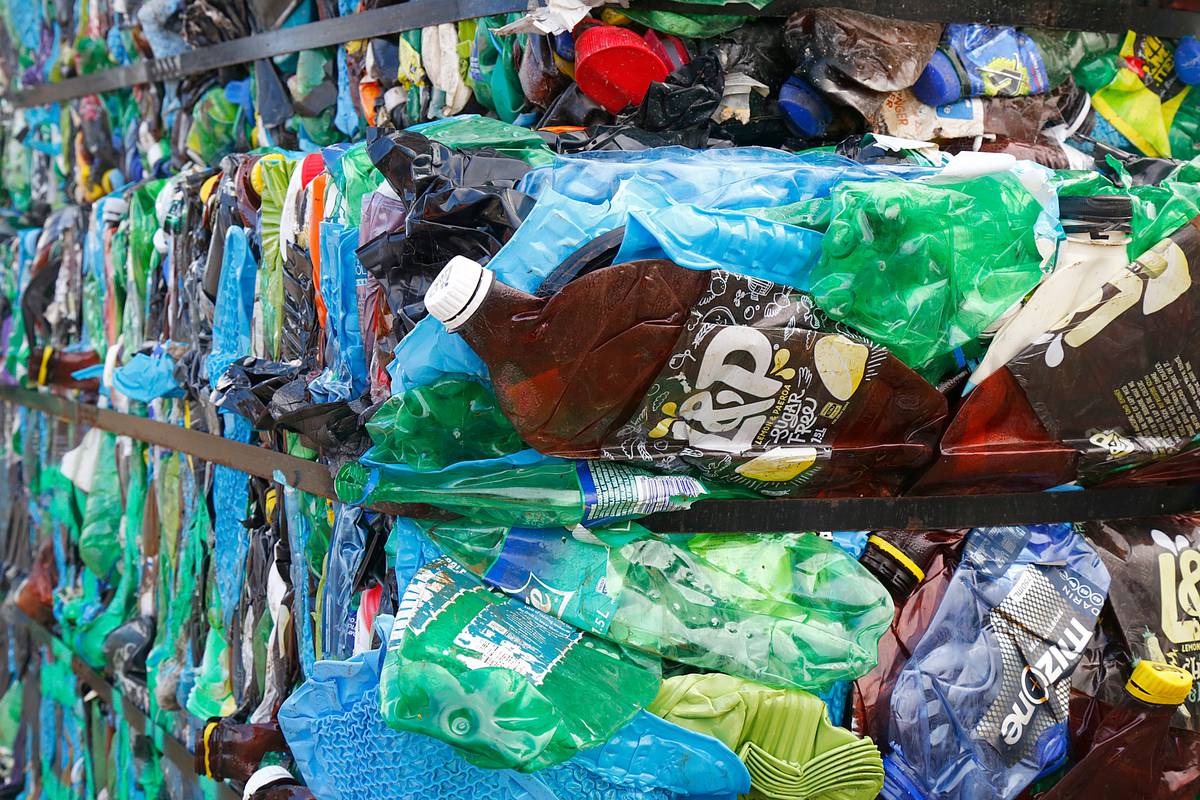
Coloured plastic and bottles with plastic sleaves are creating issues for recyclers. Image / WasteMINZ

Researchers also found confusion around the different types of plastic that could be recycled, with just 2600 tonnes of household grocery packaging made from plastics 3, 4, 6, and 7 disposed of via kerbside collections, compared with the estimated 41,300 tonnes of packaging made from plastics 1, 2 and 5.

“Improved labelling, the choice of plastic used when designing packaging, and standardising nationally the plastic packaging accepted for kerbside recycling to make it easier for Kiwis to know what can and can’t be recycled – all of these actions can improve our recycling rates,” Sood said.

Associate Minister for the Environment Eugenie Sage said the report was a “wake-up call”.

“It highlights the value of much better product design so products and their materials can be easily re-used or recycled, and the need to reduce what we use, reuse what we can, and recycle properly.

“It’s a timely wake-up call for designers, manufacturers, retailers and marketers to shift towards more recyclable and re-useable packaging. There is a strong public demand for this.”

Associate Minister for the Environment Eugenie Sage said the report was a
Associate Minister for the Environment Eugenie Sage said the report was a “wake-up call”. Photo / File

Industry group Plastics New Zealand’s CEO Rachel Barker the report showed current recycling rates were not high enough, with just 65 per cent of plastics 1, 2 and 5 recycled.

“Many councils don’t collect polypropylene (5) even though there is a strong end market for this material. Increasing the rate of collection would hugely improve the recycling statistics and this valuable material could be reprocessed right here in New Zealand.”

There needed to be better education around proper recycling etiquette, with 8m soft drink bottles with liquid in them, and 1.8m “stinky” milk bottles ending up in landfill, Barker said.

Plastics NZ also proposed improved labelling, allowing only natural or light plastic colours, and improved collection and sorting infrastructure.

The audit and report, supported by a $425,000 grant from the Ministry for the Environment over three years, was carried out late last year in partnership with councils in several cities and regional towns across New Zealand.

Sage said combined with the Chief Science Advisor (CSA) Juliet Gerrard’s recent report Rethinking Plastics in Aotearoa New Zealand. solid information to help inform our government’s work programme to reduce waste

Confusion around recyling codes is also found to be an issue. Image / WasteMINZ

Following Gerrard’s report the Government announced a ban on more single-use plastic items, including meat trays, cups and takeaway food containers – six months after the official plastic bag-ban came into force.

The overall plan also includes:

• A container return scheme for drink bottles and cans.

• Regulated product stewardship schemes for tough waste issues such as e-waste, tyres and batteries.

• A National Resource Recovery work programme in response to China and other countries’ bans on importing waste and recyclables.

• Improving waste data.

• Expanding and improving the landfill levy to help fund more ways to recover, re-use and reprocess materials and minimise waste.

• A $40 million Provincial Growth Fund investment to turn plastic waste into useful material for businesses and consumers.


Share197Tweet123
usiscc

usiscc

  • Trending
  • Comments
  • Latest
Escape From Tarkov – How to Rotate Items

Escape From Tarkov – How to Rotate Items

February 5, 2020
Supply chain examination: Planning for vulnerabilities you can’t control

Supply chain examination: Planning for vulnerabilities you can’t control

December 7, 2019
Procurement Project Manager job with Camden London Borough Council

Procurement Project Manager job with Camden London Borough Council

February 17, 2020
Art Battle Wichita Falls III at The Warehouse, 1401 Lamar.

Art Battle Wichita Falls III at The Warehouse, 1401 Lamar.

0
Global Industry Analysis, Size, Share, Growth, Trends, and Forecasts 2016–2024 – ZMR News Reports

Global Industry Analysis, Size, Share, Growth, Trends, and Forecasts 2016–2024 – ZMR News Reports

0
PHOTOS: Ottawa firefighters respond to warehouse fire

PHOTOS: Ottawa firefighters respond to warehouse fire

0
Last Mile Delivery Market Worth Observing Growth | UPS, FedEx, SF Express

Last Mile Delivery Market Worth Observing Growth | UPS, FedEx, SF Express

April 23, 2024
Top 5 Spend Analysis Software ranked in 2024

Top 5 Spend Analysis Software ranked in 2024

March 1, 2024
How Tesla And BMW Are Leading A Supply Chain Renaissance With Blockchain

How Tesla And BMW Are Leading A Supply Chain Renaissance With Blockchain

January 19, 2024
  • Privacy Policy
  • Terms of Use
  • Disclaimer
  • DMCA
  • Contact Us

Copyright © 2024 United States International Supply Chain Commission (usiscc.org)

This website uses cookies to improve your experience. We'll assume you're ok with this, but you can opt-out if you wish. Cookie settingsACCEPT
Privacy & Cookies Policy

Privacy Overview

This website uses cookies to improve your experience while you navigate through the website. Out of these cookies, the cookies that are categorized as necessary are stored on your browser as they are essential for the working of basic functionalities of the website. We also use third-party cookies that help us analyze and understand how you use this website. These cookies will be stored in your browser only with your consent. You also have the option to opt-out of these cookies. But opting out of some of these cookies may have an effect on your browsing experience.
Necessary
Always Enabled

Necessary cookies are absolutely essential for the website to function properly. This category only includes cookies that ensures basic functionalities and security features of the website. These cookies do not store any personal information.

Non-necessary

Any cookies that may not be particularly necessary for the website to function and is used specifically to collect user personal data via analytics, ads, other embedded contents are termed as non-necessary cookies. It is mandatory to procure user consent prior to running these cookies on your website.

SAVE & ACCEPT
No Result
View All Result
  • Supply Chain
  • Logistics
  • Warehousing
  • Procurement
  • Shipping
  • More
    • Strategic Sourcing
    • Spend Analysis
    • Inventory
    • Contact Us

Copyright © 2024 United States International Supply Chain Commission (usiscc.org)






