






Passenger airlines are extending flight blackouts to China as the death toll and confirmed infections from the flu-like coronavirus continue to rise. The reduction in passenger flights means there is less capacity for cargo, but how, and when, that might translate into more business for pure freighter operators remains unclear.
Airlines have been slashing flights amid a steep drop in demand for travel to and from China, as corporations prohibit employees from traveling to the area. Millions of Chinese in Wuhan and other cities are effectively under regional quarantine.
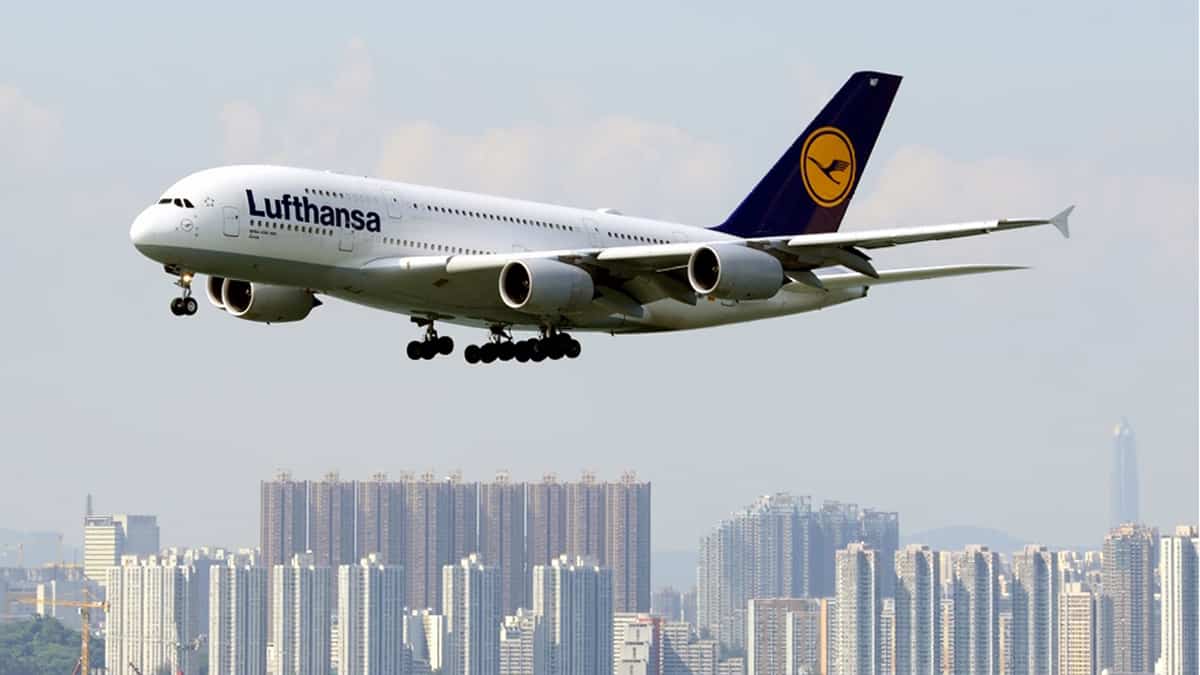
On Tuesday, Lufthansa Group suspended Lufthansa, SWISS and Austrian Airlines flights to Beijing and Shanghai until Feb. 28 after initially cutting flights through Feb. 9. The cities of Nanjing, Shenyang and Qingdao will not be served by passenger aircraft until March 28, while flight operations through Hong Kong will continue as planned, it said.
Lufthansa Cargo is operating one-third of its normal winter flight schedule for all-cargo aircraft, with Shanghai served three times per week and Beijing and Chengdu once a week from Frankfurt, Germany, with Boeing 777s. Freighter flights to Hong Kong will continue to operate according to schedule.
“Lufthansa Cargo plans to maintain connections to and from mainland China with cargo aircraft as long as possible,” the company said in a notice to customers.
One of the wild cards for continued operation of all-cargo aircraft is whether pilots and crews will be willing to fly into the epicenter of the global health emergency. Lufthansa Cargo acknowledged that is a concern and that future flights are also subject to government restrictions.
“The safety of our crews is of utmost priority for us. In order to be able to serve the Chinese market, Lufthansa Cargo has therefore taken extensive precautionary measures. Crew deployment on routes to China is voluntary. In addition, changes in entry regulations, for example, could restrict the feasibility of this at short notice. For this reason, publication of flights to mainland China must always be subject to reservations,” it said.
Lufthansa’s cargo unit said it is not accepting live animals or bookings for its express solution BXO on routes to and from the Chinese mainland until further notice.
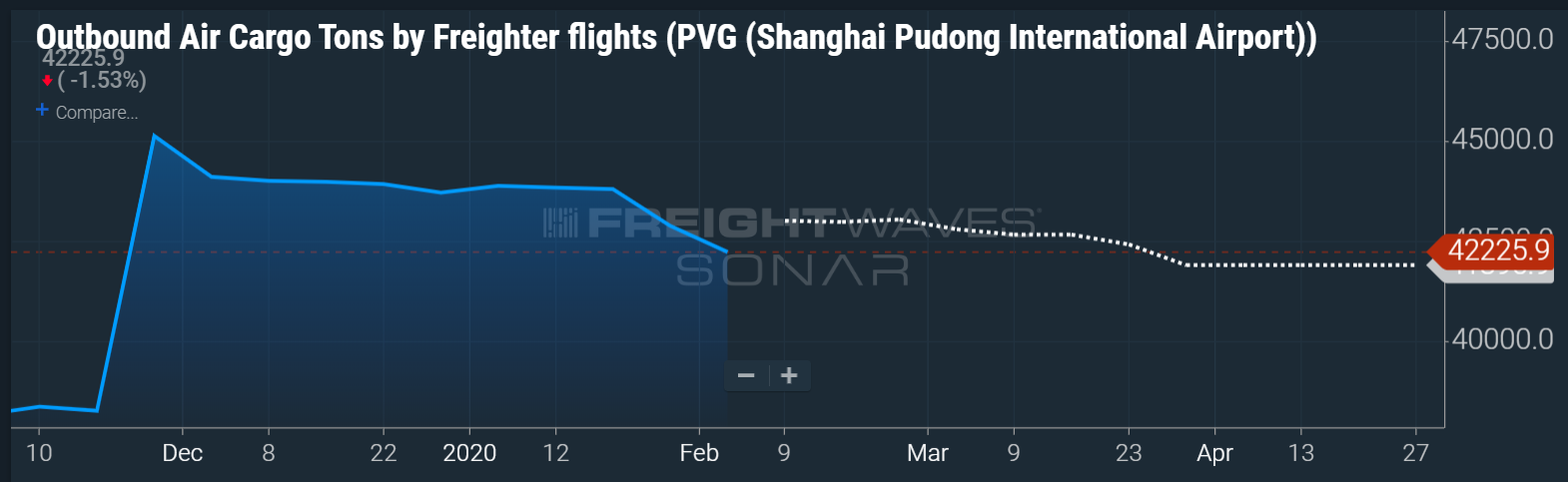
The shrinking of passenger belly-hold capacity, in theory, creates more opportunity for all-cargo airlines, but that assumes a steady state of demand from shippers. Shipping volumes were low already because Chinese factories were closed for more than a week as the nation celebrated the Lunar New Year. The national holiday normally would have ended last Sunday, but authorities have extended the holiday period through Feb. 9 in key manufacturing provinces in an effort to control the outbreak.
How much freight there is for export will depend on the extent to which factories are open and whether people can get to work if public transportation is shut down. Outbound and inbound freight will also be impacted by the availability of logistics workers and truckers to process shipments and deliver them to and from aircraft, as previously reported.
Freight aircraft carry about 70% of North American air imports from China. The reduction in passenger capacity would normally impact shipping rates, but that is less likely now, given the low level of demand, industry experts say.
Cargo airlines, such as Atlas Air (NASDAQ: AAWW) and integrators UPS (NYSE: UPS), FedEx (NYSE: FDX) and DHL (EPR: DPSGY), could benefit from a spike in demand once the coronavirus is contained and economic activity in China returns to normal as shippers look to quickly move backlogged inventory.
Cargo operators are also being used to ferry medical supplies to China to help combat the outbreak, and some are being chartered for emergency passenger evacuations. The U.S. government, for example, has arranged flights with Kalitta Air to evacuate diplomats and U.S. citizens from Wuhan on a Boeing 747 freighter outfitted with skids of passenger seats inserted on the main deck.
“As workers return to work over the next two weeks, and manufacturers start to catch up, we anticipate they will need to use the integrated carriers to get stuff to market, especially if product shortages develop between now and when manufacturing starts up again,” Helane Becker, airline analyst at brokerage Cowan, said in a research note. “This affects high value goods more than low value apparel.”
Cowan forecasts there won’t be an increase in travel to the region until at least April, or when the number of cases starts decreasing.
The virus has not had a material impact on UPS’s business so far, Jim Mayer, a spokesman for UPS Airlines, said in an email. “We are closely monitoring the situation and, should the need arise, our contingency plans can be put in place to minimize disruption to our network and ensure shipments arrive at their final destinations as soon as conditions permit.
UPS crews are being provided particulate-filtering respirator masks and hand-sanitizing gel, as well as advice on how to help prevent contracting infectious diseases and what to do should they exhibit any symptoms, he said.
The European Union Aviation Safety Agency is urging carriers to make sure they have sufficient potable water in water tanks prior to departure, a sufficient number of gloves available onboard and disinfectant gel available for the crew, and that when on the ground with passengers aboard, the maximum time without air conditioning/ventilation is less than 30 minutes.
Airline responses
United Airlines (NASDAQ: UAL) moved up by a day, to Feb. 4, it’s last U.S.-bound flight from China until March 28, spokesman Frank Benenati confirmed.
In recent days, Delta Air Lines and American Airlines froze flights to China through late March and late April, respectively. Finnair also canceled flights to and from Beijing and Shanghai between Feb. 6 and Feb. 29, and on its Beijing Daxing, Nanjing and Guangzhou routes until March 29. Major European, Middle Eastern and Asian carriers have also suspended flights.
Delta (NYSE: DAL) and American (NASDAQ: AAL) only have 2-3% revenue exposure to China and a bit more for Asia overall. United Airlines gets 4% of its total revenue from China and 10% from the region, while Air Canada’s exposure is 6% for China and 13% regionwide, according to Cowan.
Air Canada has suspended all direct flights to China until Feb. 29.
Following the SARS epidemic in 2002-03, Asia-Pacific airlines experienced a 36% decline in revenue passenger kilometers and RPK’s fell 12% for North American carriers. Asia-Pacific and North American carriers experienced revenue declines of $6 billion and $1 billion, respectively, according to the International Air Transport Association.
“A similar drop could be possible given the coronavirus has affected more people than SARS did in 2002. However, it should be noted that with the increased transparency of information, consumers may feel more comfortable traveling to destinations where the virus is less active rather than not traveling altogether out of fear as was the case in 2002,” the Kroll Bond Rating Agency said.
Meanwhile, the U.S. government is now funneling all passenger flights carrying individuals who have traveled to China within 14 days of arrival to one of 11 designated airports where resources are available for enhanced screening procedures to identify potential sick travelers. The airports include:
- John F. Kennedy International Airport (JFK), New York;
- Chicago O’Hare International Airport (ORD);
- San Francisco International Airport (SFO);
- Seattle-Tacoma International Airport (SEA);
- Daniel K. Inouye International Airport (HNL), Hawaii;
- Los Angeles International Airport (LAX);
- Hartsfield-Jackson Atlanta International Airport (ATL);
- Dallas-Fort Worth International Airport (DFW);
- Detroit International Airport (DTW);
- Newark International Airport (EWR), New Jersey; and
- Washington Dulles International Airport (IAD), Virginia
Freight forwarders likely will have to use trucks or find a connecting flight to recover shipments that went to one of these airports instead of their original destination.