

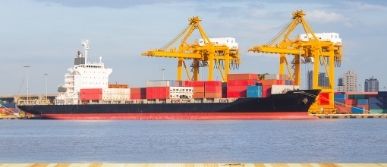




As more serious events — including the effects of climate change–occur more frequently all over the nation and the world, we must keep in mind the supply of our goods and services as they make their way to and from our region.
In our previous articles we offered reasons for choosing synergy–a whole that is greater than the sum of its parts–over zero sum thinking–a belief that whatever is gained by one side is lost to the other. If Buffalo and WNY applies synergy to its planning and prepares for the effects of climate change it can develop a high degree of resiliency—the ability to recover from adversity—in our supply chain. This requires admitting there are effects, which much of the country and the local community has been reluctant to do.
In the evolution of responses to global warming, scientists, activists and concerned citizens have been committing their time and resources attempting to change the minds of those in denial of it and its significant causes. But, while devoting decades to challenging the denial of climate change, we have been in denial of the need to prepare for its effects. That has been true across the globe.
While devoting decades to challenging the denial of climate change, we have been in denial of the need to prepare for its effects.
Locally the “climate action” events, symposiums, conferences and marches not only did not have preparing for the effects of climate change on the program, individuals and organizations who wanted to include the issue were specifically told it would not be allowed. In 2009, Designing to Live Sustainably (d2ls) came together to bring preparing for the effects of climate change into the narrative, and featured it in its mission statement. Buffalo and WNY only began to pay attention with the publication of Tracking change in the five climate zones of Western New York (T.J Pignataro, October 24, 2017) in the Buffalo News (BN).
That article – and those that followed in the Guardian, another by TJ in the BN, the Medium, The New York Times, PRI’s Environmental News Magazine, and most recently, Will Buffalo Become a Climate Change Haven? in CITYLAB, and Move to Buffalo? With Earth Warming, northern cities could become oases in NBC News – seem to at least have a few people and organizations now acknowledging that maybe we’d better get past that denial and get to preparing for the effects. Part III here outlined what Designing to Live Sustainably and Weathering Change in WNY will contribute to preparing for the effects of climate change.
The National Climate Assessment (NCA) published in 2018 by the U.S. Global Change Research Program promptly states in the title “Impacts, Risks and Adaptation,” indicating the certain importance of adaptation for success in climate change resilience. In its initial Overview it further points out that the anticipated effects and emergent effects need to be the focus of action, even if it means large upfront costs and immense stakeholder inclusion. They openly identify Localized Information as a Key Strategic Advance for adaptation planning. Anticipation and planning accordingly is key, especially on a local scale, and we are proposing to really delve into this for the benefit of WNY.
d2ls mission statement – to collectively embrace our responsibility to future generations by doing more than merely coping with the effects of climate change.
The d2ls mission statement, to collectively embrace our responsibility to future generations by doing more than merely coping with the effects of climate change, is a commitment to doing better than merely surviving, that we can adapt and thrive. There is some objection in the community to the suggestion that by preparing for the effects we could both adapt and thrive. But, by doing better than merely coping and surviving, by building and adapting our environment and a culture that is thriving, we will not only be able to improve the lives of those already living here — including those suffering the inequality that is too prevalent in Buffalo — but the lives of those moving here. We appreciate what the authors of Cradle to Cradle said about their book The Upcycle, Beyond Sustainability—Designing for Abundance.
One of the ways of doing that is to acknowledge that our opportunities lay not only in the synergy of our organizations and governmental agencies in Buffalo, but in the synergy that can be achieved by including all of the cities, towns, villages, businesses, residents, and resources in the region. Jane Jacobs, in The Death and Life of Great American Cities remarked, “Cities have the capability of providing something for everybody, only because, and only when, they are created by everybody.” That is a wonderful reminder of the necessity of inclusion. However, there are many goods and services cities cannot provide without finding ways to provide them from either their proximate surroundings, minimally further afield, or importing them from farther and farther away.
Buffalo and WNY can develop a high degree of supply chain resiliency.
Buffalo and WNY can develop a high degree of supply chain resiliency. A supply chain is the flow in which our goods and services get from their origin to our home. A supply chain risk analysis could identify which goods and services are provided from outside of the region, and which are most vulnerable to interruption or not being available at all. This would facilitate identifying the quantities and costs of those good and services to determine if there is an opportunity to provide them from within the region, or from more proximate and secure neighbors given the effects of climate change on their production and transport. The d2ls and BSC Weathering Change in WNY downscaled high resolution modeling and GIS mapping will make a significant contribution to supply chain risk/opportunity analysis.
Food security is significantly threatened by interruptions in its supply chain, and therefore a significant focus of the Weathering Change in WNY Initiative is the importance of realizing the value in local agriculture again and seizing the opportunity to grow new things and adapt as our climate shifts.
Studies show the country lost 31M acres of farmland, just between 1992-2012.
This region can not only provide significant food security, it can produce food for export to those regions no longer able to grow and deliver what they had been before their industrial agriculture ways caught-up with them and climate change exacerbated their demise. A recent article in the MEDIUM, with a less than inspiring title, is excellent in its content, outlining how small farmers can become substantially more viable by working together in collaborative and cooperative approaches. WNY needs to adopt this synergistic approach in order to thrive. WNY needs to adopt this synergistic approach in order to thrive.
While there is devastatingly serious loss of farmland to environmental factors and sprawl, what remains of industrial sized farmland is being purchased while we act as though it doesn’t matter to us.
We shop at the grocery store with no thought of the immense process of growing that food in areas that are running out of water and soil with adequate nutrients, their gross addition of greenhouse gases to the atmosphere and chemicals into ecosystems, followed by getting that product onto the shelf and into your hands. As food production around the world, including our Mid-West, becomes less-and-less reliable we need to reevaluate the advantage of local agriculture potential and the ability to shorten supply chain, protecting ourselves from the impacts of climate change elsewhere.
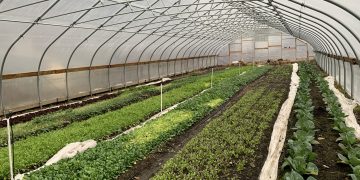
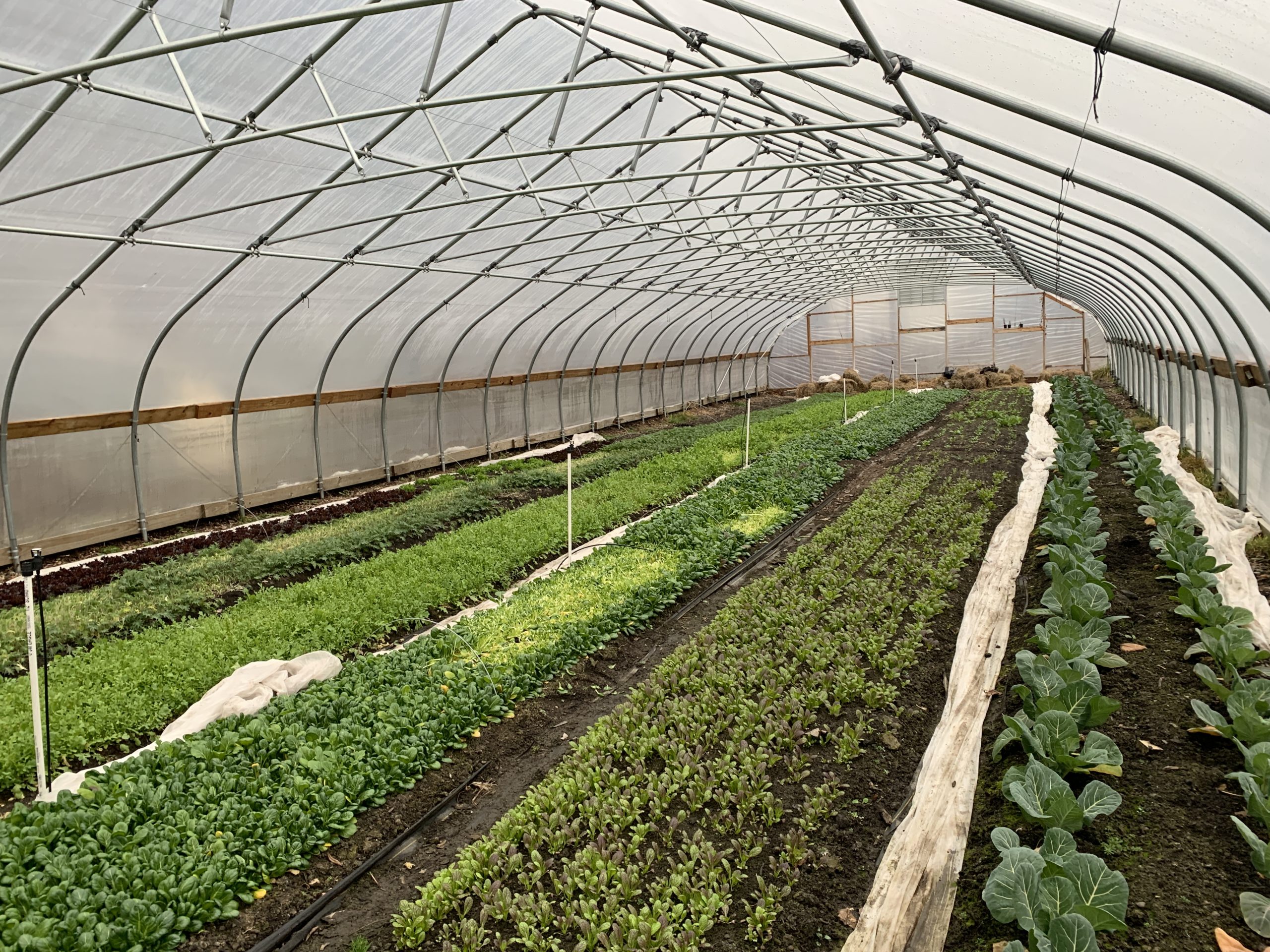
Community Supported Agriculture (CSAs), urban agriculture (lead image), cooperative gardens, home gardens, backyard orchards, food forests and adaptive permaculture will be important. All of these alternatives to large scale industrial agriculture are less vulnerable to severe weather, erosion, disease, more likely to produce healthful food not impacted by pesticides and herbicides, be more efficient with water usage, and not contribute to the greenhouse gases that industrial agriculture does via its massive machinery and tilling. Per the NSA call for “immense stakeholder inclusion”, we need to increase the inclusion of rural residents, as well as everyone in the WNY food producing chain, in decision making.
We propose taking WNY’s opportunity to adapt and thrive to a high manifestation of its potential, not just thinking outside of the box, but thinking outside of the box the first box came in. WNY can develop its capacity to depend less-and-less on supply chains that are more-and-more vulnerable to severe weather events elsewhere– the droughts, floods, fires, hurricanes, and rising sea levels—along with the depletion of arable soils and the aquifers–that affect both production and delivery. It is predicted that by 2050 there will be 5 billion people suffering from lack of water, with its associated food issues, and 1 billion climate refugees. That 1 billion does not include those who will chose to re-locate as un-forced climate migrants. The Pentagon names climate change as the #1 national security threat. We are already seeing climate refugees moving to Buffalo after Hurricane Maria, migrants coming because they decided they’ve had enough of CA wildfires, agricultural businesses buying farm land that is necessary as the climate where they are now no longer suffices, and property syndicates taking advantage of very underpriced lots in the East Side.
We often see reference to how well-situated WNY is regarding water, with 20% of the world’s fresh water flowing past us 100% of the time. The national and international articles pointing to Buffalo as one the best places to live in our climatically stressed future always mention this comparative advantage. So do some local articles. But, none of them mention the rest of our resources, never the importance of our farmland and other significant advantages. While some of our challenges with water are persuading the Federal Government to do better upstream of us, saving what farmland can still be saved rests with local governments, and due to NYS being a home-rule state, persuading those local governments to save farmland and work towards water quality improvement is essential to our adapting and thriving. For this reason, we also need to keep working at capturing and retaining the precipitation we receive, and paying attention to the water we get from Lake Erie, how it is treated and distributed via aging infrastructure.
We also have opportunities to become more energy secure. The more we develop a secure supply of local sustainable energy, the less vulnerable we will be to its interruption due to severe weather events, hacking, and the supply of fossil fuel. National Grid has long advocated for micro-grids as preferable to the large-scale macro-grids for these reasons. By developing more local sources of goods and services, we can reduce the demand for the energy needed to transport them. This is a both/and best practice, helping to prevent production of additional greenhouse gases that further global warming, and prepare for its effects. Cooperative micro-grids, like cooperative farms, are a win-win scenario. In California, PG&E isn’t able to sufficiently manage its macro-grids as the effects of climate change impact it. They are implementing roving, controlled outages. These are expected to last for at least the next ten years.
“crisis” (危機) = “danger” (危) + “opportunity” (機)
There is an ancient Chinese pictogram for “Crisis” that brings together the symbols for danger + opportunity. The effects of climate change on WNY present both a danger and an opportunity. If we continue along the path of zero sum dynamics, we won’t take advantage of our natural resources and comparative advantages, hardly be any better than so many places that will be merely surviving because they don’t have our climatic and resource advantages. If WNY can switch gears and become more synergistic, we have an Opportunity, not just a Danger.
Buffalo could do nothing to prepare for the effects of climate change and the refugees, migrants and investment that will move here because of it, and be “OK”. But, like the AT&T commercial, “Just OK is not good enough”. Let’s adapt and thrive.
Lead image: Groundwork Market Garden