


• Latest
  • Trending
  • All
The role of cleaning and disinfection in microbiological control

The role of cleaning and disinfection in microbiological control

February 9, 2020
Last Mile Delivery Market Worth Observing Growth | UPS, FedEx, SF Express

Last Mile Delivery Market Worth Observing Growth | UPS, FedEx, SF Express

April 23, 2024
Top 5 Spend Analysis Software ranked in 2024

Top 5 Spend Analysis Software ranked in 2024

March 1, 2024
How Tesla And BMW Are Leading A Supply Chain Renaissance With Blockchain

How Tesla And BMW Are Leading A Supply Chain Renaissance With Blockchain

January 19, 2024
LATAM Cargo strengthens European cargo links

LATAM Cargo strengthens European cargo links

April 14, 2020
Ford making reusable hospital gowns from airbag materials as efforts against coronavirus expand

Ford making reusable hospital gowns from airbag materials as efforts against coronavirus expand

April 14, 2020
Don’t Sweat NBC’s Decision to Cut Back on Television Ad Inventory

Don’t Sweat NBC’s Decision to Cut Back on Television Ad Inventory

April 14, 2020
Software firms sharpen focus on AI, big data as IT spending drops

Software firms sharpen focus on AI, big data as IT spending drops

April 14, 2020
Navigating turbulent times in your supply chain (TL:DR version)

Navigating turbulent times in your supply chain (TL:DR version)

April 14, 2020
Last Mile Delivery by Drones Market is Booming Worldwide

Last Mile Delivery by Drones Market is Booming Worldwide

April 14, 2020
AIR CARGO MARKET SIZE, SHARE, DEMAND, TREND, LATEST INNOVATIONS & APPLICATION ANALYSIS AND INDUSTRY GROWTH FORECAST 2027 – Science In Me

AIR CARGO MARKET SIZE, SHARE, DEMAND, TREND, LATEST INNOVATIONS & APPLICATION ANALYSIS AND INDUSTRY GROWTH FORECAST 2027 – Science In Me

April 14, 2020
Wheat procurement in Patiala: 6,500 coupons issued to farmers – cities

Wheat procurement in Patiala: 6,500 coupons issued to farmers – cities

April 14, 2020
Pandemic, Plastics And The Continuing Quest For Sustainability

Pandemic, Plastics And The Continuing Quest For Sustainability

April 14, 2020
  • Supply Chain
  • Logistics
  • Warehousing
  • Procurement
  • Shipping
  • More
    • Strategic Sourcing
    • Spend Analysis
    • Inventory
    • Contact Us
No Result
View All Result
United States International Supply Chain Commission
Home Procurement

The role of cleaning and disinfection in microbiological control

by usiscc
February 9, 2020
in Procurement
0
The role of cleaning and disinfection in microbiological control
494
SHARES
1.4k
VIEWS
Share on FacebookShare on Twitter

In any form of food, dairy or beverage operations, one of the key microbiological controls is the correct and thorough application of cleaning and disinfection regimes, states Peter Littleton, Vice-Chair and Training Services Director of the Society of Food Hygiene and Technology (SOFHT).
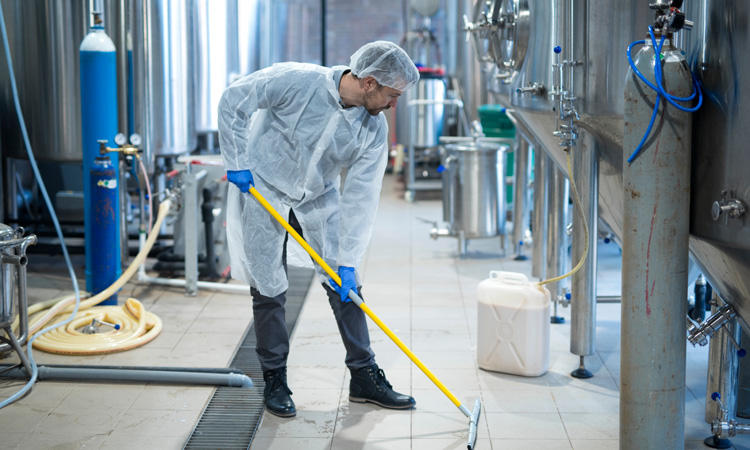
The role of cleaning and disinfection in microbiological control

In my day job, we routinely are called upon to assist with the design, implementation and evaluation of successful cleaning and disinfection interventions to ensure that both pathogenic and spoilage organisms are managed, and the risk of food contamination is reduced or eliminated.

Many people look for complex or highly technical solutions to achieve microbiological controls, however it is often the basics that will bring the greatest contribution to the management of contamination and ensure the safe production or handling of food. This is true from an SME through to a multinational supplying the UK’s food retailers, and the fundamentals of control are common across all businesses. 

Effective resourcing, both in terms of equipment and personnel, are essential as well as planning of cleaning activities to ensure that reservoirs or sources of bacterial contamination are accessed and removed along with the sources of nutrients they will need to survive and proliferate. This removal of debris will then enable an effective application of disinfectant which will have a chance to reach any remaining populations. A common error is for debris to remain on surfaces which can act as a protective barrier shielding bacterial populations and preventing access by the biocidal products resulting in survival, proliferation and, in some cases, the formation of a biofilm which can be difficult to successfully remove without the use of additional detergent products and protracted cleaning times.

The establishment of bacterial populations, in and of itself, is rarely a problem unless this has been allowed to occur on food contact surfaces or in a zone where direct contamination is likely and possible.  Methods of translocation of bacterial populations from the reservoir point to contact surfaces must be identified and managed. 

Effective resourcing, both in terms of equipment and personnel, are essential as well as planning of cleaning activities to ensure that reservoirs or sources of bacterial contamination are accessed and removed

For example, the primary vehicles of hands and personnel should be encouraged as part of the food safety culture training to adopt excellent standards of hygiene and to actively short-circuit the cycle of transfer that can occur from source to surface. Whilst secondary vehicles such as control panels or cleaning utensils must be assessed and subjected to as rigorous a regime of cleaning and disinfection as the food contact surfaces themselves to avoid them becoming an issue.  Once again, the emphasis is on management, awareness and planning to reduce the populations that can build-up on these secondary vehicles through effective cleaning and disinfection.

In too many case studies, across all sectors of our industry, a failure of the cleaning and disinfection regime has been implicated or confirmed as the root cause of a microbiological contamination incident

Verification and monitoring of hygiene regimes are as crucial as the correct choice of both detergents and disinfectants with all involved being fully aware of exactly what the results of any test technologies are telling them and the implications to food safety. Whether a simple colour change spray which reveals contamination, or an instrument based system, such as bioluminescence, is used to quantify the amount of ATP present and therefore a non-specific reading of the organic material present after cleaning is employed, the verification of hygiene is part of ensuring that the food safety KPI’s are met. 

Organisations such as The Society of Food Hygiene and Technology (SOFHT) and Campden BRI can help to raise awareness and provide valuable, independent advice through their training courses, guidelines and projects. In particular, a revised edition of Guideline 55 on Cleaning & Disinfection from Campden BRI is about to be published which has been developed by an industry group, including SOFHT, to provide practical advice on all aspects of this vital food safety maintenance operation from choosing the right detergent, through planning the cleaning to ensuing that the tools and equipment used do not themselves cause an issue.

In too many case studies, across all sectors of our industry, a failure of the cleaning and disinfection regime has been implicated or confirmed as the root cause of a microbiological contamination incident often with tragic consequences. Hygiene has, in the past, been regarded as something we have to do – I would argue that cleaning and disinfection is a vital link in the food safety chain and should be viewed as such.

About the author

Peter Littleton is Vice-Chair and Training Services Director for the Society Of Food Hygiene and Technology (a voluntary role in addition to his day job). In this position, Peter’s enthusiasm and commitment has led to an engagement with industry, enforcement and special interest groups to address the issue of consumer safety with regard to the management of food safety and hygiene within food, beverage and dairy manufacturing / processing operations.

During his 30 year career involved with the food industry, Peter has worked in the canning, poultry and ready to eat salad sectors in a variety of technical, hygiene and production based roles as well as serving as Senior Food Safety Officer for an environmental health food safety department where he was involved in drafting some of the food legislation in force today. 

Share198Tweet124
usiscc

usiscc

  • Trending
  • Comments
  • Latest
Escape From Tarkov – How to Rotate Items

Escape From Tarkov – How to Rotate Items

February 5, 2020
Supply chain examination: Planning for vulnerabilities you can’t control

Supply chain examination: Planning for vulnerabilities you can’t control

December 7, 2019
Procurement Project Manager job with Camden London Borough Council

Procurement Project Manager job with Camden London Borough Council

February 17, 2020
Art Battle Wichita Falls III at The Warehouse, 1401 Lamar.

Art Battle Wichita Falls III at The Warehouse, 1401 Lamar.

0
Global Industry Analysis, Size, Share, Growth, Trends, and Forecasts 2016–2024 – ZMR News Reports

Global Industry Analysis, Size, Share, Growth, Trends, and Forecasts 2016–2024 – ZMR News Reports

0
PHOTOS: Ottawa firefighters respond to warehouse fire

PHOTOS: Ottawa firefighters respond to warehouse fire

0
Last Mile Delivery Market Worth Observing Growth | UPS, FedEx, SF Express

Last Mile Delivery Market Worth Observing Growth | UPS, FedEx, SF Express

April 23, 2024
Top 5 Spend Analysis Software ranked in 2024

Top 5 Spend Analysis Software ranked in 2024

March 1, 2024
How Tesla And BMW Are Leading A Supply Chain Renaissance With Blockchain

How Tesla And BMW Are Leading A Supply Chain Renaissance With Blockchain

January 19, 2024
  • Privacy Policy
  • Terms of Use
  • Disclaimer
  • DMCA
  • Contact Us

Copyright © 2024 United States International Supply Chain Commission (usiscc.org)

This website uses cookies to improve your experience. We'll assume you're ok with this, but you can opt-out if you wish. Cookie settingsACCEPT
Privacy & Cookies Policy

Privacy Overview

This website uses cookies to improve your experience while you navigate through the website. Out of these cookies, the cookies that are categorized as necessary are stored on your browser as they are essential for the working of basic functionalities of the website. We also use third-party cookies that help us analyze and understand how you use this website. These cookies will be stored in your browser only with your consent. You also have the option to opt-out of these cookies. But opting out of some of these cookies may have an effect on your browsing experience.
Necessary
Always Enabled

Necessary cookies are absolutely essential for the website to function properly. This category only includes cookies that ensures basic functionalities and security features of the website. These cookies do not store any personal information.

Non-necessary

Any cookies that may not be particularly necessary for the website to function and is used specifically to collect user personal data via analytics, ads, other embedded contents are termed as non-necessary cookies. It is mandatory to procure user consent prior to running these cookies on your website.

SAVE & ACCEPT
No Result
View All Result
  • Supply Chain
  • Logistics
  • Warehousing
  • Procurement
  • Shipping
  • More
    • Strategic Sourcing
    • Spend Analysis
    • Inventory
    • Contact Us

Copyright © 2024 United States International Supply Chain Commission (usiscc.org)







