






Another U.S. case of infection with the novel coronavirus, COVID-19, was confirmed Thursday, bringing the total of domestic cases to 15. Around the world cases have reached nearly 60,000 to date.
But if something changes and large numbers of people get infected in the U.S., is our health system prepared to cope with a surge of patients from this virus, or any future pathogen?
“Surge capacity in the health care system is something that we think a lot about and prepare for in the U.S. and not specifically to coronavirus per se, but for a whole host of events that could occur in the United States,” says Jonathan Greene, director of Emergency Management and Medical Operations at the Department of Health and Human Services.
Greene points out that the likelihood of the average American coming down with the virus who has not traveled to China or come into close contact with someone who has remains “extremely low.” Public health officials have repeatedly cautioned that there are currently no signs of community transmission.
Even so, Greene says the federal agency is working to be able to treat thousands of patients if need be.
But other experts are skeptical about the U.S. capacity to handle a severe epidemic with a sudden surge of thousands of infections.
“No one is ready for a worst case-scenario for a really bad, lethal fast moving pandemic,” says bioterrorism and biosafety expert, Dr. Tara O’Toole, former undersecretary for science and technology at the U.S. Department of Homeland Security and now at In-Q-Tel, a nonprofit strategic investment firm that supports U.S. national security.
For instance, O’Toole thinks that hospitals would have a very hard time handling a lot of critically ill patients who need to be in isolation. “That’s why we want to make sure that the people we’re putting in hospitals and keeping isolated are really the ones who need that kind of care,” she says.
Greene says plans are in place to address this issue. “One of the ways we do that is through the expansion of telemedicine or the ability to utilize other types of facilities to treat patients that don’t need the type of acute care that someone who has severe respiratory distress might require.”
Plans are also underway working with E.M.S. systems to transport patients if need be to facilities other than hospital emergency departments.
In Portland, Ore., Dr. Dawn Nolt, an infectious disease specialist at Oregon Health and Science University says her hospital has protocols in place to screen patients for dangerous infectious disease.
“These protocols have been established since the onset of Ebola and we have used them to screen patients who have come in with very many infections, including ones such as SARS and MERS,” she says. And today, the hospital follows guidance from the Centers for Disease Control and Prevention when screening patients for symptoms of the new virus such as fever and cough.
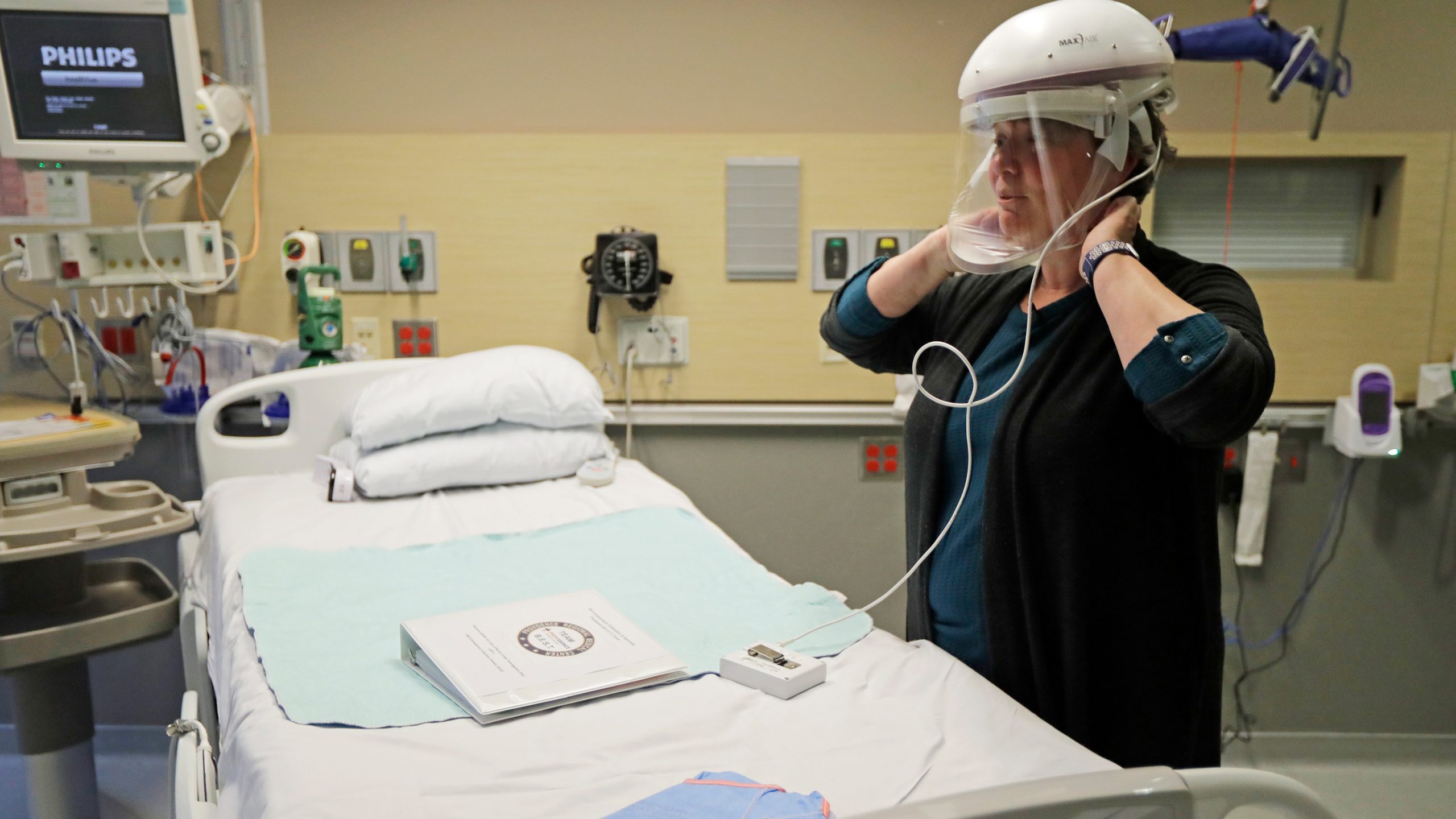
“If they have been to China we would escort them into a private room to remove them from other patients and visitors,” Nolt says. They would be evaluated and if it’s determined patients are infected or suspected of being infected with the coronavirus, they would be placed in what’s called “airborne isolation,” she says.
This is a precaution used to prevent the spread of germs through the air or dust. Typically, this is a private room that has an air exchange system which prevents germs from leaving the room.
The hospital has conducted drills to prepare for patients who have to be isolated, as did the hospital in Washington state where the first patient identified with the new coronavirus was taken. Nationwide many hospitals have engaged in similar drills.
Even so, Dr. Amesh Adalja, a senior scholar at the Johns Hopkins University Center for Health Security, questions whether hospitals pay adequate attention to working on emergency preparedness on a routine basis. “We’ve come a long way but it’s not fully as good as it should be if this threat were taken seriously all the time,” he says.
The problem, Adalja says, is that the funding for such preparedness waxes and wanes. “People’s interests goes away and then things kind of languish,” he says.
Hospitals plan for new procedures and new drugs with enthusiasm, he says, but “they don’t plan for pandemics in the same manner.”
As it is now, Adalja says the health care system is stressed for capacity; he notes that hospitals often become overcrowded and there is pressure to discharge patients because “there’s no beds, and people are waiting in emergency departments.”
Rapid and accurate disease testing is another area of concern for preparedness. Last week, the CDC released a diagnostic test for the new coronavirus that it is distributing to 115 labs around the U.S., to expands capacity to test for the virus without sending samples to the CDC. Some problems with the testing emerged Wednesday. Some labs were getting inconclusive results during quality control testing, and so the CDC is working to fix the tests. In the meantime, labs must still send tests to the CDC in Atlanta.
If there were to be a flood of new possible cases, a diagnostic test that could be done in local doctor’s offices or even at home could make it far easier to manage an epidemic, O’Toole says. And the good news, she points out, is that the U.S. already has the capacity to develop such a rapid diagnostic test.
The test could be developed in just a few months, but to do so will require a federal commitment and a greater investment in public health, she says.
And today the need for a rapid diagnostic test is critical, O’Toole says, because today’s world has become an “age of epidemics.”
These epidemics are going to keep coming, she says. “The frequency and the impact of epidemics has been increasing. It’s a consequence of trade and travel patterns; we all move around the world all the time very quickly,” she says. And she adds, “increasingly, people are venturing into once-remote ecosystems where they come in contact with animals who have new new pathogens that the human immune system isn’t ready to handle.”
What’s needed is a strategic approach to rapidly deal with an epidemic says O’Toole, but “we don’t have a strategy and we haven’t built the infrastructure” to do so.
In large part, of course, this has to do with funding, which is always challenging says John Auerbach, president of Trust for America’s Health, a nonpartisan health research and advocacy group.
“Infectious disease outbreaks can accelerate quickly and you don’t want to wait until you see what that is like and then say, ‘Well now let’s begin a slow and deliberate planning process.’ You really want to get ahead of it,” he says.
It’s best to take steps and ensure funding before a crisis looms, he adds. Take what happened in 2015 when a widespread epidemic of Zika fever, caused by the Zika virus in Brazil, spread to other parts of South America and North America.
“The CDC identified the need for additional dollars but it took several months before Congress approved those dollars and during that time period, it limited CDC’s capacity to be as effective as it could have been,” says Auerbach.
Today, Auerbach says the public health system is further frayed, in large part due to coping with other disasters like wildfires in California, flooding in the Midwest and South, the measles outbreak before that and the addiction crisis.
“Public health in America is generally underfunded and has been cut over the last decade,” he says.
On the other hand, HHS official Greene argues the nation’s health care system is better prepared than it has been in the past. “We’ve gone through outbreaks of other diseases, other coronaviruses, SARS and MERS,” he says. And each one of those experiences has helped the system develop “tactics, capabilities, training and education to be able to deal with whatever comes down the road; this is just one more in a long history of disease outbreaks that we’re being asked to tackle.”
The strategic national stockpile says Greene holds “millions of face masks, and supplies of respirators, gloves and surgical gowns that could potentially be deployed if state and local supplies are diminished during this current outbreak.” Greene says that HHS is working with the health care sector and the supply chain to ensure that any disruptions that may occur or shortages are “short lived and that the right amount of material can be provided” as soon as possible.
Copyright 2020 NPR. To see more, visit https://www.npr.org.
FEATURED PODCAST

KPBS’ daily news podcast covering local politics, education, health, environment, the border and more. New episodes are ready weekday mornings so you can listen on your morning commute.

To view PDF documents, Download Acrobat Reader.










