







Oregon regulators’ response to the illegal disposal of radioactive fracking waste at a chemical landfill in Arlington is so weak it’s almost meaningless, observers say.
Regulators say Oilfield Waste Logistics of Culbertson, Mont., “misrepresented” that 2 million pounds of radioactive waste met state guidelines and could be buried at the landfill. But it looks unlikely that the Montana company will face any consequences.
A “cursory read” of the documentation submitted with the toxic waste revealed that the material could not be disposed of in Oregon, say officials from the nuclear safety division at the Oregon Department of Energy. But the landfill operator, Chemical Waste Management, apparently didn’t bother examining them in detail, they said.
“We don’t think they did the due diligence to make sure this could be disposed of here,” said Ken Niles, assistant director for nuclear safety at the agency.
So far, Chemical Waste Management isn’t facing any serious penalties either.
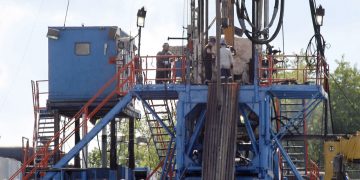
Nearly 2 million pounds of radioactive Bakken oil field waste – highly contaminated filters, tank sludge and slurry from drilling pipes – were transported to Oregon on unmarked railcars in 2016, 2017 and 2019, and buried in Arlington. In effect, a site that was never supposed to accept concentrated radioactive waste could now be such a dump forever.
“It boggles the mind that someone can use Oregon as a radioactive dump for years and face no penalty,” said Dan Serres, conservation director at Columbia Riverkeeper. “It’s a gargantuan scandal. (Former governor) Tom McCall must be turning over in his grave.”
This is the first time anyone had been caught illegally disposing of radioactive waste in Oregon, and the first time the Department of Energy has tested its related regulatory authority. But the disposal of such fracking waste has become a major controversy around the country because of the health and safety impacts on oilfield workers, those who haul the material to landfills, landfill workers, and to the watersheds and communities surrounding those sites.
The naturally occurring radioactive materials are brought to the surface during oil and gas drilling, and become concentrated in filters and drilling waste. Some of the hottest material buried in Arlington is giving off 350 times more radium than state limits allow.
Oregon officials only became aware of the violation when a tip came in from a caller in North Dakota.
Jackie Lang, a spokeswoman for Chemical Waste Management, said the company was committed to full compliance with Oregon’s “uniquely complex regulations.”
“We are cooperating in full with the department and committed to improving our processes to ensure consistency with regulations,” she said. “When we became aware of the issue, we immediately began our own investigation and stopped accepting the waste.”
So is the Oregon Department of Energy bringing down the hammer?
Not so much.
The agency’s nuclear safety division issued a notice of violation to Chemical Waste Management, a subsidiary of the landfill and hauling giant Waste Management, Inc. But regulators kept the violation at the lowest level, and don’t plan to fine the company.
There are criteria that would raise the violation to a Level II offense, and potentially involve a fine of up to $500 a day, Niles said, including if the violation is repeated.
The waste disposal took place over a period of three years, so was clearly repeated. But the agency’s lawyer at the Department of Justice interpreted the rules to mean it would only be a Level II violation if Chemical Waste had previously been notified of a violation and repeated it.
“What that means is that you can have 20 violations, but they’re not considered repeat unless you were informed,” said Craig Johnston, an environmental law professor at Lewis & Clark Law School. “It’s not just one free bite. You get as many free bites as you want until we catch you.”
Johnston said that’s inconsistent with federal law. When he worked at the U.S. Environmental Protection Agency in the 1980s, he said companies were routinely fined hundreds of thousands and even millions of dollars for lesser violations of federal law.
Oregon’s other criteria for a Level II violation include whether it resulted from the same underlying cause as a prior violation; whether it was willful; or resulted in a significant adverse impact to health and safety.
Chemical Waste has been repeatedly fined by the Department of Environmental Quality for violations in Arlington. But Niles said those violations, and their underlying causes, wouldn’t apply in this instance, as the Department of Energy’s only responsibility with respect to the landfill is nuclear safety.
Likewise, he said the department, hadn’t investigated much beyond the paperwork to determine if the violation was willful. He could not say what Chemical Waste Management was paid for disposal of the materials, for instance, and said the state had never examined any emails between the companies.
Serres, with Columbia Riverkeeper, says that’s a glaring problem. “What’s needed is for the state to independently investigate this in depth, to go to another level.”
Finally, Jeff Burright, a state nuclear waste remediation specialist, said an initial determination was made that there was no significant adverse impact on the health and safety of workers at the landfill, the public or the environment.
The notice of violation requires Chemical Waste Management to come up with a remediation plan in 30 days. That could include exhuming the material and disposing it out of state. But Burright said that would come with its own risk of exposing workers and the environment to radiation exposure.
“There would probably have to be some relative risk consideration when you consider digging back into the hazardous waste,” he said.
As it stands the radioactive waste is buried under 10 feet of other material. Burright said the landfill has a triple layer system to collect the concentrated material that leaches to the bottom, and it will eventually be capped to prevent precipitation filtering through the waste.
So Oregon may be stuck with it.
Lang, the Chemical Waste spokeswoman, said Oilfield Waste Logistics didn’t accurately describe the waste shipped to Oregon. She added that Chemical Waste has improved its procedures, and now sends waste samples to an independent technical expert for analysis prior to accepting it.
“We reject waste that doesn’t meet Oregon regulations,” she said. “Beyond this, we’re committed to working with the department on a corrective action plan.
The Department of Energy regulators also think it’s unlikely they will pursue any legal remedy against Oilfield Waste Logistics. The department hasn’t heard from the company since it called in September to determine why its waste disposal site had been cut off.
The company did not respond to a request for comment Friday.
“We’re still trying to examine what authority we have over OWL,” Niles said. “Frankly, it’s not looking very promising because of the limitations within our statutes and rules. We are looking into it, but we’re not yet finding an avenue to go after them.”
Johnston, the Lewis and Clark professor, said he’s most offended that no one is being punished here at all.
“They haven’t gone after Oilfield Waste Logistics and they believe their hands are tied with respect to Chemical Waste Management,” he said. “The message is, ‘Don’t do it again.’
“That’s a joke,” he said. “There’s a problem in the system somewhere. This is not even a slap on the wrist.”
Niles said the agency has identified weaknesses in statutes and rules. “We’ll have to see if there’s interest in strengthening those in the Legislature.”
– Ted Sickinger; 503-221-8505; @tedsickinger
Subscribe to Oregonian/OregonLive newsletters and podcasts for the latest news and top stories.










