

• Latest
  • Trending
  • All
Automation’s Effecting Warehouse Workers | Material Handling and Logistics

Automation’s Effecting Warehouse Workers | Material Handling and Logistics

February 21, 2020
Last Mile Delivery Market Worth Observing Growth | UPS, FedEx, SF Express

Last Mile Delivery Market Worth Observing Growth | UPS, FedEx, SF Express

April 23, 2024
Top 5 Spend Analysis Software ranked in 2024

Top 5 Spend Analysis Software ranked in 2024

March 1, 2024
How Tesla And BMW Are Leading A Supply Chain Renaissance With Blockchain

How Tesla And BMW Are Leading A Supply Chain Renaissance With Blockchain

January 19, 2024
LATAM Cargo strengthens European cargo links

LATAM Cargo strengthens European cargo links

April 14, 2020
Ford making reusable hospital gowns from airbag materials as efforts against coronavirus expand

Ford making reusable hospital gowns from airbag materials as efforts against coronavirus expand

April 14, 2020
Don’t Sweat NBC’s Decision to Cut Back on Television Ad Inventory

Don’t Sweat NBC’s Decision to Cut Back on Television Ad Inventory

April 14, 2020
Software firms sharpen focus on AI, big data as IT spending drops

Software firms sharpen focus on AI, big data as IT spending drops

April 14, 2020
Navigating turbulent times in your supply chain (TL:DR version)

Navigating turbulent times in your supply chain (TL:DR version)

April 14, 2020
Last Mile Delivery by Drones Market is Booming Worldwide

Last Mile Delivery by Drones Market is Booming Worldwide

April 14, 2020
AIR CARGO MARKET SIZE, SHARE, DEMAND, TREND, LATEST INNOVATIONS & APPLICATION ANALYSIS AND INDUSTRY GROWTH FORECAST 2027 – Science In Me

AIR CARGO MARKET SIZE, SHARE, DEMAND, TREND, LATEST INNOVATIONS & APPLICATION ANALYSIS AND INDUSTRY GROWTH FORECAST 2027 – Science In Me

April 14, 2020
Wheat procurement in Patiala: 6,500 coupons issued to farmers – cities

Wheat procurement in Patiala: 6,500 coupons issued to farmers – cities

April 14, 2020
Pandemic, Plastics And The Continuing Quest For Sustainability

Pandemic, Plastics And The Continuing Quest For Sustainability

April 14, 2020
  • Supply Chain
  • Logistics
  • Warehousing
  • Procurement
  • Shipping
  • More
    • Strategic Sourcing
    • Spend Analysis
    • Inventory
    • Contact Us
No Result
View All Result
United States International Supply Chain Commission
Home Warehousing

Automation’s Effecting Warehouse Workers | Material Handling and Logistics

by usiscc
February 21, 2020
in Warehousing
0
Automation’s Effecting Warehouse Workers | Material Handling and Logistics
492
SHARES
1.4k
VIEWS
Share on FacebookShare on Twitter

Trying to figure out the effect of automation on workers is a complicated matter.

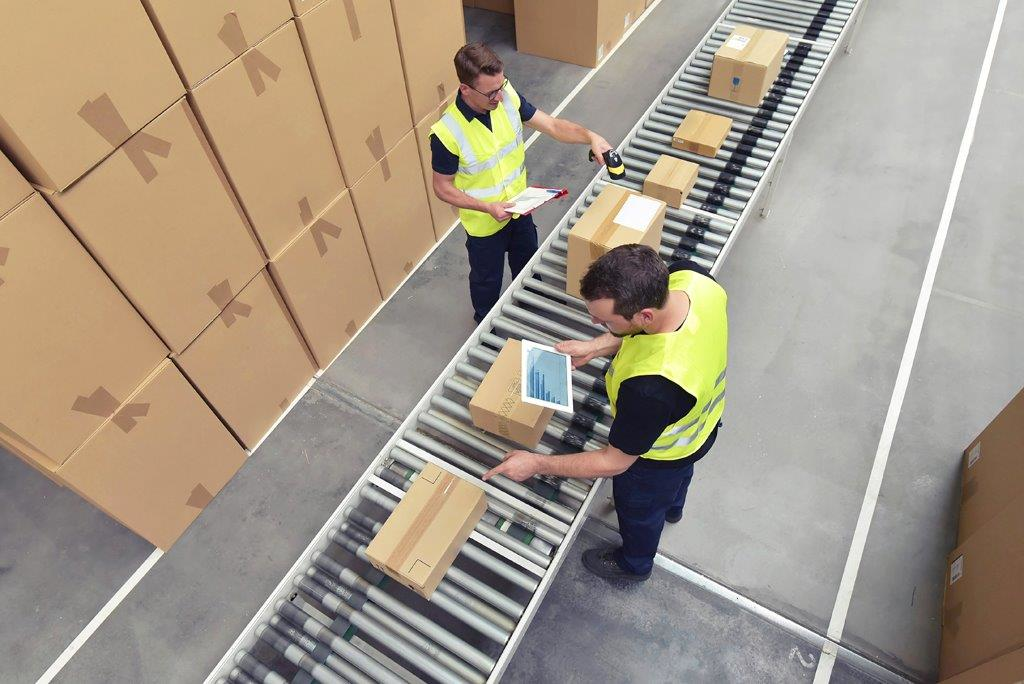
“In the warehouse, automation has moved from simple tasks such as wrapping machines to the ability of software programs to process data from a number of devices in the warehouse that is eventually analyzed through artificial intelligence to provide a variety of benefits,” explained Keven Beasley, CIO at VAI, a mid-market ERP software developer.

And one of the benefits, says Beasley, is that warehouse employees can be moved from routine procedures to more interesting tasks. “Many companies are moving workers from jobs that automation can handle more efficiently and save workers from physical stress.”

Automation has evolved in many ways to assist workers in making their jobs more efficient. Beasly pointed to the evolution of technology in the warehouse from manual tracking to bar codes to RFID tags. Now, much of the picking and packing process is automated. And of course, robots are becoming a larger part of warehouse operations.

Beasley noted that production has increased in many industries, including the pharmaceutical industry, as robots have increase efficiency.

With the mention of robots, however, the issue of job loss arises.

But Beasley says this hasn’t been the experience with many of his customers who understand the valuable knowledge that experienced workers possess and instead of letting them go as a robot performs some of their duties, moves them into positions that can capture their knowledge. One example would be to train younger workers.

However, there is still some concern over the effects of automation on workers. A recent report issued by the University of California Labor Center in October found some downsides to this automation.   

“Even though some technologies could alleviate the most arduous tasks of warehouse work (such as heavy lifting), this likely will be coupled with attempts to increase the workload and pace of work, with new methods of monitoring workers.” And that could introduce new health and safety hazards, the study says.  

Then there is the issue of de-skilling some jobs.  Here is the report’s take on that.

“Some warehouse technologies are designed to simplify aspects of warehouse work by breaking a job into subtasks and, where possible, removing the skills required of the workforce. Across all occupations in warehouses, viable technologies are likely to replace some human-performed decision-making tasks with machines, significantly changing the composition and quality of jobs. In some cases, the de-skilling appears to be motivated by a desire to shift labor strategy, including expanding the size of the potential labor market, increasing the use of temporary workers, reducing the workforce in certain occupations, and enhancing worker productivity.

Training workers to perform higher-skilled tasks is one potential avenue for adaptation to technological change, but this strategy appears to be underutilized in warehousing. Instead, labor reallocation likely will dominate in the short and medium-term, supported by processes of de-skilling and work intensification.”

As to automation leading to widespread job loss, the report does not see this happening in the short term. With continued growth in demand, aggregate employment levels in the warehousing industry will likely continue to rise over the next five to 10 years.

And it’s this last point that Beasley has found to be true.  Trying to find workers to fill both the current and future jobs, is a huge area of concern to his customers.   

 “We hear from companies that they aren’t able to attract the people that they need to be competitive with global companies,” says Beasley. “And it’s not just the U.S. that is having this issue, China is as well.”

And that is where automation is helping out, as the technology is able to perform the jobs that are going unfilled.

 Advances in technology will continue, says Beasley, and companies realize that technology is a useful tool to remain competitive in a global market. 

Share197Tweet123
usiscc

usiscc

  • Trending
  • Comments
  • Latest
Escape From Tarkov – How to Rotate Items

Escape From Tarkov – How to Rotate Items

February 5, 2020
Supply chain examination: Planning for vulnerabilities you can’t control

Supply chain examination: Planning for vulnerabilities you can’t control

December 7, 2019
Procurement Project Manager job with Camden London Borough Council

Procurement Project Manager job with Camden London Borough Council

February 17, 2020
Art Battle Wichita Falls III at The Warehouse, 1401 Lamar.

Art Battle Wichita Falls III at The Warehouse, 1401 Lamar.

0
Global Industry Analysis, Size, Share, Growth, Trends, and Forecasts 2016–2024 – ZMR News Reports

Global Industry Analysis, Size, Share, Growth, Trends, and Forecasts 2016–2024 – ZMR News Reports

0
PHOTOS: Ottawa firefighters respond to warehouse fire

PHOTOS: Ottawa firefighters respond to warehouse fire

0
Last Mile Delivery Market Worth Observing Growth | UPS, FedEx, SF Express

Last Mile Delivery Market Worth Observing Growth | UPS, FedEx, SF Express

April 23, 2024
Top 5 Spend Analysis Software ranked in 2024

Top 5 Spend Analysis Software ranked in 2024

March 1, 2024
How Tesla And BMW Are Leading A Supply Chain Renaissance With Blockchain

How Tesla And BMW Are Leading A Supply Chain Renaissance With Blockchain

January 19, 2024
  • Privacy Policy
  • Terms of Use
  • Disclaimer
  • DMCA
  • Contact Us

Copyright © 2024 United States International Supply Chain Commission (usiscc.org)

This website uses cookies to improve your experience. We'll assume you're ok with this, but you can opt-out if you wish. Cookie settingsACCEPT
Privacy & Cookies Policy

Privacy Overview

This website uses cookies to improve your experience while you navigate through the website. Out of these cookies, the cookies that are categorized as necessary are stored on your browser as they are essential for the working of basic functionalities of the website. We also use third-party cookies that help us analyze and understand how you use this website. These cookies will be stored in your browser only with your consent. You also have the option to opt-out of these cookies. But opting out of some of these cookies may have an effect on your browsing experience.
Necessary
Always Enabled

Necessary cookies are absolutely essential for the website to function properly. This category only includes cookies that ensures basic functionalities and security features of the website. These cookies do not store any personal information.

Non-necessary

Any cookies that may not be particularly necessary for the website to function and is used specifically to collect user personal data via analytics, ads, other embedded contents are termed as non-necessary cookies. It is mandatory to procure user consent prior to running these cookies on your website.

SAVE & ACCEPT
No Result
View All Result
  • Supply Chain
  • Logistics
  • Warehousing
  • Procurement
  • Shipping
  • More
    • Strategic Sourcing
    • Spend Analysis
    • Inventory
    • Contact Us

Copyright © 2024 United States International Supply Chain Commission (usiscc.org)







