







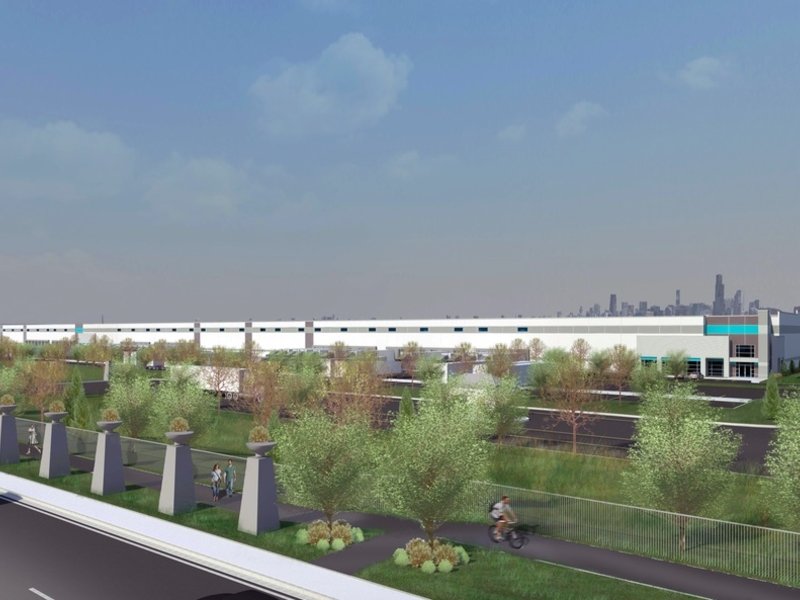
Cushman has marketed the project as the largest industrial building available in Chicago, with 990,900 square feet, according to a Cushman brochure. Hilco, a unit of Northbrook-based Hilco Global, has the flexibility to expand the project to nearly 1.1 million square feet, the brochure says. It’s possible that Target is leasing less space than that, but if the deal is that big, the retailer would be involved in the two largest local industrial leases of 2019, according to Colliers.
The Hilco project faced heavy resistance from Little Village residents, environmental groups and some Chicago aldermen when Hilco proposed it, even though it was expected to generate nearly 180 permanent jobs. Opponents argued the development would merely replace one form of pollution, emissions from a coal-burning power plant, with another, diesel exhaust from dozens of trucks driving to and from the property each day.
Yet Chicago City Council approved Hilco’s plans in 2018 and signed off on property tax breaks for the project worth $19.7 million last year.
The Target lease caps another exceptional year for the Chicago industrial real estate market. The local industrial vacancy rate finished 2019 at 6.25 percent, up slightly from 6.15 percent in the third quarter but down from 6.4 percent a year earlier, according to Colliers. The Chicago-area vacancy rate stands about where it was is 2001.
It’s a golden era for owners and developers of warehouses. Amid a booming economy, companies need more space for storing and shipping their products.
The e-commerce boom has added jet fuel to the market. Amazon has been aggressively expanding its network of warehouses, recently buying a huge site for one Bolingbrook. Amid rising online sales, legacy brick-and-mortar retailers like Target also are investing heavily in industrial real estate. Target’s digital sales rose 31 percent in third-quarter 2019.
“Ecommerce is a threat for certain types of retail real estate, but it is increasing demand for industrial space with little end in sight,” Green Street Advisors, a Newport Beach, Calif.-based research firm, writes in a recent report. “Ecommerce customers seek a greater variety of goods and speed of delivery (requiring more warehouse space to be located closer to population centers and express shipping hubs).”










