

• Latest
  • Trending
  • All
How fast can a virus destroy a supply chain?

How fast can a virus destroy a supply chain?

February 27, 2020
Last Mile Delivery Market Worth Observing Growth | UPS, FedEx, SF Express

Last Mile Delivery Market Worth Observing Growth | UPS, FedEx, SF Express

April 23, 2024
Top 5 Spend Analysis Software ranked in 2024

Top 5 Spend Analysis Software ranked in 2024

March 1, 2024
How Tesla And BMW Are Leading A Supply Chain Renaissance With Blockchain

How Tesla And BMW Are Leading A Supply Chain Renaissance With Blockchain

January 19, 2024
LATAM Cargo strengthens European cargo links

LATAM Cargo strengthens European cargo links

April 14, 2020
Ford making reusable hospital gowns from airbag materials as efforts against coronavirus expand

Ford making reusable hospital gowns from airbag materials as efforts against coronavirus expand

April 14, 2020
Don’t Sweat NBC’s Decision to Cut Back on Television Ad Inventory

Don’t Sweat NBC’s Decision to Cut Back on Television Ad Inventory

April 14, 2020
Software firms sharpen focus on AI, big data as IT spending drops

Software firms sharpen focus on AI, big data as IT spending drops

April 14, 2020
Navigating turbulent times in your supply chain (TL:DR version)

Navigating turbulent times in your supply chain (TL:DR version)

April 14, 2020
Last Mile Delivery by Drones Market is Booming Worldwide

Last Mile Delivery by Drones Market is Booming Worldwide

April 14, 2020
AIR CARGO MARKET SIZE, SHARE, DEMAND, TREND, LATEST INNOVATIONS & APPLICATION ANALYSIS AND INDUSTRY GROWTH FORECAST 2027 – Science In Me

AIR CARGO MARKET SIZE, SHARE, DEMAND, TREND, LATEST INNOVATIONS & APPLICATION ANALYSIS AND INDUSTRY GROWTH FORECAST 2027 – Science In Me

April 14, 2020
Wheat procurement in Patiala: 6,500 coupons issued to farmers – cities

Wheat procurement in Patiala: 6,500 coupons issued to farmers – cities

April 14, 2020
Pandemic, Plastics And The Continuing Quest For Sustainability

Pandemic, Plastics And The Continuing Quest For Sustainability

April 14, 2020
  • Supply Chain
  • Logistics
  • Warehousing
  • Procurement
  • Shipping
  • More
    • Strategic Sourcing
    • Spend Analysis
    • Inventory
    • Contact Us
No Result
View All Result
United States International Supply Chain Commission
Home Supply Chain

How fast can a virus destroy a supply chain?

by usiscc
February 27, 2020
in Supply Chain
0
How fast can a virus destroy a supply chain?
491
SHARES
1.4k
VIEWS
Share on FacebookShare on Twitter

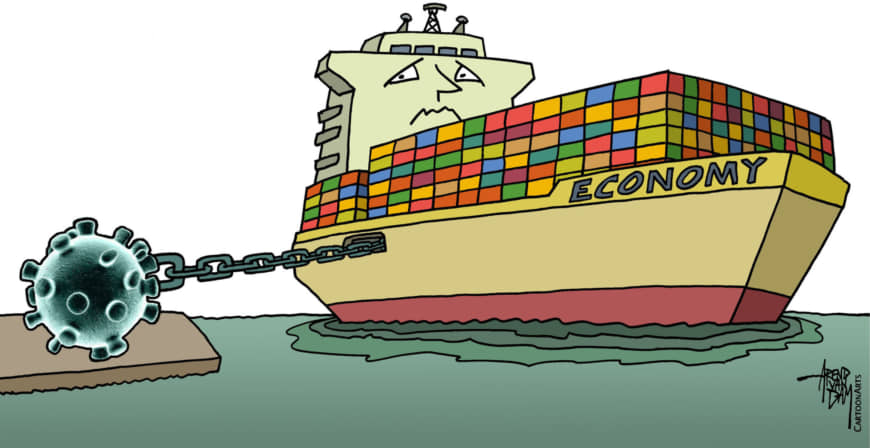
FAIRFAX, VIRGINIA – The global supply chain, already under pressure from U.S. President Donald Trump’s trade war, now faces further strain from the COVID-19 coronavirus. And while cross-national supply chains are more robust than they may appear, if they fail they will do so suddenly and without much warning.

Consider the supply chain of the Apple iPhone, which stretches across dozens of companies and several continents. Such complex cross-national supply chains generate relatively high profits, giving them a kind of immunity to small disruptions. If there is an unexpected tax, tariff or exchange movement, the supply chain can generally swallow the costs and move on. Profits will be lower within the supply chain, but production will continue, as it is too lucrative to simply shut everything down.

Do not be deceived, however. Supply chains are not indestructible. If the new costs or risks are high enough, the entire structure will be dismantled. By their nature, supply chains do not fall apart slowly, because each part of the chain relies upon other parts to add its value. It does not help much to have the circuit components of the iPhone lined up, for instance, if you cannot also produce the glass screens.

In this way, these supply chains are less robust under extreme conditions.

Global supply chains have yet to come apart mostly because trade and prosperity generally have been rising. But now, for the first time since World War II, the global economy faces the possibility of a true decoupling of many trade connections.

It is not sufficiently well understood how rapid that process could be. A complex international supply chain is fragile precisely for the same reasons it is valuable — namely, it is hard to construct and maintain because it involves so many interdependencies.

The nature of the cross-national supply chain makes it especially vulnerable to shocks coming from the coronavirus. These supply chains do not adapt so well to complete cutoffs in materials or labor, as may happen if Chinese coronavirus casualties continue and workplaces find it hard to operate effectively.

Imagine that closed Chinese factories cannot produce the components of many American medicines. It is not a question of the supply chain simply losing some profits; rather, some critical pieces of the production process are missing. The medicines won’t work without these inputs. The U.S. medical establishment might try to source those components elsewhere, but it isn’t easy for other suppliers to produce enough of them at sufficient scale and quality.

U.S. medical producers might try to bid more for the Chinese medicine components, but if the workers are prohibited from even showing up at the factory, no feasible market clearing price can make this arrangement work. Production just won’t be possible. Fashionable practices of near-zero inventories can make these shortages appear all the more rapidly. About 80 percent of the active pharmaceutical ingredients in U.S. medicines rely on Chinese or Indian components, so this does represent a very real public health risk for the United States, even if the coronavirus itself does not.

India, of course, also may prove vulnerable to the coronavirus, because it has high population density and relatively weak public health institutions. China is the world’s No. 2 economy, but it is not the only vulnerable part of the global supply chain in this regard.

In contrast, the older, less global, supply chains were less vulnerable to these kinds of risks. If the production of medical components were at risk within the borders of the U.S., American officials could take regulatory or private-company actions to help maintain supply. U.S. officials don’t have the same leverage over conditions in China or India.

So far the best bet is that current international supply chains will hold, for the most part, and deliver the goods. But the chance that they will not is rising sharply, as both the trade war and the coronavirus strengthen the hand of those who advocate for more dismantling of international trade networks. And if that dismantling does occur, it is likely to snap into place suddenly — with neither market prices nor advance warning offering much protection. The more people start to believe that long, complex cross-national supply chains are risky, the more fragile they will turn out to be.

Bloomberg columnist Tyler Cowen teaches economics at George Mason University.

Coronavirus banner

Share196Tweet123
usiscc

usiscc

  • Trending
  • Comments
  • Latest
Escape From Tarkov – How to Rotate Items

Escape From Tarkov – How to Rotate Items

February 5, 2020
Supply chain examination: Planning for vulnerabilities you can’t control

Supply chain examination: Planning for vulnerabilities you can’t control

December 7, 2019
Procurement Project Manager job with Camden London Borough Council

Procurement Project Manager job with Camden London Borough Council

February 17, 2020
Art Battle Wichita Falls III at The Warehouse, 1401 Lamar.

Art Battle Wichita Falls III at The Warehouse, 1401 Lamar.

0
Global Industry Analysis, Size, Share, Growth, Trends, and Forecasts 2016–2024 – ZMR News Reports

Global Industry Analysis, Size, Share, Growth, Trends, and Forecasts 2016–2024 – ZMR News Reports

0
PHOTOS: Ottawa firefighters respond to warehouse fire

PHOTOS: Ottawa firefighters respond to warehouse fire

0
Last Mile Delivery Market Worth Observing Growth | UPS, FedEx, SF Express

Last Mile Delivery Market Worth Observing Growth | UPS, FedEx, SF Express

April 23, 2024
Top 5 Spend Analysis Software ranked in 2024

Top 5 Spend Analysis Software ranked in 2024

March 1, 2024
How Tesla And BMW Are Leading A Supply Chain Renaissance With Blockchain

How Tesla And BMW Are Leading A Supply Chain Renaissance With Blockchain

January 19, 2024
  • Privacy Policy
  • Terms of Use
  • Disclaimer
  • DMCA
  • Contact Us

Copyright © 2024 United States International Supply Chain Commission (usiscc.org)

This website uses cookies to improve your experience. We'll assume you're ok with this, but you can opt-out if you wish. Cookie settingsACCEPT
Privacy & Cookies Policy

Privacy Overview

This website uses cookies to improve your experience while you navigate through the website. Out of these cookies, the cookies that are categorized as necessary are stored on your browser as they are essential for the working of basic functionalities of the website. We also use third-party cookies that help us analyze and understand how you use this website. These cookies will be stored in your browser only with your consent. You also have the option to opt-out of these cookies. But opting out of some of these cookies may have an effect on your browsing experience.
Necessary
Always Enabled

Necessary cookies are absolutely essential for the website to function properly. This category only includes cookies that ensures basic functionalities and security features of the website. These cookies do not store any personal information.

Non-necessary

Any cookies that may not be particularly necessary for the website to function and is used specifically to collect user personal data via analytics, ads, other embedded contents are termed as non-necessary cookies. It is mandatory to procure user consent prior to running these cookies on your website.

SAVE & ACCEPT
No Result
View All Result
  • Supply Chain
  • Logistics
  • Warehousing
  • Procurement
  • Shipping
  • More
    • Strategic Sourcing
    • Spend Analysis
    • Inventory
    • Contact Us

Copyright © 2024 United States International Supply Chain Commission (usiscc.org)







