






Ten months ago, Szaky launched Loop, an online delivery service that uses sturdy, reusable containers. The bold part of his venture—or risk, if you are one of his financial backers—is that Loop pushes far beyond the uniformity of returnable beverage bottles and sells more than 300 items, from food to laundry detergent, in containers of various sizes and made from various materials. His signature product is Häagen-Dazs ice cream that comes packed inside a sleek, insulated stainless steel tub guaranteed to prevent its contents from melting.
Slightly dishevelled in jeans and a hoodie, Szaky looks every bit the millennial entrepreneur. Now 38, he dropped out of Princeton 17 years ago to become an innovator in the rubbish business. He founded TerraCycle, a small waste management company, 10 miles from the Princeton campus.
He figured out a way to recycle diapers, cigarette butts, and a long list of other non-recyclables. In time, he became more interested in restoring the circularity of that earlier era and eliminating the disposability from packaging altogether.
“Loop’s theory is let’s learn from the past and go back to a model where when you buy your deodorant, you’re borrowing the package and just paying for the content,” he says.
Loop is part of the resurgence of refillables as a serious option to plastic waste. The beverage industry is expanding its use of returnable bottles; an Oregon brewery claims to have started the United States’ first state-wide refillable beer system. More significantly, efforts like Loop’s to reinvent packaging for products that don’t fit easily into the refillable category have attracted startups and some of the world’s largest corporate players.
Starbucks and McDonalds are partnering in a pilot program in California known as the NextGen Cup Challenge to sell coffee in reusable cups. If it works, the companies could spare the world the remains of billions of paper cups lined with a thin film of plastic that prevents leakage.
And in Chile, a small startup called Algramo is working to replace single-serving packets known as sachets that are sold by the billions in Africa and Asia. The concept was to make coffee, toothpaste and other products affordable to impoverished people who couldn’t afford to buy in larger amounts. Sachets are mostly not recyclable and have made the glut of plastic litter in those nations worse. Algramo, whose name means “by the gram” in Spanish, is creating a vending machine system to dispense food and cleaning products into reusable containers. Last December, it won the National Geographic and Sky Ventures Ocean Plastic Innovation Challenge’s prize for using circular economy principles and a £77,000 purse.
As Szaky tours Loop’s warehouse, where newly filled containers are shipped out and returned empties taken in, he notes the irony that this age-old method has only flowered again because waste has become a global crisis.
“Five years ago, we couldn’t have done this,” he says. No one would have signed on. Not consumers, who pay a healthy, refundable deposit. And not the companies he’s convinced to join his experiment.
Consumers and product retailers might have laughed at the idea as too unrealistic and inconvenient, neither being the ingredients for success.The shipping expenses alone, which involve up to six transfers, would have given investors pause.
Then, almost overnight, the game changed. Szaky pitched his idea to the World Economic Forum in Davos, Switzerland, and convinced Nestle, Unilever, Proctor & Gamble, Coca-Cola and PepsiCo, among others, to sign on.
A spotlight on plastic waste grows
It’s easy to lose sight of how quickly the landscape of plastics has shifted. Only a decade ago scientists and plastic manufacturers and retailers were still arguing about whether disposable plastic was even a serious issue.
In 2011, when Ocean Conservancy met with scientists, activists, and plastics industry executives in an effort to set up what eventually became, in 2012, the Trash Free Alliance so all parties could work together, no consensus on the issue existed.
“There was the question, is this just unsightly or a real problem?” recalls George Leonard, the conservancy’s chief scientist. “People retracted back into their corners. The NGOs said, ‘The world is coming to an end,’ and the industry sector said, ‘We don’t think it’s a problem.’”
The debate effectively ended with publication in 2015 of the first solid numbers showing plastic waste washing into the ocean at an average rate of 8.5 million tons a year. The years that followed produced a glut of anti-plastic campaigns, bans of shopping bags and other products, pledges by retailers to use more recycled plastic in new packaging, industry investment in recycling facilities, and cleanups of existing waste.
A count of scientific studies assembled by Richard Thompson, the British marine scientist who coined the term microplastics, reveals how rapidly plastic came to be considered an environmental crisis. In 2011, the year of Leonard’s meeting, 103 scientific studies containing the words “plastic” and “pollution” were published. The count in 2019, using the same code words, was 879 studies.
“Thank goodness we’re over the hump,” says Chelsea Rochman, a marine scientist at the University of Toronto who is leading a working group of scientists trying to sort out which of the various solutions are most effective. The consulting firm Systemiq, with offices in London, Munich, and Indonesia, is also making a similar assessment. The results of both projects may further shape the debate on how to proceed.
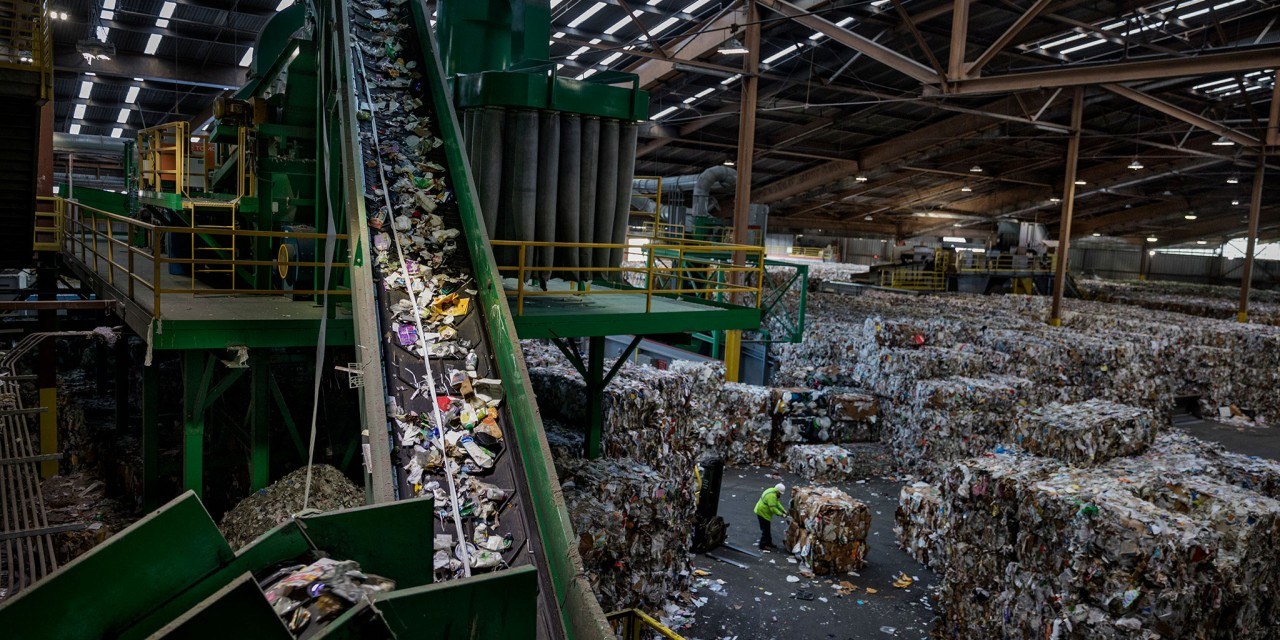
In the meantime, it helps to consider where things stand today: Of the 9.2 billion tonnes of plastic ever manufactured, 6.9 billion tonnes have become waste. Most of that—6.3 billion tonnes, or to put it another way, a whopping 91 percent—has never been recycled. The number seemed so shocking that the UK’s Royal Statistical Society named it the international statistic of the year in 2018. That’s the same year that China stopped buying the world’s waste, and recycling has only become more troubled since.
Beyond recycling, 12 percent of plastic waste is incinerated, mostly in Europe and Asia. About 79 percent goes to a landfill or leaks into the natural environment. As a measure of how quickly plastic production accelerated in recent decades, half of all plastics ever made has been produced since 2013. Production is projected to double in the next 20 years, according to a 2016 report by the World Economic Forum.
Finally, plastic is exceedingly cheap to make. And its low cost is one of the main impediments to developing an economically viable, global system for recycling or otherwise disposing of plastic waste.










