

• Latest
  • Trending
  • All
US concerns for TSMC’s supply chain ris…

US concerns for TSMC’s supply chain ris…

March 1, 2020
Last Mile Delivery Market Worth Observing Growth | UPS, FedEx, SF Express

Last Mile Delivery Market Worth Observing Growth | UPS, FedEx, SF Express

April 23, 2024
Top 5 Spend Analysis Software ranked in 2024

Top 5 Spend Analysis Software ranked in 2024

March 1, 2024
How Tesla And BMW Are Leading A Supply Chain Renaissance With Blockchain

How Tesla And BMW Are Leading A Supply Chain Renaissance With Blockchain

January 19, 2024
LATAM Cargo strengthens European cargo links

LATAM Cargo strengthens European cargo links

April 14, 2020
Ford making reusable hospital gowns from airbag materials as efforts against coronavirus expand

Ford making reusable hospital gowns from airbag materials as efforts against coronavirus expand

April 14, 2020
Don’t Sweat NBC’s Decision to Cut Back on Television Ad Inventory

Don’t Sweat NBC’s Decision to Cut Back on Television Ad Inventory

April 14, 2020
Software firms sharpen focus on AI, big data as IT spending drops

Software firms sharpen focus on AI, big data as IT spending drops

April 14, 2020
Navigating turbulent times in your supply chain (TL:DR version)

Navigating turbulent times in your supply chain (TL:DR version)

April 14, 2020
Last Mile Delivery by Drones Market is Booming Worldwide

Last Mile Delivery by Drones Market is Booming Worldwide

April 14, 2020
AIR CARGO MARKET SIZE, SHARE, DEMAND, TREND, LATEST INNOVATIONS & APPLICATION ANALYSIS AND INDUSTRY GROWTH FORECAST 2027 – Science In Me

AIR CARGO MARKET SIZE, SHARE, DEMAND, TREND, LATEST INNOVATIONS & APPLICATION ANALYSIS AND INDUSTRY GROWTH FORECAST 2027 – Science In Me

April 14, 2020
Wheat procurement in Patiala: 6,500 coupons issued to farmers – cities

Wheat procurement in Patiala: 6,500 coupons issued to farmers – cities

April 14, 2020
Pandemic, Plastics And The Continuing Quest For Sustainability

Pandemic, Plastics And The Continuing Quest For Sustainability

April 14, 2020
  • Supply Chain
  • Logistics
  • Warehousing
  • Procurement
  • Shipping
  • More
    • Strategic Sourcing
    • Spend Analysis
    • Inventory
    • Contact Us
No Result
View All Result
United States International Supply Chain Commission
Home Supply Chain

US concerns for TSMC’s supply chain ris…

by usiscc
March 1, 2020
in Supply Chain
0
US concerns for TSMC’s supply chain ris…
491
SHARES
1.4k
VIEWS
Share on FacebookShare on Twitter

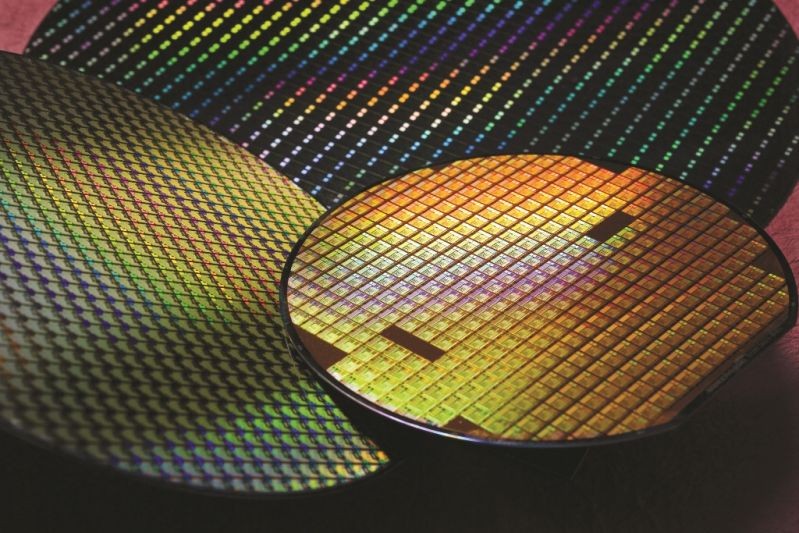
In recent months, the Pentagon has increased pressure on Taiwan Semiconductor Manufacturing Company Ltd. (TSMC) to move its defense-related semiconductor production from Taiwan to the U.S, which has voiced concerns that Chinese agents may plant a backdoor in the manufactured chips and/or steal the designs and, most importantly, that China may at some point take military action against Taiwan.


The risks, perceived or real, can be discussed at four levels.


First, from an engineering perspective, it’s impossible for Chinese agents to plant a backdoor into chips designed by the US, for several reasons: 1) TSMC is a hardware company and doesn’t do software or firmware, in which it is comparatively easier to plant backdoors. 2) A semiconductor fabricator (fab) such as TSMC will validate the logical circuit on a chip with input/output simulation patterns provided by the chip designer. If the circuit on the chip is modified at either the logical or physical level, the validation cannot pass.


3) The hardware fabrication process requires electronic data called a photomask set, which defines geometry for the photolithography steps and typically contains as many as twenty or more masks. To insert a foreign backdoor module into the already designed chip means the photomask set has to be changed somehow. And that will certainly alarm TSMC’s engineers. 4) Even if no engineer at TSMC notices the change, for it to slip through the tests and avoid detection is just not possible. In short, the concern about the backdoor has no merit.


Second, we can look at TSMC’s internal control to address the issue of China’s potential data theft. It’s true that TSMC has a two fabs in China: the 12” plant in Nanjing and the 8” plant near Shanghai. TSMC nevertheless has solid compartmentalization control to separate operations in China from the rest of the company. In fact, the company is known for its watertight security and internal control. Even the American Institute in Taiwan (AIT), the de facto US embassy, praises TSMC’s information security measures. If the Pentagon is still concerned about TSMC’s internal controls, the DoD can certainly put its personnel at the company to monitor the whole process or conduct regular audits. This cost effective approach will mitigate the risks of China’s potential data theft.


Third, with regard to the economies of scale, the volume of chips used in the defense sector is far smaller than that of the commercial sector’s use in automobiles and cell phones. People outside of TSMC are not privy to the company’s decision making; it would be very difficult for its leadership to come up with a business case to rationalize moving defense-related chip manufacturing to the US, as a new state-of-the-art fab will cost billions of dollars. The return on investment doesn’t seem attractive enough. The relatively small volume used by the DoD doesn’t appear to justify the investment.


Last but not least, on the strategic level, if the U.S. is concerned about Taiwan being invaded by China, thereby disrupting the semiconductor supply chain, Washington should then revise its outdated strategic ambiguity policy and do all it can with its allies, such as Japan, to help protect the island. With China’s ever-increasing menace in East Asia, peaceful democracies in the region should form a united front to deter their common adversary. Standing by to watch the threat from China grow is not a strategy.


Semiconductors in the information age are as important, if not more so, than crude oil was in the industrial age. Subsequently, if Taiwan-manufactured semiconductors in the world market can reach a critical mass similar to that of Kuwait’s crude oil, major industrial powers such as the U.S. and Japan will not be able to overlook Taiwan’s security easily. In short, Taiwan’s niche in semiconductor technologies can be utilized as the basis for its national security strategy. The government in Taipei should therefore help TSMC to allay American concerns.






Share196Tweet123
usiscc

usiscc

  • Trending
  • Comments
  • Latest
Escape From Tarkov – How to Rotate Items

Escape From Tarkov – How to Rotate Items

February 5, 2020
Supply chain examination: Planning for vulnerabilities you can’t control

Supply chain examination: Planning for vulnerabilities you can’t control

December 7, 2019
Procurement Project Manager job with Camden London Borough Council

Procurement Project Manager job with Camden London Borough Council

February 17, 2020
Art Battle Wichita Falls III at The Warehouse, 1401 Lamar.

Art Battle Wichita Falls III at The Warehouse, 1401 Lamar.

0
Global Industry Analysis, Size, Share, Growth, Trends, and Forecasts 2016–2024 – ZMR News Reports

Global Industry Analysis, Size, Share, Growth, Trends, and Forecasts 2016–2024 – ZMR News Reports

0
PHOTOS: Ottawa firefighters respond to warehouse fire

PHOTOS: Ottawa firefighters respond to warehouse fire

0
Last Mile Delivery Market Worth Observing Growth | UPS, FedEx, SF Express

Last Mile Delivery Market Worth Observing Growth | UPS, FedEx, SF Express

April 23, 2024
Top 5 Spend Analysis Software ranked in 2024

Top 5 Spend Analysis Software ranked in 2024

March 1, 2024
How Tesla And BMW Are Leading A Supply Chain Renaissance With Blockchain

How Tesla And BMW Are Leading A Supply Chain Renaissance With Blockchain

January 19, 2024
  • Privacy Policy
  • Terms of Use
  • Disclaimer
  • DMCA
  • Contact Us

Copyright © 2024 United States International Supply Chain Commission (usiscc.org)

This website uses cookies to improve your experience. We'll assume you're ok with this, but you can opt-out if you wish. Cookie settingsACCEPT
Privacy & Cookies Policy

Privacy Overview

This website uses cookies to improve your experience while you navigate through the website. Out of these cookies, the cookies that are categorized as necessary are stored on your browser as they are essential for the working of basic functionalities of the website. We also use third-party cookies that help us analyze and understand how you use this website. These cookies will be stored in your browser only with your consent. You also have the option to opt-out of these cookies. But opting out of some of these cookies may have an effect on your browsing experience.
Necessary
Always Enabled

Necessary cookies are absolutely essential for the website to function properly. This category only includes cookies that ensures basic functionalities and security features of the website. These cookies do not store any personal information.

Non-necessary

Any cookies that may not be particularly necessary for the website to function and is used specifically to collect user personal data via analytics, ads, other embedded contents are termed as non-necessary cookies. It is mandatory to procure user consent prior to running these cookies on your website.

SAVE & ACCEPT
No Result
View All Result
  • Supply Chain
  • Logistics
  • Warehousing
  • Procurement
  • Shipping
  • More
    • Strategic Sourcing
    • Spend Analysis
    • Inventory
    • Contact Us

Copyright © 2024 United States International Supply Chain Commission (usiscc.org)



