






Discussions about bedding trends usually focuses on product innovations, say boxed mattresses or smartbeds, or consumer preferences like omnichannel shopping. Supply chain management — not so trendy, right?
But important developments are shaping manufacturing supply chains across sectors. Here we’ll look at three of the most significant trends to keep in mind as you visit ISPA EXPO 2020 March 18-20 in New Orleans and plan for your supply chain of the future.
Show and tell
“The concept of supply chain transparency was virtually unknown 15 years ago, yet today it commands the attention of mid- and senior-level managers across a broad spectrum of companies and industries,” say Alexis Bateman, director of MIT Sustainable Supply Chains, and Leonardo Bonanni, founder and chief executive officer of Sourcemap. Together, the two wrote “What Supply Chain Transparency Really Means” for the August 2019 Harvard Business Review.
“The reasons for this increased interest are clear: Companies are under pressure from governments, consumers, NGOs and other stakeholders to divulge more information about their supply chains, and the reputational cost of failing to meet these demands can be high,” the authors say.
These stakeholder groups may demand details about the types of materials used in products, information about where components are sourced and manufactured, or data regarding the conditions facing factory workers. For companies, it can be daunting — even uncomfortable — to make information public that previously they kept private to protect competitive advantages or because the data itself is hard to collect and verify.
As you move to make your supply chain more transparent, one thing to consider is what questions you’ll want to answer for consumers.
Given these challenges, as you move to make your supply chain more transparent, one thing to consider is what questions you’ll want to answer for consumers and other interested parties. “For instance,” Bateman and Bonanni say, “Do you want to ensure no child labor at your contract manufacturers or identify the source of origin of your materials?”
Benefits to transparent supply chains include more easily complying with regulations and earning product certifications, as well as building a reputation as a trustworthy, responsible company. But, the authors say, the process of documenting supply chain performance also “helps companies identify opportunities for improvement, such as unnecessary middlemen, and to plan more effectively over the long term.”
I, Robot
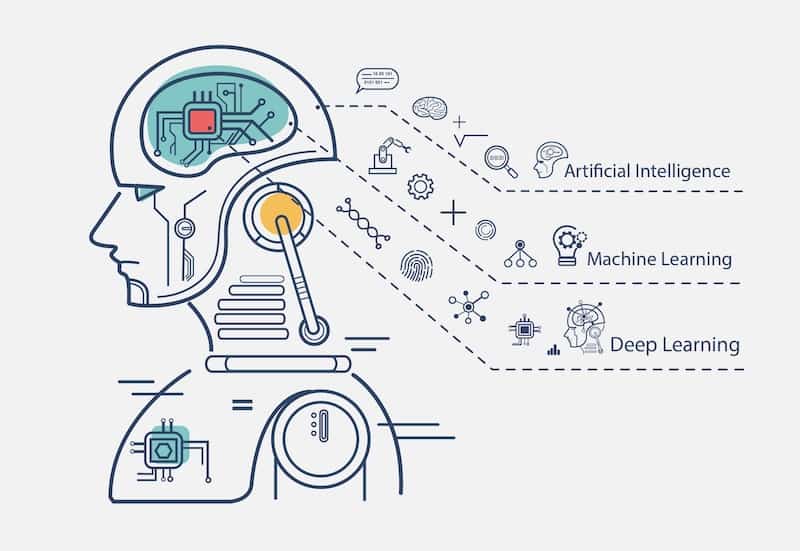
Amazon’s robotic fulfillment system uses machine learning to improve the accuracy and speed of order processing and shipping, while DHL relies on machine learning to monitor, respond to and enhance dozens of shipping parameters. And more companies are following suit, putting to work machine learning to upgrade their supply chains.
“Machine learning algorithms and the models they’re based on excel at finding anomalies, patterns and predictive insights in large data sets. Many supply chain challenges are time-, cost- and resource constraint-based, making machine learning an ideal technology to solve them,” writes Louis Columbus in an April 2019 article for Forbes. Columbus is a principal in IQMS, a manufacturing software company in Paso Robles, California.
Helping to drive the trend toward machine learning is the increasing prevalence of data-generating technologies, such as the internet of things, as well as other innovations, like intelligent transport systems, he says.
Part of what makes machine learning so useful is its ability to tackle myriad problems. Machine learning can help manufacturers do everything from reduce forecasting and production errors to predict needed machine maintenance. It can even help improve customer experiences.
“Bottom line: Enterprises are attaining double-digit improvements in forecast error rates, demand planning productivity, cost reductions and on-time shipments using machine learning today, revolutionizing supply chain management in the process,” Columbus says.
“Many supply chain challenges are time-, cost- and resource constraint-based, making machine learning an ideal technology to solve them.”
He argues that machine learning, with its ability to detect patterns and make adjustments at scale, is most effective at solving complex problems with large data sets, meaning it is most useful for bigger companies with complicated, far-flung operations and supply chains.
Building with blockchain
Perhaps best known for facilitating the exchange of cryptocurrencies like Bitcoin, blockchain also has the potential to redefine supply chain management, according to Stefan Gstettner, partner and associate director at Boston Consulting Group.
Gstettner was interviewed last year by [email protected], the online business analysis journal of the Wharton School of the University of Pennsylvania. An edited version of the discussion was published in July 2019.
“(Blockchain) is a technology that enables users to store data in a decentralized way. The term ‘decentralized’ is perhaps the most important one — not relying on a single database, but using distributed ledgers, distributed storage opportunities, and then storing the blocks into the network,” Gstettner says. “The advantage is that information is available multiple times in the network, which means that it cannot easily be changed. It’s immutable, it’s trustworthy, and can be used by many parties.”
By storing information that way, it’s also available to anyone in the supply chain, connecting previously separated functions.
Some sectors are more inclined to benefit from blockchain technology than others — at least for now, Gstettner says. “Blockchain is relevant and has the potential to revolutionize industries such as health care or pharma, where authority applications, like FDA requirements, are becoming stronger,” he says. “For instance, in pharma one has to track every single unit of a sale — and we are talking about millions and millions of units. There needs to be a unique identifier on every single package to be able to trace back active pharma ingredients and make sure where it all comes from. The value of trust is high here. We want to trust the critical pharmacy ingredients because our lives depend on them.”
And, like machine learning, blockchain currently is most suitable for complex companies with diverse, widely dispersed operations.
“But I do believe that blockchain will be a driving technology some years down the road and smaller companies will be able to participate in established blockchain networks,” Gstettner says. “Over time, blockchain networks may become more readily available and become more a standard of the network economy.”