






As the number of confirmed cases of a novel coronavirus named COVID-19 surges past 100,000, the impact of the disease has taken a toll on the global economy, causing fluctuations in stock prices, depressing earnings projections, and even delaying movie premieres.
Goker Aydin and Tinglong Dai, both experts in operations management and business analytics from the Johns Hopkins University Carey Business School, have been monitoring the spread of COVID-19 and taking note of how the disease is affecting business supply chains and operations.
“For a business to deliver its promise to its customers, it must have a properly functioning supply chain,” Aydin says. “Without an intact supply chain, a manufacturing business will starve for key inputs into its production process. A retailer will have empty shelves.”

Image caption: Goker Aydin (left) and Tinglong Dai
Aydin and Dai discuss the impact of coronavirus on the global economy, how retailers can diversify their supply chains to become more resilient, and lessons learned from past disasters and public health crises.
What kind of impact is COVID-19 having on the supply chains and operations of businesses?
Goker Aydin: So far, the global effects on supply chains have resulted mostly from the serious situation in China, and we can talk about those effects in two distinct ways. First, it’s having an impact on the supply of inputs for many manufacturers and retailers all over the world, and that’s important because China is a huge source of components and finished goods. The longer plants in China sit idle, the emptier the global pipeline of parts and components circling the globe, which is meant to feed manufacturers and retailers all over the world. If the disruption continues, we may see many manufacturers, and maybe even retailers, suspending their operations as they run out of the key inputs they need.
Second, China is also a major market for goods and services. Anywhere in the world, local economies that depend on China as a customer are feeling the effects, as consumers in China limit their travel and consumption, and as manufacturers in China slow down or suspend their production. For example, a recent article in The New York Times explained how truck drivers in Mongolia are losing their income because they can no longer deliver coal to China—the border is closed, and the demand for coal is way down anyway. The flow of tourists from China has come to a screeching halt, and that’s affecting the tourism sector in many countries, from freelancing guides to major hotels, especially in Asia.
What’s the impact of stockpiling?
Tinglong Dai: Stockpiling means a spike in demand in the short term, and an immediate effect is you start seeing many empty shelves. The impact of stockpiling depends on the size of a business—larger businesses such as Costco, Walmart, and Target tend to be more robust because of their centralized procurement strategy, better inventory control, and diverse supply bases. So this particular case may well be an opportunity for them to gain in their market shares when consumers value product availability. For smaller businesses, this could be a very vulnerable moment because stockpiling creates variability in their demand. Variability is hard for smaller businesses to absorb because they do not have the level of scale and flexibility required to maintain a reasonable level of product availability at times of demand shocks.
Now, are consumers rational in stockpiling? Maybe. In fact, the Department of Homeland Security says that in preparation for possible pandemics, people should have a two-week supply of water and food. Health care professionals should probably stock even more than that. On the other hand, excessive stockpiling creates negative externalities: When people go to the store and see empty shelves, they may enter into a vicious cycle of panic buying.
Have we seen similar situations like COVID-19 or is this something unique?
Aydin: There have been similar supply chain disruptions in the past, but I myself haven’t seen anything like COVID-19. Its scope, in terms of the number of people affected, the geographical impact, how long it has lasted, seems to be unique in recent memory.
But, yes, there have been other major disruptions to supply chains. For example, an earthquake in Taiwan in 1999 claimed many lives. With Taiwan being a major exporter of memory chips at the time, the earthquake cut off a major source of memory chips for computer manufacturers, driving up RAM prices. Of course, SARS in 2003 had an effect on supply chains. More recently, the earthquake that hit Japan in 2011 impacted many automotive manufacturers who relied heavily on inputs that were coming from affected Japanese factories.

Image caption: Residents of Ginza district of Tokyo walk through the streets. Major metropolises around the world have shut down in response to the coronavirus outbreak.
Image credit: Getty Images
Were there lessons learned from these experiences?
Aydin: After every one of these disasters and resulting disruptions, there was a sort of taking stock of how we are managing risk in supply chains. Until the early 2000s, supply chains stretched across the globe as manufacturing shifted where labor was cheap, and they also became leaner, because stuff sitting in the pipeline can easily become obsolete when product lifetimes are short, for example, in fashion apparel and consumer electronics. But many global brands learned, from disruptions like SARS or the Tohoku earthquake in Japan, that a disruption to production in one corner of the world could starve the entire chain from much-needed inputs.
In the last two decades, an important buzzword in supply chain management has been resilience. A resilient supply chain must be able to detect early warning signs of a disruption and it must respond by shifting production to alternative sources. It must have either a diversified supply base or some contingency plan to utilize backup suppliers. Of course, for a business to detect that a disruption is on the horizon, it must have a good handle on what its supply chain looks like. It’s not enough to know your suppliers; you must also know who your supplier’s suppliers are, and so on. Without that kind of detailed map of the supply chain, it is difficult to know the vulnerable links.
Unfortunately, with something like COVID-19, an epidemic that is affecting large swaths of the world and threatening to turn into a pandemic, even the best-laid contingency plans may prove inadequate.
Dai: The scale of this crisis is unprecedented in modern times. For weeks, China essentially locked down the entire country. Most of the factories ceased production and once-bustling cities became ghost towns. This situation is definitely not something one could fully anticipate or plan for.
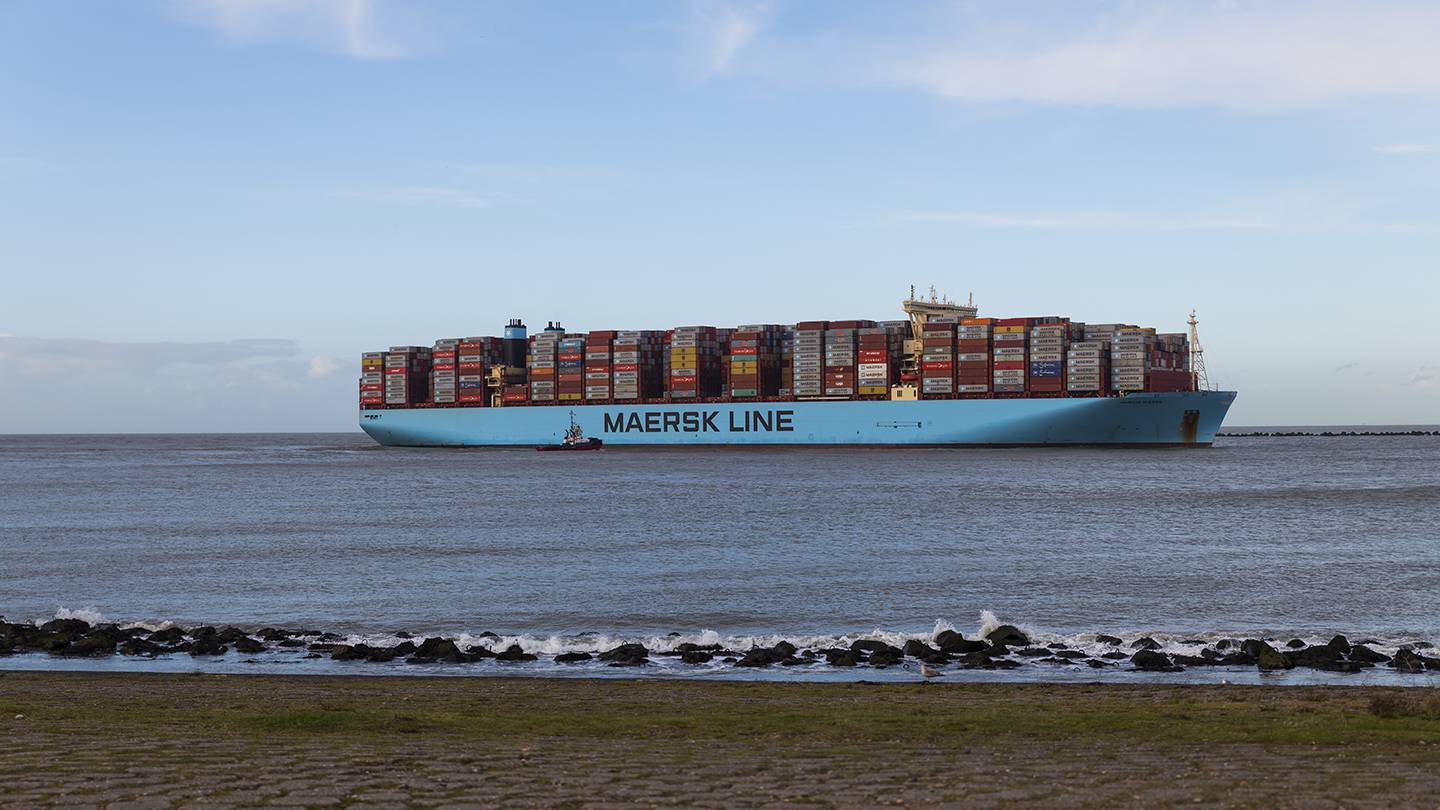
Think about the top nine container ports in the world—seven of them are in China, one is in Singapore, and one is in South Korea. All three countries are now deeply hit by the coronavirus outbreak. Collectively, about a third of the world’s economy is being affected, and the outbreak is still ongoing. We don’t know to what extent the Americas will be hit. Expect a clearer picture in the coming weeks.
What will be the impact for the future? Do you think there will be changes on the horizon?
Dai: This is a crisis moment, but this could well be an opportunity. In the short term, many businesses, especially those in the service industries that depend on “crowds” and high customer volumes, may run into cash flow troubles. Companies that are more resilient will be able to survive or even gain market shares. In the long term, companies should think about turning crisis management into risk management. Every major business that is heavily dependent on suppliers or consumers located in regions affected by the coronavirus should think about diversifying their supply bases. Executives must get serious about making their supply chains more resilient and should be rewarded for doing so.
Aydin: I think this crisis may speed up a trend that was already in place. The ongoing trade battle between China and the United States was already causing global manufacturers to rethink their reliance on suppliers in China. If they weren’t taking action before, this situation is probably going to precipitate action to diversify their supply base.
What is special about China in this context is that if a manufacturer is finding itself over-relying on suppliers in one particular country, right now that country is likely to be China. Of course, the answer should not be moving all your operations out of China and putting all of them in, say, Vietnam or Bangladesh, where labor is cheaper for now. That’s how supply chains operated up until the last couple of decades, with manufacturing chasing low labor costs. The better solution is to diversify the supply base, so as to have uncorrelated sources of supply. So that when one set of suppliers may be down due to a regional problem, another set might still be in operation.
Dai: When a company relies exclusively on a single country, the situation is like the concept of a corner solution, to use optimization terminology. We may want to avoid corner solutions.
Aydin: In other words, don’t paint yourself into a corner.
Dai: Exactly. Instead of relying on corner solutions, businesses should think about interior solutions. Say, option A is much cheaper than option B. Choosing a corner solution means you bet a hundred percent on option A and zero percent on option B. When you become more risk-aware, this corner solution may cease to be the best solution. One could use a bit of both, and that’s an interior solution.
Aydin: Of course, it bears repeating that even the best risk-management strategy may not be equipped to handle something on the scale of COVID-19 in the short run. Even if a manufacturer diversified its suppliers so that some are in China and others are in South Europe, that may be of no help with COVID-19 right now.
Dai: I agree. On a related note, we may see a strong growth in online service at a time when people worry about stepping out for basic shopping. This could be an opportunity for some business to develop their online capabilities or even omni channels. Of course, you could still face a lot of logistic constraints.
When a situation like this happens, living in 2020, we are in a much better position than, say, 17 years ago when the SARS outbreak occurred. Today, we have abundant optionality—we have so many options, even futuristic ones. Who knows, things like drone deliveries and self-driving cars may be able to finally take off.










