


• Latest
  • Trending
  • All
COVID Stocking Issues Put Focus On Supply Chain

COVID Stocking Issues Put Focus On Supply Chain

March 7, 2020
Last Mile Delivery Market Worth Observing Growth | UPS, FedEx, SF Express

Last Mile Delivery Market Worth Observing Growth | UPS, FedEx, SF Express

April 23, 2024
Top 5 Spend Analysis Software ranked in 2024

Top 5 Spend Analysis Software ranked in 2024

March 1, 2024
How Tesla And BMW Are Leading A Supply Chain Renaissance With Blockchain

How Tesla And BMW Are Leading A Supply Chain Renaissance With Blockchain

January 19, 2024
LATAM Cargo strengthens European cargo links

LATAM Cargo strengthens European cargo links

April 14, 2020
Ford making reusable hospital gowns from airbag materials as efforts against coronavirus expand

Ford making reusable hospital gowns from airbag materials as efforts against coronavirus expand

April 14, 2020
Don’t Sweat NBC’s Decision to Cut Back on Television Ad Inventory

Don’t Sweat NBC’s Decision to Cut Back on Television Ad Inventory

April 14, 2020
Software firms sharpen focus on AI, big data as IT spending drops

Software firms sharpen focus on AI, big data as IT spending drops

April 14, 2020
Navigating turbulent times in your supply chain (TL:DR version)

Navigating turbulent times in your supply chain (TL:DR version)

April 14, 2020
Last Mile Delivery by Drones Market is Booming Worldwide

Last Mile Delivery by Drones Market is Booming Worldwide

April 14, 2020
AIR CARGO MARKET SIZE, SHARE, DEMAND, TREND, LATEST INNOVATIONS & APPLICATION ANALYSIS AND INDUSTRY GROWTH FORECAST 2027 – Science In Me

AIR CARGO MARKET SIZE, SHARE, DEMAND, TREND, LATEST INNOVATIONS & APPLICATION ANALYSIS AND INDUSTRY GROWTH FORECAST 2027 – Science In Me

April 14, 2020
Wheat procurement in Patiala: 6,500 coupons issued to farmers – cities

Wheat procurement in Patiala: 6,500 coupons issued to farmers – cities

April 14, 2020
Pandemic, Plastics And The Continuing Quest For Sustainability

Pandemic, Plastics And The Continuing Quest For Sustainability

April 14, 2020
  • Supply Chain
  • Logistics
  • Warehousing
  • Procurement
  • Shipping
  • More
    • Strategic Sourcing
    • Spend Analysis
    • Inventory
    • Contact Us
No Result
View All Result
United States International Supply Chain Commission
Home Supply Chain

COVID Stocking Issues Put Focus On Supply Chain

by usiscc
March 7, 2020
in Supply Chain
0
COVID Stocking Issues Put Focus On Supply Chain
497
SHARES
1.4k
VIEWS
Share on FacebookShare on Twitter

Share

Tweet

Share

Share

Share

Print

Email

If there’s a positive development from the disruptive effect the COVID-19 virus has had on retailing, it’s a renewed focus on technology and the supply chain. Retailers are suddenly aware that goods don’t arrive by magic. And they’re aware that vulnerabilities in technology can be a competitive disadvantage. See Target’s earnings announcement earlier this week for proof.

As part of that announcement Target recommitted to scaling robotics solutions that have been in development to replenish inventory to hundreds of stores by this summer. The technology enables precise sorting on an aisle-by-aisle basis to help store team members fill shelves easier and faster while reducing backroom inventory. In 2020, Target also will open new warehouses near key markets, including New York and southern California, to more efficiently replenish stores in high-volume areas.

The supply chain has been a factor for retailers as the coronavirus crisis has unfolded. The only point of comparison is the SARS outbreak in 2003. “Because shopping behavior is so much different than during the SARS outbreak, and because the government started to control the issue sooner, we think the retail impact cycle will be shorter,” said Ryan Zhou, vice president, consumer packaged goods, Nielsen China. “Store sourcing is also much different today, and online suppliers have reacted very, very quickly by offering store owners, for example, mobile applications for sourcing orders. So online has really helped suppliers react and adjust their supply systems in ways that didn’t exist during SARS.”

Technologies that facilitate operational efficiency — such as by gathering relevant data to inform decision-making and mitigate risk — are now critical, according to a recent study by Coresight Research. Assuming those roles are artificial intelligence (AI), robotics, enterprise resource planning (ERP) and blockchain — tools retailers are using increasingly to promote sustainability goals that increase financial value while protecting the environment, which in retail means focus on supply chains and customer relations.

The Coresight study produced several insights. A retailer can demonstrate “bold commitment towards strategic stewardship” through transparency in communicating sustainability objectives, the study concludes. Robotics can be employed by retailers to increase space efficiency, which is a dimension of sustainability. The use of robots removes the need for on-site manual labor and allows retailers to make more efficient use of their physical space. Fabric optimizes space efficiency at retailers’ sites or its third-party logistics site with a tailored solution to support each retailer’s level of inventory.

The study encouraged retailers to increase understanding of the value chain to cut waste, particularly from product return, damage or recalls and to improve the efficiency of operations. Several technologies can enable business transformation and operational efficiencies throughout the value chain, such as by gathering relevant data to inform retailers’ decision-making and mitigate risk.

ERP, for example, allows retailers to anticipate issues well ahead of time and take preventative or corrective actions accordingly. Waste can be combatted by rerouting inventory, optimizing transportation and analyzing systems of behavior .

Use Cases

Apparel manufacturers, for instance, can use 3D digital design software to create virtual, true-to-life renderings of garments in order to validate concepts and approve colors and patterns before production. Blockchain technology benefits retailers by offering greater transparency throughout the supply chain, thus providing easier traceability and enhanced security. For payments, blockchain removes the need for third-party involvement and facilitates faster transactions through peer-to-peer, cross-border transfers of digital currency — resulting in increased efficiency for the retailer and convenience for the consumer.

Data analytics can be used by retailers to reduce the number of returns on eCommerce channels. Returns result in processing costs, lost revenue, potential landfill waste (from damaged products and used packaging, for example) and added logistics requirements — such as transportation, which increases carbon emissions. Reducing eCommerce returns therefore comprises one sustainability goal for many retailers.

According to technology company Newmine, lost revenue for retailers as a result of returns is set to increase from $205 billion in 2020 to $290 billion in 2022. Because 65 percent of returns are controllable, the reduction opportunity is $133 billion in 2020 and upwards of $189 billion through 2022. The company helps retailers to optimize retail commerce and reduce returns by gathering and analyzing data from multiple retail systems — merchandising, planning, product information management, product lifecycle management, order management, warehouse management, customer relationship management — as well as product reviews. Newmine uses data analytics, AI, NLP and machine learning to identify and understand the primary reasons for returns — such as sizing, product quality and misleading marketing — so that retailers can take actions to address the challenges.

Another area in which technology comes into play is enhancing the ways which retailers improve business processes by continuously engaging with their workforce and customers.

Polling the factory floor, for instance, could help to reduce inefficiencies by identifying the processes that workers believe are inefficient or not adding value. Similarly, communicating with customers produces insights into what shoppers consider important to them, which the retailer can then act upon proactively. Consumer desires have been found to gain momentum to the point of influencing public opinion and affecting government policy.
——————————–

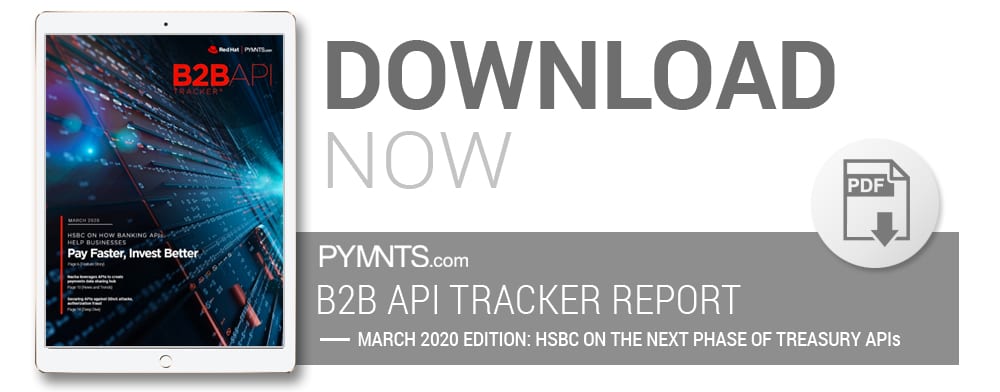
Exclusive PYMNTS Report: 

B2B APIs aren’t just for large enterprises anymore — middle-market firms and SMBs now realize their potential for enabling low-cost access to real-time payments and account data. But those capabilities are only the tip of the API iceberg, says HSBC global head of liquidity and cash management Diane Reyes. In the March 2020 B2B API Tracker, Reyes explains how the next wave of banking APIs could fight payments fraud and proactively alert middle-market treasurers to investment opportunities.

Share199Tweet124
usiscc

usiscc

  • Trending
  • Comments
  • Latest
Escape From Tarkov – How to Rotate Items

Escape From Tarkov – How to Rotate Items

February 5, 2020
Supply chain examination: Planning for vulnerabilities you can’t control

Supply chain examination: Planning for vulnerabilities you can’t control

December 7, 2019
Procurement Project Manager job with Camden London Borough Council

Procurement Project Manager job with Camden London Borough Council

February 17, 2020
Art Battle Wichita Falls III at The Warehouse, 1401 Lamar.

Art Battle Wichita Falls III at The Warehouse, 1401 Lamar.

0
Global Industry Analysis, Size, Share, Growth, Trends, and Forecasts 2016–2024 – ZMR News Reports

Global Industry Analysis, Size, Share, Growth, Trends, and Forecasts 2016–2024 – ZMR News Reports

0
PHOTOS: Ottawa firefighters respond to warehouse fire

PHOTOS: Ottawa firefighters respond to warehouse fire

0
Last Mile Delivery Market Worth Observing Growth | UPS, FedEx, SF Express

Last Mile Delivery Market Worth Observing Growth | UPS, FedEx, SF Express

April 23, 2024
Top 5 Spend Analysis Software ranked in 2024

Top 5 Spend Analysis Software ranked in 2024

March 1, 2024
How Tesla And BMW Are Leading A Supply Chain Renaissance With Blockchain

How Tesla And BMW Are Leading A Supply Chain Renaissance With Blockchain

January 19, 2024
  • Privacy Policy
  • Terms of Use
  • Disclaimer
  • DMCA
  • Contact Us

Copyright © 2024 United States International Supply Chain Commission (usiscc.org)

This website uses cookies to improve your experience. We'll assume you're ok with this, but you can opt-out if you wish. Cookie settingsACCEPT
Privacy & Cookies Policy

Privacy Overview

This website uses cookies to improve your experience while you navigate through the website. Out of these cookies, the cookies that are categorized as necessary are stored on your browser as they are essential for the working of basic functionalities of the website. We also use third-party cookies that help us analyze and understand how you use this website. These cookies will be stored in your browser only with your consent. You also have the option to opt-out of these cookies. But opting out of some of these cookies may have an effect on your browsing experience.
Necessary
Always Enabled

Necessary cookies are absolutely essential for the website to function properly. This category only includes cookies that ensures basic functionalities and security features of the website. These cookies do not store any personal information.

Non-necessary

Any cookies that may not be particularly necessary for the website to function and is used specifically to collect user personal data via analytics, ads, other embedded contents are termed as non-necessary cookies. It is mandatory to procure user consent prior to running these cookies on your website.

SAVE & ACCEPT
No Result
View All Result
  • Supply Chain
  • Logistics
  • Warehousing
  • Procurement
  • Shipping
  • More
    • Strategic Sourcing
    • Spend Analysis
    • Inventory
    • Contact Us

Copyright © 2024 United States International Supply Chain Commission (usiscc.org)







