






A lot of opinions have been expressed recently about the possible effects of the coronavirus on the Chinese supply chain. On one hand, there are people who say that the impact will be temporary and minimal. Conversely, others warn of possible significant disruptions to order fulfillment of manufactured parts sourced in China. I am in no position to weigh in on either position but, based on a recent discussion I had with a U.S.-based OEM, I can tell you negative impacts are already happening.
The company I spoke with has a joint product/manufacturing development program with a Chinese manufacturer. The two parties coordinate the work needed to bring the new product to market through weekly teleconferences. Three weeks ago, the Chinese company’s personnel failed to show up for the teleconference. Since then, that supplier has been incommunicado, not only failing to attend the net meetings but also to answer or otherwise reply to phone calls.
Without an explanation, the OEM can’t know for sure what is happening with their supplier which, by the way, has been a good partner on past projects. Normally at the first sign of trouble, they would have gotten someone on a plane and flown to China to find out what’s happening. But of course, under the current coronavirus-related travel recommendations, this option isn’t open to them. But their “gut” feeling is that this is somehow related to the virus.
The product this market is aimed for is highly seasonal, and the lack of communication with the negative financial impact will be great if product introduction is delayed a year—which could be a real possibility if contact doesn’t happen in the next week or two.
I know what is going on in this OEM’s mind, as I have a similar experience in my background.
Most of my career time was spent working for a division of a major corporation whose business was in off-road consumer and commercial equipment. We enjoyed a reputation for high value and quality. In other words, our products were the crème-de-la-crème. To support this position, we had product features above and beyond what was available elsewhere in the market. At one point, in fact, we offered the only liquid-cooled engines in our industry which, of course, offered performance and reliability advantages to heavy users. Because of this, we were able to obtain a premium price for products they were used on.
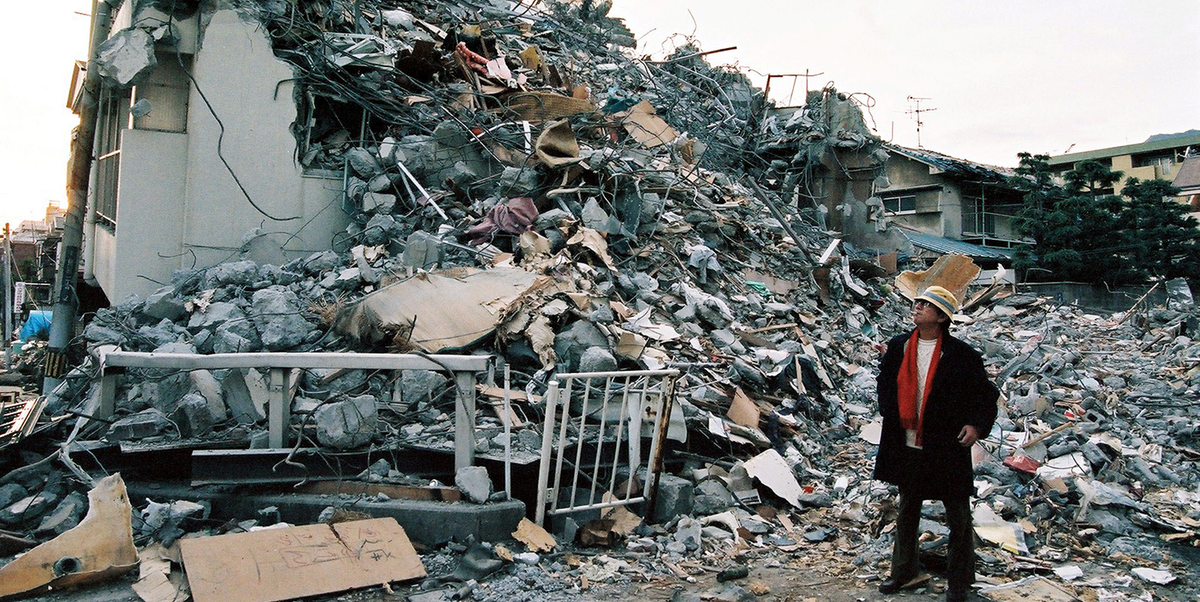
At the time, there was only one manufacturer in the world—located in Japan—of the liquid-cooled engines we needed. The company that produced them was located in Kyoto. In February of 1995, Kyoto experienced a severe earthquake. Since the city was only 13 miles from the epicenter of the quake, the intensity within Kyoto proper measured out at the maximum rating of the Japanese Meteorological Agency. In other words, it was bad.
Our engine supplier was in located right in this max impact area and their factory was severely damaged. Four thousand deaths were experienced in Kyoto, and a couple dozen of them were either factory employees of our supplier or their relatives. Over the years this supplier had operated as a true partner to my division, and our concern was not only for the production coming out of their factory but for their employees. My boss at this time was our factory materials manager, and he emphasized his concern about their personnel during his initial post-quake contacts with them and offered to help with whatever they needed.
The reality of our business situation, though, was that sales were extremely seasonal and that we built as close to demand as we were capable of. In other words, since bulk of our liquid-cooled equipped product would be sold from mid-April through May, production of this product would begin in our factory shortly. And only a fraction of the liquid-cooled engines we’d need to support our factory’s schedule were either on-site or already manufactured and in transit. And since these engines were used on our highest-margin products, we stood to take a pretty big financial “hit” if we couldn’t get more engines.
It’s difficult to talk about production with a supplier when their factory is in shambles and deaths have occurred, but that’s part of a purchasing manager’s job. My boss handled these discussions superbly. The supplier was highly motivated to do whatever they could to build engines to support our short sales season and we were willing to provide them with the resources to do so.
The supplier was up to the task. Luckily, most of their own suppliers had not experienced the damage they had. Partially because of this, they were able to refit and relocate their production and assembly equipment to undamaged areas of their shop and were producing engines within six weeks. Our financial people were both in awe and ecstatic that purchasing had been able to turn this around. To my boss’s credit, he told everyone that it was the supplier that deserved all of the accolades. Most of the engines were to be shipped from Japan on a single container ship departing in mid-March. This meant that they would be just-in-time for us to build the water-cooled product so important to our factory’s profitability.
A couple of weeks later, I saw my boss walking aimlessly around the department one morning. He didn’t look good, and I went over and asked him if he was ill or something was wrong. It took a few minutes for him to tell me that he had just received word that the ship carrying our engines had been hit in mid-ocean by a typhoon and virtually all of the containers with our engines had been swept overboard. In other words, our engines were now on the bottom of the Pacific Ocean and there would be no more production of product with the liquid-cooled engine feature this year.
Our financial year was destroyed. I think I understand what the OEM cited above was facing.
My employer did a “postmortem” on the liquid-cooled engine fiasco. We realized that there were things we could have done that in retrospect would have leveled out the risk we had of non-supply.
1. Bring these engines into our factory well before their scheduled production. This would eliminate the need for such quick response to any future Acts of God. Of course, it would eliminate Just-in-Time delivery and add cost. On the other hand, that cost is something that should be considered when there are no alternative sources for a particular product.
2. Ship the engines in multiple shipments instead of a single one. This would distribute risk by not having “all of our eggs in one basket.” The fact is, we normally had multiple monthly shipments, and the only reason they had been bunched together this time was the situation we faced. But still the shipment could have been divided into several smaller sequenced ones and still supported our needs. Spreading out the shipment of these engines would also have increased cost, but again, probably would have been worth it.
3. Ask our supplier to relocate their production stateside. We had done this before with other product-types and it did reduce the various acts-of-God risks. The issue here was that most of our supplier’s customers of these engines were—at least at the time—not located in the United States, and to open up a second factory here totally dedicated to my division’s needs would not be financially feasible, i.e. the price of the engines would have to go up too much.
This situation reinforces the idea that OEMs have a Plan B in their sourcing strategy—and consider the risks they incur in sourcing based solely on piece price.
Penny Wise and Pound Foolish
What is the status of country’s preparedness for addressing the coronavirus threat?
- Most victims suffer flulike symptoms early on. There is a kit that can be used to test for this at the onset of symptoms, but it is not readily available in the United States while in other countries—for instance Germany—there is no shortage.
- Reduced federal resources for developing a vaccine for the virus. At best, the earliest vaccine will be available about a year from now.
- Lack of clarity on the virus itself, with the White House and federal health care officials putting out conflicting views on its’ potential; i.e. should it be considered a “hoax” or a legitimate threat?
None of the above should be a surprise. Why? Since 2018, the Center for Disease Control’s (CDC) budget for epidemic prevention programs has been cut by 80%, scaling back efforts in 39 of 49 countries (including China). The Trump administration’s proposal for the 2020/2021 budget is to make similar cuts to the National Institute of Health (NIH). Yet, now we hear that both the administration and congress are talking about spending as much as $9 billion on emergency funding to both CDC and NIH.
So what did the country gain from the budgets cuts other than a lack or preparedness for the kind of health threat the coronavirus represents? I suspect this might be a case of penny-wise-and-pound-foolish.
I live in Washington state, and as of this writing we have already had nine confirmed deaths due to the coronavirus. This seems significant when compared to the minimal country-wide impact of ebola virus scare of 2014 when the federal government seemed to act in a coordinated and effective manner.
I’ve always been a fan of preparedness rather than firefighting. Especially when we know that the possibility of a larger world-wide epidemic is not an if but a when. The United States participates in world trade, so regardless of which country it may emanate from, there is always the possibility of that health-related threat coming to our shores.
It is better—and less costly, both in terms of the federal budget and U.S.-based manufacturing—that this country adequately fund those governmental institutions that will be the front line in defending us from such threats.










