






Words & photographs by Darren James
Updated
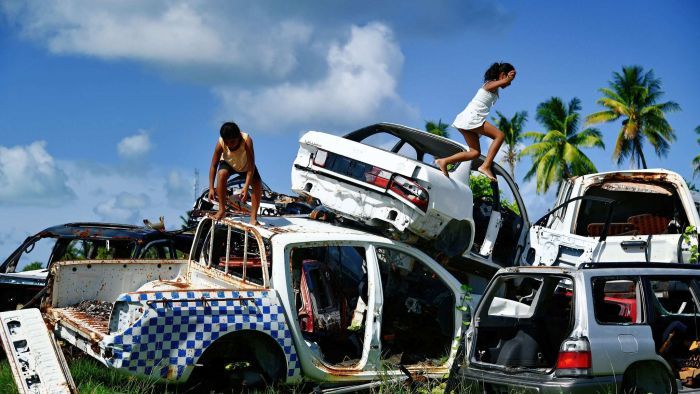
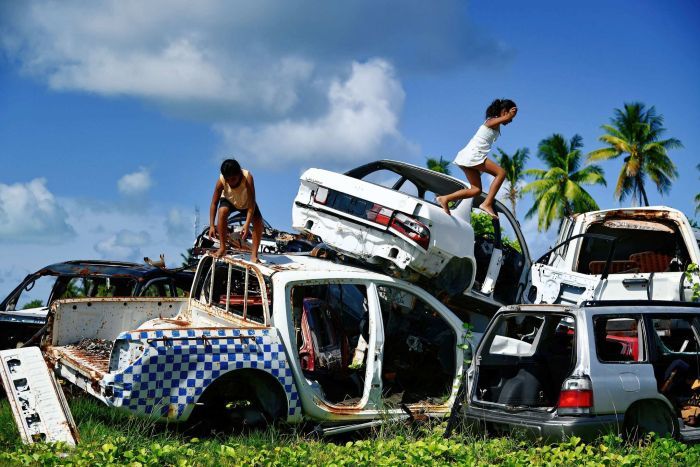
While known for pristine beaches and blue skies, Pacific Islands are also polluted with thousands of man-made monuments: rusting cars, trucks and other wreckage.
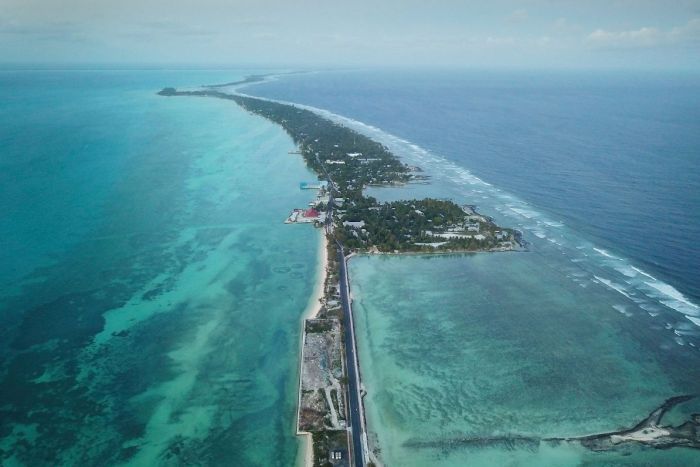
The 40-kilometre road that runs the length of South Tarawa in Kiribati is surprisingly busy: it will take more than an hour to travel its length, about half the time it took before it was paved a few years ago.
Travelling the length of any coral atoll can take a very long time, but travelling the width is rarely more than a few minutes’ walk.
Two or three generations ago, village life generally involved less long-distance travel. Food was sourced or produced locally and needs were met within comparatively easy reach.
Many weekly activities now involve greater distances, as people travel further for work, education, health care and commerce: more families have one or even two vehicles, and in densely populated areas, there are a lot of vehicles on the road.
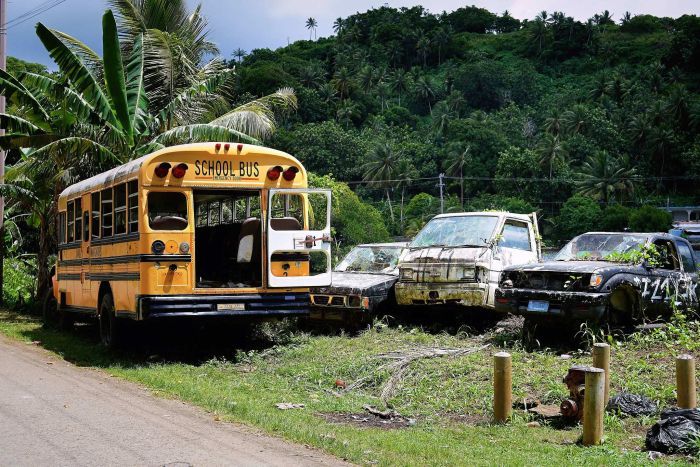
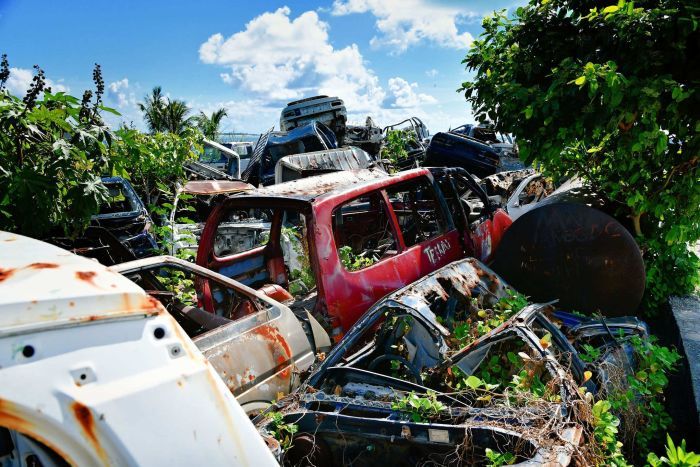
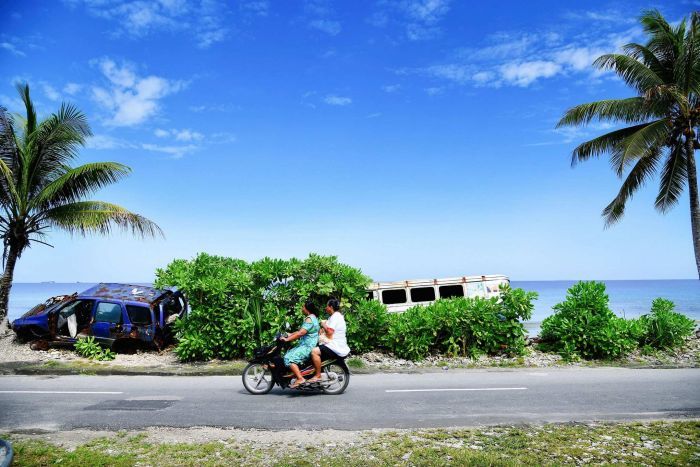
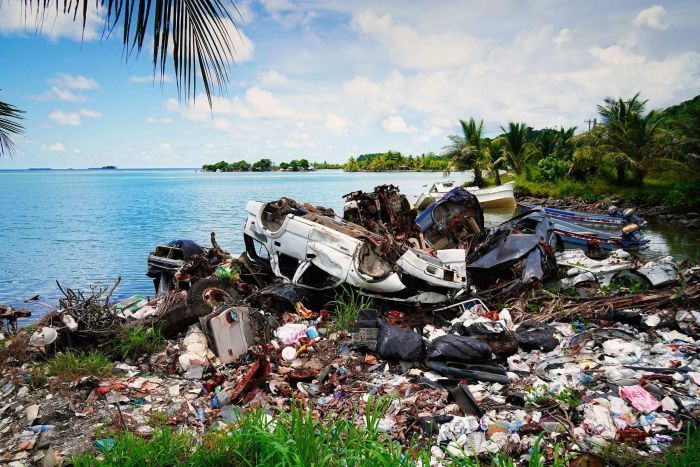
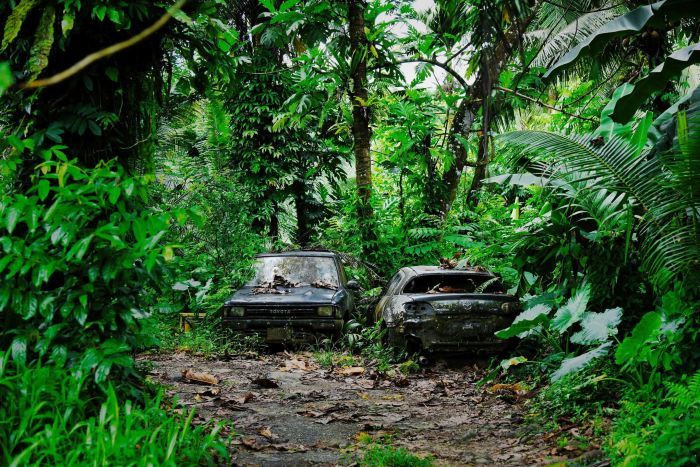
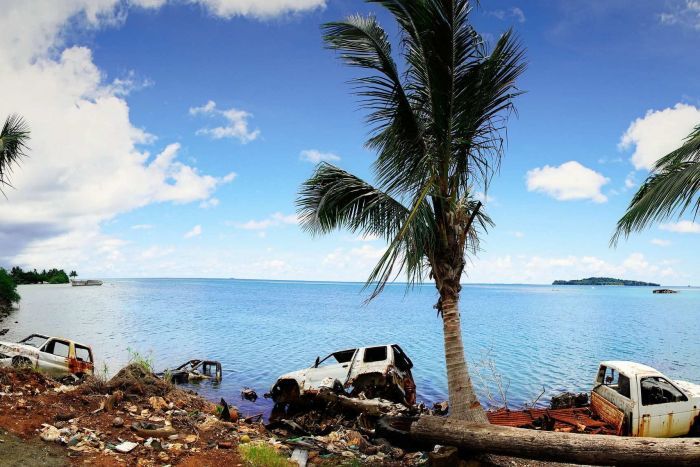
But there are also a lot of vehicles on the side of the road: thousands of broken-down cars, trucks, and buses take up front yards, open spaces and the beach.
Even when salvageable components have been stripped from an end-of-life vehicle, there remains a lot of unusable debris with very few suitable dumping places.
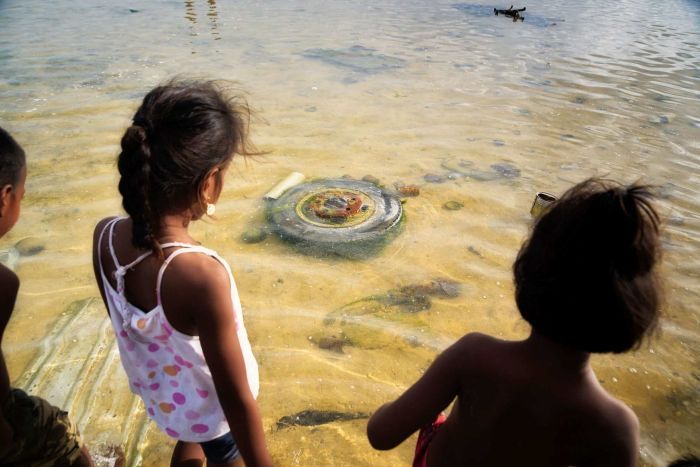
Whole car bodies, thousands of parts, and potentially millions of fragments, end up in the sand, on the rocks, embedded in reefs and in the streams, mangroves and lagoons.
Oil and other toxic fluids seep into ground water, paint flakes and plastics enter the ecosystem.
The long-term impacts on health are serious, especially for children.
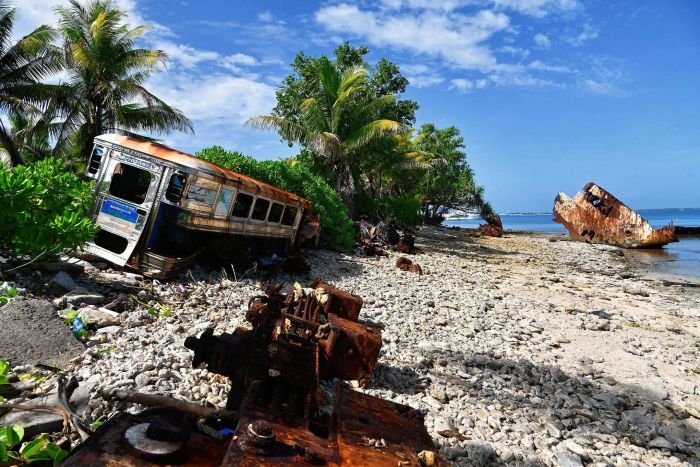
The steel will rust away eventually, but myriad toxic components — the chemicals and substances that make up a modern vehicle — will continue poisoning the fragile environment.
It’s a very similar situation in other atoll nations such as Tuvalu and the Marshall Islands, as well as smaller Pacific Island countries and territories.
There just isn’t adequate space to dump cars out of sight, as the land area for some of the small atoll nations is tiny: Tuvalu is just 26 square kilometres.
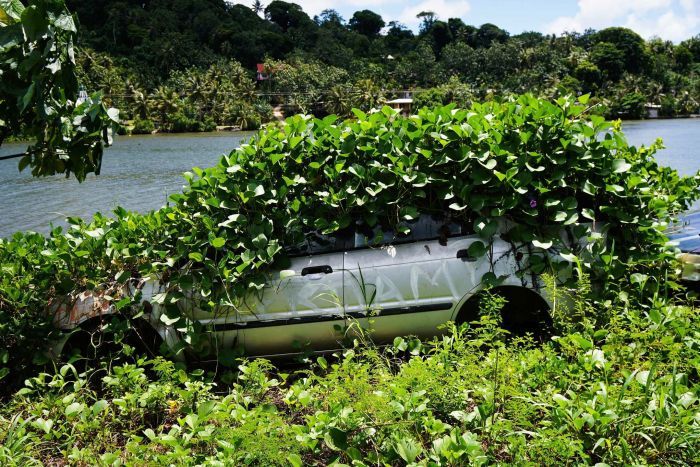
Cars with short lives
End-of-life vehicles (ELV) acutely exemplify the challenges of hard waste management. The highly visible rubbish in densely populated small islands is confronting.
Desire and capacity to own a car are increasing, but they often don’t last long here. Vehicles degrade rapidly in the highly corrosive and rough conditions of atolls and small islands.
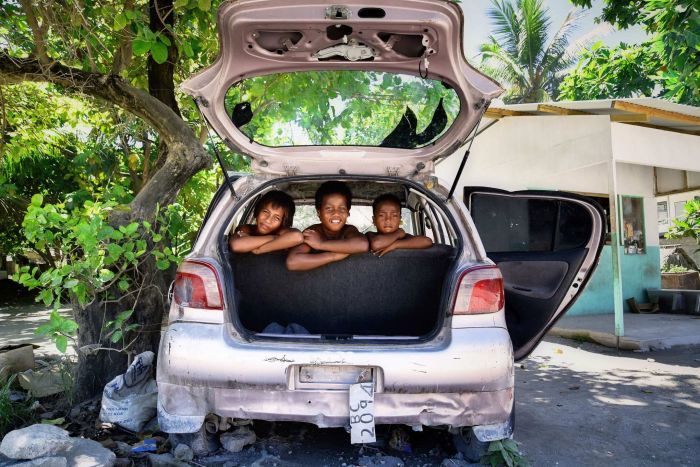
Sophisticated service requirements can’t be met in remote communities. Modern cars, often second-hand units from Japan, can have very short lives.
A repair that might require two hours and cost $500 in Australia could take two months and cost $2,000 on a remote island.
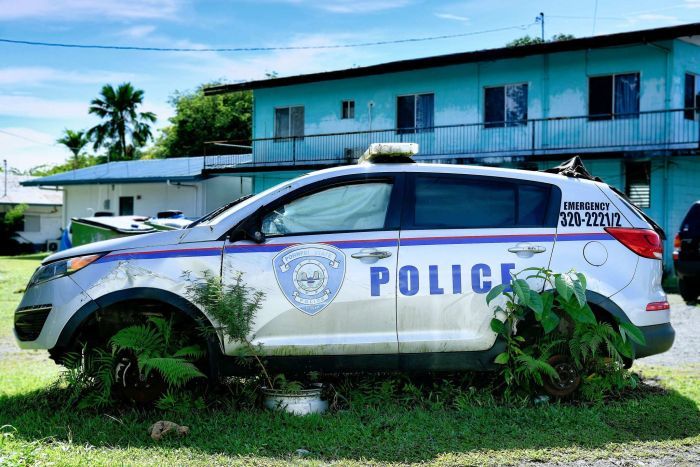
Relatively young cars can be written off over what should be a simple repair.
Vehicle wrecks make up a significant proportion of the hard waste on small islands, where it is cheaper to import a running vehicle than to get rid of a dead one, but they’re not the only issue.
Demand for Western goods is strong, and businesses are only too happy to profit by importing vast amounts of product.
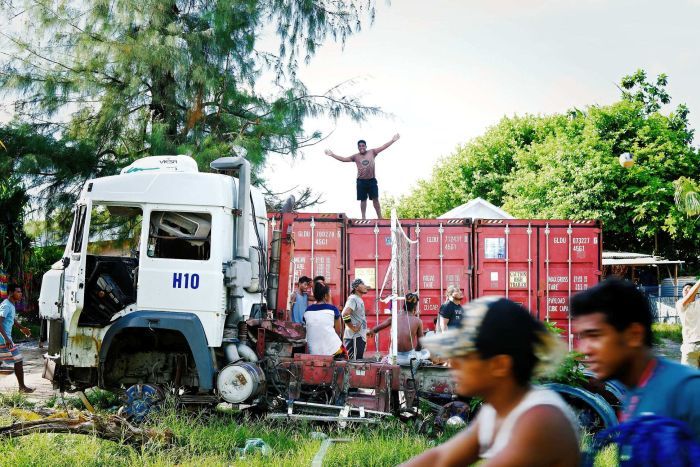
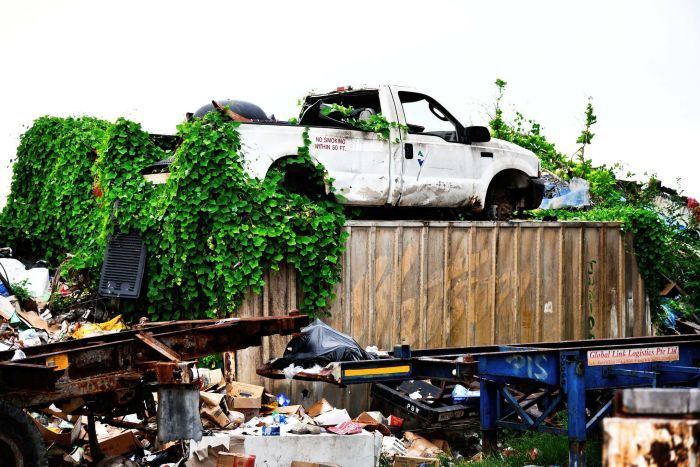
Freight traffic into the Pacific region is one-way when it comes to cargo, commodities and cars: shipping containers filled with products arrive, but there’s very little commercial export from these islands.
Containers leave empty, or remain and become hard waste themselves.
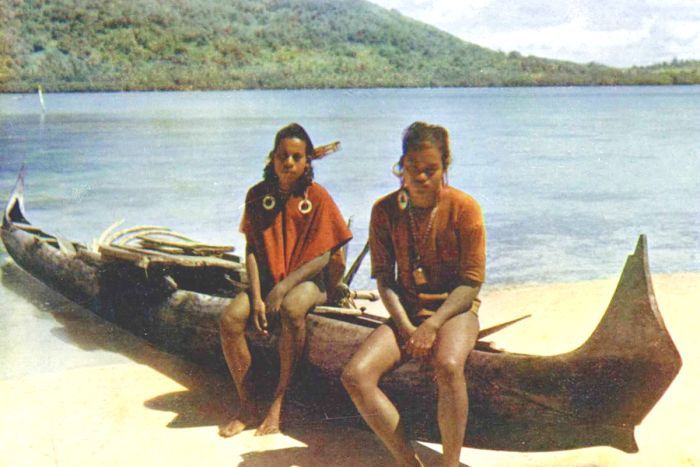
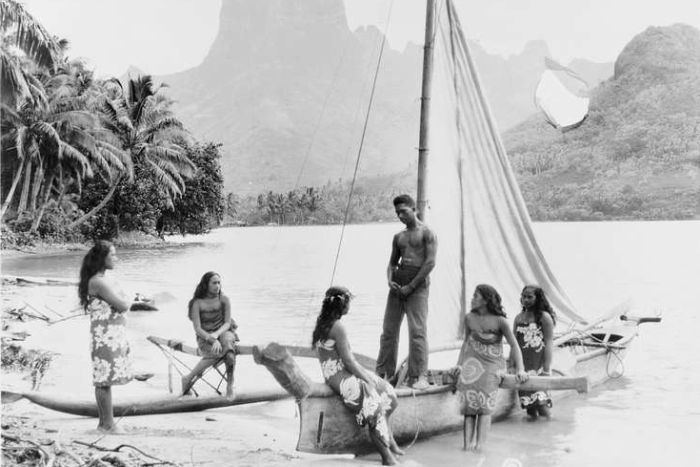
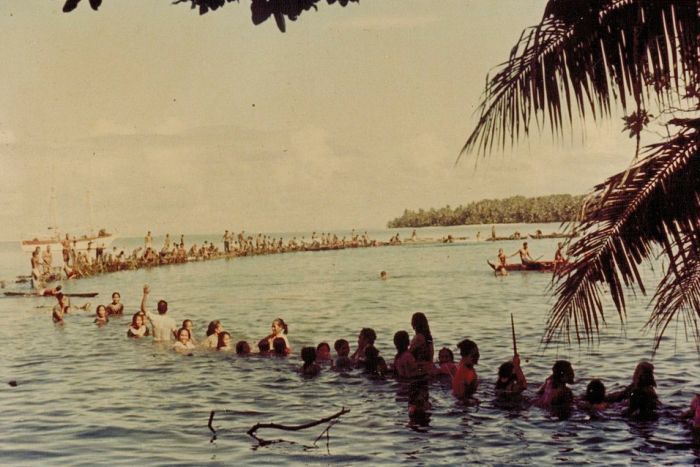
Long ago, the sea brought life and took away the waste effortlessly. Now the sea brings ships containing products that, when discarded, will not decompose.
‘It’s about markets’
There are some grounds for optimism: Pacific governments are increasingly engaging with the challenges of waste management, as the burden on limited landmasses becomes greater.
Problems are being acknowledged, causes identified, solutions sought and action taken.
Vastly improved collection services and modernised dumping sites are making tangible differences, and there are plans for a deposit system on cars that will help pay for their removal from the islands at the end of their life.
As education and awareness have increased, populations are more engaged in waste management activities such as sorting recyclables from general and organic waste.
Strong regional partnerships exist through the Secretariat of the Pacific Regional Environment Programme (SPREP), including the Moana Taka Partnership, a waste management project with shipping firm the China Navigation Company.
“The aim is to move non-commercial, recyclable waste, from the centre of the Pacific area, to the Pacific rim where it can be responsibly, competently and sustainably recycled,” said Simon Bennett, General Manager of sustainable development at the China Navigation Company.
The Singapore-based company ships the waste away from the islands free of charge, helping address the long-standing issue of freight costs.
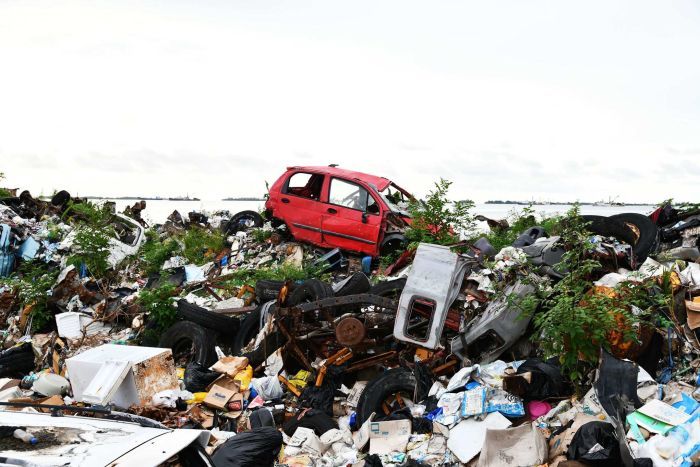
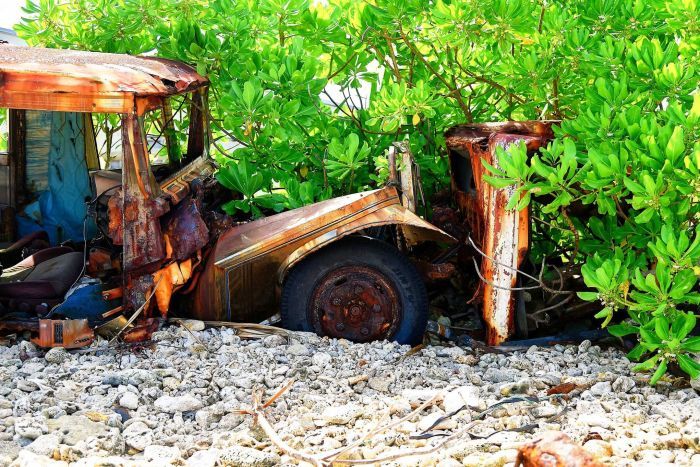
While there is plenty of space on the ships to take car wrecks away from the islands, the biggest hurdle is finding a place to send them for treatment and recycling.
“It’s not about space, it’s about markets,” SPREP pollution adviser Tony Talouli said.
The next step in the program is for a portable car crusher to be included on the same ship, that will then carry the crushed wrecks away.
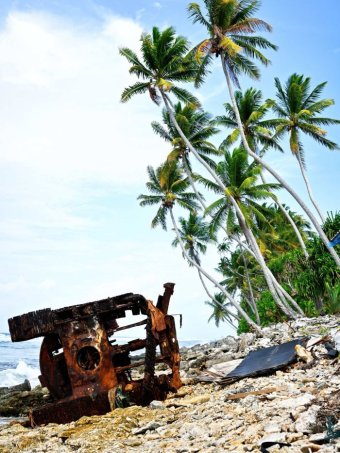
The goal is to have a circular economy for the whole vehicle, not just the metal.
It would be hard to overstate the negative impact of waste on Pacific Island nations. Contamination severely damages fragile environments and ecosystems, while the destruction of beautiful landscapes also affects tourism.
But far more important are the effects on the communities themselves: island cultures are inextricably linked to their environments, not only for food and shelter.
“There’s an impact in terms of our iconic marine species, that’s a concern for us,” SPREP’s Director General Kosi Latu said.
“Not just because of the need to conserve these iconic species, but these are part of our cultures, and so if they’re gone then part of our cultures has also gone.”
Credits
- Words & Photography: Darren James
- Historical Images: Wikimedia Commons and PICRYL
- Digital Production: Michael Walsh
Topics:
recycling-and-waste-management,
First posted










