

• Latest
  • Trending
  • All
Chinese forced labor is in US supply chain, Congressional report finds

Chinese forced labor is in US supply chain, Congressional report finds

March 15, 2020
Last Mile Delivery Market Worth Observing Growth | UPS, FedEx, SF Express

Last Mile Delivery Market Worth Observing Growth | UPS, FedEx, SF Express

April 23, 2024
Top 5 Spend Analysis Software ranked in 2024

Top 5 Spend Analysis Software ranked in 2024

March 1, 2024
How Tesla And BMW Are Leading A Supply Chain Renaissance With Blockchain

How Tesla And BMW Are Leading A Supply Chain Renaissance With Blockchain

January 19, 2024
LATAM Cargo strengthens European cargo links

LATAM Cargo strengthens European cargo links

April 14, 2020
Ford making reusable hospital gowns from airbag materials as efforts against coronavirus expand

Ford making reusable hospital gowns from airbag materials as efforts against coronavirus expand

April 14, 2020
Don’t Sweat NBC’s Decision to Cut Back on Television Ad Inventory

Don’t Sweat NBC’s Decision to Cut Back on Television Ad Inventory

April 14, 2020
Software firms sharpen focus on AI, big data as IT spending drops

Software firms sharpen focus on AI, big data as IT spending drops

April 14, 2020
Navigating turbulent times in your supply chain (TL:DR version)

Navigating turbulent times in your supply chain (TL:DR version)

April 14, 2020
Last Mile Delivery by Drones Market is Booming Worldwide

Last Mile Delivery by Drones Market is Booming Worldwide

April 14, 2020
AIR CARGO MARKET SIZE, SHARE, DEMAND, TREND, LATEST INNOVATIONS & APPLICATION ANALYSIS AND INDUSTRY GROWTH FORECAST 2027 – Science In Me

AIR CARGO MARKET SIZE, SHARE, DEMAND, TREND, LATEST INNOVATIONS & APPLICATION ANALYSIS AND INDUSTRY GROWTH FORECAST 2027 – Science In Me

April 14, 2020
Wheat procurement in Patiala: 6,500 coupons issued to farmers – cities

Wheat procurement in Patiala: 6,500 coupons issued to farmers – cities

April 14, 2020
Pandemic, Plastics And The Continuing Quest For Sustainability

Pandemic, Plastics And The Continuing Quest For Sustainability

April 14, 2020
  • Supply Chain
  • Logistics
  • Warehousing
  • Procurement
  • Shipping
  • More
    • Strategic Sourcing
    • Spend Analysis
    • Inventory
    • Contact Us
No Result
View All Result
United States International Supply Chain Commission
Home Supply Chain

Chinese forced labor is in US supply chain, Congressional report finds

by usiscc
March 15, 2020
in Supply Chain
0
Chinese forced labor is in US supply chain, Congressional report finds
492
SHARES
1.4k
VIEWS
Share on FacebookShare on Twitter

Washington D.C., Mar 12, 2020 / 03:00 pm (CNA).- Political, ethnic and religious prisoners are being used as forced labor in China, making goods that end up in U.S. supply chains, a new report from the U.S. China Commission has found.

As many as 1.8 million Uyghurs, ethnic Kazakhs, Kyrgyz, and other Muslim minorities are or have been detained in China’s Xinjiang Uyghur Autonomous Region (XUAR), a situation which groups like the U.S. Holocaust Memorial Museum are now calling a “crime against humanity.”

Victims or families of victims of the camps have reported numerous abuses in the camps, including political indoctrination, starvation, torture, beatings, and forced sterilizations.

The new report from the Congressional-Executive Commission on China (CECC), released on March 11, alleges that current and former detainees in the region have been forced to work in factories and in the agriculture industry, and that goods made with this labor are in the supply chains of major U.S. companies.

“Satellite imagery, personal testimonies, and official documents indicate that the XUAR

authorities are systematically forcing predominantly Muslim ethnic minorities, including Uyghurs, Kazakhs, and others, to engage in forced labor in the XUAR,” the report states.

Members of Congress on Wednesday condemned the abuses and introduced legislation to hold U.S. companies accountable for their supply chains.

“It’s injected forced labor into American and global supply chains. It’s injected forced labor under the Christmas tree. It’s injected forced labor in the boxes we give over for birthdays. And it’s injected forced labor in many of the things that we buy on a daily basis,” Sen. Marco Rubio (R-Fla.), co-chair of the China Commission, said upon release of the report on Wednesday.

“And this is a disturbing reality, and it’s one that we need to confront and we need to face.”

The new bill, the Uyghur Forced Labor Prevention Act, sets up accountability mechanisms to ensure U.S. supply chains are free of forced labor.

It grants sanctions authority for those complicit in forced labor in Xinjiang, requires SEC disclosures for companies engaged with certain entities in Xinjiang, and mandates that the Secretary of State to determine whether “atrocities” are taking place there.

The bill also includes a provision creating a “rebuttable presumption”—meaning that any imported goods sourced from Xinjiang will be presumed to have been created with forced labor. Companies wishing to import these goods must present “clear and convincing” evidence otherwise to U.S. Customs.

Rep. Chris Smith (R-N.J.), a commissioner and former chair of the China Commission, noted that as early as 1991, it was known that imprisoned democracy activists from Tiananmen Square were forced to make shoes in a Beijing prison. Despite evidence that prisoners in Chinese camps were forced to make goods exported elsewhere, Smith said that a subsequent “memorandum of understanding” of the U.S. against importation of such goods “wasn’t worth the paper it was written on.”

“This is a horrific tragedy,” he said of the ongoing treatment of Muslim Uyghurs.

The bill’s rebuttable presumption is key, he said, in that “the presumption of innocence shifts” to companies to prove that “their supply chain is clear and clean of this kind of horrific behavior.”

“It’s hard for anybody in America to believe that there’s forced labor camps. People being forced to work with no pay,” Rep. Tom Suozzi (D-N.Y.), a commissioner, stated on Wednesday.

“The only thing that the Chinese government will recognize is if we prevent them from continuing to export these goods, using forced labor, into our marketplace,” he said.

Some of these forced labor cases in the report occur within the internment camps, while others involve detainees being sent to factories upon their release from the camps. In still other cases, minorities are forced into labor without even being sent to the camps.

All this labor is done under the guise of “job training” or “poverty alleviation,” as the Chinese government claims.

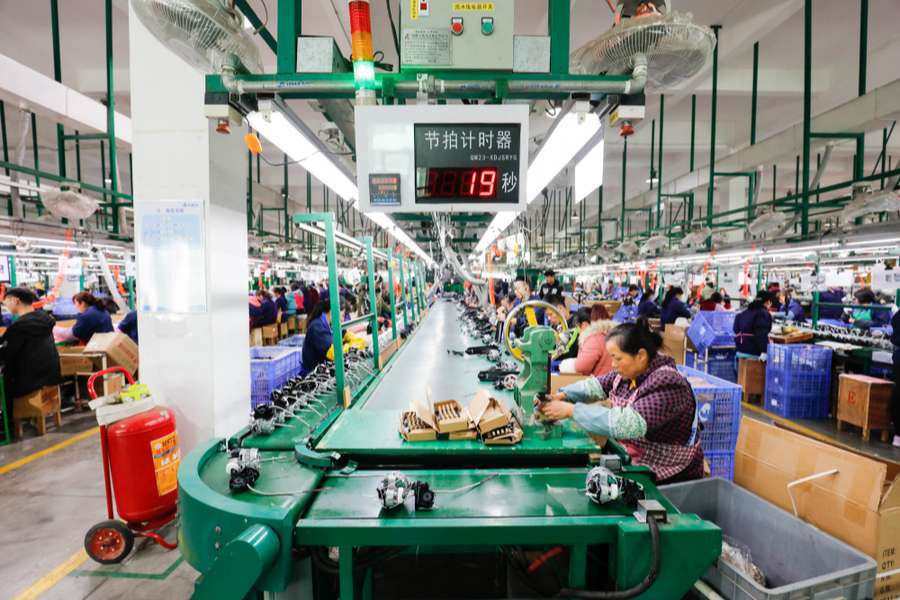
Good commonly made with forced labor include textiles such as clothing, bedding, and carpet, shoes, tea, electronics, and food products such as noodles and cakes.

Companies suspected of directly employing forced labor, or sourcing from suppliers suspected of using forced labor, include Adidas, Calvin Klein, Coca-Cola, Costco, H&M, Kraft Heinz, Nike, Patagonia, and Tommy Hilfiger.

The company Badger Sportswear announced in January of 2019 that it was ending its partnership with Hetian Taida Apparel because of its suspected ties to forced labor of detainees in Xinjiang.

Audits of which factories in the region are using forced labor will prove difficult, the report said, due to residents and detainees who may be afraid to speak out about poor conditions. Companies should instead assume that any goods sourced to the region are made with forced labor.

On March 5, an AP investigation reported that “mostly Muslim ethnic Uighurs” detained in camps were afterwards forced in work in a heavily-guarded factory within the supply chains of U.S. tech companies.

A document leaked in February from a local government authority in Xinjiang listed the names of around 3,000 Uyghurs under surveillance, with 484 being detained. Many of those were imprisoned for religious reasons or for family the religious or political behavior of family members. 

Share197Tweet123
usiscc

usiscc

  • Trending
  • Comments
  • Latest
Escape From Tarkov – How to Rotate Items

Escape From Tarkov – How to Rotate Items

February 5, 2020
Supply chain examination: Planning for vulnerabilities you can’t control

Supply chain examination: Planning for vulnerabilities you can’t control

December 7, 2019
Procurement Project Manager job with Camden London Borough Council

Procurement Project Manager job with Camden London Borough Council

February 17, 2020
Art Battle Wichita Falls III at The Warehouse, 1401 Lamar.

Art Battle Wichita Falls III at The Warehouse, 1401 Lamar.

0
Global Industry Analysis, Size, Share, Growth, Trends, and Forecasts 2016–2024 – ZMR News Reports

Global Industry Analysis, Size, Share, Growth, Trends, and Forecasts 2016–2024 – ZMR News Reports

0
PHOTOS: Ottawa firefighters respond to warehouse fire

PHOTOS: Ottawa firefighters respond to warehouse fire

0
Last Mile Delivery Market Worth Observing Growth | UPS, FedEx, SF Express

Last Mile Delivery Market Worth Observing Growth | UPS, FedEx, SF Express

April 23, 2024
Top 5 Spend Analysis Software ranked in 2024

Top 5 Spend Analysis Software ranked in 2024

March 1, 2024
How Tesla And BMW Are Leading A Supply Chain Renaissance With Blockchain

How Tesla And BMW Are Leading A Supply Chain Renaissance With Blockchain

January 19, 2024
  • Privacy Policy
  • Terms of Use
  • Disclaimer
  • DMCA
  • Contact Us

Copyright © 2024 United States International Supply Chain Commission (usiscc.org)

This website uses cookies to improve your experience. We'll assume you're ok with this, but you can opt-out if you wish. Cookie settingsACCEPT
Privacy & Cookies Policy

Privacy Overview

This website uses cookies to improve your experience while you navigate through the website. Out of these cookies, the cookies that are categorized as necessary are stored on your browser as they are essential for the working of basic functionalities of the website. We also use third-party cookies that help us analyze and understand how you use this website. These cookies will be stored in your browser only with your consent. You also have the option to opt-out of these cookies. But opting out of some of these cookies may have an effect on your browsing experience.
Necessary
Always Enabled

Necessary cookies are absolutely essential for the website to function properly. This category only includes cookies that ensures basic functionalities and security features of the website. These cookies do not store any personal information.

Non-necessary

Any cookies that may not be particularly necessary for the website to function and is used specifically to collect user personal data via analytics, ads, other embedded contents are termed as non-necessary cookies. It is mandatory to procure user consent prior to running these cookies on your website.

SAVE & ACCEPT
No Result
View All Result
  • Supply Chain
  • Logistics
  • Warehousing
  • Procurement
  • Shipping
  • More
    • Strategic Sourcing
    • Spend Analysis
    • Inventory
    • Contact Us

Copyright © 2024 United States International Supply Chain Commission (usiscc.org)







