


• Latest
  • Trending
  • All
Australia’s Medicine Supply Chain Is Vulnerable

Australia’s Medicine Supply Chain Is Vulnerable

March 16, 2020
Last Mile Delivery Market Worth Observing Growth | UPS, FedEx, SF Express

Last Mile Delivery Market Worth Observing Growth | UPS, FedEx, SF Express

April 23, 2024
Top 5 Spend Analysis Software ranked in 2024

Top 5 Spend Analysis Software ranked in 2024

March 1, 2024
How Tesla And BMW Are Leading A Supply Chain Renaissance With Blockchain

How Tesla And BMW Are Leading A Supply Chain Renaissance With Blockchain

January 19, 2024
LATAM Cargo strengthens European cargo links

LATAM Cargo strengthens European cargo links

April 14, 2020
Ford making reusable hospital gowns from airbag materials as efforts against coronavirus expand

Ford making reusable hospital gowns from airbag materials as efforts against coronavirus expand

April 14, 2020
Don’t Sweat NBC’s Decision to Cut Back on Television Ad Inventory

Don’t Sweat NBC’s Decision to Cut Back on Television Ad Inventory

April 14, 2020
Software firms sharpen focus on AI, big data as IT spending drops

Software firms sharpen focus on AI, big data as IT spending drops

April 14, 2020
Navigating turbulent times in your supply chain (TL:DR version)

Navigating turbulent times in your supply chain (TL:DR version)

April 14, 2020
Last Mile Delivery by Drones Market is Booming Worldwide

Last Mile Delivery by Drones Market is Booming Worldwide

April 14, 2020
AIR CARGO MARKET SIZE, SHARE, DEMAND, TREND, LATEST INNOVATIONS & APPLICATION ANALYSIS AND INDUSTRY GROWTH FORECAST 2027 – Science In Me

AIR CARGO MARKET SIZE, SHARE, DEMAND, TREND, LATEST INNOVATIONS & APPLICATION ANALYSIS AND INDUSTRY GROWTH FORECAST 2027 – Science In Me

April 14, 2020
Wheat procurement in Patiala: 6,500 coupons issued to farmers – cities

Wheat procurement in Patiala: 6,500 coupons issued to farmers – cities

April 14, 2020
Pandemic, Plastics And The Continuing Quest For Sustainability

Pandemic, Plastics And The Continuing Quest For Sustainability

April 14, 2020
  • Supply Chain
  • Logistics
  • Warehousing
  • Procurement
  • Shipping
  • More
    • Strategic Sourcing
    • Spend Analysis
    • Inventory
    • Contact Us
No Result
View All Result
United States International Supply Chain Commission
Home Supply Chain

Australia’s Medicine Supply Chain Is Vulnerable

by usiscc
March 16, 2020
in Supply Chain
0
Australia’s Medicine Supply Chain Is Vulnerable
495
SHARES
1.4k
VIEWS
Share on FacebookShare on Twitter

By Air Vice-Marshal John Blackburn AO (Retd) & Anne Borzycki, IIER-A

In February 2020, the Australian Financial Review (AFR) reported that Australia is dangerously dependent on imported medicine.

The report referenced by the AFR was published last month by the Institute for Integrated Economic Research – Australia(IIER-A).

The report highlighted that Australia imports over 90% of its’ medicines and is at the end of a very long global supply chain making the nation vulnerable to supply chain disruptions. Australia’s Therapeutic Goods Administration has acknowledged these supply chain risks and have noted that at times there may not be enough of a specific medicine in the Australian marketplace, leading to potential weaknesses in supply.

Australia is particularly vulnerable to medicine shortages arising from factors outside our control.

These factors can include manufacturing problems, political instability, pandemics, another global economic crisis and natural disasters.

The COVID-19 ‘pandemic’ has seen a significant increase in public discussion about supply chains and exposure to shortages of critical items because of long, complex and global supply chains.

The pandemic could significantly impact the global medicine supply chain given the global dependencies on China’s pharmaceutical industry. 

In February European Union health ministers raised concerns over the potential for drug shortages if the COVID-19 outbreak continued to keep China in a near lockdown.

Last week, concerns over supply chain shortages led the Indian government to place limits on the export of 26 pharmaceutical ingredients and the medicines and vitamins made from them.  India is one of the world’s largest producers and exporters of drugs, with the US and Europe heavily reliant on the supply.

A 2019 United States Congress Commission hearing regarding the US dependence on China for medicines highlighted that even the US, our largest individual source of imported medicines, does not have a robust understanding of its own supply chains.

The Commission concluded that an over reliance on foreign production for critical medication is a national security risk.

We would be foolhardy to think that our situation is any less risky.

The Australian national strategic stockpile of medicines and protective equipment has also been in the headlines.

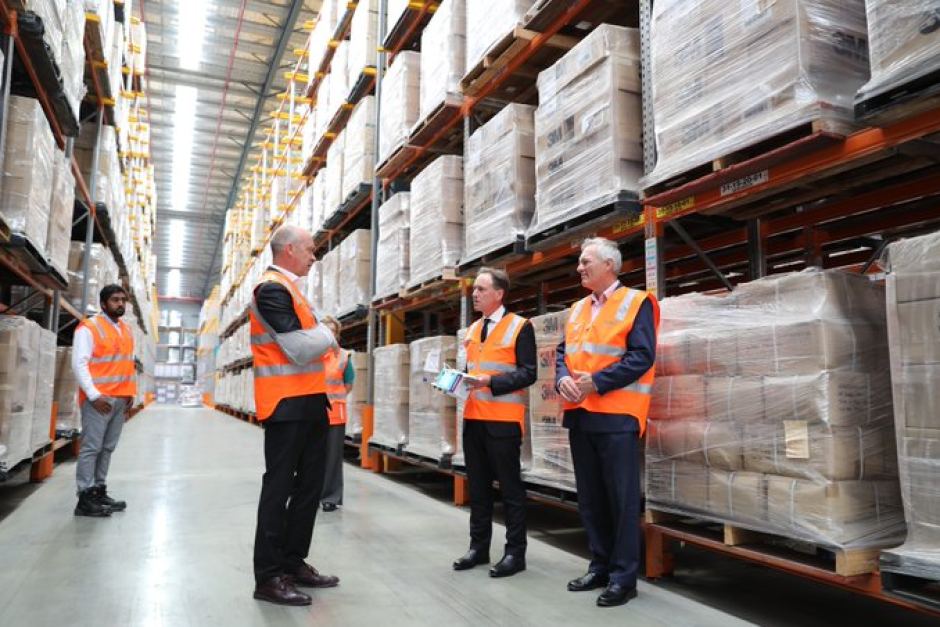
The stockpile was established in 2002 as a part of the Government’s anti-terrorism strategy and is intended for use in public health emergencies such as pandemics and biological attacks.   Images of the health minister in a huge warehouse can be vaguely reassuring to a population fearing the virus.

However, the IIER-A report concluded that while the national stockpile will be essential to protect Australians during a national health emergency, it will do little to help on a day-by-day basis if supply chains break down, if national distribution networks falter, if pharmaceuticals are contaminated or if the local pharmacy or hospital run out of something.

Last week, Australia’s Deputy Chief Medical Officer Paul Kelly said his department was “very actively looking, both internationally and locally” at sourcing key products, including drugs, protective masks and medical devices, in response to the disrupted supply of medicines and ingredients out of China.

Professor Kelly said that the two most crucial medicines the government would need to stockpile were antibiotics and antivirals.

This action does support the conclusion that the strategic stockpile is not adequate to address both a health and a supply chain crisis concurrently. 

Of particular concern is the just-in-time nature of Australia’s supply chains.

While just-in-time makes sound business sense, it makes Australians vulnerable to disruptions in the supply chain, be they inadvertent or deliberate.  The Sigma Healthcare boss, Mark Hooper, was reported in the AFR as saying that our three national wholesalers hold six weeks of products … If [the coronavirus] turns into a six-month exercise, then there are potential issues [with supply].”

So how do other countries address this issue?  

Finland, for example, mandates stockholding levels on pharmaceutical companies, importers and health care units.  Stockholdings vary from 3 to 10 months depending on the medicine; there are 1457 medicinal products in the list of mandatory reserve supplies that are visible to the public.  Companies are compensated yearly by the Finnish Government for the cost of maintaining these reserves.

Australians have no such visibility of the details of their national strategic stockpile nor of stock levels in our commercial supply chain. 

Photos of Health Minister Greg Hunt in a warehouse are not as reassuring as actual information.   While it is not practical for Australia to become fully self-reliant, the resilience that would be provided by an increased level of indigenous, or more appropriately called ‘sovereign’, capability needs to be determined.

Clearly Finland takes a much more comprehensive approach to mitigating its exposure to supply chain risk and vulnerability that we do in Australia.

We need to have a robust analysis of our medicine supply chains and the Government needs to address any shortfalls in our national resilience before another crisis occurs.  

Sadly, we may already be too late.

The featured photo shows Health Minister Greg Hunt touring one of the National Medical Stockpile warehouses in January.


Post Views:
68

Share198Tweet124
usiscc

usiscc

  • Trending
  • Comments
  • Latest
Escape From Tarkov – How to Rotate Items

Escape From Tarkov – How to Rotate Items

February 5, 2020
Supply chain examination: Planning for vulnerabilities you can’t control

Supply chain examination: Planning for vulnerabilities you can’t control

December 7, 2019
Procurement Project Manager job with Camden London Borough Council

Procurement Project Manager job with Camden London Borough Council

February 17, 2020
Art Battle Wichita Falls III at The Warehouse, 1401 Lamar.

Art Battle Wichita Falls III at The Warehouse, 1401 Lamar.

0
Global Industry Analysis, Size, Share, Growth, Trends, and Forecasts 2016–2024 – ZMR News Reports

Global Industry Analysis, Size, Share, Growth, Trends, and Forecasts 2016–2024 – ZMR News Reports

0
PHOTOS: Ottawa firefighters respond to warehouse fire

PHOTOS: Ottawa firefighters respond to warehouse fire

0
Last Mile Delivery Market Worth Observing Growth | UPS, FedEx, SF Express

Last Mile Delivery Market Worth Observing Growth | UPS, FedEx, SF Express

April 23, 2024
Top 5 Spend Analysis Software ranked in 2024

Top 5 Spend Analysis Software ranked in 2024

March 1, 2024
How Tesla And BMW Are Leading A Supply Chain Renaissance With Blockchain

How Tesla And BMW Are Leading A Supply Chain Renaissance With Blockchain

January 19, 2024
  • Privacy Policy
  • Terms of Use
  • Disclaimer
  • DMCA
  • Contact Us

Copyright © 2024 United States International Supply Chain Commission (usiscc.org)

This website uses cookies to improve your experience. We'll assume you're ok with this, but you can opt-out if you wish. Cookie settingsACCEPT
Privacy & Cookies Policy

Privacy Overview

This website uses cookies to improve your experience while you navigate through the website. Out of these cookies, the cookies that are categorized as necessary are stored on your browser as they are essential for the working of basic functionalities of the website. We also use third-party cookies that help us analyze and understand how you use this website. These cookies will be stored in your browser only with your consent. You also have the option to opt-out of these cookies. But opting out of some of these cookies may have an effect on your browsing experience.
Necessary
Always Enabled

Necessary cookies are absolutely essential for the website to function properly. This category only includes cookies that ensures basic functionalities and security features of the website. These cookies do not store any personal information.

Non-necessary

Any cookies that may not be particularly necessary for the website to function and is used specifically to collect user personal data via analytics, ads, other embedded contents are termed as non-necessary cookies. It is mandatory to procure user consent prior to running these cookies on your website.

SAVE & ACCEPT
No Result
View All Result
  • Supply Chain
  • Logistics
  • Warehousing
  • Procurement
  • Shipping
  • More
    • Strategic Sourcing
    • Spend Analysis
    • Inventory
    • Contact Us

Copyright © 2024 United States International Supply Chain Commission (usiscc.org)







