






Facing a severe drop in traffic and revenue associated with new coronavirus travel restrictions imposed by many countries, including Canada and the U.S., airlines are cutting flight schedules to the bone and taking other drastic measures that are seriously impacting frontline workers for the first time.
Bookings and cancellations are happening so fast that in some cases, airlines have downsized operations two or three times in the past week. And carriers are beginning to outline how gravely the coronavirus crisis is impacting their finances, with the specter of bankruptcy looming for less-capitalized companies.
Airline stocks continued their slide Monday, led by International Consolidated Airline Group and Air Canada, at 27% and 28.2%, respectively.
The situation could deteriorate even further for the airline industry. White House and Homeland Security officials said they are considering domestic travel bans that could restrict flights in certain areas. At a White House briefing, President Donald Trump didn’t go as far as saying there would be a blanket Federal Aviation Administration flight ban.
Several airlines on Sunday and Monday announced they are cutting seat capacity by 75% or more and parking a big chunk of their fleets, while Lufthansa Group said its airlines will cut long-haul capacity by 90% and short-haul supply by 80%.
Meanwhile, Lufthansa subsidiary Austrian Airlines is temporarily suspending all flight operations between March 19-28, and SAS Ireland, the Irish subsidiary of Scandinavian Airlines, said it is grounding all aircraft for one month as of this Wednesday, with all staff going on unpaid leave.
Last week’s decision by the European Commission to suspend until June 30 rules requiring airlines to use allotted takeoff and landing slots at busy airports, or lose them, has enabled airlines to consolidate schedules and ground aircraft immediately.
The disruption is making its way to Latin America too.
Late Monday, Brazilian airline Gol (NYSE: GOL) said it will reduce total flight capacity by 60 to 70% until mid-June with a 50 to 60% reduction in the domestic market and 90 to 95% reduction in available seats for international routes. The carrier said business was almost normal in February, but in the past few days there has been a precipitous drop in demand for air travel in Brazil.
The removal of passenger planes from service is also a problem for shippers because there is less space available now to carry cargo in the lower deck, forcing companies to look at all-cargo operators and ocean carriers as alternative transport modes.
North American Airlines
United Airlines (NASDAQ: UAL) said it is cutting capacity by 50% for April and into the busy summer travel period, but only expects load factors to be in the 20%-30% range on remaining flights. In the first two weeks of March, it has carried more than 1 million fewer passengers than in the same period last year and is projecting that revenue in March will be $1.5 billion lower than last March.
In a letter to employees, CEO Oscar Munoz and President Scott Kirby said they began talks with union leaders about how to reduce payroll expenses and are halving the salaries of corporate officers.
Last week, Munoz said he would not accept his base salary and deferred a salary increase. Like many airlines, United previously imposed a hiring freeze and offered a voluntary leave program, while also reducing capital expenditures and discretionary spending, but it has not been enough to staunch the bleeding.
“We’re facing an unprecedented challenge. When medical experts say that our health and safety depends on people staying home and practicing social distancing, it’s nearly impossible to run a business whose shared purpose is ‘Connecting people. Uniting the world,’” the leaders wrote.
United’s stock fell 14.8% on Monday.
Air Canada is also eliminating 50% of systemwide capacity, with available seats cut by about 75% in the trans-Pacific market as of April.
The airline said it expects to offset 50%-60% of second-quarter revenue losses with savings from significantly lower jet fuel prices, capacity and workforce reductions, and other belt-tightening measures. Combined with deferred capital expenses, it is targeting at least CA$500 million ($362 million) in savings to preserve cash.
Air Canada is also suspending its share-repurchasing program and borrowed CA$600 million from its line of credit. The company, which has CA$7.1 billion in liquid assets, said it is working to raise more cash in the next several weeks and is withdrawing its previous guidance for this year and next until it can get a handle on the rapidly changing situation.
Air Canada (TO: AC) also said it will explore with Boeing and Airbus the possibility of deferring aircraft deliveries scheduled for this year, including 17 A220 regional jets and six Boeing 737 MAX aircraft.
“We are confident that after a decade of transformation and record results, Air Canada today has the agility, the team and the route network to successfully navigate through this crisis. Most importantly for business continuity, it also has the necessary financial resources, including a solid balance sheet, record liquidity levels, higher debt ratings based on a low leverage ratio, and a significant pension plan surplus,” President Calin Rovinescu said in a statement. “These deep strengths enable us to fully focus our immediate attention on both the safety and well-being of our customers and our employees and on mitigating the financial impact of the virus.”
After announcing Friday it is pulling down 40% of its capacity, suspending service to most of Europe for a month and parking up to 300 planes, Delta Air Lines (NYSE: DAL) on Monday said it will pare an additional 10%-15% of domestic seats and is suspending its New York-to-Mumbai, India, service. Delta has shrunk its schedule to Latin America too in recent days. It’s stock was down 6.6%.
CNBC reported that Delta has reached agreement with the Air Line Pilots Association to let it offer partially paid time off. JetBlue is also asking employees to take unpaid leave.
As previously reported, American Airlines on Sunday said it is reducing its international schedule in coming weeks by 75% and parking 135 wide-body jets. The Dallas-based company earlier said it was retiring its E190 regional fleet by the end of this summer and its fleet of Boeing 757s by mid-2021. Helane Becker, airline analyst at Cowen investment bank, estimated that at least 2,000 pilots will be affected by the equipment decisions.
American (NASDAQ: https://www.barchart.com/stocks/quotes/AAL/overviewAAL) saw its stock price slide more than 16% on Monday.
Bloomberg reported that Delta and American are in talks to line up billions in financing for working capital. Earlier on Monday, Southwest Airlines said it had arranged a one-year term load for $1 billion, while United last week revealed that it received a similar loan for $2 billion.
U.K. Airlines
Virgin Atlantic said it will chop its schedule by about 80% to focus on core routes and store about three-quarters of its aircraft by March 26, with an additional 5% reduction in capacity following in April. Employees are being asked to take eight weeks of unpaid leave over the next three months, with the cost spread over six months’ salary in an effort to reduce costs without having to eliminate jobs.
The airline said the pilots and flight attendants union supported the measures.
Virgin also said it is offering employees a one-time voluntary severance package and a six- to 12-month sabbatical. It is deferring pay increases, reducing pension contributions for one year and reducing the amount of paid sick leave. CEO Shai Weiss has extended his 20% pay cut to the end of 2020, with corporate executives taking a 15% pay cut.
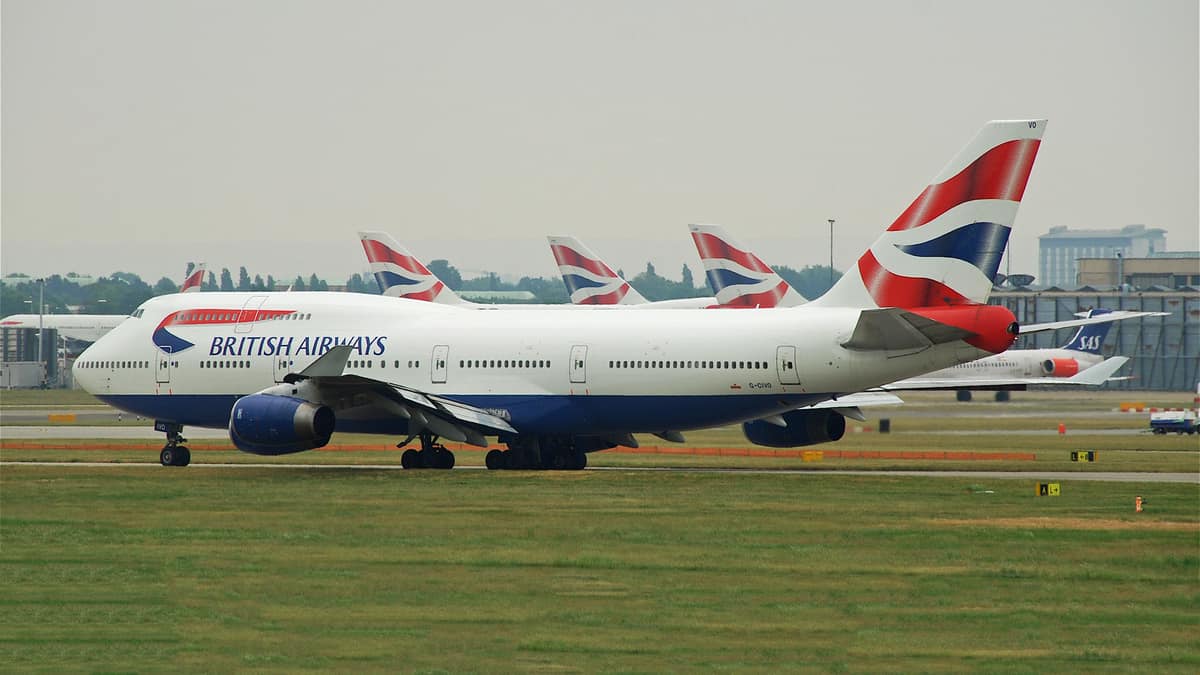
IAG Group (LN: IAG), the parent company of British Airways, said it plans to reduce passenger capacity by 75% for April and May and that CEO Willie Walsh will postpone his retirement to maintain management stability during the current threat. The company is also cutting many operational costs to save money, including non-essential and non-cyber-related IT spending, and reducing work hours.
It said it is in a strong cash position with 7.35 billion euros, with an additional 1.9 billion euros’ worth of aircraft that can be used as collateral for additional financing.
In addition to the temporary shutdown at SAS Ireland, charter airline TUI Airways is grounding all aircraft until further notice, and easyJet announced it will ground the majority of its fleet.
Manchester Airport Holdings, which operates East Midlands Airport, Manchester and London Stansted airports, said it plans to take a series of steps to protect the bottom line as passenger demand crumbles, including reduced work hours, temporary pay cuts and temporary layoffs.
European Airlines
Low-cost carrier Norwegian Air is grounding most of its flights and temporarily laying off 7,300 employees, or 90% of its workforce, including pilots. It’s a swift change of events for the company, which had undergone a significant restructuring and in February gave guidance that it expected positive results in 2020. The airline said the turmoil in capital markets has made it extremely difficult to secure loans and credit to finance operations.
Deutsche Lufthansa AG (D.IX: LHA) said it operated more than 17 special flights over the weekend with large aircraft to repatriate more than 4,000 stranded cruise passengers and tourists back to Germany and that group airlines, including Swiss International Airlines, Brussels Airlines and Eurowings, will continue to carry out evacuation flights to Germany, Austria, Belgium and Switzerland.
The company also said it is suspending its dividend for fiscal year 2019 to preserve cash and raised about 600 million euros ($666.5 million) in credit. It currently has about 4.3 billion euros in liquid assets. Lufthansa Group, which owns 86% of its fleet, is looking to raise additional funds secured by its aircraft. It said the fleet’s book value is about 10 billion euros.
Lufthansa stock was down 7.71%.
Unlike the passenger airlines, Lufthansa Cargo has so far been able to carry out all of its planned freighter flights, with the exception of deletions to mainland China.










