






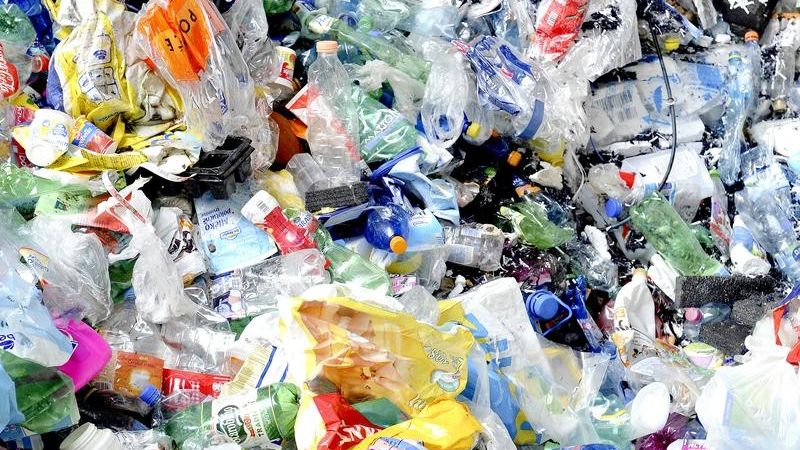
Australians will have to get a lot better at the full process of recycling as exports of unprocessed materials are banned, the waste management industry warns.
And the sector’s peak body says households and local councils will wear the cost of the bans unless producers are made to take responsibility for their packaging and products.
The Council of Australian Governments agreed on Friday to a timetable for the bans, starting with unprocessed glass in July 2020.
By mid-2024, unprocessed plastics, whole used tyres, and mixed paper and cardboard will all have to stay onshore.
The ban won’t stop businesses selling processed waste material, such as plastic flakes or paper pulp.
Environment Minister Sussan Ley said the ban is about Australians saying our waste is our responsibility.
“This is about waking up to an issue that has been buried in landfill for too long,” she said.
But the Waste Management and Resource Recovery Association of Australia says individuals already pay and it’s those companies that create the waste who need to step up.
“The overriding issue we have … is that we seem to think that it’s enough to put it in a bin and we never really got that closed-loop approach that, no, you’re only recycling if you’re buying recycled,” chief executive Gayle Sloan told AAP.
While some companies are starting to market things like shoes and activewear made out of recycled plastic bottles, Ms Sloan said it’s better to design products to be reused or recycled.
“We prefer that plastic bottles are made back into plastic bottles, so that we’re not letting the beverage manufacturers who use that material off the hook,” she said.
She wants to see more extended producer responsibility programs, like the existing container deposit schemes, that put the cost of waste disposal onto the companies that created the problem.
“In the absence of doing that, we’re then looking again at households and local councils to pay the cost of those services,” she said.
The COAG strategic paper notes the commonwealth “will play its part by providing national leadership” and promises policy certainty.










