







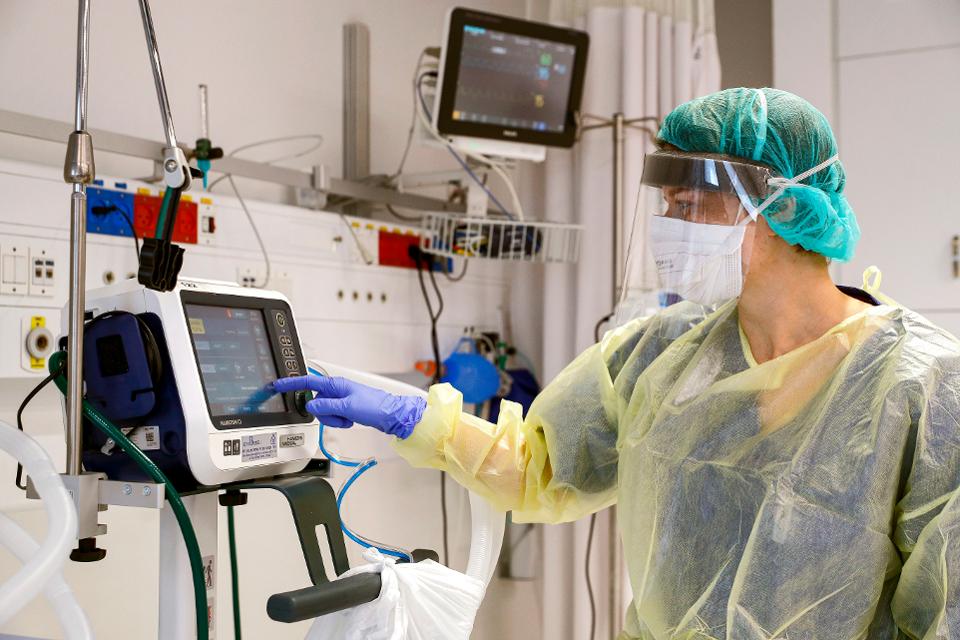
New hospital service opens for coronavirus patients at Samson Assuta Ashdod University Hospital in … [+]
AFP via Getty Images
The COVID-19 crisis has put unprecedented strain on the global supply chain of every product, but most acutely on critical medical supplies.
Companies in the US are converting supply chains to manufacture critical supplies such as personal protective equipment, COVID-19 Test Kits and ventilators. New open source movements are stepping up around the world to try address growing ventilator shortages.
Internationally, as COVID-19 cases in China have fallen, factories are slowly coming back online. This is at the same time as demand around the world is starting to skyrocket for critical supplies.
Multi-million dollar contracts that usually take months to negotiate, are being inked within hours. However, one of the key bottlenecks has been the lack of trust between demand, supply and the financing mechanism.
Broken medical supply chains
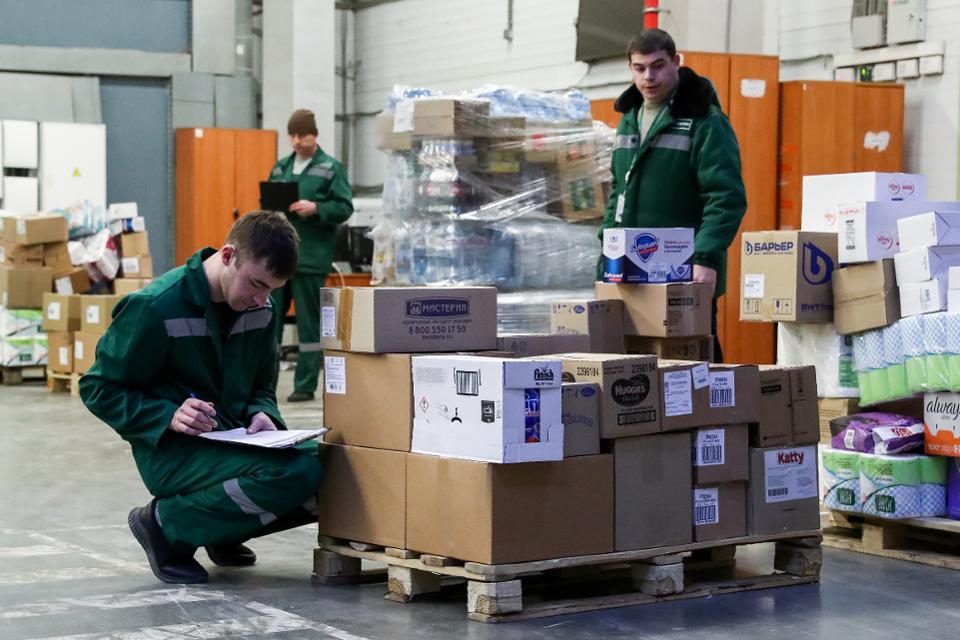
Goods stored in a distribution center of the Perekrestok retail chain at the Sofyino logistics … [+]
Stanislav Krasilnikov/TASS
Governments and Health Systems around the world have particular requirements for each system (e.g., a confusing array of EU standards, US FDA standards, non-EU standards). These standards are being updated almost weekly to allow for more supplies to come online to meet forecast demand.
Governments around the world are battling to overcome legacy procurement systems that cannot move at the pace this crisis demands. This means countries around the world are missing out on supplies because they cannot get financial mechanisms in place in time (hours, rather than weeks).
Many suppliers around the world are insisting on upfront cash payment as they try to distinguish credible buyers from brokers and middle-men distributors. There has been widespread reports of fraudulent production and fraudulent claims across the medical and personal protective equipment supply chain. There are risks that equipment may not arrive in the right specifications at the right locations at the right time.
There is essentially a trust breakdown across the medical supply chain globally.
The 5 Trust Challenges facing the medical supply chain
Trust in the global medical supply chain is broken
Getty
1. Product Requirements: standards vary across health systems and countries, creating confusion for what each factory should be producing.
2. Supplier Credibility: there is uncertainty over which suppliers can produce equipment to the right quality, at the right production volume, at the right time.
3. Financial Payments: factories and freight companies are requiring financial payments be made upfront as their workers slowly come back online, and they themselves are trying to prioritize credible purchase requests.
4. Customs Certifications: Customs Certifications need to be rapidly validated to allow rapid transportation of equipment internationally, given that medical equipment is highly regulated.
5. Transportation Tracking: transport options need to be validated to ensure the right shipments can move from factories to airports to distribution centers to health centers around the world, under the right conditions (e.g., temperature controlled for pharmaceutical products).
What is blockchain?

Blockchain can unblock the global medical supply chain, strengthening trust among all parties.
Getty
Blockchain is a novel smart contract technology that has been used to guarantee crypto-currencies such as Bitcoin, as well as ensure provenance of supplies. In the sustainability world, blockchain has been used to verify the ethical source of minerals, seafood, fresh produce and forest products, among others.
It uses a deep encryption system, which enables contracts to be regulated in a more decentralized manner, and secure enough to allow financial payments to flow through such a mechanism. There are both private and open-source blockchain systems, with each system encouraging coordination and collaboration, above one particular party having too much control over the market, and rapid dispute resolution.
What role could blockchain play in the medical supply chain?
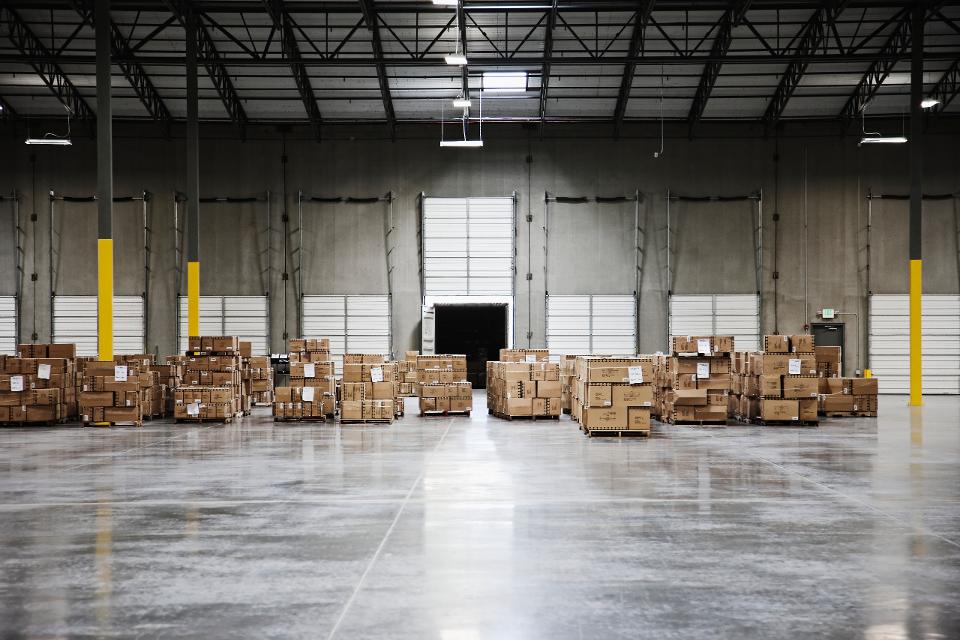
Cardboard boxes at loading dock in warehouse
Getty
Currently there is no centralized procurement system governed by a central body (as Central Banks regulate the financial system centrally). It is a situation where demand for critical supplies are spiking around the world, these Healthcare Systems are unable to verify which ones have credible manufacturing capacities, traditional supply chains have been globally disrupted, new vendors are appearing with credibility challenges, and suppliers are trying to distinguish credible purchasers or ensure their production inventory will be purchased.
Traditional tools of excel sheets and google forms are currently being used to govern supplies, with legal contracts being uncertain, inability of individuals to fly to verify factories’ capacity and breakdown of trust of the trade finance and letters of credit traditional payment mechanism.
Lack of trust is the biggest bottleneck preventing this market ramping up quicker, and speed is of the essence in the next few weeks.
5 Ways Blockchain can help
Blockchain can help with Certification of supplies
Getty
1. Product requirements: provide a mechanism for health systems to continually update factories with the latest product requirements and specifications, almost like a production auction.
2. Supplier credibility: provide a way for health systems to credibly assess which factories have high quality control, and can meet the specifications and production volumes needed.
3. Financial Payments: act as a trade finance mechanism to ensure upfront blockchain-backed payments to factories that is then released as working capital upon pre-agreed production milestones and as supplies move to the next step of the supply chain.
4. Customs certifications: blockchain-based Customs Certifications have been used to regulate export of many products from wildlife trade to pharmaceuticals, and can be applied here.
5. Transportation tracking: supplies need to be securely tracked around the world to ensure transparency in the supply chain, which can occur with blockchain-based provenance tracking.
Is there a broader role for blockchain?
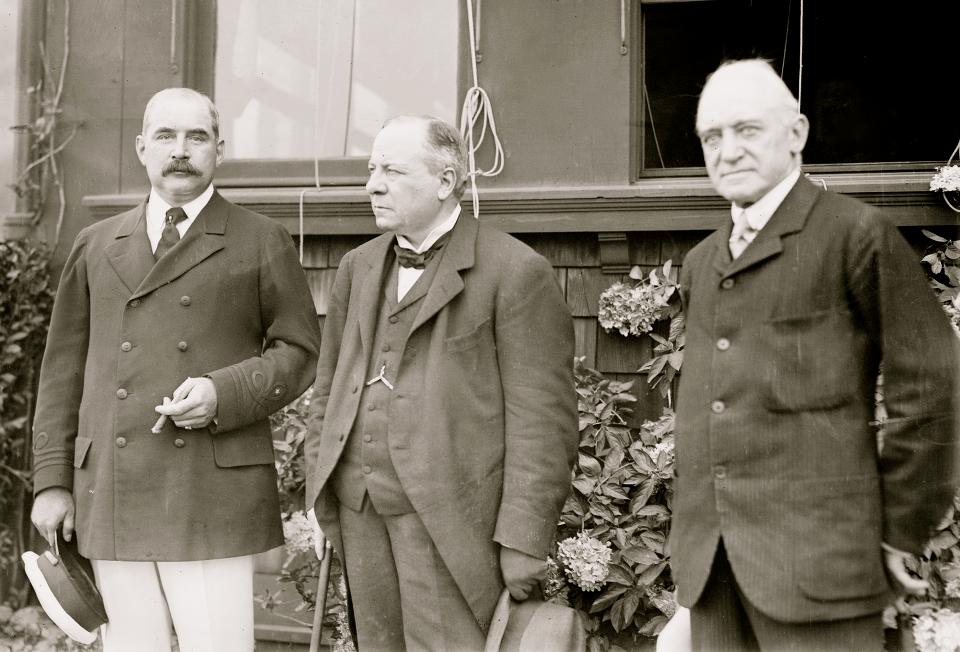
From L to R: Financier J.P. Morgan Jr. (1867 – 1943), British politicians Richard Haldane, 1st … [+]
Getty Images
As the US Congress explores a $2 Tillion Economic Stimulus Package, a blockchain solution could also help ensure companies adhere to conditions set in such a package.
For example, guaranteeing worker retention, committing to new standards to rebuild their companies (e.g., on executive compensation, share buy-backs). This could also by applied to commitments around lower carbon standards in line with the Paris Agreement, that should be conditional in any corporate bailout.
This is a war-time effort unlike anything faced in a generation.
In 1915 during WW1, JP Morgan Jr and a syndicate of 2200 banks stepped in as the official purchasing agent for the British, French and US Government for critical war supplies such as steel, chemicals, foods, cotton, to get the allies up and running with war production capacity.
Nothing short of this sort of concerted effort is needed now.










