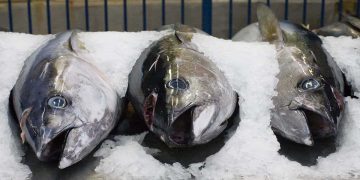






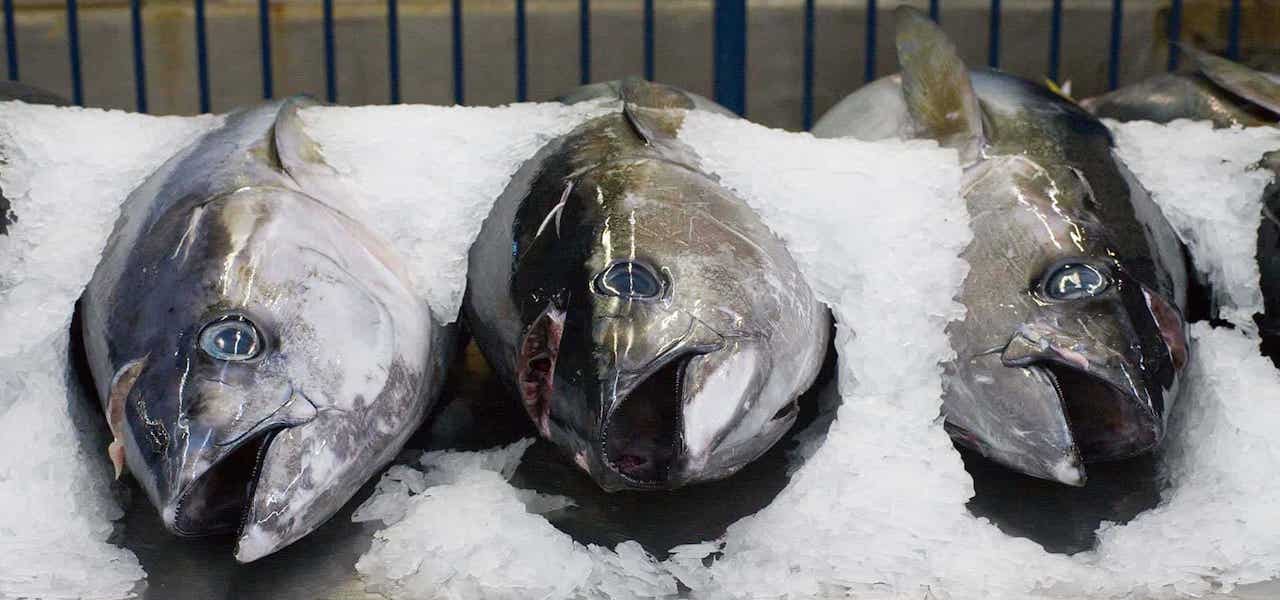
Tuna Australia members have been hit hard by the coronavirus pandemic – and the future doesn’t look promising.
Within days of the pandemic taking hold, there was a significant economic shock to members’ business operations, threatening their economic viability, reports Kate Bevitt.
Direct sales to international wholesalers and restaurant chains have ceased as they have stopped buying fish due to low demand, at the same time as the Japanese fresh fish market is depressed due to weak restaurant demand, although wholesale fish prices are related to supply.
Domestic wholesalers have stopped purchasing fish due to weak demand and buyers have said it is unknown when they will start purchasing again.
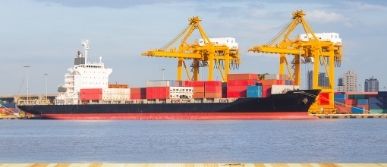
Further problems are due to flights to the US and Japan having limited air freight space, if any at all, while Tuna Australia members do not have access to other Asian markets and obtaining stores to provision fishing vessels has hit obstacles.
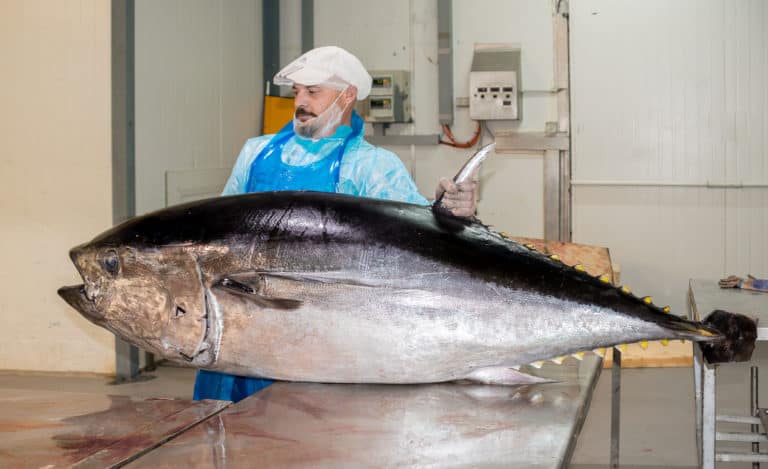
‘While government assistance is very welcome in this time of global uncertainty, fundamentally, we need to have a market for our fish,’ said Tuna Australia CEO David Ellis.
‘If the government can assist tuna producers by facilitating access to markets, such as subsidised freight using cargo planes, then we are going to be in a better position.’
According to 4 Seas owner Adam Whan, his business, one of the biggest operators in the Eastern Tuna and Billfish Fishery, has been hit hard by the coronavirus outbreak.
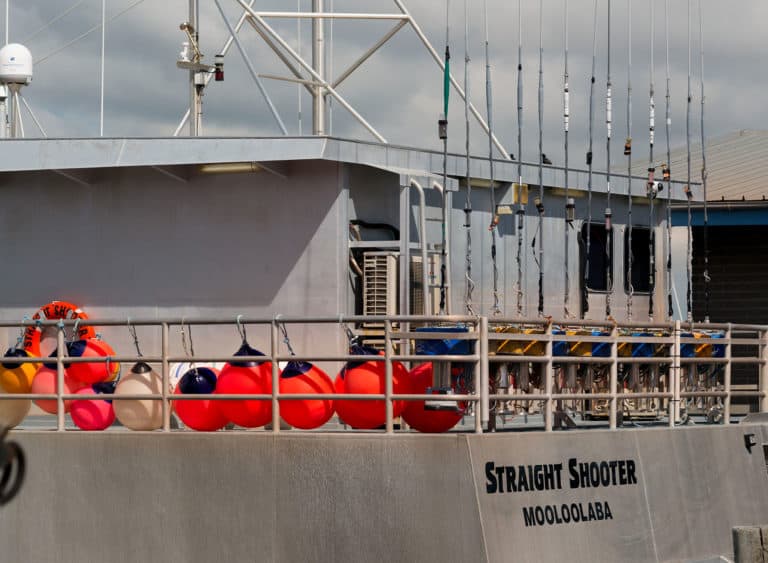
‘Our business, which operates five vessels out of Mooloolaba, is primarily export focused. But worldwide demand has dropped. Our export facility processes up to 700-800 tonnes of fish annually and that’s gone to zero. It’s a massive impact. The business has no access to markets right now,’ he said.
‘The airlines have dropped out of the skies. There’s no way to get product to the US. And the one airline still flying to Japan will soon be stopping.’
Typically, from March to October, 4 Seas distributes 30% of its product locally and 70% is exported. During the warmer months, from November to the end of March, the numbers are reversed.
‘We can’t dream of catching the same quantity of fish, nor can we simply put it all through the domestic markets. If we push our product into the market, that drives down our prices and that of other seafood operators,’ he said.
Despite having ‘a few things to turn to,’ Adam said his business is exploring some different options.
‘We could go into frozen albacore as that’s still a live market. We’re looking at sea freight. And canneries are an option, as they’re still operating around the world, albeit with 14 days restrictions to enter port.’
To tread water, Adam said that the industry needs to be able to move product, even at a reduced rate.
‘The best thing would be for airline companies to realise that there’s industry demand for flights. Put freight planes back in the air, and if the government subsidised the freight cost then this would alleviate some pain,’ he said, adding that it’s critical that unused quota catch, which will be affected substantially, be carried over.
‘We won’t be catching our allowable catches or quota holdings. We’d like to see our unused quota rolled over into 2021 and 2022. That will help us to get rolling when we start back up again.’
Walker Seafoods owner Heidi Walker said that coronavirus is a ‘real rollercoaster ride’ at the moment.
‘With the scale of our business, the number of people we employ and our level of debt, it’s fairly terrifying. We’ve got five boats coming in and nowhere to send the fish,’ she said.
The Mooloolaba-based business exports 80% of its product to the United States.
‘As of Monday, no-one in the US wants our products,’ she explained. ‘We’ve reached out to every customer – some have already closed down, and there are no flights. So even if our customers want our fish, they can’t get it. It’s the same in Sydney and Melbourne. The wholesalers, restaurants and food service industry don’t want our fish.’
Heidi said that she’d like to see more support from the government and banks to assist with the ‘big issue’ of cashflow.
‘We’d like the state government to waive payroll tax for twelve months. I’ve spoken with the banks. I’d like to see them waive interest and principle repayments for a period of time. The big Australian retailers must also play their part in supporting industries like ours,’ she said.
‘I’d love them to step up and support products that people can’t move overseas [like tuna] and will be cheaper for consumers.’
Heidi says Walker Seafoods is exploring new options to navigate these hard times.
‘We’re toying with canning tuna but it’s very difficult because Australian labour costs are high,’ she said.
‘We’ll push into the local retail market. We’ve spoken with local retailers who have started doing home deliveries. Normal customers are getting home deliveries and doing pick up and go. So we’ll focus more on these stores,’ she said, commenting that it’s critical for the longline tuna industry unite as one to weather this storm.
‘We’re all in this together and now is the time to support each other and work out solutions.’
For Cathal Farrell at Upscale Seafoods, uncertainty is the biggest problem he sees arising from the coronavirus pandemic.
‘You can deal with adverse conditions. But uncertainty is very hard to deal with because you don’t know what decision or move to make,’ he said. ‘It’s affecting every facet of our business.’
Between 70 and 80% of Upscale Seafood’s traditional distribution channels have been shut down.
Cathal says his business and other operators will need to quickly access new channels like supermarkets, ‘where we traditionally haven’t been very active.’
‘We want to see a change in the position of big retailers, who need to help local industries. For example, they could suspend adherence to only purchasing Marine Stewardship Council (MSC) approved products as a temporary measure,’ he suggested.
Echoing Heidi’s sentiment, Cathal says that industry support will be critical over the coming months and what will help is an industry-wide approach, not a splintered diversified approach.
‘As individuals, we wouldn’t know how to start approaching Woollies or Coles or how to get our product in there,’ he said. ‘We need to take an industry approach to get products into supermarkets.’