





The Pacific halibut fishery opened on March 14 amid little fanfare and flattened markets.
The first fish of the eight-month season typically attracts the highest prices and is rushed fresh to high-end buyers, especially during the Lenten season. But that’s not the case in this time of coronavirus chaos, when air traffic is stalled and seafood of all kinds is backlogged in global freezers.
Alaska’s share of the 2020 halibut catch is about 17 million pounds for nearly 2,000 fishermen who own shares of the popular flatfish. A week into the fishery, fewer than 50 landings were made, totaling just over 262,000 pounds, and as anticipated, prices to fishermen were in the pits.
Earliest price reports at Homer were posted at $4.20 to $4.40 per pound, Kodiak prices were at $3.25 for 10- to 20-pounders, $3.50 for halibut weighing 20 to 40 pounds and $4 for “forty ups.” Prices ranged from $3.75 to $4 at Yakutat and $3.50 “across the board” at Wrangell, according to Alaska Boats and Permits in Homer.
The highest prices of $5, $4.75 and $4.50 were reported at Southeast ports that have regular air freight service, although they are expected to drop by $1 to $2 per pound, a major buyer said.
The average statewide price for Alaska halibut in 2019 was $5.30 a pound and $5.35 in 2018.
For this season’s start, some Alaska processors were buying small lots of halibut on consignment or filling existing orders; others were not buying at all.
“We are tentatively going to be buying longline fish on the first of May after the Columbia ferry gets back on line,” said a major buyer in Southeast who blamed not having traditional ferries that haul thousands of pounds of fish each week, and a lack of air freight options at smaller communities.
“We’re down here where transportation is dictating where fish has to go,” he added.
Most of Alaska’s halibut goes into the U.S. market, where in recent years it has faced stiff competition from up to 8 million pounds of fresh Atlantic halibut, primarily from eastern Canada. And although Russia has banned purchases of U.S. seafood since 2014, increasing amounts of halibut caught by Russian fishing fleets are coming into our nation. Trade data show that 2 million pounds of Pacific and Atlantic halibut were imported to the U.S. over the past year through January 2020, valued at nearly $6.7 million.
A major Alaska buyer said: “One of our salespeople shot us a deal showing that right now you can buy frozen at sea, tail off, 3-5 and 5-8 pound Pacific halibut from Russia for $3.25 a pound.”
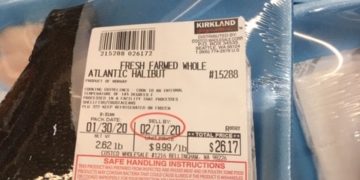
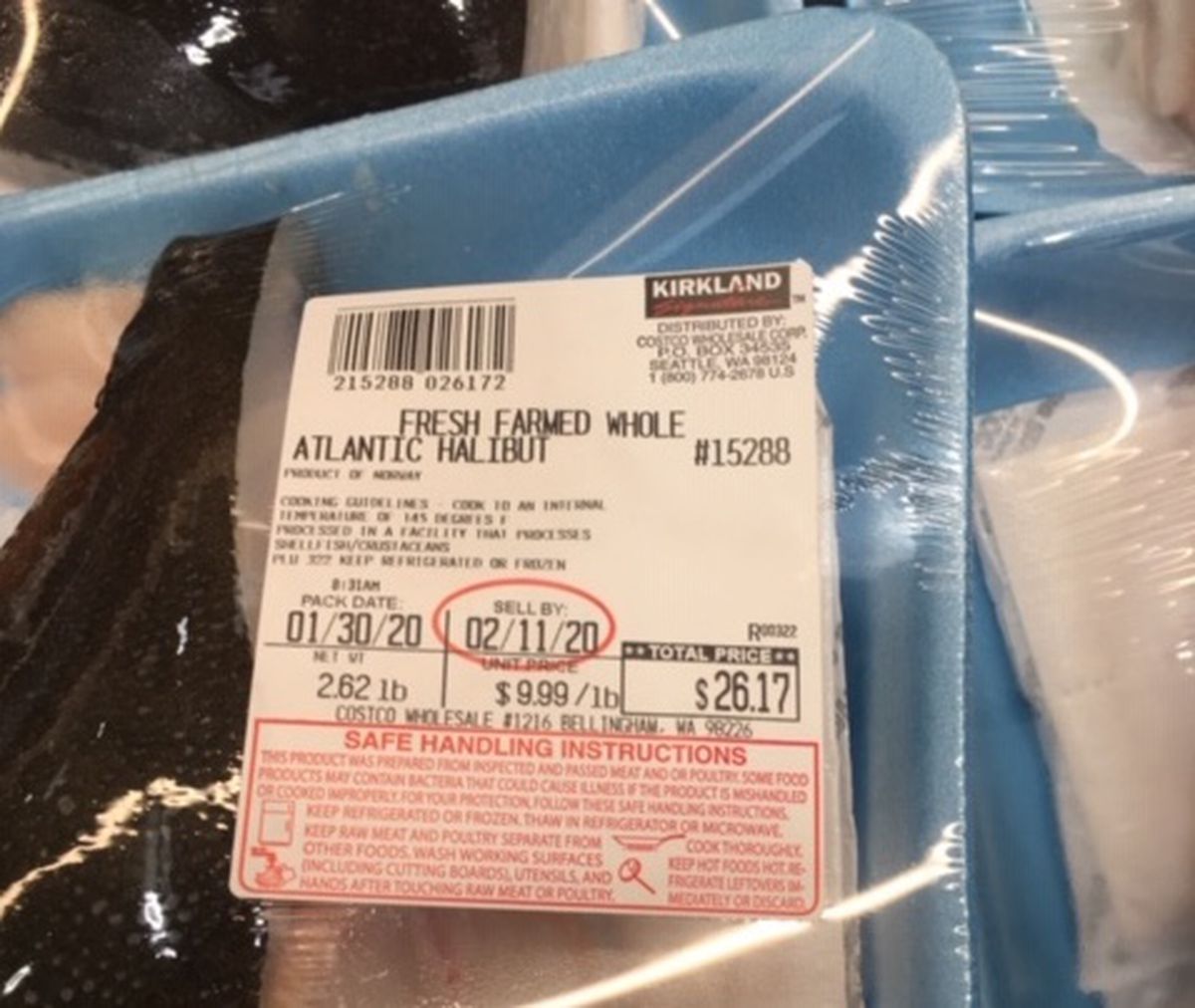
Also newly appearing on U.S. shelves: farmed halibut fillets from Norway retailing at $9.99 a pound.
Farmed halibut from Norway seen in 2020 in Bellingham, Washington. (Photo by Bill Sullivan)
Hatchery hauls – Alaska salmon that got their start in hatcheries made up 25 percent of last year’s total statewide catch.
In 2019, roughly 50 million hatchery salmon, mostly pinks and chums, were caught by Alaska fishermen, valued at $118 million, or 18% of the state’s total salmon harvest value.
That’s according to the annual salmon enhancement report by the Alaska Department of Fish and Game.
Currently there are 30 hatcheries producing salmon in Alaska, of which 26 are operated by private nonprofits. Fish and Game operates two sportfish hatcheries, in Anchorage and Fairbanks, the federal government runs a research hatchery near Sitka, and the Metlakatla tribe also operates a hatchery.
The hatcheries are funded by a fishermen’s tax and sales of a portion of the returning fish; they receive no state dollars. They also produce salmon for sport, subsistence and personal use fisheries at no cost to the state.
“For the coastal communities the hatchery program is a lifesaver for many of the people who fish for a living. It gives about 25% of the salmon harvest and that supplementation is a critical component for their business model,” said Steve Reifenstuhl, who on March 15 retired after 40 years as general manager at the Northern Southeast Regional Aquaculture Association.
At Prince William Sound, which most of Alaska’s hatchery fish call home, 31 million salmon were caught last summer valued at $64 million, or 56% of the region’s total dockside value. Nearly 83% were chums, 61% were pinks and 34% were sockeye salmon.
For Southeast Alaska, the second-largest hatchery region, fishermen harvested about 6.5 million hatchery fish valued at $32 million, or 37% of the region’s landings value. Chum salmon contributed $24 million of that total.
Kodiak has the state’s third-highest hatchery production and about 3.4 million hatchery salmon were caught last year, nearly all pinks. The value to fishermen was close to $5 million, or 11% of the total dockside value for Kodiak fishermen.
Three hatcheries in Cook Inlet produce primarily sockeye and pink salmon. About 42,000 hatchery-produced salmon were harvested there last year for a total of nearly $2 million, or 9 percent of the value for the region.
About 1.7 billion tiny salmon were released by Alaska hatcheries in 2019 which operators predict will product a total return of about 52 million salmon in 2020 including 35 million pinks, 13 million chums, 2.2 million sockeyes, 1.2 million cohos, and 100,000 chinook salmon.
Alaska’s on acid – Alaska waters are showing effects of increasing acidity faster and more severely than in lower latitudes because cold water is richer in carbon dioxide and melting sea ice and glaciers worsen the problem. The off-kilter ocean chemistry reduces the amount of minerals sea creatures need to build and maintain their shells.
That’s the verdict in the 2019 report by the Alaska Ocean Acidification Network, which updates the science going on around the state. The network has modeled 40 years of ocean changes in the Gulf of Alaska and is doing the same for the greater Arctic.
At Sitka, researchers are testing the effects of acidification and ocean warming on the earliest life stages of herring; early signs point to warming as the bigger threat.
At the Alutiiq Pride Shellfish Hatchery at Seward, studies on razor clams indicate they are hurt by increasing acidity.
Tiny swimming sea snails called pteropods that make up 40 percent of the diet of juvenile pink salmon already are showing extensive shell corrosion in both the Gulf of Alaska and Bering Sea.
The 2019 report also updates the monitoring being done since 2017 by the ferry Columbia as part of an unprecedented Alaska/Canada project to learn how increasing ocean acidity affects fisheries. The 418-foot ferry sucks up water samples every two minutes and has produced more than 700,000 measurements. The monitoring will resume when the Columbia is back on the water in May.
“The fantastic thing about this vessel is it’s going from Bellingham to Skagway and back every week. That’s a 1,600-kilometer run. Nowhere in the world is there a ferry system that’s outfitted with CO2 sensors that’s running that scale of a transit. This is really exciting,” said Wiley Evans, program technical lead with the Hakai Institute.
Early data point to an extremely variable seascape in which the surface water is more corrosive in fall and winter, representing the most vulnerable time for species that are sensitive to acidity. When spring arrives, the phytoplankton bloom removes carbon dioxide from the water through photosynthesis, and the water gets warmer, making conditions more favorable for shell production.
So far, only a limited number of Alaska’s commercially important species have been studied for their response to increasing acidity.