






LAWRENCE SMITH/STUFF
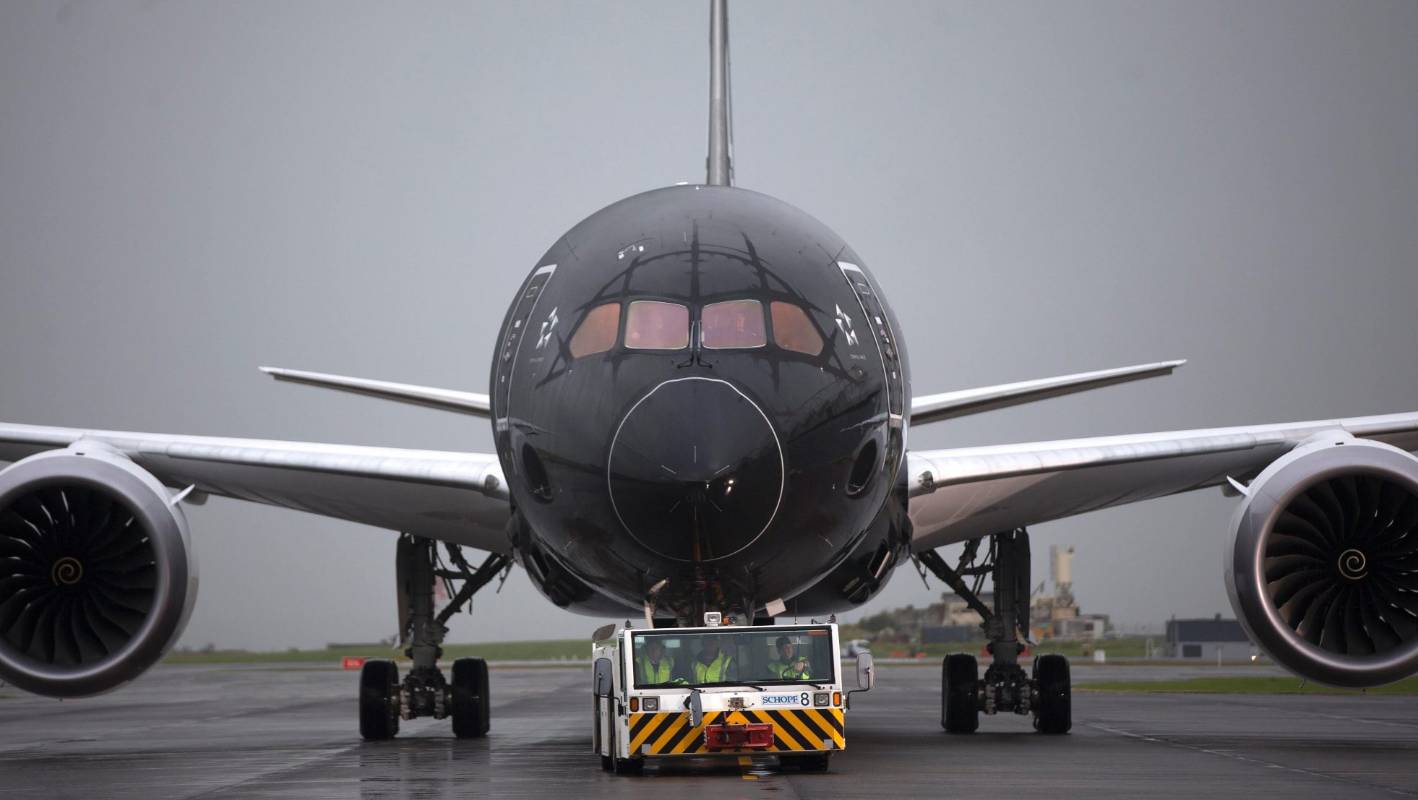
An Air New Zealand Dreamliner flying from Singapore to Auckland is carrying just four passengers.
Just four passengers are on board a 275-seat Air New Zealand jet returning to Auckland from Singapore, reflecting the challenges the airline industry is facing due to coronavirus.
The window for Kiwis returning to New Zealand is rapidly closing as international air travel grinds to a halt due to a fall in demand and countries around the world closing their borders in an attempt to contain the spread of the deadly Covid-19 virus.
NZ283, one of the last Air New Zealand flights between Singapore and New Zealand, is due to land in Auckland at around 10.30am.
An Air New Zealand spokesman said the four passengers on board the 787-9 Dreamliner were upgraded to business class.
READ MORE:
* Coronavirus: Here’s what major airlines are offering customers affected air travel turmoil
*Coronavirus lockdown: Air New Zealand asking no shows to cancel flights so others can get on
There were usually 10 crew on board, he said.
Remaining flights were carrying “a fair bit of cargo” both ways such as food and medical supplies, he said.
Air New Zealand’s travel alerts page shows the last Singapore-Auckland flight is on Sunday.
From Thursday midnight New Zealand’s borders are closed to almost all travellers. New Zealand citizens, permanent residents, residents with valid travel conditions and their immediate family are still allowed in.
On Wednesday evening Air New Zealand announced it would be reducing international capacity by 95 per cent and flying only 11 routes for essential workers and freight.
Singapore, which is closed to people in transit, is not one of them.
Air New Zealand pilot Phillip Kirk tweeted a photo from on board NZ283, describing it as being like a “corporate jet” for the four passengers on board.
Earlier he gave insights into the Auckland to Singapore flight the previous day.
The flight initially had been overbooked. Prior to filing a flight report the load had dropped to 263 passengers. “We departed with 20.”
After landing at Changi Airport he walked to the airport hotel, had his temperature checked, answered a bunch of questions answered and was handed a room key with only one entry programmed on key.
“Room service only. Meals delivered in plastic containers in plastic bag, hung on door knob, bell rung. A flash prison for 24 hours.”
He said Changi Airport was “apocalyptic like” with an aircraft movement about once every 20 minutes, predominantly cargo aircraft.
Air New Zealand chief operating officer Cam Wallace said Kirk’s photo from the return leg paints a picture of what demand was like for air travel at the moment.
Meanwhile, Air New Zealand general manager cargo, Rick Nelson, said the airline had introduced a number of measures to keep Kiwi businesses connected to the world.
“We’re offering our cargo customers a range of aircraft charter services covering every port on the Air New Zealand network (excluding London). We have also been able to provide customised options from North American markets through to Australia.
“With our Boeing 787-9 Dreamliner aircraft for example, we have the ability to uplift 11 cargo pallets in each direction we fly. Each of these pallets can take up to 12 cubic metres in volume and up to 4600 kilograms in weight.
“We’ve shared these options with our global cargo customer base and are getting some strong interest from customers wanting to ship to and from Shanghai, Hong Kong, San Francisco, Los Angeles, Sydney and Melbourne.
“We’ve also introduced the concept of a ‘Multi Party Charter Agreement’ which has been designed to help small and medium sized exporters and importers to ensure they have options available to them to move their goods in these challenging times. Under this model, our customers can purchase a single airfreight pallet position on a charter flight, or by working together with a freight forwarder, a coalition of exporters and importers can potentially combine and consolidate their shipments so that they are able to purchase a single unit on the aircraft.
“This is undoubtedly an extremely difficult time for our airline with a significant reduction in capacity due to reduced travel demand, but we are pleased to be able to keep New Zealand connected to the world in this way.”










