






VF Corps new targets include:
- An absolute reduction of Scope 1 and 2 greenhouse gas emissions by 55% by 2030, from a 2017 baseline year.
- An absolute reduction of Scope 3 greenhouse gas emissions 30% by 2030, from a 2017 baseline year, focusing on farm-to-retail materials, sourcing operations and logistics
- 100% of its top nine materials, which account for about 90% of its materials-related carbon emissions, will originate from regenerative, responsibly sourced renewable, or recycled sources by 2030.
 |
|
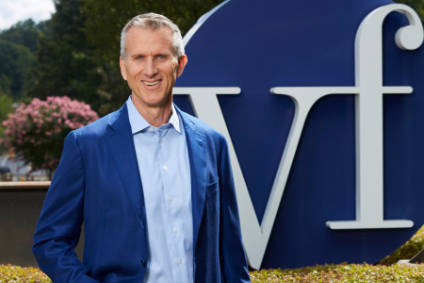
CEO Steve Rendle said: “We’re proud of our progress but know there is so much more we can do.” |
Apparel and footwear giant VF Corp has set new targets to slash its carbon emissions over the next decade, including a 30% absolute reduction of Scope 3 greenhouse gas emissions focusing on farm-to-retail materials, sourcing operations and logistics.
The company, whose portfolio of billion-dollar brands includes Vans, The North Face, and Timberland, says the new science-based targets (SBTs) are in line with the goals of the UN Paris Agreement – the central aim of which is to keep the global temperature rise below 1.5 degrees Celsius.
VF underwent an intensive, two-year long collaborative process to develop its new targets, partnering with global consultancy the Carbon Trust to model data across its 1,400 owned and operated facilities, distribution centres and global logistics as well as more than 100 Tier 1 and Tier 2 suppliers.
They include:
- A 55% absolute reduction of Scope 1 and 2 greenhouse gas emissions by 2030, from a 2017 baseline year; and,
- A 30% absolute reduction of Scope 3 greenhouse gas emissions by 2030, from a 2017 baseline year focusing on farm-to-retail materials, sourcing operations and logistics.
Scope 1 emissions are direct emissions from the activities owned or controlled by an organisation, while Scope 2 emissions are indirect emissions from energy purchased and used by the organisation. Scope 3 emissions, meanwhile, are all indirect emissions (not included in Scope 2) that occur in the value chain of an organisation, both upstream and downstream.
The analysis showed two-thirds of VF’s Scope 3 emissions are associated with raw materials, material processing, product manufacturing and transportation. These key areas of impact form the primary focus areas for setting science-based targets, the company says.
“This is the most comprehensive strategic advice we have delivered to an organisation on how it can achieve its SBTs across its own operations and its value chain,” says Tom Delay, chief executive, the Carbon Trust. “This work sends a strong signal to the apparel sector about the degree of transformation needed to truly address emissions across global supply and distribution chains and multiple brands.”
The company has set out its plans in its latest ‘Made for Change Sustainability & Responsibility Report.’
Sustainable materials
Also on the agenda is VF Corp’s new sustainable materials vision to tackle the carbon emissions impact associated with the extraction, production, and manufacturing of raw materials. The firm has committed to ensuring that 100% of its top nine materials – accounting for about 90% of its materials-related carbon emissions – will originate from regenerative, responsibly sourced renewable, or recycled sources.
These three materials choices are defined as:
- Regenerative materials promote biodiversity, enhance water cycles and sequester carbon in the soil. These types of materials are produced via farming or ranching techniques that enrich, rather than degrade the soil while valuing workers and animals.
- Responsibly sourced renewable materials include renewable natural materials found in nature that are replenished quickly, including wool, down and cotton, as well as bio-based synthetic materials such as polyester and lyocell that can be used as substitutes for traditional petrol-based materials. Responsibly sourced renewable materials must meet VF’s internal criteria for both sustainable feedstocks and processing.
- Recycled materials are reprocessed from reclaimed material that would otherwise have been disposed or used for energy recovery, and made into a new product or product ingredient. Examples include recycled nylon and polyester already used in The North Face, Timberland, JanSport, Kipling and Eastpak products.
VF will use tools such as the Sustainable Apparel Coalition’s Materials Sustainability Index and Life Cycle Analysis methodologies to assess its materials choices within these three areas to identify the greatest opportunities for environmental impact reduction, and to understand how using materials from more sustainable sources will help it achieve its science-based targets.
In its Sustainability & Responsibility Report VF also notes that from 2017 to 2018 it increased the amount of recycled nylon and polyester to 11%, and is on track to achieve its goal of 50% recycled nylon and polyester by 2025.
Over the same timeframe the company has also doubled the percentage of PFC-free durable water repellent (DWR) for outdoor apparel to 34%, and is on track to achieve its goal of 100% PFC-free DWR for outdoor apparel by 2025. It also said all virgin down purchased in 2017 and 2018 was certified to the Responsible Down Standard (RDS), with 2018 the first year that VF purchased recycled down, which was all certified to the Global Standard (GRS).
The group is also continuing to explore circular business models, namely recommerce, rental, and circular design, aiming to lead large-scale commercialisation of circular business models by 2030. It got a recommerce (The North Face Renewed) and a rental (TNF EMEA rental) pilot in the market after just six months.
“We’re proud of our progress but know there is so much more we can do,” says CEO Steve Rendle. “Our Made for Change strategy outlines our forward-looking priorities and provides us with a renewed focus to push ourselves harder and farther as we address some of our industry’s most challenging issues.”
Click here to access the full report and here to read just-style’s interview with Anna Maria Rugarli, senior director of sustainability and responsibility for EMEA at VF International.










