






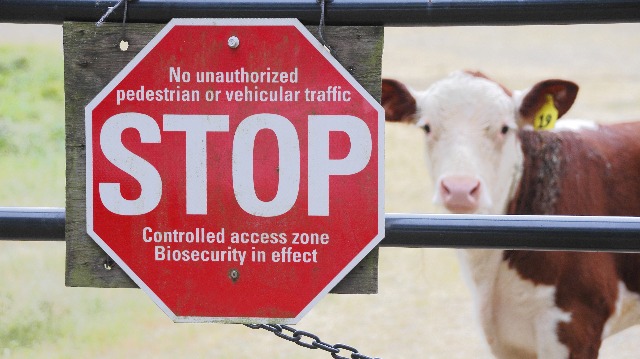
When most people think of biosecurity, two aspects initially come to mind. Firstly, the prevention of the incursion of naturally occurring infectious agents from one area to another. Typically, this involves the use of policies and preventative measures to stop disease outbreaks happening in the first place. Secondly, once outbreaks of disease have been identified, the procedures that need to be implemented to prevent further spread of the disease to the wider community. For example, the treatment, vaccination and quarantine of people during the recent and current outbreaks of Ebola in Africa. However, the term “biosecurity” also encompasses a wide range of important topics. These include the threat from bioterrorism, invasive alien species of both plants and animals, biosecurity in relation to food with the use of modern molecular technique to generate genetically modified plants and animals, and the biosecurity risks associated with handling highly pathogenic material in a laboratory environment.
But for the purposes of this article, we are going to focus on the prevention of outbreaks of disease and how to minimize the spread when they do inevitably happen.
Perceptions and misconceptions of biosecurity by the public
For many in the UK, the first foot and mouth outbreak in 2001 painted a stark and enduring image of biosecurity measures. Footage of vets and officials in personal protective equipment (PPE), foot baths, movement restrictions and funeral pyres of infected, or potentially infected cattle were highly prevalent in the media.
But despite media coverage, does the average person appreciate what biosecurity really means or how valuable it can be in disease prevention, not just as a reflex response when the worst has already happened?
Dr Caroline Crew, Biosecurity Policy Advisor at the Department of Food, Environment and Rural Affairs, commented in respect to the equine industry that “implementation of recommended biosecurity practices by horse owners is variable, with many undertaking a level of biosecurity which they consider to be appropriate to the disease risk they perceive. Horse owners generally see biosecurity as something to be undertaken in the event of a known, specific disease threat, rather than preventive measures used as part of everyday equine management practices.”
Typically, biosecurity measures that make the news headlines are in the throes of major outbreaks of disease where the images presented can be quite disturbing and shocking. Dr Crew continued “this has a considerable impact – leading to negative perceptions of biosecurity and concern where biosecurity measures are visible. These negative connotations are likely to have arisen from horse owners’ first introductions to the term “biosecurity”. Until these negative associations with biosecurity are removed, it is unlikely that biosecurity measures will be seen as routine day-to-day practices.”
Education of the general public is therefore of great importance to enable them to understand the role biosecurity could and should play in daily life. As a public interface, healthcare professionals are therefore ideally placed to serve this function.
“This presents an opportunity for vets to introduce both the principles of biosecurity and the term “biosecurity” itself into routine healthcare and management conversations which could gradually act to improve familiarity and reduce any uneasiness invoked by the word itself” Dr Crew emphasized.
The role of the professionals
In addition to familiarizing people with the concept of biosecurity, healthcare professionals play a pivotal role in helping them to understand disease risk. Dr Crew explained “owners notice when vets themselves do not undertake any visible hygiene or biosecurity measures between different horses or premises. This is regarded as demonstrating an absence of disease risk, and therefore provides little motivation for owners to undertake any recommended measures themselves. It is important for vets to acknowledge and take on their responsibility to lead by example. If a need for biosecurity is not communicated through the actions of trusted professionals, encouraging horse owners to implement biosecurity measures that are not proportionate to the risk they perceive will be a difficult task.”
However, it is not solely the responsibility of professionals to advise on biosecurity. There is a wealth of very good information available on the internet with which the general public can familiarize themselves. Implementation of simple processes will certainly help in preventing disease outbreaks and minimize the impact when they do occur. Whilst the examples used here relate to the equine industry, they are equally applicable to all potential disease scenarios, from the prevention of seasonal influenza to general kitchen hygiene to prevent foodborne illnesses.
Effective disease control begins at home, prevention is always better than cure
As alluded to above, everyone must play a role in the prevention of disease outbreaks and be aware of their own particular circumstance and what measures are appropriate for themselves.
“With regards to the biosecurity practices that horse owners should be undertaking, the layout and management practices on the individual premises must be considered. On most equestrian premises visited, prevention of contact between horses on the same premises could not be consistently guaranteed. Movements of horses and people around equestrian premises, and the layout of housing and grazing facilities suggests that disease transmission would be likely to occur before clinical signs are detected. In many instances, it would not be practical or reasonable to advise that measures are routinely implemented to prevent this when known infectious disease is absent on the premises. Therefore, efforts should be focused towards improving biosecurity to prevent disease being brought onto the premises, whether this is through new horse arrivals, horses returning to the premises from a show/event, visitors to the premises or fomites” concluded Dr Crew.
With this in mind, and to enable the adoption of good biosecurity practices before and during outbreaks of disease, biosecurity experts have advised the UK equine industry, in its various guises, by writing a number of guides or codes to help owners and vets in their implementation. These include the STEPS guidelines from the British Horse Society for strangles, the Horserace Betting Levy Board Codes of Practice and the Scottish Rural College Premium Assured Strangles Scheme.
Recent issues with equine influenza – there is hope
One very good example where the implementation of strict biosecurity procedures certainly helped to minimize the impact of an infectious agent was during the recent equine influenza outbreak that was identified in the UK racehorse population in February 2019.
Dr Richard Newton, Director of Epidemiology at the Animal Health Trust in Newmarket, UK, commented that “whilst the implementation of isolation and testing protocols to screen potentially exposed yards of racehorses in training may have been financially costly to individual premises and the equine industry as a whole, their implementation, aligned with the rapid diagnostic testing performed by the Animal Health Trust and the short-term cessation of racing for six days in February, ultimately minimized the potential impact of the outbreak.”
Dr Newton continued “the measures implemented by the equine industry and individual training yards allowed the annual Cheltenham National Hunt Festival, which was scheduled for only a few weeks later, to go ahead safely without risk of major disruption of an escalating epidemic of influenza in racehorses. This demonstrated that proactive biosecurity reduced both the monetary cost and minimized animal welfare issues associated with that particular outbreak”.
Hopefully horse owners and yards will continue to embrace simple, common sense, measures and see the impact that the implementation of biosecurity procedures, whist a little costly and a little awkward in the first instance, will reduce the financial and emotional cost of disease outbreaks by preventing the incursion and spread of disease in the future.
Whilst this article has focused primarily on equine matters, the principles of biosecurity in relation to the prevention and spread of disease are similar in all circumstances, whether it is in your house, your garden, a hospital, a farm etc. It is the responsibility of everyone to be aware of the measures needed to prevent diseases spreading and once this becomes second nature we will see real differences in terms of both cost and welfare.