






DP World’s (NDAQ DXB: DPW) recent announcement that it indirectly acquired a 77% stake in Asian ocean shipping feeder and short-sea carrier, Feedertech, has further advanced the container terminal operator’s goal of becoming an end-to-end logistics provider.
The deal, which is due to close at the end of the year, will see Europe-focused and Denmark-headquartered Unifeeder (which is owned by DP World) buy just over three-quarters of Asia-focused and Singapore-based Feedertech. The balance of Feedertech will remain in the hands of the company’s founder, Ali Maghami.
Meanwhile, Unifeeder is, as its name implies, also a feeder operator and short-sea carrier.
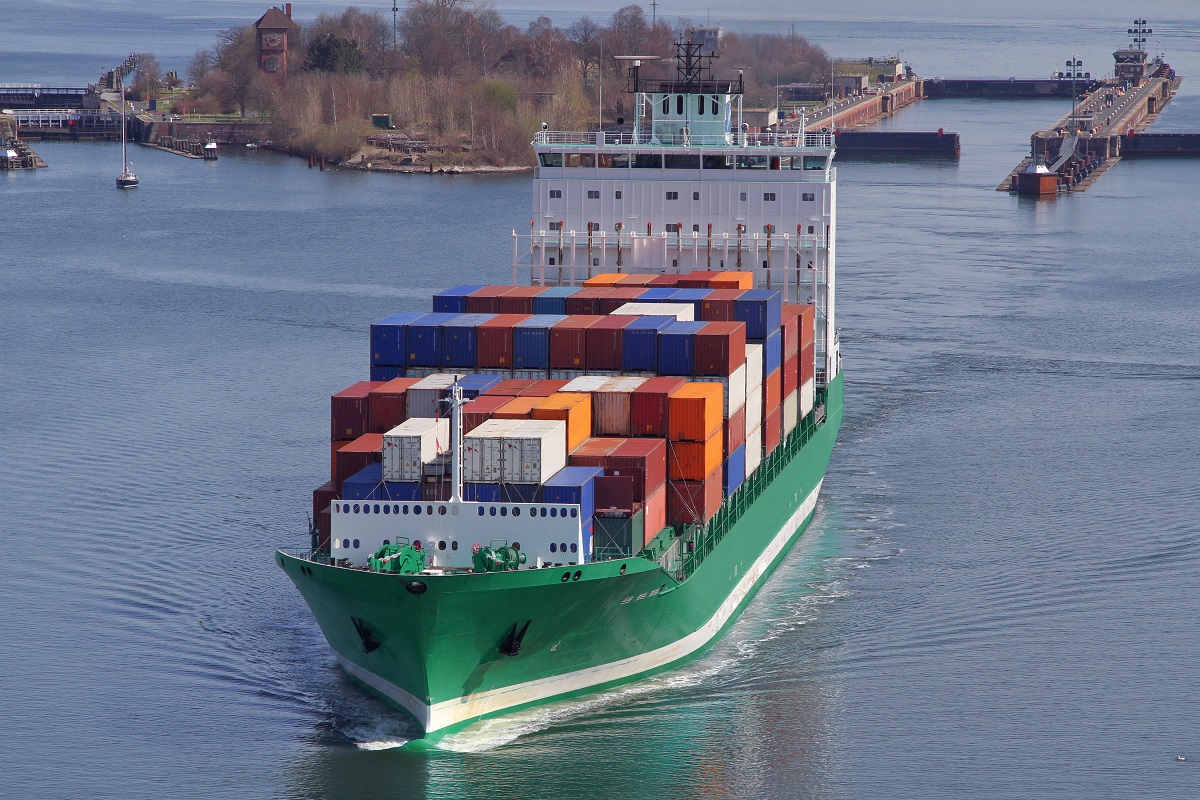
A “feeder” carrier is a sea-going carrier that typically hauls containers from smaller, regional seaports, to much bigger ports for later pick up by larger container ships. Feeders usually sail the ‘spoke’ in a hub-and-spoke model of cargo trans-shipment.
Meanwhile, the definition of “short sea” varies widely but it is usually equivalent to something like “coasting” or “coastwise” trade and it normally means marine freight carriage without necessarily involving a large hub port or the crossing of a large sea or ocean.
A foothold in the intra-Asia markets
Commenting on the benefit to Europe-focused Unifeeder of buying an intra-Asia specialist, Daniel Richards, a senior analyst with consultancy Maritime Strategies International (MSI), told FreightWaves: “The Feedertech acquisition gives Unifeeder – and by extension, DP World – a foothold in the intra-Asia markets, which are expected to be one of the more dynamic containership markets in the years ahead. It seems DP World’s original purchase of Unifeeder was largely about getting wider exposure within the sector in its push to become a more integrated logistics provider. The Feedertech acquisition diversifies Unifeeder’s geographic and trade-lane exposure and as such, control of an Asian short-sea operator is arguably very helpful in DP World’s broader strategy of doing more end-to-end logistics in the Far East/ISC.”
Commenting on the competitive landscape was container analyst Alphaliner, which described the deal to create the soon-to-be unified ocean feeder /short-sea carrier as “a major feeder operator.” The analyst added that entity would challenge “the current leader X-Press Feeders Group.”
Alphaliner added that X-Press would retain leadership in terms of fleet size of over 107,000 TEU, or twenty-foot equivalent units. X-Press states that it operates more than 110 vessels (up to new Panamax) of which 40 are owned. It sails more than 100 routes and calls at over 200 ports in Asia, the Middle East, Europe, the Mediterranean, Africa and Latin America.
Richards of Maritime Strategies International also turned his mind to the competitive feeder/short-sea landscape following the Unifeeder/Feedertech tie-up.
“On a very general level, the consolidation between liner companies on the intra-Asia trade will allow for the deployment of larger vessels. However, in this specific case, Feedertech is merging with an intra-Europe specialist and there won’t be a separate set of networks to combine. The immediate implications for intra-Asia trades are therefore limited.”
However, Richards added, as consolidation increases then there could be an increase in pressure on smaller specialists, assuming that vessels continue to get bigger.
Dramatis personae
Feedertech calls at 19 ports on five services linking China, Taiwan, the Philippines, Malaysia, Thailand, India, Pakistan and the United Arab Emirates. Feedertech’s short-sea subsidiary, Perma Shipping Line, calls at 10 ports in the Middle East; 12 ports around India and neighbouring countries; and at 19 ports around Northeast Asia and Southeast Asia. The Feedertech Group (Feeertech and Perma Shipping combined) generates an annual revenue of $200 million and transports over 600,000 TEU each year.
DP World is already very well-known for being a major container terminal operator. It has more than 150 operations in over 50 countries, handling more than 71.4 million TEU a year. In addition, it is already a substantial short-sea/feeder operator through its various acquisitions.
DP World bought Unifeeder for 660 million Euros ($765.6 million) in August 2018. Unifeeder reported 510 million Euros of revenues in 2017. That latter figure was equivalent to $611.9 million as at the end of December 2017. Unifeeder, like Feedertech, splits its business into feeder and short sea services and it also splits business geographically. Unifeeder covers northeast Europe with about 50 feeder port calls in far west Russia, the Baltic states, the Scandinavian countries, the Benelux, the U.K. and Portugal. The company can then truck or rail containers into numerous destinations all through north, northeastern and northwestern Europe. Meanwhile, Unifeeder sister feeder company Unimed calls at about 53 ports around the Mediterranean and it also operates in the intra-Red Sea market.
At the time of the Unifeeder acquisition, Sultan Ahmed Bin Sulayem, group chairman and CEO, DP World, commented on the rationale for the purchase of the European feeder operator as being one that “supports our strategy to grow in complementary sectors, strengthen our product offering and play a wider role in the global supply chain as a trade enabler… The ever-growing deployment of ultra-large container vessels has made high-quality connectivity from hub terminals crucial for our customers.”
DP World is already the owner of P&O Ferries, which it bought in 2006. P&O Ferries runs passenger and freight carrying roll-on/roll-off vessels to and from the United Kingdom and continental Europe. P&O sister company P&O Ferrymasters offers a wide range of air, road and sea freight forwarding and trucking to many destinations throughout Europe.
Acquisition funding raised
Jump forward in time to late November 2019, and it appears that DP World was hungry for another feeder operator. It raised acquisition capital worth $2.3 billion by listing two conventional bonds totaling $800 million and two “Sukuks” (Islamically compliant financial certificates with a contractual promise to buy-back the certificate at a future date at a given value) totaling about $1.5 billion on the Nasdaq Dubai. To be Islamically compliant, Sukuk funds must be used to buy identifiable or tangible assets and the purchaser of the Sukuk takes partial ownership of the asset.
The funds that DP World raised were specifically generated to fund growth opportunities and, at the time of the listing, Sultan Bin Sulayem referred to the DP World’s strategy to become a “logistics solutions provider to end-cargo owners.”
DP World leads… but will anyone follow?
Although DP World has clearly decided that its future lies, at least in part, in end-to-end logistics, container analyst Richards of Maritime Strategies International thinks it is unlikely that competing terminal operators will follow the Arabian company’s lead.
He notes that it is normally ocean shipping companies that found or buy container terminal companies and not the other way around. However, although the deal is clearly significant, Richards was thoughtful on potential issues raised by the tie-up and by the likely (or not) impacts on the Asian short-sea/feeder trades.
“By and large, we don’t expect competing container terminal operators will necessarily follow suit and buy their own Intra-Asia specialists. It remains to be seen whether this will generate significant operational synergies. Indeed, these acquisitions have historically been the other way round, with liner companies expanding into port ownership. Captive cargo and guaranteed volumes are obviously a good thing for a port operator.
“But, at the same time, the ‘true’ feeder/transhipment cargoes, as opposed to the end-to-end cargos within the region, are generated by the needs of the major liner companies. Whether or not the larger carriers choose to hub at DP World terminals and generate work for feeder specialists at that terminal is out of Unifeeder’s control. Also, the advantage to a liner company of controlling its own terminal is fairly clear from the perspective of container handling costs, but aside from better visibility in terms of volumes, the flipside of a tie-up with a liner company is less obvious for a port operator as one side’s costs is the other’s revenues.”










