

• Latest
  • Trending
  • All
Maritime History Notes: Hazards of the sea

Maritime History Notes: Hazards of the sea

December 25, 2019
Last Mile Delivery Market Worth Observing Growth | UPS, FedEx, SF Express

Last Mile Delivery Market Worth Observing Growth | UPS, FedEx, SF Express

April 23, 2024
Top 5 Spend Analysis Software ranked in 2024

Top 5 Spend Analysis Software ranked in 2024

March 1, 2024
How Tesla And BMW Are Leading A Supply Chain Renaissance With Blockchain

How Tesla And BMW Are Leading A Supply Chain Renaissance With Blockchain

January 19, 2024
LATAM Cargo strengthens European cargo links

LATAM Cargo strengthens European cargo links

April 14, 2020
Ford making reusable hospital gowns from airbag materials as efforts against coronavirus expand

Ford making reusable hospital gowns from airbag materials as efforts against coronavirus expand

April 14, 2020
Don’t Sweat NBC’s Decision to Cut Back on Television Ad Inventory

Don’t Sweat NBC’s Decision to Cut Back on Television Ad Inventory

April 14, 2020
Software firms sharpen focus on AI, big data as IT spending drops

Software firms sharpen focus on AI, big data as IT spending drops

April 14, 2020
Navigating turbulent times in your supply chain (TL:DR version)

Navigating turbulent times in your supply chain (TL:DR version)

April 14, 2020
Last Mile Delivery by Drones Market is Booming Worldwide

Last Mile Delivery by Drones Market is Booming Worldwide

April 14, 2020
AIR CARGO MARKET SIZE, SHARE, DEMAND, TREND, LATEST INNOVATIONS & APPLICATION ANALYSIS AND INDUSTRY GROWTH FORECAST 2027 – Science In Me

AIR CARGO MARKET SIZE, SHARE, DEMAND, TREND, LATEST INNOVATIONS & APPLICATION ANALYSIS AND INDUSTRY GROWTH FORECAST 2027 – Science In Me

April 14, 2020
Wheat procurement in Patiala: 6,500 coupons issued to farmers – cities

Wheat procurement in Patiala: 6,500 coupons issued to farmers – cities

April 14, 2020
Pandemic, Plastics And The Continuing Quest For Sustainability

Pandemic, Plastics And The Continuing Quest For Sustainability

April 14, 2020
  • Supply Chain
  • Logistics
  • Warehousing
  • Procurement
  • Shipping
  • More
    • Strategic Sourcing
    • Spend Analysis
    • Inventory
    • Contact Us
No Result
View All Result
United States International Supply Chain Commission
Home Logistics

Maritime History Notes: Hazards of the sea

by usiscc
December 25, 2019
in Logistics
0
Maritime History Notes: Hazards of the sea
493
SHARES
1.4k
VIEWS
Share on FacebookShare on Twitter

It seems that the only time we read a news story about the maritime industry is when there’s a ship fire or sinking.

Fires recently have occurred aboard large, modern container ships, with industry observers claiming this now happens on average every 66 days.

The cargo on board is usually determined to be the cause of damage or total loss of the ship. Cargoes can burn, shift, explode or even liquefy if not properly handled.

Keep in mind that the only reason for a ship’s existence is to earn a profit for its owner by carrying cargo. In order to do this, the cargo must be delivered in the same condition that it was received. Furthermore, the ship as an asset must be well maintained and its crew cared for.

The wider public became aware of the hazards of the sea in 1912 with the sinking of the Titanic. This tragedy was followed in 1913 by the disaster aboard the British emigrant ship Volturno.

Along with the 561 passengers and 93 crew, the Volturno was transporting a cargo of barium oxide, flammable and toxic chemicals, peat moss, rags and straw goods. The ship was bound for New York in heavy weather when a fire broke out, followed by an explosion in the No. 1 hold. When rescue ships finally arrived, the anxious passengers and crew could not abandon ship due to the stormy seas. After an interminable delay, the Carmania rescued many of the passengers and crew; however, 133 perished. 
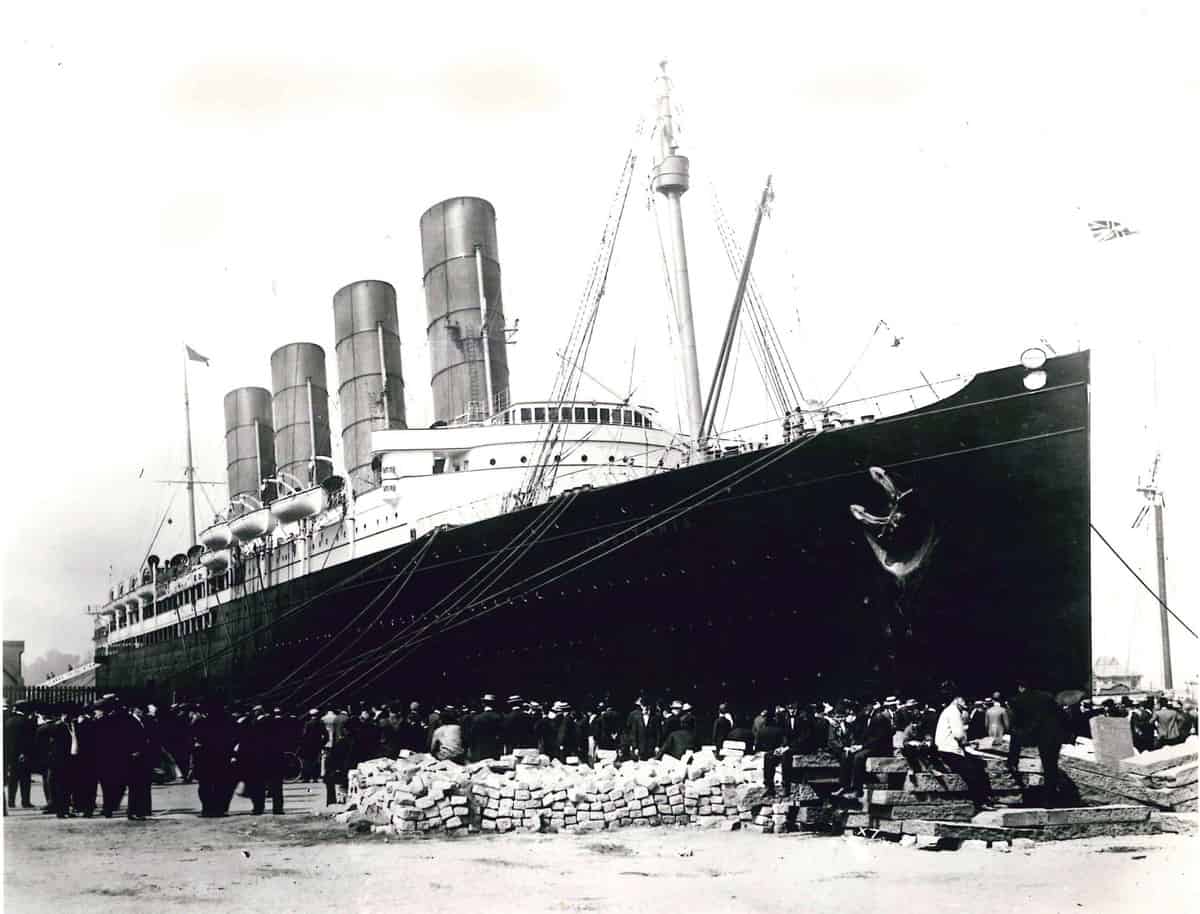
It is unknown if mis-declared cargo caused the explosion that sealed the fate of the Lusitania and 1,198 lives.

The next disaster to catch the eye of the public was the sinking of the Lusitania on May 7, 1915, by a German submarine, resulting in the loss of 1,198 passengers and crew. To this day the nature of the Lusitania’s cargo and its impact on this disaster are still being debated. After the initial torpedo struck the ship, there was a terrific explosion that caused the greatest loss of life. In the ship’s cargo holds were tons of foodstuffs, ammunition, empty shrapnel shells, fuses and other cases and barrels of cargo that had a manifest value of $750,000. The question remains, what caused the explosion — coal dust or the cargo?
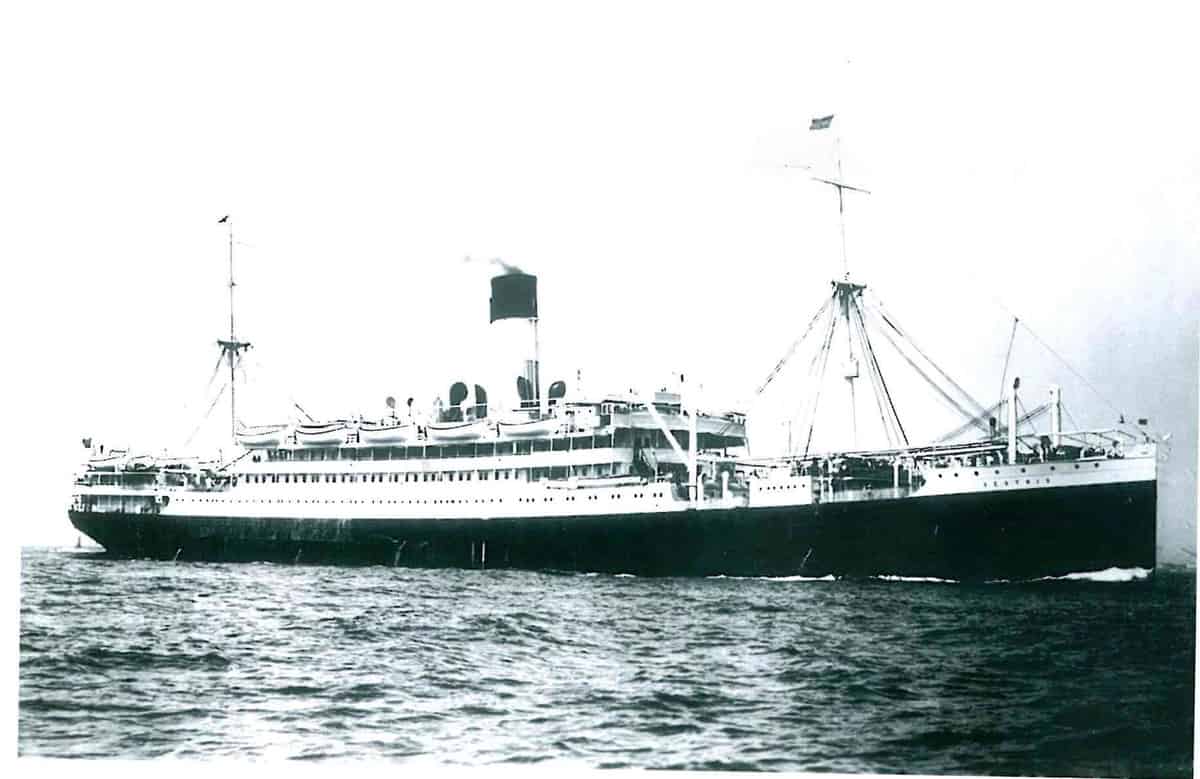
Improperly secured heavy cargo created a severe list, resulting in the loss of the Vestris and 111 lives in 1928.

Years passed until the public was once again shocked by another major sea disaster. The New York Times reported in mid-November 1928 the sinking of the British liner Vestris with the headline, “THE GRIMMEST EPIC of the SEAS since the LUSITANIA was Sunk.” 
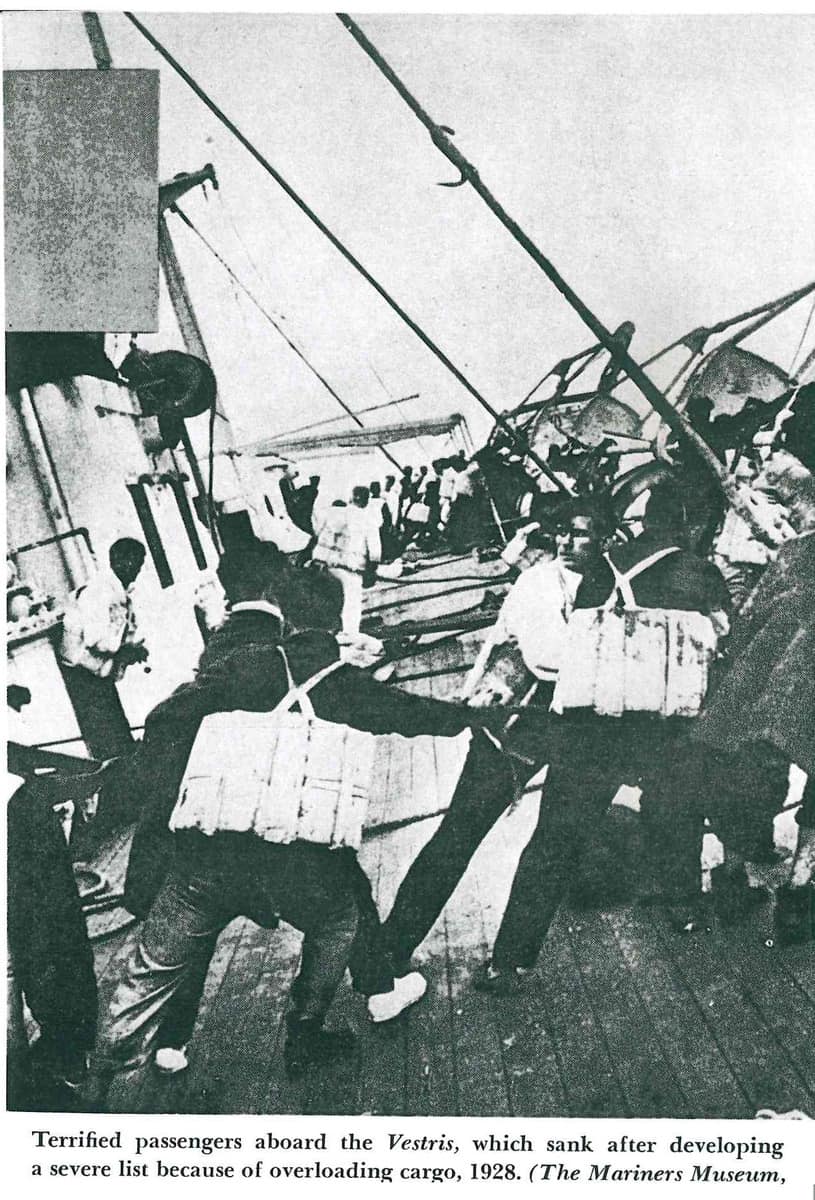
The 496-foot-long Vestris was built in Belfast in 1912 and plied regularly between New York and the east coast of South America. On Nov. 10, 1928, the ship departed New York with 128 passengers and 197 crew. Due to a heavy load of on- and under-deck cargo, the ship was about 7 inches, or 200 tons, over the legal sailing draft and had a pronounced port list. As the ship sailed south, a very slow roll was experienced and within a few hours took a permanent 5-degree starboard list. The next day two large waves struck the ship, causing the bunker coal and cargo to shift and break loose, resulting in a 32-degree starboard list. Despite the heavy seas, the captain ordered abandon ship and commenced lowering the lifeboats. Of the 325 people on board, 214 were rescued and 111 drowned.
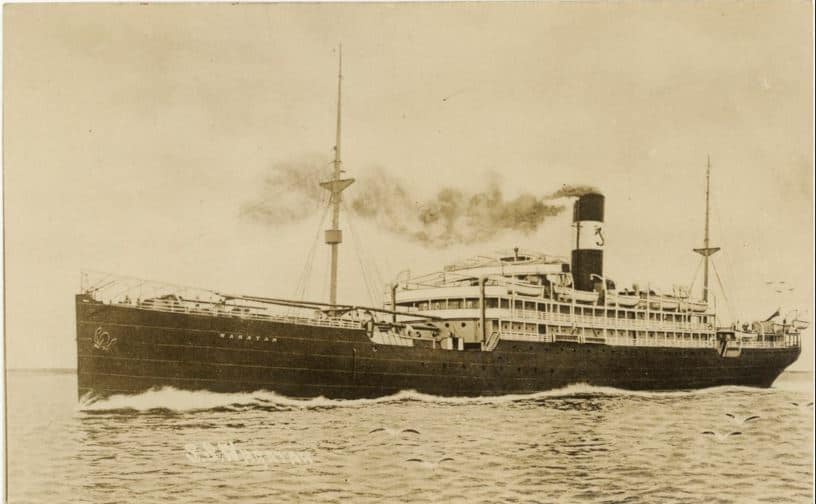
The Waratah, known to be top heavy, presumably suffered a shift of its cargo and bunker coal off South Africa.

Little known in the United States, a similar ship stability-related disaster occurred in 1909 on board the British liner Waratah. The ship, during its second voyage to Australia, was heavily laden and known to be top heavy. The cargo presumably shifted and the ship capsized off the South African coast with a heavy loss of life.
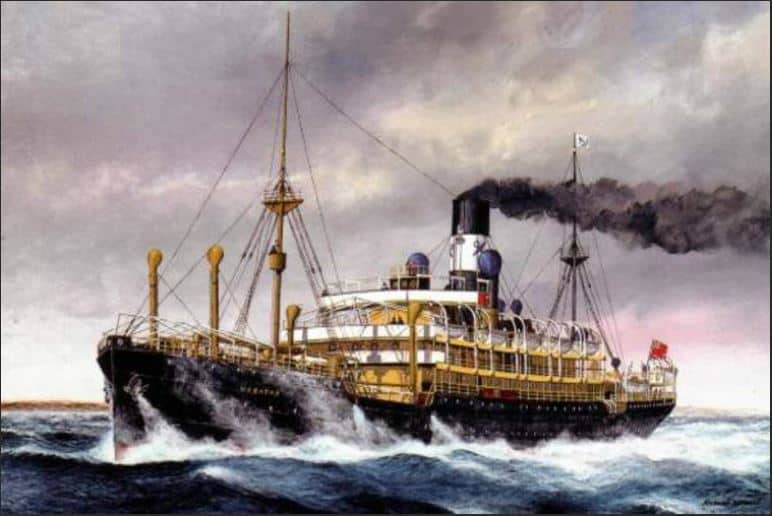
The Waratah went missing in 1909 during its second voyage; 211 lives were lost.

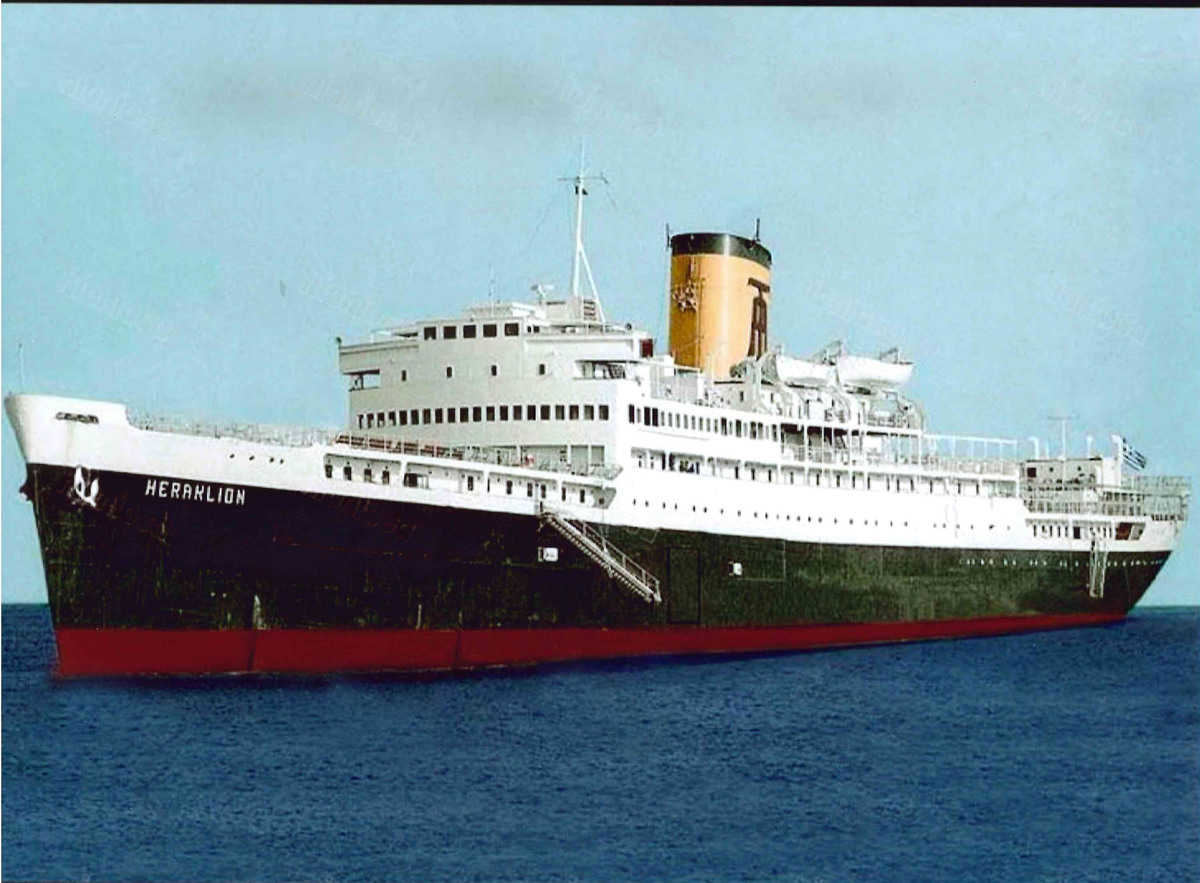
Then in 1966, 217 lives were lost when the Heraklion rolled and sank within minutes in the Aegean Sea. A refrigerated truck broke loose and slammed through the side-port doors, allowing seawater to flood the ship.

An inquiry by the Greek government found that improperly secured cargo was the primary cause of the sinking. The company was ultimately charged with manslaughter and the ship’s owner and manager served time in prison.

These incidents are a few of the more well-known ship disasters attributed to cargo. They occurred prior to highly regulated regimes set forth by the International Maritime Organization and various national coast guards or maritime police. The only oversight of the maritime industry at that time was the insurance underwriters that covered any losses due to or caused by the cargo.

Recently, it was calculated that 10% of the 60 million maritime containers that move each year are declared dangerous goods. About 20% of those, or about 1.3 million containers, however, are poorly packed or incorrectly identified. In addition to container ships, bulk carriers continue to sink due to cargo liquefaction or break up due to unstable loads of ore. This is a sad commentary, resulting in the deaths of hundreds of seafarers who now sail the seas in the 21th century.


Share197Tweet123
usiscc

usiscc

  • Trending
  • Comments
  • Latest
Escape From Tarkov – How to Rotate Items

Escape From Tarkov – How to Rotate Items

February 5, 2020
Supply chain examination: Planning for vulnerabilities you can’t control

Supply chain examination: Planning for vulnerabilities you can’t control

December 7, 2019
Procurement Project Manager job with Camden London Borough Council

Procurement Project Manager job with Camden London Borough Council

February 17, 2020
Art Battle Wichita Falls III at The Warehouse, 1401 Lamar.

Art Battle Wichita Falls III at The Warehouse, 1401 Lamar.

0
Global Industry Analysis, Size, Share, Growth, Trends, and Forecasts 2016–2024 – ZMR News Reports

Global Industry Analysis, Size, Share, Growth, Trends, and Forecasts 2016–2024 – ZMR News Reports

0
PHOTOS: Ottawa firefighters respond to warehouse fire

PHOTOS: Ottawa firefighters respond to warehouse fire

0
Last Mile Delivery Market Worth Observing Growth | UPS, FedEx, SF Express

Last Mile Delivery Market Worth Observing Growth | UPS, FedEx, SF Express

April 23, 2024
Top 5 Spend Analysis Software ranked in 2024

Top 5 Spend Analysis Software ranked in 2024

March 1, 2024
How Tesla And BMW Are Leading A Supply Chain Renaissance With Blockchain

How Tesla And BMW Are Leading A Supply Chain Renaissance With Blockchain

January 19, 2024
  • Privacy Policy
  • Terms of Use
  • Disclaimer
  • DMCA
  • Contact Us

Copyright © 2024 United States International Supply Chain Commission (usiscc.org)

This website uses cookies to improve your experience. We'll assume you're ok with this, but you can opt-out if you wish. Cookie settingsACCEPT
Privacy & Cookies Policy

Privacy Overview

This website uses cookies to improve your experience while you navigate through the website. Out of these cookies, the cookies that are categorized as necessary are stored on your browser as they are essential for the working of basic functionalities of the website. We also use third-party cookies that help us analyze and understand how you use this website. These cookies will be stored in your browser only with your consent. You also have the option to opt-out of these cookies. But opting out of some of these cookies may have an effect on your browsing experience.
Necessary
Always Enabled

Necessary cookies are absolutely essential for the website to function properly. This category only includes cookies that ensures basic functionalities and security features of the website. These cookies do not store any personal information.

Non-necessary

Any cookies that may not be particularly necessary for the website to function and is used specifically to collect user personal data via analytics, ads, other embedded contents are termed as non-necessary cookies. It is mandatory to procure user consent prior to running these cookies on your website.

SAVE & ACCEPT
No Result
View All Result
  • Supply Chain
  • Logistics
  • Warehousing
  • Procurement
  • Shipping
  • More
    • Strategic Sourcing
    • Spend Analysis
    • Inventory
    • Contact Us

Copyright © 2024 United States International Supply Chain Commission (usiscc.org)






