

• Latest
  • Trending
  • All
Australians create 67 million tonnes of waste each year. Here’s where it all ends up

Australians create 67 million tonnes of waste each year. Here’s where it all ends up

December 27, 2019
Last Mile Delivery Market Worth Observing Growth | UPS, FedEx, SF Express

Last Mile Delivery Market Worth Observing Growth | UPS, FedEx, SF Express

April 23, 2024
Top 5 Spend Analysis Software ranked in 2024

Top 5 Spend Analysis Software ranked in 2024

March 1, 2024
How Tesla And BMW Are Leading A Supply Chain Renaissance With Blockchain

How Tesla And BMW Are Leading A Supply Chain Renaissance With Blockchain

January 19, 2024
LATAM Cargo strengthens European cargo links

LATAM Cargo strengthens European cargo links

April 14, 2020
Ford making reusable hospital gowns from airbag materials as efforts against coronavirus expand

Ford making reusable hospital gowns from airbag materials as efforts against coronavirus expand

April 14, 2020
Don’t Sweat NBC’s Decision to Cut Back on Television Ad Inventory

Don’t Sweat NBC’s Decision to Cut Back on Television Ad Inventory

April 14, 2020
Software firms sharpen focus on AI, big data as IT spending drops

Software firms sharpen focus on AI, big data as IT spending drops

April 14, 2020
Navigating turbulent times in your supply chain (TL:DR version)

Navigating turbulent times in your supply chain (TL:DR version)

April 14, 2020
Last Mile Delivery by Drones Market is Booming Worldwide

Last Mile Delivery by Drones Market is Booming Worldwide

April 14, 2020
AIR CARGO MARKET SIZE, SHARE, DEMAND, TREND, LATEST INNOVATIONS & APPLICATION ANALYSIS AND INDUSTRY GROWTH FORECAST 2027 – Science In Me

AIR CARGO MARKET SIZE, SHARE, DEMAND, TREND, LATEST INNOVATIONS & APPLICATION ANALYSIS AND INDUSTRY GROWTH FORECAST 2027 – Science In Me

April 14, 2020
Wheat procurement in Patiala: 6,500 coupons issued to farmers – cities

Wheat procurement in Patiala: 6,500 coupons issued to farmers – cities

April 14, 2020
Pandemic, Plastics And The Continuing Quest For Sustainability

Pandemic, Plastics And The Continuing Quest For Sustainability

April 14, 2020
  • Supply Chain
  • Logistics
  • Warehousing
  • Procurement
  • Shipping
  • More
    • Strategic Sourcing
    • Spend Analysis
    • Inventory
    • Contact Us
No Result
View All Result
United States International Supply Chain Commission
Home Procurement

Australians create 67 million tonnes of waste each year. Here’s where it all ends up

by usiscc
December 27, 2019
in Procurement
0
Australians create 67 million tonnes of waste each year. Here’s where it all ends up
492
SHARES
1.4k
VIEWS
Share on FacebookShare on Twitter

Updated

December 27, 2019 11:09:21

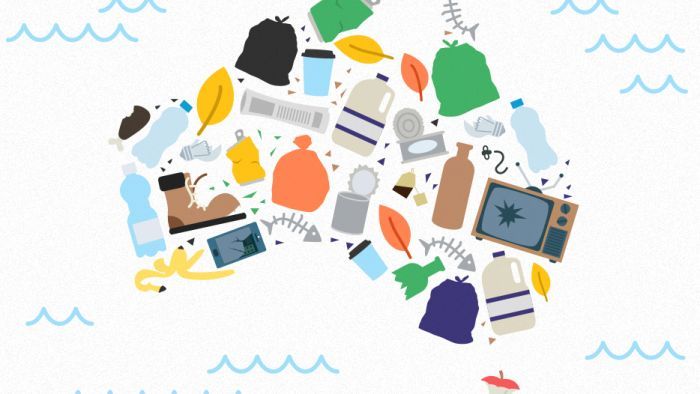
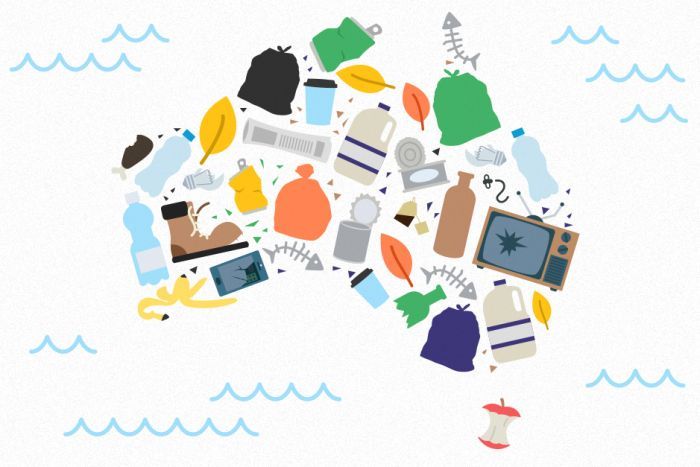
An illustrated map of Australia, made up of pieces of rubbish and detritus, like shoes, bottles, banana peels and televisions.

Photo:

Do you know what happens to your rubbish once you’ve put it in the bin? (ABC News: Andrew Harrison)

Recycling has never been bigger news.

We have bag bans, single-use plastic bans, a local industry thrown into chaos by a decision in China, recycling companies making the headlines and even a war on waste.

And despite a huge national push to solve what’s been acknowledged as a recycling crisis, a lot of our waste is being sent straight to landfill or overseas.

Just how much waste are we talking about?

In short, it’s a lot.

The most up-to-date stats show Australians generated 67 million tonnes of waste in 2016-2017.
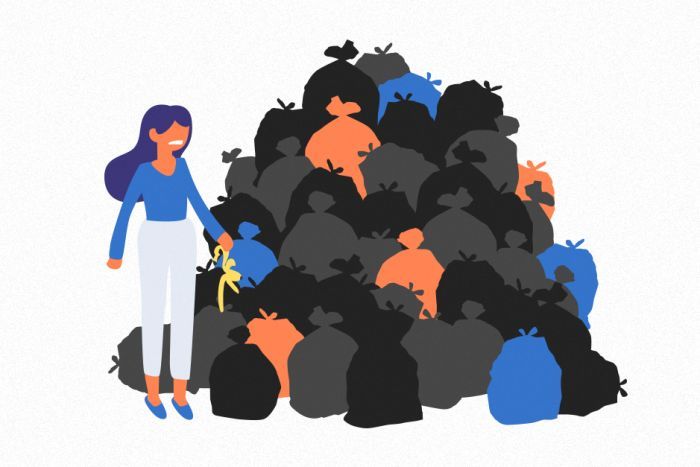
An illustrated graphic showing a woman standing next to a large pile of rubbish bags.

Photo:

That’s 2.7 tonnes, per person, per year — roughly the weight of an African forest elephant. (ABC News: Andrew Harrison)

Of that, about 54 million tonnes is known as “core waste”, and is dealt with by the waste and resource recovery industry.

The rest is things like ash from electricity generation, mud from refining, manure from farming and liquid waste like sewage — stuff that can’t be picked up by a rubbish truck on bin day.

While a lot of the focus is on households, more than a third of our waste comes from the construction and demolition industry, and the same amount comes from the commercial and industrial sector.

Compared with other similar developed countries, the Department of Environment says we generate “more waste than the average” and recycle “a little less than the average”.

“We have way too much of a view that it’s just waste and you just throw it out,” says Gayle Sloan, the CEO of the Waste Management Association of Australia.

Where’s it all going?

Jenni Downes, a researcher at Monash University’s Sustainable Development Institute, says what happens once rubbish is put in a bin remains a mystery for many people.

She says a big part of that is the fact that waste companies have “designed their services to be almost invisible”.

“They’ve tried to make it as simple and convenient for householders so that you put your waste in the bin, and it disappears. Poof, it’s gone.”

For what goes into general waste bins the outcome is pretty simple — in most instances, it goes straight into landfill.
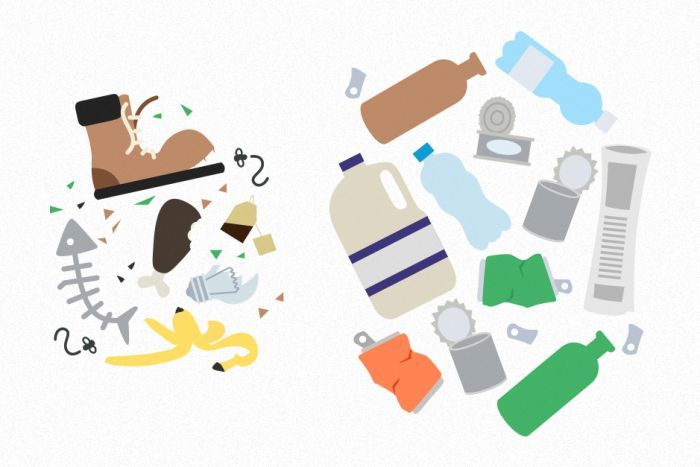
An illustrated graphic showing a smaller pile of brown rubbish and a larger pile of cleaner-looking recyclable materials.

Photo:

Of the 67 million tonnes of waste we created in 2016-2017, we recycled 37 million tonnes. (ABC News: Andrew Harrison)

A large portion of that — about 6.7 million tonnes — is organic waste like food and garden waste, which creates methane-rich greenhouse gases as it decomposes.

Only about 2 per cent of our waste is converted to energy, a much lower rate than some European countries.

And it’s estimated about 130,000 tonnes of Australian plastic ends up in waterways and oceans each year.

The three main ways it ends up there, according to WWF, are littering, products like wet wipes being flushed and plastic flying away from landfill processing.

What’s the recycling process like?

There are generally quite a few steps before recycling can be what the industry calls “manufacture ready”.
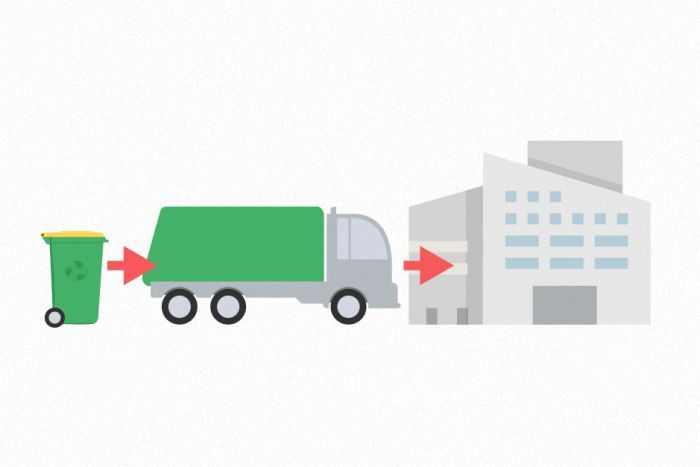
An illustrated graphic showing a yellow-lid bin, a rubbish truck and a building.

Photo:

Kerbside recycling is first taken by a rubbish truck to a material recovery facility. (ABC News: Andrew Harrison)

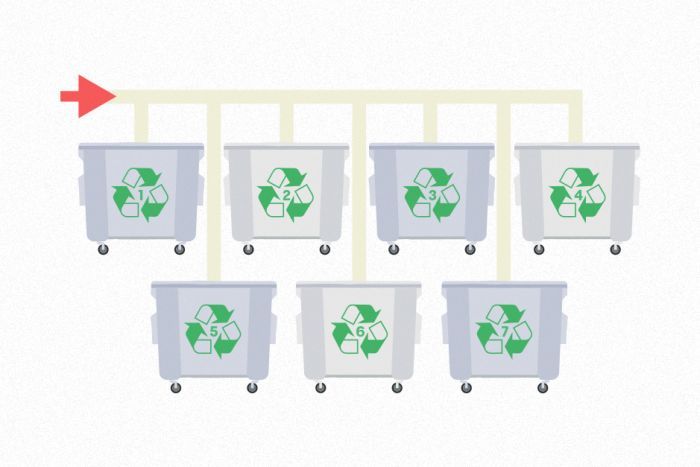
An illustrated graphic showing a flow-chart of sorting in to different recycling bins.

Photo:

It’s then sorted into different streams, and often sorted again into sub-categories. With plastic, that’s where those little numbers on the packaging come in. (ABC News: Andrew Harrison)

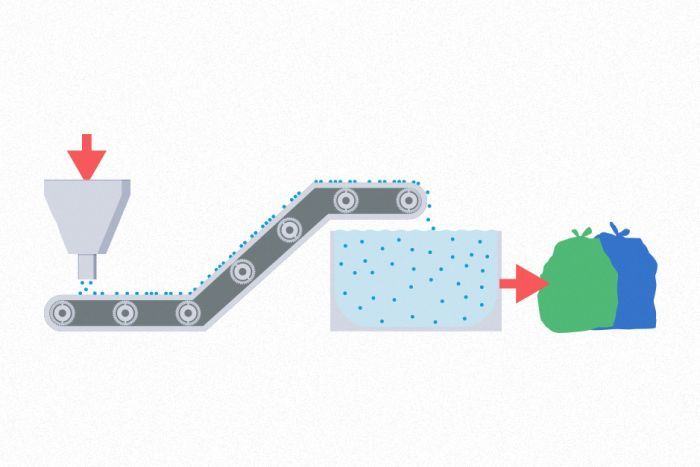
An illustrated graphic showing how plastic is processed into pellets.

Photo:

Plastic is then shredded, granulated, washed, dried, decontaminated and finally made into pellets that can be used in manufacturing. (ABC News: Andrew Harrison)

But Ms Sloan says a key part of the recycling process that’s often forgotten is buying products made from recycled materials.

“The loop is not closed unless you buy that back,” Ms Sloan says.

“You’re not recycling unless you’re buying recycled.”

So why does recycling get sent to landfill?

Where your recycling ends up really depends on what kind of material it is.
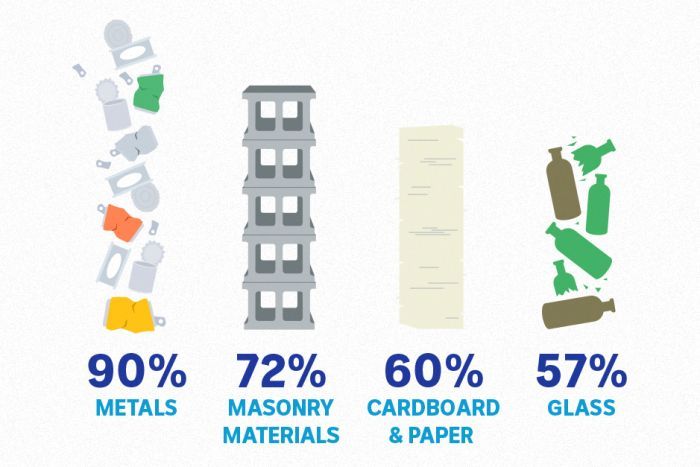
A graph showing the rates of recycling for different materials, including 90 per cent for metals and 12 per cent for plastics.

Photo:

Most of Australia’s metal gets recycled, but other materials don’t have the same fate. (ABC News: Andrew Harrison)

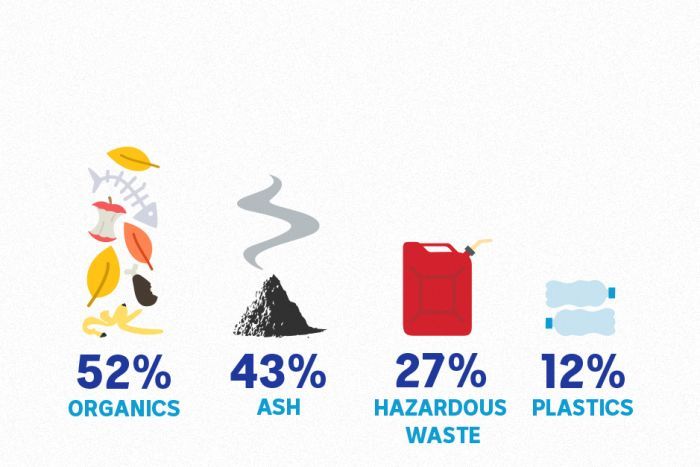
A graph showing the rates of recycling for different materials, including 52 per cent for organics and 12 per cent for plastic.

Photo:

A large portion of our plastic is sent straight to landfill — often due to the way plastic creeps into so much packaging. (ABC News: Andrew Harrison)

Even once your recycling goes into the right bin, a lot of it is unusable due to contamination — broken glass, food, plastic bags, rubbish and liquids all increase the chance of the material being eventually sent to landfill.

“The difficulty is that over the past 20 years or so, our packaging has become much, much more sophisticated, and the types of materials and the way they’re put in have become way more complicated than when we first learnt to recycle,” Ms Downes says.

Things like plastic-lined paper, tissues and glassware often don’t make the cut.

The recycling company Visy calls this “wish-cycling” — where people hope materials can be recycled, but their presence actually dooms other perfectly good recyclables to landfill.

To combat this, Infrastructure Victoria has recommended a six-bin system so all the separating is done at home.

It’s more of a problem with kerbside recycling, as business and construction often get charged more if their waste isn’t up to scratch.
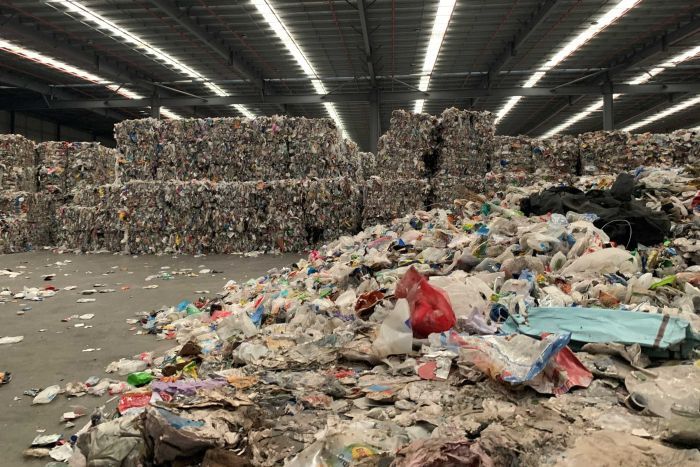
Large cubes of plastic waste bundled in a huge warehouse.

Photo:

Lots of recyclable goods sit in warehouses or sorting facilities for a long time before they reach a final destination. (ABC News: James Oaten)

And even if it’s totally pristine, there’s no guarantee it’ll actually be recycled at the end of the process if there isn’t a buyer for it.

A 2017 Four Corners investigation found hundreds of thousands of tonnes of glass — which at the time was expensive to recycle — was sitting in New South Wales warehouses because there was “no viable market” for it.

In recent months, major Victorian company SKM Recycling went insolvent. While a number of councils and the State Government scrambled to find a solution, an estimated 780 rubbish trucks’ worth of recyclables were sent to landfill in a week.

What’s China got to do with it?

Until about two years ago, Chinese companies processed a lot of our recyclable material.

But that changed when the Government there brought in the National Sword Policy, which stopped the importation of 24 types of solid waste.

It meant thousands of tonnes of recyclables — and so thousands of dollars to be made from recycling companies — suddenly had nowhere to go.

“We’ve been having real troubles now because China has wanted it for so long, that all its competition in Australia has died out,” Ms Downes says.

The China decision immediately affected 1.3 million tonnes of Australian waste, which is about 4 per cent of Australia’s recyclable waste.

Despite the crackdown in China, we’re actually exporting slightly more waste overseas than we did before the waste ban began there — it’s increased by 5 per cent to reach 4.4 million tonnes.

But more and more countries, including India, Indonesia and Malaysia are following China’s lead and tightening restrictions.
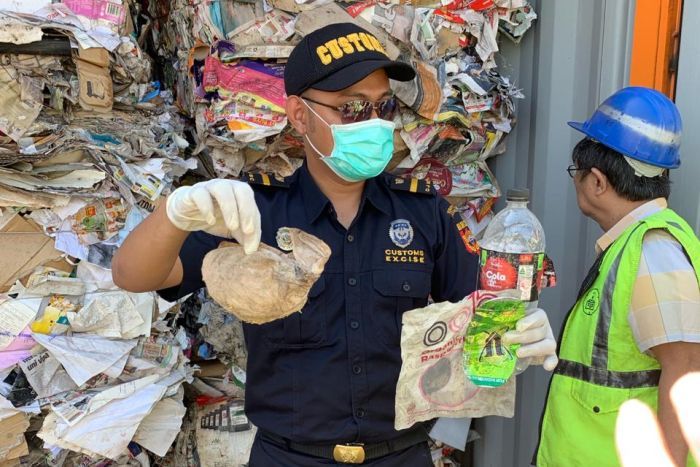
An Indonesian customs official holds up a dirty nappy in front of a shipping container full of paper.

Photo:

In some cases, the reason countries are cracking down is because of bad practices in Australia — like this nappy found in paper shipped to Indonesia. (ABC News: David Lipson )

What’s being done to deal with all that waste?

After months of talks, the Council of Australian Governments (COAG) has agreed to a near-total ban on exporting recyclables overseas, beginning in the second half of 2020.

Under the national waste policy action plan, which was hammered out in November and has seven targets, governments have agreed to set a timeline to ban the export of waste plastic, paper, glass and tyres.

It’s all part of the push for what’s known as the circular economy, where products and materials are continually used.

The plan aims to increase Australia’s resource recovery rate to 80 per cent — meaning the goal is for only 20 per cent to not be recycled.

As well as the slated export ban, the plan includes a goal of reducing the total waste generated in Australia by 10 per cent per person by 2030 — with the definition of “per person” still being worked out.

The action plan says it’ll have benefits for the economy as well. For every 10,000 tonnes of waste that is recycled, 9.2 jobs are created, compared to the 2.8 jobs if the same amount goes to landfill.

But advocates want the plan to go further.

“It’s really weak, and out of step with what other OECD nations are doing in the sense of it doesn’t have market demand,” Ms Sloan says.

But Ms Downes says not to get too disheartened by the current state of the recycling crisis.

“We’re getting closer to a solution that’s probably going to set us up for 30 or 40 years into the future,” Ms Downes says.

“This is a really big change. And change has road bumps, but we’re getting there.”

Topics:

environment,

environmental-impact,

environmental-management,

environmental-policy,

recycling-and-waste-management,

government-and-politics,

melbourne-3000,

australia

First posted

December 27, 2019 06:02:52

Share197Tweet123
usiscc

usiscc

  • Trending
  • Comments
  • Latest
Escape From Tarkov – How to Rotate Items

Escape From Tarkov – How to Rotate Items

February 5, 2020
Supply chain examination: Planning for vulnerabilities you can’t control

Supply chain examination: Planning for vulnerabilities you can’t control

December 7, 2019
Procurement Project Manager job with Camden London Borough Council

Procurement Project Manager job with Camden London Borough Council

February 17, 2020
Art Battle Wichita Falls III at The Warehouse, 1401 Lamar.

Art Battle Wichita Falls III at The Warehouse, 1401 Lamar.

0
Global Industry Analysis, Size, Share, Growth, Trends, and Forecasts 2016–2024 – ZMR News Reports

Global Industry Analysis, Size, Share, Growth, Trends, and Forecasts 2016–2024 – ZMR News Reports

0
PHOTOS: Ottawa firefighters respond to warehouse fire

PHOTOS: Ottawa firefighters respond to warehouse fire

0
Last Mile Delivery Market Worth Observing Growth | UPS, FedEx, SF Express

Last Mile Delivery Market Worth Observing Growth | UPS, FedEx, SF Express

April 23, 2024
Top 5 Spend Analysis Software ranked in 2024

Top 5 Spend Analysis Software ranked in 2024

March 1, 2024
How Tesla And BMW Are Leading A Supply Chain Renaissance With Blockchain

How Tesla And BMW Are Leading A Supply Chain Renaissance With Blockchain

January 19, 2024
  • Privacy Policy
  • Terms of Use
  • Disclaimer
  • DMCA
  • Contact Us

Copyright © 2024 United States International Supply Chain Commission (usiscc.org)

This website uses cookies to improve your experience. We'll assume you're ok with this, but you can opt-out if you wish. Cookie settingsACCEPT
Privacy & Cookies Policy

Privacy Overview

This website uses cookies to improve your experience while you navigate through the website. Out of these cookies, the cookies that are categorized as necessary are stored on your browser as they are essential for the working of basic functionalities of the website. We also use third-party cookies that help us analyze and understand how you use this website. These cookies will be stored in your browser only with your consent. You also have the option to opt-out of these cookies. But opting out of some of these cookies may have an effect on your browsing experience.
Necessary
Always Enabled

Necessary cookies are absolutely essential for the website to function properly. This category only includes cookies that ensures basic functionalities and security features of the website. These cookies do not store any personal information.

Non-necessary

Any cookies that may not be particularly necessary for the website to function and is used specifically to collect user personal data via analytics, ads, other embedded contents are termed as non-necessary cookies. It is mandatory to procure user consent prior to running these cookies on your website.

SAVE & ACCEPT
No Result
View All Result
  • Supply Chain
  • Logistics
  • Warehousing
  • Procurement
  • Shipping
  • More
    • Strategic Sourcing
    • Spend Analysis
    • Inventory
    • Contact Us

Copyright © 2024 United States International Supply Chain Commission (usiscc.org)