







With Christmas 2019 just celebrated, here is an only-in-Alaska tale of goodies from the sky. While the logistics involved are nowhere near as flawless as Santa Claus’ annual air courier trek, phrases like “Ho-Ho-Ho” or “Bah, humbug” may dance in your head. But one thing is certain – Alaska Bypass is a logistical program like no other in the country.
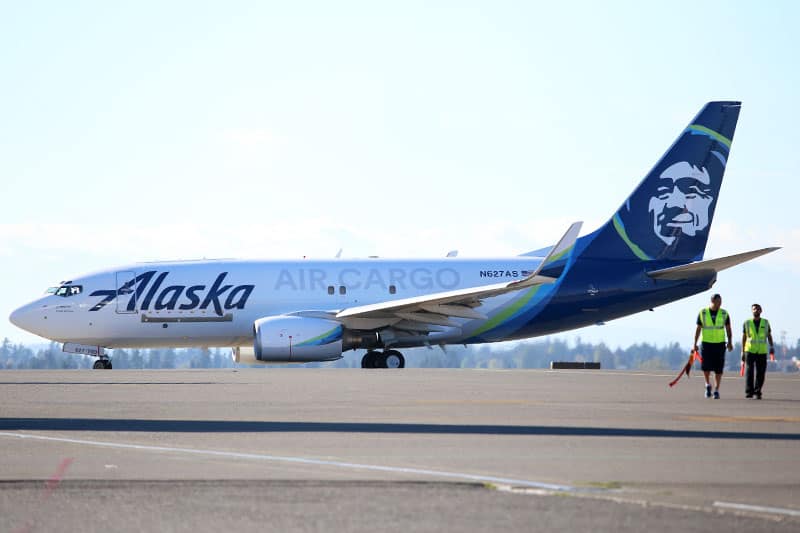
In a related matter Alaska Air Cargo, a division of Seattle-based Alaska Airlines, grounded its intra-Alaska freighter fleet made up of three Boeing 737-770Fs on December 12, 2019. One day earlier Australia’s Qantas Airways grounded its fleet of four of these models. The vendor that retrofitted these airplanes, Israel Aerospace Industries (IAI), notified its customers that there was a problem (“irregularity” was IAI’s term) with some of the rigid barriers installed during the conversion from passenger to cargo airplanes. These barriers avoid the need for less reliable cargo nets to keep cargo containers secured in their place. Rigid barriers avoid the distension that nets can create during flights. This allows for optional seating in front of the barriers for deadheading crews or handlers of animals in flight.
By December 15 Alaska Air Cargo’s grounded freighters were back in the air. The Federal Aviation Administration (FAA) issued an Airworthiness Directive approving IAI’s suggested fixes, which included additional tie-down straps on the containers and reduced cargo weight. Qantas returned to normal business on December 17 after Australian authorities were satisfied. Of course, in the grander scheme of things, Alaska Air Cargo is fortunate to have inherited the use of 70 Airbus A320 and A321 aircraft from its parent company, Alaska Air Group, through its acquisition of Virgin America in 2016. This gives it a potential increase in cargo belly space of up to 40%.

Alaska Air Cargo serves over 100 destinations in North America paralleling those of its passenger airline cousin. These include Hawaii and Alaska. In Alaska, its 19 destinations include the three major population centers (Anchorage, Fairbanks and Juneau); as far west as Adak on the Aleutian Islands; and as far north as Barrow on the Arctic Ocean. Alaska towns and villages off of the rail belt and major roads – which run like a spine from Seward, through Anchorage and up to Fairbanks – are highly dependent on air cargo deliveries. The luckier locales along the coast or rivers have the option of ships and barges if, of course, the residents are patient enough to wait for the weeks or even months necessary during the winter.
Since Alaska Air Cargo’s three Boeing freighters primarily serve intra-Alaska routes, their grounding was impactful. Cargo and mail deliveries slowed as items were transferred to the bellies of Alaska Airlines’ passenger planes and to other air cargo carriers. Events like these highlight how fragile Alaska’s logistical web is. When one strand frays it affects the strength of the entire web of socio-economic activity in the state.
One may wonder how Alaskans living in such remote and weather-stricken towns and villages receive regular mail and cargo service. Does the United States Postal Service (USPS) have the fleet of planes, ground crews and mail carriers to handle door-to-door delivery throughout the U.S. Arctic? Consider the famous words: “Neither snow nor rain nor heat nor gloom of night stays these couriers from the swift completion of their appointed rounds.” Postal deliveries in Alaska would certainly put those stirring words to the test. But just like that aphorism was never the official motto of USPS, it is also not the case that USPS mail carriers need to trudge across the vast Arctic tundra delivering mail and other packages.
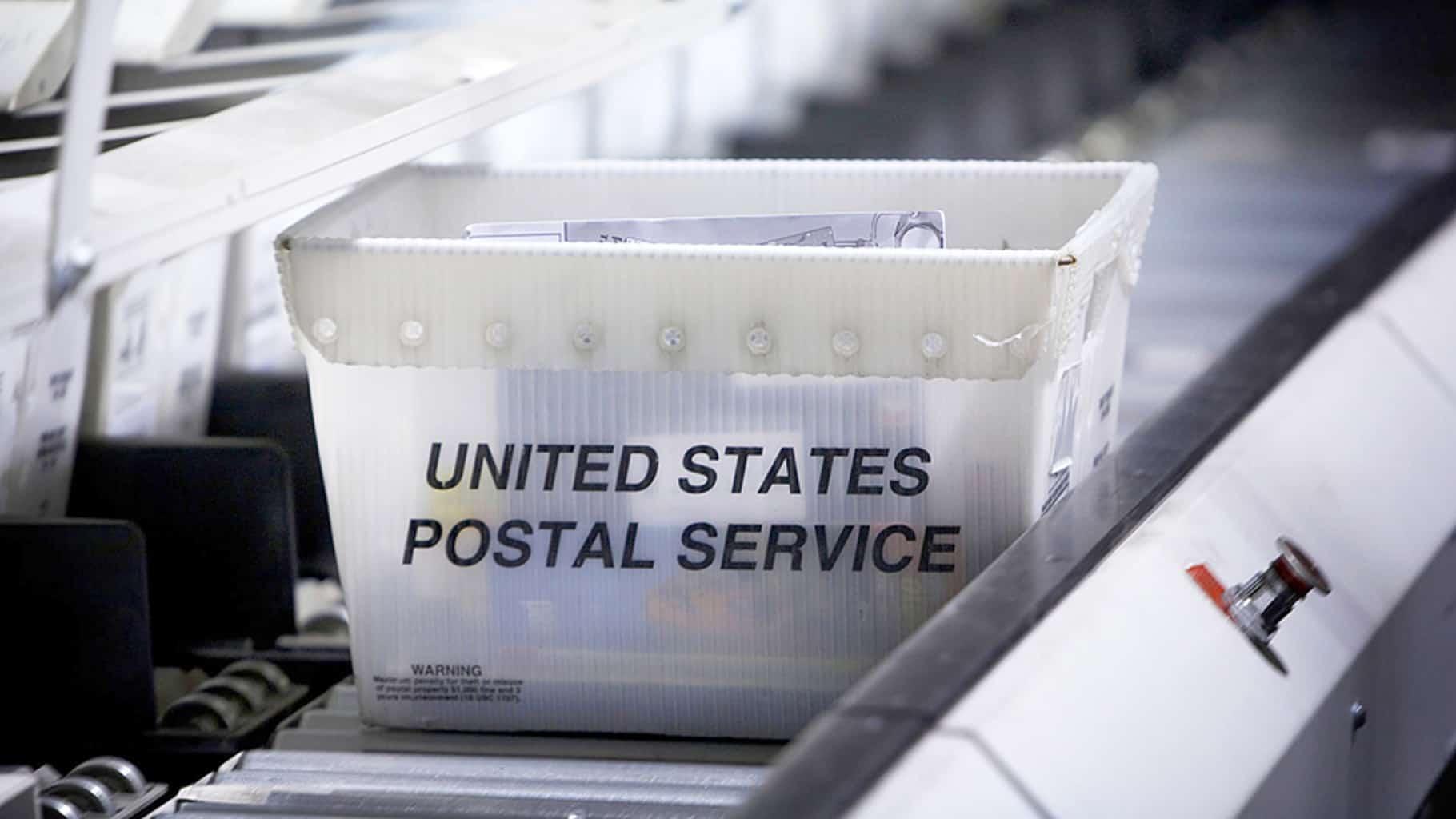
Alaska benefits from a service known as Alaska Bypass. In 1972 USPS started an alliance of approved air carriers mandated to ensure that cargo moved more efficiently throughout the state. Today, the five mainline air carriers are Alaska Airlines, Everts Air Cargo, Lynden Air Cargo, Northern Air Cargo and Ravn Alaska. These carriers fly beyond Anchorage or Fairbanks to 14 “bypass hub” airports (of which Barrow is one, by the way) and transfer bypass cargo to smaller carriers if the destination is even more remote. There are 37 of these smaller “Alaska Bush” carriers that may carry no more than 7,500 pounds of bypass cargo.

Palletized shrink-wrapped packages weighing at least 1,000 pounds may be tendered by shippers directly to bypass-approved air carriers but only in Anchorage or Fairbanks. The packages “bypass” the USPS system, are assessed USPS ground parcel post rates, and are delivered straight to Alaskans’ doors. What about typical mail (i.e., letters and smaller packages)? While those are not a part of the Alaska Bypass program, USPS itself tenders these items to the same bypass-approved air carriers, which fly them to USPS offices in villages or other approved sites if there is no official post office nearby. Air carriers are paid directly by USPS using a rate scheme set out by the U.S. Department of Transportation to cover the air carriers’ costs.
In effect, Alaska Bypass is a federal subsidy paid to those air carriers that are part of the program. While popularly known as “Alaska Bypass Mail,” the term is misleading. Given the weight of the packages and the fact that the recipients tend to be local merchants selling consumer goods and groceries, bypass “mail” seems like anything but. On the contrary, Alaska Bypass looks much like for-hire air cargo carriage except that USPS is regulating the weight and subsidizing the cost. It is just another example of Alaska’s unique logistics system.
USPS claims to have lost $81 million in 2016 through the subsidies it paid to the air carriers, which flew a total of 83 million pounds of bypass cargo that year. On the other hand, Alaska does not have the surface and air infrastructure that most states have to facilitate cargo delivery throughout their territories. Would not the state and/or federal outlay to build and maintain near-Arctic highways be much more costly? What about the positive spillover effects of villagers paying lower air fares than otherwise due to steady incoming bypass air cargo activity? Would a weaning off of Alaska Bypass spur the state to provide most or at least some of the required transportation infrastructure? Not likely. Certainly the state’s fiscal problem of having a 90% revenue dependence on taxes from oil production, combined with political squabbling over bringing back an income tax and the status of the $65 billion Permanent Fund, means that the state is in no mood to take on a fiscal burden that the federal government has assumed for nearly 50 years.
Can remote villages of predominately low-income people be maintained in Arctic and sub-Arctic locales without large government subsidies? Access to transportation will always be an issue that is front and center in Alaska’s socio-economic fabric. I can hear the cacophony of “Ho-Ho-Ho’s” and “Bah, humbugs” now.










