






The traditional logistics supply chain is coming under significant and diverse pressures, ranging from climate change to human resource shortages, and infrastructure congestion, writes James Jordan, HFW senior associate.
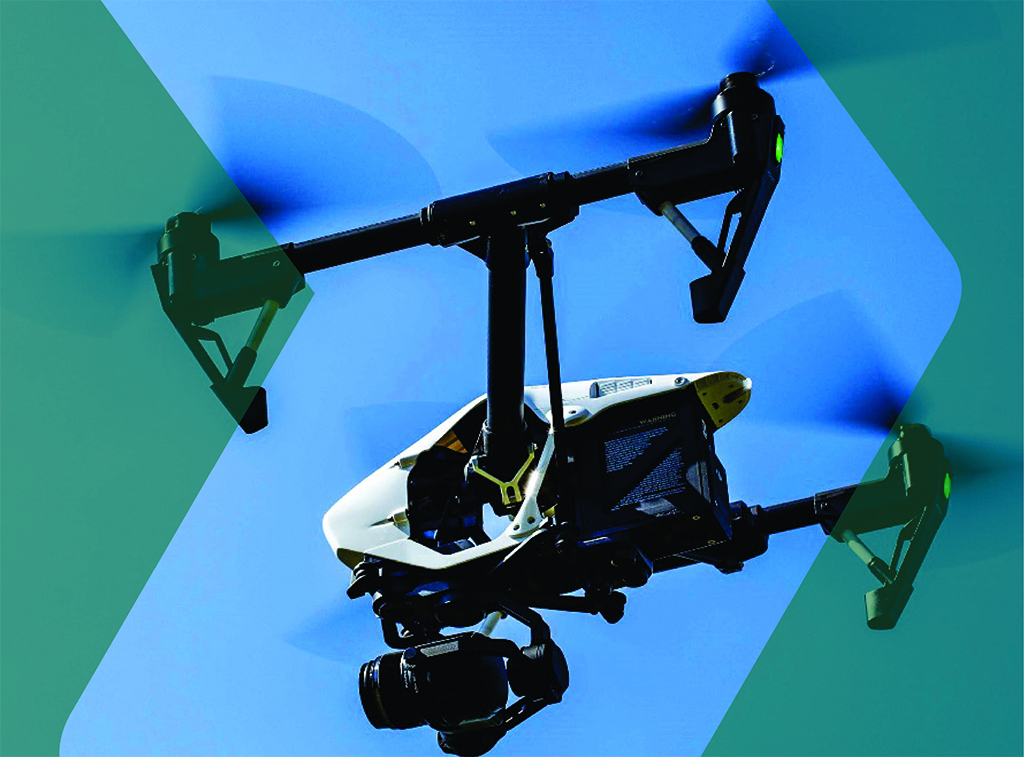
The solution to these problems may be on the horizon in the form of Unmanned Aerial Vehicles (UAV) and Large Unmanned Cargo Aircraft (LUCA).
A sector ripe for disruption
The global value of trade in goods has increased dramatically, rising from $10 trillion in 2005 to $17.5 trillion in 2017[1].
Despite this staggering growth, the typical logistics supply chain – involving marine/air transport supplemented by point-to-point trucking or rail between fixed infrastructure bases – has not changed significantly since the mid-twentieth century.
Increased automation of all modes of transportation is set to usher in significant change during the decade ahead. Arguably, the most exciting development is the integration of UAVs into the supply chain.
Logistics drones
Logistics drones can broadly be categorised into three distinct groups:
- final-mile parcel delivery
- long-distance, high-value parcel delivery
- LUCA
Each category has a compelling use case, with small payload drones receiving the most publicity (e.g. Amazon Prime). The game changer for the global cargo industry is likely to be the successful deployment of LUCA.
Advancements in Beyond Visual Line Of Sight (BVLOS) operations and batteries have helped realise the commercial possibilities of LUCA. However, concerns remain in relation to the dollar cost per mile of UAVs, given the well-publicised limitations of electric aircraft range and payload.
In the short-term, jet fuel-powered LUCA will be a more commercially viable option.
The industry
The global drone logistics market is fragmented, with a large number of small entities competing within a global market that generated only US$24 million in revenue in 2018[2]. The industry will need to mature and consolidate through mergers as well as the acquisition of smaller entities by larger manufacturers who can provide access to global production lines. Nevertheless, revenue is anticipated to grow to US$1.6 billion by 2027[3].
Prototypes and projects
Exciting LUCA projects in development include Sabrewing Aircraft Inc, whose prototype can carry a load of 455kg for 1800km[4], and Elroy Air[5], whose drone can carry 113kg for 482km. The accolade for the most ambitious project, however, goes to California-based start-up, Natilus[6], which is developing a 60m-long drone with a 100 ton (220,000lbs) capacity.
Indonesian carrier Garuda recently announced plans to purchase 100 UAVs from China’s Beihang Technology in order to deliver freight to Indonesia’s 18,000 islands. The UAVs will have payloads of up to 2.2 tons (4,400lbs), despite domestic UAV regulations stipulating a maximum take-off weight of 7kg.
It remains to be seen how many of these projects will achieve their goals, but ambitious plans are afoot provided the regulatory environment is able to keep pace.
Regulatory challenges
As most projects are currently at the prototype stage, the initial regulatory focus will be on type certification rather than flight rules.
Most commentators recognise that the regulations for flight operations are years away from being ready for the deployment of an automated cargo fleet. This is partly due to regulators still grappling with the challenges created by small UAVs.
Significant strides have, however, been made in relation to certification, with the European Union Aviation Safety Agency (EASA) recently publishing certification conditions for autonomous VTOLs (Vertical Take-off and Landing), which address cargo requirements up to a maximum take-off weight of 3,175kg[7]. Significant changes will, however, be required if aircraft similar to the 100-ton Natilus are to get off the ground.
Cargo vs. passenger drones
Convincing the public that LUCA are safe will be a significant challenge. LUCA may, however, be used as a testbed for the technology, given the negative public safety perception of passenger UAVs.
It is, for example, easier to build and certify an unmanned cargo aircraft using existing regulations as there will be no requirement to comply with passenger safety regulations. It would be possible, therefore, to certify a passenger version with relative ease once the regulators understand the challenges of certifying LUCA.
Regulations for large UAVs are, therefore, likely to develop around cargo before being adapted for passenger operations.
What does the future hold?
The air cargo industry will be the driving force behind the development of unmanned aerial technology in the next decade. If successfully integrated into the existing supply chain, the benefits of UAVs – and specifically LUCA – are numerous and will include reduced airport congestion, improved safety, optimised route flexibility, reduced carbon emissions, and enhanced delivery times.
LUCA also have the potential to open new markets in areas where geographical barriers limit the efficiency of existing transportation modes. Regions without access to strategic land, air and sea hubs stand to gain significantly from the development of UAVs and LUCAs.
Given the huge potential benefits that UAVs and LUCAs could have for the air cargo industry, this author is hopeful that a sensible regulatory approach will enable this new technology to take-off.
James Jordan is a senior associate at law firm HFW. He is an expert in the legal aspects of emerging technology affecting the aviation sector and is a member of the firm’s market-leading aerospace practice.
[1] https://unctad.org/en/PublicationsLibrary/ditctab2019d2_en.pdf
[2] https://www.theinsightpartners.com/reports/drone-logistics-and-transportation-market
[3] ibid
[4] https://www.sabrewingaircraft.com/cargo-uav/
[6] http://www.natilus.co/about-us2
[7] https://www.easa.europa.eu/sites/default/files/dfu/SC-VTOL-01.pdf










