







Machining and metalworking shops can be dangerous places to work, with a wide variety of potential accidents waiting for workers who are unaware, unalert, or unprepared. From chemical spills and fires to severe lacerations and even possible amputations, the list is quite long.
Proper workplace design and maintenance can prevent many accidents, but no one can plan for everything. It makes sense to focus on some of the most common injuries, to mitigate or eliminate them.
According to the Bureau of Labor Statistics and OSHA, workers that operate machinery experience approximately 18,000 amputations, crushing injuries, lacerations, and abrasions each year. In addition to these incidents there are over 800 fatalities.
What are some of the most common injuries? Where are the best places to focus on safety and maintenance teams? How can the industry cut down on that massive amount of accidents?
Most Common Machine Shop Injuries
Stops and safety guards are installed in newer machinery, which of course is warranted. However, at the machine work center not necessarily where most operations see the highest number of incidents.
1. Material handling and repetitive strain injuries — Material handling and improper lifting techniques contribute to a lot of injuries. Repetitive movements and environmental conditions can put a lot of strain on the human body over time. For example, workers subjected to a prolonged series of vibrations might sustain injuries, similar to being stuck in an awkward position or posture for an extended period.
Injuries of this type fall into several classifications, including repetitive strain injuries (RSI), occupational overuse syndrome (OOS), cumulative trauma disorder (CTD), and repetitive motion disorder or repetitive motion injuries (RMD). The damage can be worsened as a result of psychological stress and repeated work sessions.
2. Hand tool-related injuries — Many hand tools are involved in the metal and parts fabrication process, which can be a direct source of injury. Improper tool selection can increase the strain on a worker, further boosting the potential of an injury. Other reasons include excessive tool use or repetition, poor equipment maintenance, improper safety policies or failure to comply with them, and ineffective workstation design.
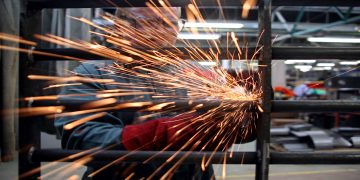
Many tool injuries are musculoskeletal, similar to repetitive strain injuries. However, there are cases where a tool could cause major bodily harm. Grinders, sanders and other powered hand tools might send pieces of material flying or cause sparks — which may be incredibly harmful without the proper skin, face and eye protection.
3. Chemical hazards and poor ventilation — While specific tasks require protective gear — such as welding with its many types of face masks and helmets — this may not prevent toxic substances from causing a problem. Poor ventilation is a concern with welding, as well as for grinding, finishing, and other machining tasks.
Workers may come into contact with harmful chemicals and gases like carbon monoxide and even ozone, as well as airborne dust, shrapnel, and other particulate matter. These issues are quite common because they happen over long periods, and symptoms are not usually apparent until much later in a worker’s career.
4. Failure to act — Injuries are common, and while unfortunate, they can happen when workers least expect them, even when following all safety guidelines and wearing the proper protective equipment. If not dealt with accordingly — and that includes taking the adequate time to rest and heal — they will become worse over time.
Sadly, a lot of injuries get worse because people are afraid to speak up, get help, or take time off. It’s a problem that’s especially true of workers who never use their sick time. Many organizations plug the idea that their employees are “part of the family”; ultimately, it’s a business.
It is imperative for workers and employers to recognize the importance of worker health, including taking advantage of workers’ compensation programs and the appropriate time off to heal, even for small injuries.
5. Poor guarding techniques — When it comes to heavy machines, a correctly placed guard or barrier can be the difference between safe operation and serious injury, like loss of a limb. It goes beyond having machine guards in place, however. Sometimes the right system exists but malfunctions, or does not correctly identify hazard situations, such as someone’s finger sitting in a saw or gear track.
Poorly maintained and nonexistent guards are among the most common issues related to machine-shop injuries, often resulting in some of the most horrific accidents. Improper machine guarding has been in OSHA’s Top Ten Most Cited Violations list for the past six years, including in 2019.
Tips for Preventing Common Injuries
While specific techniques can be deployed to deal with common hazards, general safety improvements are going to have the most significant impact across the board. These are some details that every manufacturing operation and safety team should ensure are maintained:
1. Well-maintained PPE — Personal Protective Equipment and safety gear are musts, and most workplaces already conform to this standard. Choosing the right safety gear is essential to healthy working conditions, but perhaps more important is the condition of that equipment. Helmets that are old, worn, and dirty are going to be more likely to break down in an emergency. The same holds true for gloves, footwear, clothing, and any other item of PPE.
All safety equipment should be properly maintained, and when it can no longer be trusted, it should be replaced immediately.
2. Clean work areas and stations — The entire machine shop must remain clean, which means all workers are responsible for keeping their areas or workstations tidy. Doing so will prevent common injuries that occur from spills, hazards and environmental issues. Most important, maintaining clean work areas promotes accountability and encourages everyone to play a role in keeping the entire plant safe and secure.
3. Proper safety guards and sensors — Heavy machinery should always have accurate and reliable safety guards, and that includes all the related devices and systems, like sensors, jams, control networks, and more. It should extend beyond heavy equipment and include things like tools, transportation, and other plant systems.
Legacy equipment should be upgraded or replaced in order to implement the appropriate safety systems. All existing applications should be well-maintained and regularly inspected to ensure they meet standards.
4. Comprehensive safety training. The entire workforce should be trained and educated in safety protocols, covering everything from using and wearing protective equipment to operating machinery.
No one should be allowed to handle equipment, tools, or machines without first completing the necessary education tracks. Furthermore, the entire education lineup should be updated regularly — along with the workers — as new technologies and methods are established and introduced.
5. Documented safety ops. Documentation plays a significant role in the safety and security of a machine shop. Efforts should include logs for safety events, ranging from machines that have been serviced to detailed rundowns of accidents and potential failures.
The information can be used to improve the operation further and prevent similar events from happening in the future. This alone is an important element of safety: Every precaution should be taken to avoid further incidents.
Promoting safety on the floor — Preventing machine shop injuries is key to having a productive and safe machine shop. Employing these practices should make your operation the best it can be, both for business and your workers.
Kayla Matthews writes about the IoT, IIoT, automation and smart technologies for publications like InformationWeek, Manufacturing.net, Robotiq others. To read more from Kayla, follow her personal tech blog, Productivity Bytes.










