

• Latest
  • Trending
  • All
Achieve Customer Responsiveness Without Creating Supply Chain Chaos

Achieve Customer Responsiveness Without Creating Supply Chain Chaos

December 11, 2019
Last Mile Delivery Market Worth Observing Growth | UPS, FedEx, SF Express

Last Mile Delivery Market Worth Observing Growth | UPS, FedEx, SF Express

April 23, 2024
Top 5 Spend Analysis Software ranked in 2024

Top 5 Spend Analysis Software ranked in 2024

March 1, 2024
How Tesla And BMW Are Leading A Supply Chain Renaissance With Blockchain

How Tesla And BMW Are Leading A Supply Chain Renaissance With Blockchain

January 19, 2024
LATAM Cargo strengthens European cargo links

LATAM Cargo strengthens European cargo links

April 14, 2020
Ford making reusable hospital gowns from airbag materials as efforts against coronavirus expand

Ford making reusable hospital gowns from airbag materials as efforts against coronavirus expand

April 14, 2020
Don’t Sweat NBC’s Decision to Cut Back on Television Ad Inventory

Don’t Sweat NBC’s Decision to Cut Back on Television Ad Inventory

April 14, 2020
Software firms sharpen focus on AI, big data as IT spending drops

Software firms sharpen focus on AI, big data as IT spending drops

April 14, 2020
Navigating turbulent times in your supply chain (TL:DR version)

Navigating turbulent times in your supply chain (TL:DR version)

April 14, 2020
Last Mile Delivery by Drones Market is Booming Worldwide

Last Mile Delivery by Drones Market is Booming Worldwide

April 14, 2020
AIR CARGO MARKET SIZE, SHARE, DEMAND, TREND, LATEST INNOVATIONS & APPLICATION ANALYSIS AND INDUSTRY GROWTH FORECAST 2027 – Science In Me

AIR CARGO MARKET SIZE, SHARE, DEMAND, TREND, LATEST INNOVATIONS & APPLICATION ANALYSIS AND INDUSTRY GROWTH FORECAST 2027 – Science In Me

April 14, 2020
Wheat procurement in Patiala: 6,500 coupons issued to farmers – cities

Wheat procurement in Patiala: 6,500 coupons issued to farmers – cities

April 14, 2020
Pandemic, Plastics And The Continuing Quest For Sustainability

Pandemic, Plastics And The Continuing Quest For Sustainability

April 14, 2020
  • Supply Chain
  • Logistics
  • Warehousing
  • Procurement
  • Shipping
  • More
    • Strategic Sourcing
    • Spend Analysis
    • Inventory
    • Contact Us
No Result
View All Result
United States International Supply Chain Commission
Home Supply Chain

Achieve Customer Responsiveness Without Creating Supply Chain Chaos

by usiscc
December 11, 2019
in Supply Chain
0
Achieve Customer Responsiveness Without Creating Supply Chain Chaos
492
SHARES
1.4k
VIEWS
Share on FacebookShare on Twitter

Modern supply chain planning (SCP) tools allow companies to create a brand-new demand and/or supply plans every day if they so desire. There is the prospect of unparalleled responsiveness, the ability to quickly react to new opportunities and mitigate new problems.

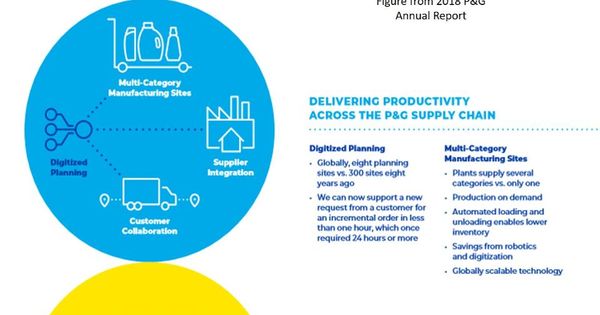
Procter & Gamble is doing the demand/supply planning for products like Tide multiple times a day! This means what is manufactured and shipped may be adjusted several times a day! For other products, the plan/execute cycle is weeks. This responsiveness, this ability to do quick scenario planning, opens new opportunities. A P&G executive spoke of the ability to respond to an incremental business request, for example a request from a retail customer for an incremental promotion in minutes. These kinds of requests use to take multiple days to respond to.

But at the same time companies have integrated business planning (IBP) processes, often 30-day supply plans matched to projected demand with long frozen production fences. They don’t do this because they are opposed to responsiveness. They do it because they have monthly financial and market goals. The IBP process helps to give companies some level of certainty that key goals can be largely achieved.

How can supply chain responsiveness be embedded in a new planning process with guardrails that helps give companies some level of certainty that their monthly and quarterly goals will be mostly attained?

One of the biggest inhibitors to a responsive supply chain are frozen production plans that can extend from weeks to over a month. Shaun Phillips, Director of Product Management at QAD Dynasys sent me an article he wrote recently. “Fundamental changes happening on the ground at many manufacturing sites. Here we see companies questioning a piece of planning furniture that has been in place since the birth of MRP (materials requirements planning) … the frozen planning horizon.” These frozen production fences are intervals of time in the planning horizon during which a company doesn’t change its supply plan for a product, regardless of events or changes.

In a company with a seven-day frozen production plan, the plan is frozen for the next seven days. The other three weeks in the month continue to be planned and replanned to meet changing demand and customer replenishment requests. In a one-day frozen production plan, only the next day’s production is locked down.

“The objective of the frozen horizon is to minimize disruption to the factory schedules.” Mr. Phillips wrote. “This is an honorable objective as production disruption reduces production efficiency. However frozen periods also result in reduced flexibility, agility and responsiveness.”

But Mr. Phillips points out that there are good reasons to question the old way of doing things. Companies have much better access to real-time information on what is actually selling – versus what was expected to sell – and IoT devices can provide early advance warnings of probable supply disruptions based on predictive maintenance alerts (this key piece of machinery is about to break down), probable inbound shipment delays, or other similar types of events.

Supply chain planning (SCP) technology allows near-term daily factory schedules – called operational plans – to be connected to medium-term (week and monthly manufacturing plans) tactical plans. “When two plans become synchronized it is natural that they start to be treated as one plan with two different decision-making windows,” Mr. Phillips explained. “The planning technologies used to manage the plans have become much more powerful. Most planning software vendors now use a common data model to ensure tight synchronization between operational and tactical planning data.”

In concurrent planning, the model with the detailed production plan might have set-up times for each machine, understand how much can be made on that machine in an hour, understand production wheels, and other similar forms of granular modeling. The IBP plan will be less granular, it might model how much can be produced by the production line in an hour. But when running demand/supply scenarios, it is easy to come up with a plan that looks good in the less granular model, and quickly test if for feasibility in the operational model. 

Concurrent planning is becoming something increasingly demanded in the market. Kinaxis is best known for this capability. But in the course of updating my global supply chain planning market study, suppliers like Solvoyo, JDA Software, AspenTech, OMP, QAD Dynasys and others tell me they also offer this functionality. This means that the initial integrated business plan is more realistic; the plan that is being developed has a higher chance of being executed. It is a key planning feature that enables more responsive supply chain planning.  

Achieving a responsive supply chain, without carrying gobs of inventory, is a multifaceted problem. Shrinking the frozen production window is a no brainer. Other potential solutions to this problem are more difficult to ascertain. I’ve kicked off a collaborative research project with APQC, one of the world’s best resources for benchmarking, to find best practices in this area. Supply Chain Management Review, the closest thing we have to the Harvard Business Review for supply chain management, has agreed to publish our findings if we find significant correlations. There are no guarantees we will find anything. Keep your fingers crossed!


Share197Tweet123
usiscc

usiscc

  • Trending
  • Comments
  • Latest
Escape From Tarkov – How to Rotate Items

Escape From Tarkov – How to Rotate Items

February 5, 2020
Supply chain examination: Planning for vulnerabilities you can’t control

Supply chain examination: Planning for vulnerabilities you can’t control

December 7, 2019
Procurement Project Manager job with Camden London Borough Council

Procurement Project Manager job with Camden London Borough Council

February 17, 2020
Art Battle Wichita Falls III at The Warehouse, 1401 Lamar.

Art Battle Wichita Falls III at The Warehouse, 1401 Lamar.

0
Global Industry Analysis, Size, Share, Growth, Trends, and Forecasts 2016–2024 – ZMR News Reports

Global Industry Analysis, Size, Share, Growth, Trends, and Forecasts 2016–2024 – ZMR News Reports

0
PHOTOS: Ottawa firefighters respond to warehouse fire

PHOTOS: Ottawa firefighters respond to warehouse fire

0
Last Mile Delivery Market Worth Observing Growth | UPS, FedEx, SF Express

Last Mile Delivery Market Worth Observing Growth | UPS, FedEx, SF Express

April 23, 2024
Top 5 Spend Analysis Software ranked in 2024

Top 5 Spend Analysis Software ranked in 2024

March 1, 2024
How Tesla And BMW Are Leading A Supply Chain Renaissance With Blockchain

How Tesla And BMW Are Leading A Supply Chain Renaissance With Blockchain

January 19, 2024
  • Privacy Policy
  • Terms of Use
  • Disclaimer
  • DMCA
  • Contact Us

Copyright © 2024 United States International Supply Chain Commission (usiscc.org)

This website uses cookies to improve your experience. We'll assume you're ok with this, but you can opt-out if you wish. Cookie settingsACCEPT
Privacy & Cookies Policy

Privacy Overview

This website uses cookies to improve your experience while you navigate through the website. Out of these cookies, the cookies that are categorized as necessary are stored on your browser as they are essential for the working of basic functionalities of the website. We also use third-party cookies that help us analyze and understand how you use this website. These cookies will be stored in your browser only with your consent. You also have the option to opt-out of these cookies. But opting out of some of these cookies may have an effect on your browsing experience.
Necessary
Always Enabled

Necessary cookies are absolutely essential for the website to function properly. This category only includes cookies that ensures basic functionalities and security features of the website. These cookies do not store any personal information.

Non-necessary

Any cookies that may not be particularly necessary for the website to function and is used specifically to collect user personal data via analytics, ads, other embedded contents are termed as non-necessary cookies. It is mandatory to procure user consent prior to running these cookies on your website.

SAVE & ACCEPT
No Result
View All Result
  • Supply Chain
  • Logistics
  • Warehousing
  • Procurement
  • Shipping
  • More
    • Strategic Sourcing
    • Spend Analysis
    • Inventory
    • Contact Us

Copyright © 2024 United States International Supply Chain Commission (usiscc.org)






