



• Latest
  • Trending
  • All
Agile software platforms key to surviving disasters, freight tech execs say

Agile software platforms key to surviving disasters, freight tech execs say

March 19, 2020
Last Mile Delivery Market Worth Observing Growth | UPS, FedEx, SF Express

Last Mile Delivery Market Worth Observing Growth | UPS, FedEx, SF Express

April 23, 2024
Top 5 Spend Analysis Software ranked in 2024

Top 5 Spend Analysis Software ranked in 2024

March 1, 2024
How Tesla And BMW Are Leading A Supply Chain Renaissance With Blockchain

How Tesla And BMW Are Leading A Supply Chain Renaissance With Blockchain

January 19, 2024
LATAM Cargo strengthens European cargo links

LATAM Cargo strengthens European cargo links

April 14, 2020
Ford making reusable hospital gowns from airbag materials as efforts against coronavirus expand

Ford making reusable hospital gowns from airbag materials as efforts against coronavirus expand

April 14, 2020
Don’t Sweat NBC’s Decision to Cut Back on Television Ad Inventory

Don’t Sweat NBC’s Decision to Cut Back on Television Ad Inventory

April 14, 2020
Software firms sharpen focus on AI, big data as IT spending drops

Software firms sharpen focus on AI, big data as IT spending drops

April 14, 2020
Navigating turbulent times in your supply chain (TL:DR version)

Navigating turbulent times in your supply chain (TL:DR version)

April 14, 2020
Last Mile Delivery by Drones Market is Booming Worldwide

Last Mile Delivery by Drones Market is Booming Worldwide

April 14, 2020
AIR CARGO MARKET SIZE, SHARE, DEMAND, TREND, LATEST INNOVATIONS & APPLICATION ANALYSIS AND INDUSTRY GROWTH FORECAST 2027 – Science In Me

AIR CARGO MARKET SIZE, SHARE, DEMAND, TREND, LATEST INNOVATIONS & APPLICATION ANALYSIS AND INDUSTRY GROWTH FORECAST 2027 – Science In Me

April 14, 2020
Wheat procurement in Patiala: 6,500 coupons issued to farmers – cities

Wheat procurement in Patiala: 6,500 coupons issued to farmers – cities

April 14, 2020
Pandemic, Plastics And The Continuing Quest For Sustainability

Pandemic, Plastics And The Continuing Quest For Sustainability

April 14, 2020
  • Supply Chain
  • Logistics
  • Warehousing
  • Procurement
  • Shipping
  • More
    • Strategic Sourcing
    • Spend Analysis
    • Inventory
    • Contact Us
No Result
View All Result
United States International Supply Chain Commission
Home Logistics

Agile software platforms key to surviving disasters, freight tech execs say

by usiscc
March 19, 2020
in Logistics
0
Agile software platforms key to surviving disasters, freight tech execs say
491
SHARES
1.4k
VIEWS
Share on FacebookShare on Twitter

Digital logistics tools are helping manage the chaos and uncertainty the coronavirus has injected into the supply chain, but the crisis is a warning sign that the freight industry overall needs to do a better job of making sure companies are equipped to absorb the inevitable disasters of the future.

“Logistics software platforms are fundamentally more agile than old school systems; they are built to put structural flexibility into supply chains,” said Karl Siebrecht, co-founder and CEO of Flexe, an on-demand warehousing company.

The coronavirus pandemic is “painful on a human level and supply chain level,” he said. But it is also an opportunity to build more resilience into supply chains to mitigate the impacts for “when it happens next.”

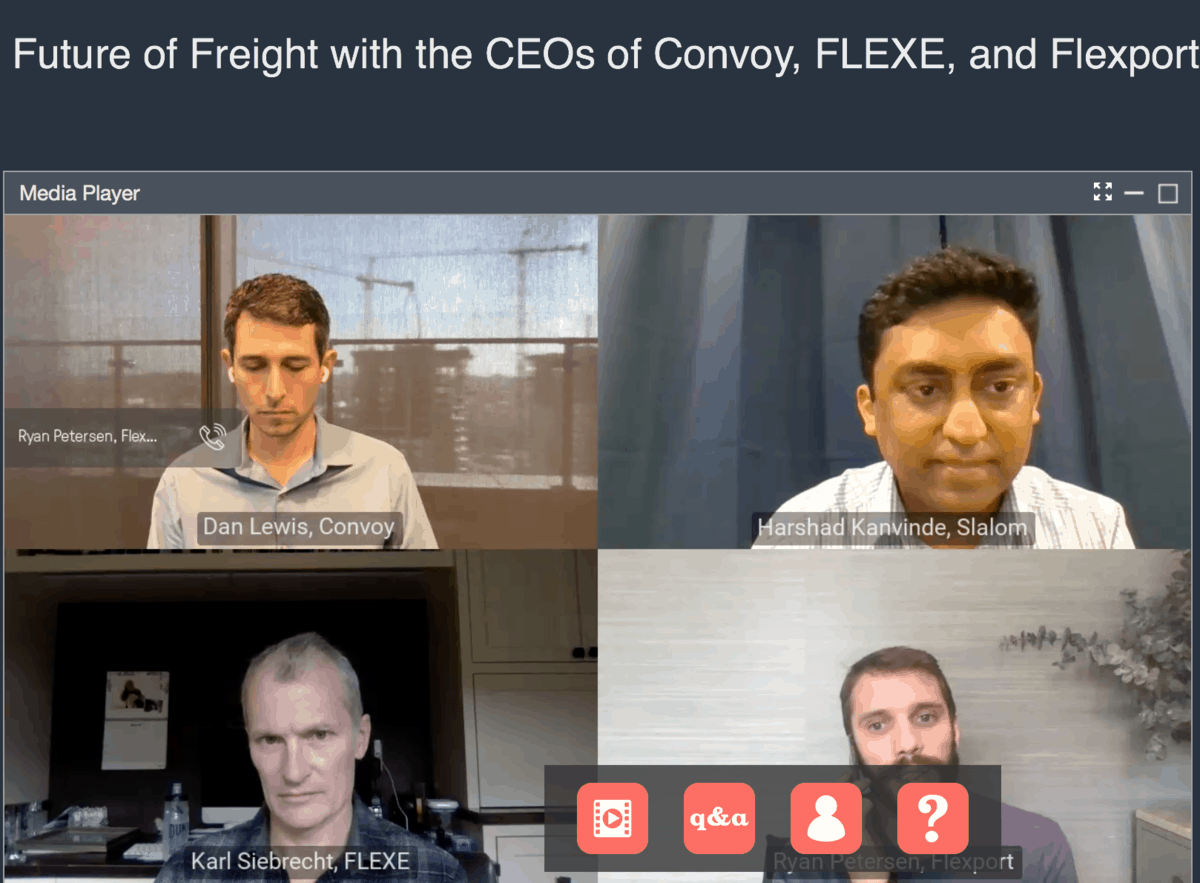
Siebrecht joined Dan Lewis, CEO of digital fright network Convoy, and Ryan Petersen, CEO of Flexport, a global freight forwarding platform, in a virtual roundtable yesterday about how COVID-19 is impacting their companies and supply chain partners.   

The wide-ranging discussion touched on panic buying, swings in supply and demand, remote work and how tech platforms, long touted for making supply chains more efficient, serve as a critical lever to keep freight moving in times of crisis.
Throughout the 90-minute conversation, one common if obvious theme emerged: “The biggest and most important thing is [coronavirus] has made things very unpredictable,” said Lewis.

Supply chain disruption

Asked for his view on trucking impacts, Lewis said Convoy is seeing up to five to 10 times the normal demand into cities like Seattle, an epicenter of the crisis. At the same time, the system is continuing to absorb a big drop in freight coming into the Southern California ports from China, where the pandemic started.

As a result of these reversals, the transactional spot freight market is growing very quickly, Lewis said. “All existing agreements aren’t really holding up.”

Sharing an example of how panic buying has upended inventory cycles, Siebrecht  said bottled water companies at this time of year are typically building up inventory in anticipation of summer. Now all “pre-built inventory” is being sold immediately, he said, with one large player registering its highest month of sales – 900 million bottles of water – over the past month.

Flexe is managing today’s “unforeseen peaks” in several ways, according to Siebrecht. Citing a couple of examples he said the company, which connects hundreds of warehouses across the U.S. and Canada, is spinning out additional warehouse capacity and accelerating distribution of medical supplies. 

“Because this is a software-based business, we can move really quickly,” he explained, noting that Flexe received two requests on March 17 from companies needing hospital equipment; one shipment arrived yesterday, the other one is expected to arrive today.

Petersen described the collapse in air freight that has accompanied the current crisis, and said skyrocketing air cargo prices have fueled demand for Flexport’s “premium ocean service,” which shaves four days off the typical trans-Pacific voyage. 

The company is also taking creative approaches to problems, like chartering a Boeing 747 for a company that makes baby wipes and had never shipped by air before – “ever,” according to Petersen. Ventilators and masks are also being shipped to hospital systems by air “in a rush delivery mindset,” he said. 

Insourcing, or outsourcing

Taking a 40,000-foot view, the panel discussed whether the current crisis exposed fault lines in the supply chain, and what solutions might come out of it.

The group agreed that the pandemic was an “extreme example” of a broader trend toward uncertainty set in motion with last year’s tariffs and port labor strikes in 2018 – and would likely intensify debates over domesticating the supply chain vs. maintaining a global supply chain and whether companies should accelerate efforts to source goods from a variety of locations instead of depending on a single country.

Flexport is seeing volumes from Philippines surge, but “in a global pandemic, I don’t know that diversifying helps you that much,” Petersen said, noting there’s a balance between risk and cost. 

“Ultimately the best insurance policy is running your own garden and growing your own food,” he said. “But that’s costly. It’s a hard calculus if you are a supply chain manager.”

Harshade Kanvinde, a Slalom supply chain consultant who moderated the roundtable, talked about infusing more overall agility into the supply chain to avoid inventory problems such as retailers running out of soap while their shelves are full of shampoo. “They’re practically the same ingredients,” he said. 

A freight tech pull back?

Digital logistics companies are not immune to the cataclysms shaking the global economy. A couple of pilot projects have been paused, Siebrecht said, from customers that want to get consumables to market. “Everything else takes a back seat,” he said.

Without offering details, Lewis said Convoy is adapting to the pandemic by changing its priorities about what to invest in and what problems the company will try and solve with technology..

Recounting a story about a major international freight forwarder whose employees had to haul their desktop computers home because they didn’t have laptops for remote work, Petersen said the crisis spotlights tech providers are enabling new workflows.

“It’s not just customers adopting tech and how it will help them,” he said. It’s about how the platform of the provider enables remote work, connecting people, companies and factories all over the world.

“Software has such a role, keeping companies responsive to something like this,” he said. “We cannot predict something like this by its very nature. But you can predict that something like this will happen.”


Share196Tweet123
usiscc

usiscc

  • Trending
  • Comments
  • Latest
Escape From Tarkov – How to Rotate Items

Escape From Tarkov – How to Rotate Items

February 5, 2020
Supply chain examination: Planning for vulnerabilities you can’t control

Supply chain examination: Planning for vulnerabilities you can’t control

December 7, 2019
Procurement Project Manager job with Camden London Borough Council

Procurement Project Manager job with Camden London Borough Council

February 17, 2020
Art Battle Wichita Falls III at The Warehouse, 1401 Lamar.

Art Battle Wichita Falls III at The Warehouse, 1401 Lamar.

0
Global Industry Analysis, Size, Share, Growth, Trends, and Forecasts 2016–2024 – ZMR News Reports

Global Industry Analysis, Size, Share, Growth, Trends, and Forecasts 2016–2024 – ZMR News Reports

0
PHOTOS: Ottawa firefighters respond to warehouse fire

PHOTOS: Ottawa firefighters respond to warehouse fire

0
Last Mile Delivery Market Worth Observing Growth | UPS, FedEx, SF Express

Last Mile Delivery Market Worth Observing Growth | UPS, FedEx, SF Express

April 23, 2024
Top 5 Spend Analysis Software ranked in 2024

Top 5 Spend Analysis Software ranked in 2024

March 1, 2024
How Tesla And BMW Are Leading A Supply Chain Renaissance With Blockchain

How Tesla And BMW Are Leading A Supply Chain Renaissance With Blockchain

January 19, 2024
  • Privacy Policy
  • Terms of Use
  • Disclaimer
  • DMCA
  • Contact Us

Copyright © 2024 United States International Supply Chain Commission (usiscc.org)

This website uses cookies to improve your experience. We'll assume you're ok with this, but you can opt-out if you wish. Cookie settingsACCEPT
Privacy & Cookies Policy

Privacy Overview

This website uses cookies to improve your experience while you navigate through the website. Out of these cookies, the cookies that are categorized as necessary are stored on your browser as they are essential for the working of basic functionalities of the website. We also use third-party cookies that help us analyze and understand how you use this website. These cookies will be stored in your browser only with your consent. You also have the option to opt-out of these cookies. But opting out of some of these cookies may have an effect on your browsing experience.
Necessary
Always Enabled

Necessary cookies are absolutely essential for the website to function properly. This category only includes cookies that ensures basic functionalities and security features of the website. These cookies do not store any personal information.

Non-necessary

Any cookies that may not be particularly necessary for the website to function and is used specifically to collect user personal data via analytics, ads, other embedded contents are termed as non-necessary cookies. It is mandatory to procure user consent prior to running these cookies on your website.

SAVE & ACCEPT
No Result
View All Result
  • Supply Chain
  • Logistics
  • Warehousing
  • Procurement
  • Shipping
  • More
    • Strategic Sourcing
    • Spend Analysis
    • Inventory
    • Contact Us

Copyright © 2024 United States International Supply Chain Commission (usiscc.org)






