


• Latest
  • Trending
  • All
Arctic shipping unlikely to be viable for apparel | Apparel Industry Analysis

Arctic shipping unlikely to be viable for apparel | Apparel Industry Analysis

December 19, 2019
Last Mile Delivery Market Worth Observing Growth | UPS, FedEx, SF Express

Last Mile Delivery Market Worth Observing Growth | UPS, FedEx, SF Express

April 23, 2024
Top 5 Spend Analysis Software ranked in 2024

Top 5 Spend Analysis Software ranked in 2024

March 1, 2024
How Tesla And BMW Are Leading A Supply Chain Renaissance With Blockchain

How Tesla And BMW Are Leading A Supply Chain Renaissance With Blockchain

January 19, 2024
LATAM Cargo strengthens European cargo links

LATAM Cargo strengthens European cargo links

April 14, 2020
Ford making reusable hospital gowns from airbag materials as efforts against coronavirus expand

Ford making reusable hospital gowns from airbag materials as efforts against coronavirus expand

April 14, 2020
Don’t Sweat NBC’s Decision to Cut Back on Television Ad Inventory

Don’t Sweat NBC’s Decision to Cut Back on Television Ad Inventory

April 14, 2020
Software firms sharpen focus on AI, big data as IT spending drops

Software firms sharpen focus on AI, big data as IT spending drops

April 14, 2020
Navigating turbulent times in your supply chain (TL:DR version)

Navigating turbulent times in your supply chain (TL:DR version)

April 14, 2020
Last Mile Delivery by Drones Market is Booming Worldwide

Last Mile Delivery by Drones Market is Booming Worldwide

April 14, 2020
AIR CARGO MARKET SIZE, SHARE, DEMAND, TREND, LATEST INNOVATIONS & APPLICATION ANALYSIS AND INDUSTRY GROWTH FORECAST 2027 – Science In Me

AIR CARGO MARKET SIZE, SHARE, DEMAND, TREND, LATEST INNOVATIONS & APPLICATION ANALYSIS AND INDUSTRY GROWTH FORECAST 2027 – Science In Me

April 14, 2020
Wheat procurement in Patiala: 6,500 coupons issued to farmers – cities

Wheat procurement in Patiala: 6,500 coupons issued to farmers – cities

April 14, 2020
Pandemic, Plastics And The Continuing Quest For Sustainability

Pandemic, Plastics And The Continuing Quest For Sustainability

April 14, 2020
  • Supply Chain
  • Logistics
  • Warehousing
  • Procurement
  • Shipping
  • More
    • Strategic Sourcing
    • Spend Analysis
    • Inventory
    • Contact Us
No Result
View All Result
United States International Supply Chain Commission
Home Logistics

Arctic shipping unlikely to be viable for apparel | Apparel Industry Analysis

by usiscc
December 19, 2019
in Logistics
0
Arctic shipping unlikely to be viable for apparel | Apparel Industry Analysis
491
SHARES
1.4k
VIEWS
Share on FacebookShare on Twitter

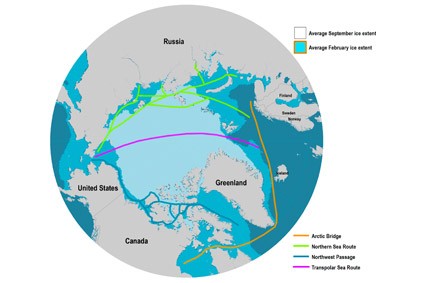
A map of the polar shipping routes also shows the average ice extent from 1981-2010. Photo credit: Rodrigue, J-P (2017), The Geography of Transport Systems, Fourth Edition, New York: Routledge

A map of the polar shipping routes also shows the average ice extent from 1981-2010. Photo credit: Rodrigue, J-P (2017), ‘The Geography of Transport Systems’, Fourth Edition, New York: Routledge

A number of fashion firms and ocean carriers are taking a stand against the potential opening up of trans-Arctic shipping – but just-style has been told these routes are unlikely to ever become economically viable for the textile or apparel industry.

US sporting goods giant Nike is leading the charge after teaming up with environmental group Ocean Conservancy to introduce an Arctic Shipping Corporate Pledge at the end of October.

They have been joined by Bestseller, Columbia, Gap Inc, H&M Group, Kering, Li & Fung and PVH Corp, alongside ocean carriers CMA CGM, Evergreen, Hapag-Lloyd and MSC Mediterranean Shipping Company, in pledging not to intentionally send ships through the Arctic Ocean.

Cargo traffic through previously unnavigable ocean routes is becoming increasingly feasible as climate change causes Arctic sea ice to diminish.

Among the main maritime paths through the polar region are the Northern Sea Route, which runs along Russia’s arctic coast, and the Northwest Passage which joins the Atlantic Ocean with the Pacific via Canada’s northern shoreline. In addition, the currently hypothetical Transpolar Sea Route would link the two oceans via the centre of the Arctic.

Though these routes can offer faster transit times, the possibility of increased vessel traffic across the Arctic poses great risk and potentially devastating environmental impacts for one of the world’s most fragile regions, the companies say.

According to Dr Jean-Paul Rodrigue, professor of geography at Hofstra University in New York, the Northern Sea Route would reduce a maritime journey between East Asia and Western Europe by more than 8,000 km – cutting transit time by ten to 15 days. The Northwest Passage, meanwhile, which connects the Atlantic Ocean with the Pacific across Canada’s northern shoreline, would offer a saving of more than 10,000 km.

Yet despite the potential reduction in lead times, Rodrigue says he does not see polar shipping routes ever becoming economically viable for textile or apparel trade.

One reason is that despite receding ice around the North Pole as the effects of climate change take hold, the main maritime paths are still only open for a couple of months a year maximum. On top of this, the window of opportunity varies each year, making it difficult to plan in advance.

So for continuous trade such as textiles and apparel, where demand is relatively constant, “I don’t think that the Arctic shipping routes fit in any reasonable fashion within this industry,” says Rodrigue, author of ‘The Geography of Transport Systems.‘ “It’s only a short block of time available every year where you can gain a few days compared by rail, and also you have air freight operations.”

As he points out, the apparel and textile industries are already served by regular shipping services to Southeast Asia, across the Pacific, and also now, to a smaller extent, with rail services as part of the Chinese Belt & Road Initiative.

Another factor is cost.

“The cost of shipping across the Arctic is actually fairly high because you have to have specially equipped ships, convoys, and icebreakers so you gain some time but the cost is higher and I think since the margins in the [apparel] industry are very narrow, I don’t think it fits very well,” Rodrigue adds. 

What’s more, he believes there are two other options that could compete effectively with trans-Arctic shipping in terms of reducing speed to market so significantly.

“The Chinese are now offering rail services directly from China to Europe which fits very well with a lot of the requirements of the fashion industry which requires things to be moved very quickly with a decent lead time. 

“That is an option that could compete effectively, but the best option remains the near sourcing strategy where you locate your plant in North Africa, maybe the Middle East, maybe Eastern Europe, and with this, you have very short lead times that could service the European market – I think that is one of the best solutions.”

Click here to read more on the Arctic Shipping Corporate Pledge.

Share196Tweet123
usiscc

usiscc

  • Trending
  • Comments
  • Latest
Escape From Tarkov – How to Rotate Items

Escape From Tarkov – How to Rotate Items

February 5, 2020
Supply chain examination: Planning for vulnerabilities you can’t control

Supply chain examination: Planning for vulnerabilities you can’t control

December 7, 2019
Procurement Project Manager job with Camden London Borough Council

Procurement Project Manager job with Camden London Borough Council

February 17, 2020
Art Battle Wichita Falls III at The Warehouse, 1401 Lamar.

Art Battle Wichita Falls III at The Warehouse, 1401 Lamar.

0
Global Industry Analysis, Size, Share, Growth, Trends, and Forecasts 2016–2024 – ZMR News Reports

Global Industry Analysis, Size, Share, Growth, Trends, and Forecasts 2016–2024 – ZMR News Reports

0
PHOTOS: Ottawa firefighters respond to warehouse fire

PHOTOS: Ottawa firefighters respond to warehouse fire

0
Last Mile Delivery Market Worth Observing Growth | UPS, FedEx, SF Express

Last Mile Delivery Market Worth Observing Growth | UPS, FedEx, SF Express

April 23, 2024
Top 5 Spend Analysis Software ranked in 2024

Top 5 Spend Analysis Software ranked in 2024

March 1, 2024
How Tesla And BMW Are Leading A Supply Chain Renaissance With Blockchain

How Tesla And BMW Are Leading A Supply Chain Renaissance With Blockchain

January 19, 2024
  • Privacy Policy
  • Terms of Use
  • Disclaimer
  • DMCA
  • Contact Us

Copyright © 2024 United States International Supply Chain Commission (usiscc.org)

This website uses cookies to improve your experience. We'll assume you're ok with this, but you can opt-out if you wish. Cookie settingsACCEPT
Privacy & Cookies Policy

Privacy Overview

This website uses cookies to improve your experience while you navigate through the website. Out of these cookies, the cookies that are categorized as necessary are stored on your browser as they are essential for the working of basic functionalities of the website. We also use third-party cookies that help us analyze and understand how you use this website. These cookies will be stored in your browser only with your consent. You also have the option to opt-out of these cookies. But opting out of some of these cookies may have an effect on your browsing experience.
Necessary
Always Enabled

Necessary cookies are absolutely essential for the website to function properly. This category only includes cookies that ensures basic functionalities and security features of the website. These cookies do not store any personal information.

Non-necessary

Any cookies that may not be particularly necessary for the website to function and is used specifically to collect user personal data via analytics, ads, other embedded contents are termed as non-necessary cookies. It is mandatory to procure user consent prior to running these cookies on your website.

SAVE & ACCEPT
No Result
View All Result
  • Supply Chain
  • Logistics
  • Warehousing
  • Procurement
  • Shipping
  • More
    • Strategic Sourcing
    • Spend Analysis
    • Inventory
    • Contact Us

Copyright © 2024 United States International Supply Chain Commission (usiscc.org)







