


• Latest
  • Trending
  • All
As peace gap widens, USAID must fix its ‘procurement problem’

As peace gap widens, USAID must fix its ‘procurement problem’

December 23, 2019
Last Mile Delivery Market Worth Observing Growth | UPS, FedEx, SF Express

Last Mile Delivery Market Worth Observing Growth | UPS, FedEx, SF Express

April 23, 2024
Top 5 Spend Analysis Software ranked in 2024

Top 5 Spend Analysis Software ranked in 2024

March 1, 2024
How Tesla And BMW Are Leading A Supply Chain Renaissance With Blockchain

How Tesla And BMW Are Leading A Supply Chain Renaissance With Blockchain

January 19, 2024
LATAM Cargo strengthens European cargo links

LATAM Cargo strengthens European cargo links

April 14, 2020
Ford making reusable hospital gowns from airbag materials as efforts against coronavirus expand

Ford making reusable hospital gowns from airbag materials as efforts against coronavirus expand

April 14, 2020
Don’t Sweat NBC’s Decision to Cut Back on Television Ad Inventory

Don’t Sweat NBC’s Decision to Cut Back on Television Ad Inventory

April 14, 2020
Software firms sharpen focus on AI, big data as IT spending drops

Software firms sharpen focus on AI, big data as IT spending drops

April 14, 2020
Navigating turbulent times in your supply chain (TL:DR version)

Navigating turbulent times in your supply chain (TL:DR version)

April 14, 2020
Last Mile Delivery by Drones Market is Booming Worldwide

Last Mile Delivery by Drones Market is Booming Worldwide

April 14, 2020
AIR CARGO MARKET SIZE, SHARE, DEMAND, TREND, LATEST INNOVATIONS & APPLICATION ANALYSIS AND INDUSTRY GROWTH FORECAST 2027 – Science In Me

AIR CARGO MARKET SIZE, SHARE, DEMAND, TREND, LATEST INNOVATIONS & APPLICATION ANALYSIS AND INDUSTRY GROWTH FORECAST 2027 – Science In Me

April 14, 2020
Wheat procurement in Patiala: 6,500 coupons issued to farmers – cities

Wheat procurement in Patiala: 6,500 coupons issued to farmers – cities

April 14, 2020
Pandemic, Plastics And The Continuing Quest For Sustainability

Pandemic, Plastics And The Continuing Quest For Sustainability

April 14, 2020
  • Supply Chain
  • Logistics
  • Warehousing
  • Procurement
  • Shipping
  • More
    • Strategic Sourcing
    • Spend Analysis
    • Inventory
    • Contact Us
No Result
View All Result
United States International Supply Chain Commission
Home Procurement

As peace gap widens, USAID must fix its ‘procurement problem’

by usiscc
December 23, 2019
in Procurement
0
As peace gap widens, USAID must fix its ‘procurement problem’
493
SHARES
1.4k
VIEWS
Share on FacebookShare on Twitter

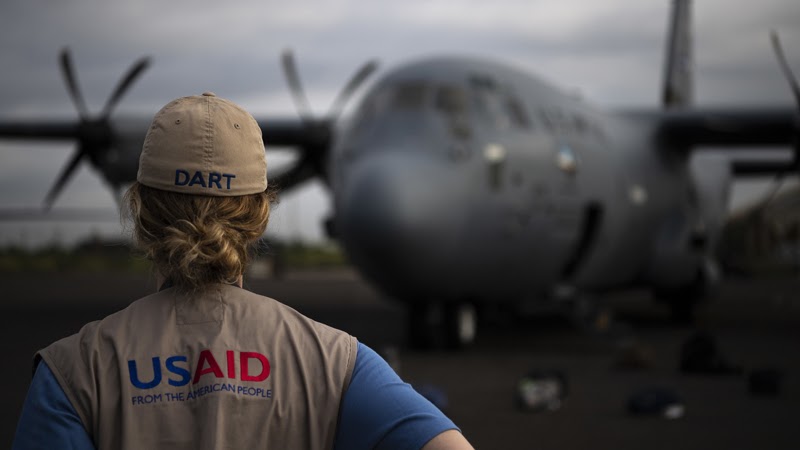
A U.S. Agency for International Development worker waits for a flight on a C-130J Hercules headed to Mozambique. Photo by: Tech. Sgt. Chris Hibben / U.S. Air Force / CC BY

WASHINGTON — The gap between the most and least peaceful countries in the world continues to grow wider, according to the 2019 global peace index. A robust civil society can help address underlying causes of conflict — and U.S. foreign assistance can do a better job of funding local groups that support peacebuilding, officials said at the launch of the index in Washington on Thursday.

Compiled by the Institute for Economics and Peace, the 13th annual index ranks 163 countries and territories by 23 qualitative and quantitative indicators in three thematic domains: societal safety and security, ongoing domestic and international conflict, and militarism.

USAID takes broader view of local procurement

In its latest procurement reform effort, USAID is foregoing top-line targets and highlighting the links between international organizations and local capacity.

Although the 2019 ranking showed a slight overall increase in peacefulness for the first time in five years, since 2008 global peacefulness has deteriorated by 3.78%, with eight of the last 12 yearly indexes showing losses in peacefulness. Holding the top position since 2008, Iceland is the most peaceful country, while Afghanistan is the least peaceful for the first time. It replaces Syria, which is now the second least peaceful.

Rounding out the top 5 least peaceful countries are South Sudan, Yemen — which finds itself in this bottom grouping for the first time in the index’s history — and Iraq.

“Governments bear the primary responsibility to protect civilians and address insecurity, but the complexity and scale of conflicts that we see these days really means that no government alone can solve all of these challenges,” said Shannon Green, who served as regional coordinator for the Middle East at the Center of Excellence on Democracy, Human Rights & Governance at the U.S. Agency for International Development during the Obama administration. “They need a robust, vibrant civil society to help them address the underlying causes of conflict.”

“It’s very easy to get captured by big NGOs — which are great — and miss all of the rest of civil society that’s out there.”

— Stephen Lennon, senior policy adviser to USAID’s Bureau of Democracy, Conflict and Humanitarian Affairs

In 2019, 86 countries improved their ranking and 76 worsened since last year’s index. Nicaragua was the most deteriorated country overall due to worsening in ongoing conflict and safety and security metrics. It is followed by Burkina Faso, Zimbabwe, Iran, and Brazil.

Green, who is now senior director of programs at the Center for Civilians in Conflict, said that large international development organizations are not necessarily best placed to support peacebuilding initiatives and diffuse conflict.

“Sometimes INGOs need to get out of the way,” Green said at Thursday’s launch event for the global peace index in Washington. “If they’re always the intermediary, it prevents local organizations from really being able to stand on their own two legs and thrive. I think anybody that takes a hard look at our sector can see that there have been many, many, many decades of talking about capacity building.

Get development’s most important headlines in your inbox every day.

Thanks for subscribing!

“We really need to think hard about what is enough capacity building such that local organizations can take the lead, can receive the funding directly, and can really be sort of the ones that have the direct relationship with donors.”

Stephen Lennon, senior policy adviser to USAID’s Bureau of Democracy, Conflict and Humanitarian Affairs, acknowledged that his agency can have a “procurement problem” when it comes to working with local civil society organizations in challenging contexts. He said global civil society is “teeming,” but the U.S. government needs to broaden its definition to expand who it works with.

“It’s very easy to get captured by big NGOs — which are great — and miss all of the rest of civil society that’s out there,” Lennon said, noting that procurement can be one of the biggest limiting factors for governments. “It gets very bureaucratic, they trip over themselves and they don’t get out and talk to all of civil society that’s out there.”

Lennon previously served under USAID’s Office of Transition Initiatives, which works to foster peace and democracy during political transitions and stabilization. OTI started a grants function that allowed it to work with a wider range of organizations outside the traditional large international NGOs, which included an in-kind grant that saw U.S. personnel able to “work with almost anybody,” Lennon said. “It’s doable.”

He said that one way the U.S. can be more effective in supporting civil society to strengthen indicators that lead to peace is if U.S. foreign assistance allocations were more general to allow USAID flexibility to adapt solutions to the problem at hand in complex situations.

“As closed space is growing, we are getting more risk averse in the government and throughout all of the people that the government works with and that’s a problem,” Lennon said, noting his views do not reflect that of the U.S. government.

“The U.S. government needs more contingency funding and less earmarks on funding so that when a problem arises we can be very optimistic by hitting the target as soon as we possibly can working with civil society. Although spaces are closing, I do remain optimistic that if we had more contingency funding then the U.S. government would be able to help.”

Printing articles to share with others is a breach of our terms and conditions and copyright policy. Please use the sharing options on the left side of the article. Devex Pro subscribers may share up to 10 articles per month using the Pro share tool ( ).


Share197Tweet123
usiscc

usiscc

  • Trending
  • Comments
  • Latest
Escape From Tarkov – How to Rotate Items

Escape From Tarkov – How to Rotate Items

February 5, 2020
Supply chain examination: Planning for vulnerabilities you can’t control

Supply chain examination: Planning for vulnerabilities you can’t control

December 7, 2019
Procurement Project Manager job with Camden London Borough Council

Procurement Project Manager job with Camden London Borough Council

February 17, 2020
Art Battle Wichita Falls III at The Warehouse, 1401 Lamar.

Art Battle Wichita Falls III at The Warehouse, 1401 Lamar.

0
Global Industry Analysis, Size, Share, Growth, Trends, and Forecasts 2016–2024 – ZMR News Reports

Global Industry Analysis, Size, Share, Growth, Trends, and Forecasts 2016–2024 – ZMR News Reports

0
PHOTOS: Ottawa firefighters respond to warehouse fire

PHOTOS: Ottawa firefighters respond to warehouse fire

0
Last Mile Delivery Market Worth Observing Growth | UPS, FedEx, SF Express

Last Mile Delivery Market Worth Observing Growth | UPS, FedEx, SF Express

April 23, 2024
Top 5 Spend Analysis Software ranked in 2024

Top 5 Spend Analysis Software ranked in 2024

March 1, 2024
How Tesla And BMW Are Leading A Supply Chain Renaissance With Blockchain

How Tesla And BMW Are Leading A Supply Chain Renaissance With Blockchain

January 19, 2024
  • Privacy Policy
  • Terms of Use
  • Disclaimer
  • DMCA
  • Contact Us

Copyright © 2024 United States International Supply Chain Commission (usiscc.org)

This website uses cookies to improve your experience. We'll assume you're ok with this, but you can opt-out if you wish. Cookie settingsACCEPT
Privacy & Cookies Policy

Privacy Overview

This website uses cookies to improve your experience while you navigate through the website. Out of these cookies, the cookies that are categorized as necessary are stored on your browser as they are essential for the working of basic functionalities of the website. We also use third-party cookies that help us analyze and understand how you use this website. These cookies will be stored in your browser only with your consent. You also have the option to opt-out of these cookies. But opting out of some of these cookies may have an effect on your browsing experience.
Necessary
Always Enabled

Necessary cookies are absolutely essential for the website to function properly. This category only includes cookies that ensures basic functionalities and security features of the website. These cookies do not store any personal information.

Non-necessary

Any cookies that may not be particularly necessary for the website to function and is used specifically to collect user personal data via analytics, ads, other embedded contents are termed as non-necessary cookies. It is mandatory to procure user consent prior to running these cookies on your website.

SAVE & ACCEPT
No Result
View All Result
  • Supply Chain
  • Logistics
  • Warehousing
  • Procurement
  • Shipping
  • More
    • Strategic Sourcing
    • Spend Analysis
    • Inventory
    • Contact Us

Copyright © 2024 United States International Supply Chain Commission (usiscc.org)






