







Forward Thinking
By Victoria Kickham | March 18, 2020
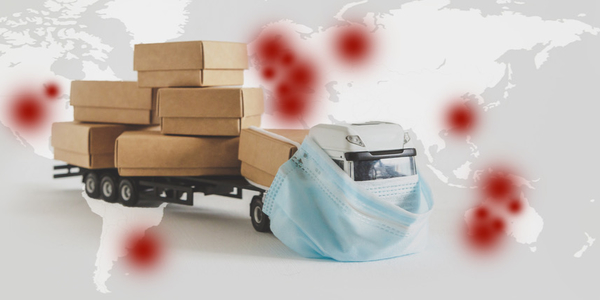
Companies should ready for a six-month disruption to global supply chains and prepare for changes in sourcing strategies moving forward as a result of the coronavirus pandemic, supply chain experts warn.
Companies should prepare for a six-month disruption in global supply chains as the novel coronavirus pandemic increases in intensity—and they should also brace for changes in global sourcing in the long term, according to business experts tracking the situation.
Silicon Valley-based supply chain technology firm Resilinc said this week it expects global supply chains to be disrupted for six months due to inventory shortages, lead time delays, and logistics and transportation concerns related to the virus. The firm had previously projected a three-month disruption, but revised its outlook due to the increasing intensity of infections and deaths from COVID-19, the name of the respiratory illness that began in China and has now spread around the world. The total number of cases worldwide has topped 200,000 and there have been more than 8,000 deaths, according to the most recent statistics from Johns Hopkins University.
Bindiya Vakil, Resilinc founder and CEO, said the majority of the supply chain across Asia is being disrupted and that the company is tracking growing concerns in European supply chains due to the U.S. travel ban and increased cases of COVID-19 there. Resilinc is tracking the situation globally, monitoring data from more than 90,000 companies as well as public domains to map scenarios and the potential impact to businesses and consumers around the world.
Vakil said Resilinc and others had hoped the virus would reach a peak in mid-March and begin to show signs of slowing, but she said this week the situation has “gone in the opposite direction.” She said all industries are being affected, but pointed to high-tech and automotive industries as some of the most at risk, due to declining demand as well as supply disruptions out of Asia. Growing demand at grocery stores and pharmacies has been a boon to those businesses, but the increases are temporary, she said, and can lead to supply disruptions as shelves await restocking.
“No industry is left unscathed at this point,” Vakil said, adding that Resilinc is tracking longer term concerns about meeting growing demand for pharmaceuticals and medical supplies in the United States. “We are very concerned about this market, and how to [fulfill] increasing demand … people are going to [get] sick and need treatment—antibiotics, different medications, and supplies as well.”
Vakil echoes broader concerns on that topic. President Trump said today that he is invoking the Defense Production Act as part of the administration’s efforts to tackle the coronavirus pandemic. The act ensures the private sector can ramp-up manufacturing and distribution of emergency medical supplies and equipment. The move gives the government the authority to increase production of masks, ventilators, and respirators, as well as expand hospital capacity to combat the coronavirus.
Resilinc is monitoring about 60,000 supplier sites of all kinds across North America to determine how many might be disrupted in the coming months. Vakil added that supply chain operations in Asia are a bell-weather for monitoring the health of the global supply chain because more than 50% of all global manufacturing output comes from Asian countries such as China, South Korea, Japan, Taiwan, Singapore, Indonesia, and India.
Logistics steps up, prepares for the future
Although challenges persist and the long-term outlook is uncertain, logistics companies are stepping up to keep supply lines flowing here at home. Transportation and logistics firm XPO Logistics said this week it’s stepping in to handle an overflow of need for trucking and working with customers to develop better visibility into long-term demand.
“We’re helping our customers who sell the essential items consumers need. Our brokerage team is handling the extra overflow to complement the customer’s own fleet. We’re helping find the extra capacity they can’t handle. For instance, last week a lot of supermarkets ran out of toilet paper. That’s not happening as much this week because we’re able to pick up those loads,” said Drew Wilkerson, president of the company’s North American Transportation business. “One of the other things we’re seeing is more business from customers we haven’t worked with recently. We’re helping our long-term customers a lot, but we’re also hearing from customers we haven’t heard from in a while, and helping them handle all that extra capacity.”
Wilkerson also said XPO is fielding inquiries for other services down the road.
“Customers are also starting to ask about intermodal,” he said. “Big box retailers are starting to plan further out and know that as the truckload business tightens, we could see a pick-up in Intermodal.”
Vikal adds that supply chain companies should also be preparing to meet longer term challenges, first and foremost by developing supply chain risk programs and alternate sources of supply. Although everyone is being disrupted, she explains, not everyone is being equally disrupted.
“There are some [companies] that have been thoughtful—in how they manage supply, manage contracts, et cetera. All of these capabilities are there when you have a good supply chain risk program [in place],” she said. “There are these types of companies that have put in place good practices, that will definitely do better.”
Elements of a good supply chain risk program include scenario planning, communicating with suppliers and subcontractors to ensure readiness, training employees on scenarios and next steps, and determining weak links in their supply chains.
Vikal also said she expects the current situation to spur changes in sourcing strategies and manufacturing capabilities.
“We will see the supply chain change for sure,” as a result of the COVID-19 pandemic,” she said, noting that changes will vary by industry.
“This has shown us that, in general, we need to have a back-up plan,” she added, noting that that could mean having a plan with the same supplier but in a different geography, having better visibility across your supply chain, or just implementing better control over inventory. “Definitely, things will change. Procurement will have to take this opportunity to rethink how they’ve sourced in the past.”
Victoria Kickham, an editor at large for Supply Chain Quarterly, started her career as a newspaper reporter in the Boston area before moving into B2B journalism. She has covered manufacturing, distribution and supply chain issues for a variety of publications in the industrial and electronics sectors, and now writes about everything from forklift batteries to omnichannel business trends for Supply Chain Quarterly’s sister publication, DC Velocity.
Join the Discussion
After you comment, click Post. If you’re not already logged in, you will be asked to log in or register.

Want more articles like this? Sign up for a free subscription to Supply Chain Executive Insight, a monthly e-newsletter that provides insights and commentary on supply chain trends and developments. Click here to subscribe.
We Want to Hear From You! We invite you to share your thoughts and opinions about this article by sending an e-mail to
?Subject=Letter to the Editor: Quarter : Businesses gear up for supply chain challenges”>
. We will publish selected readers’ comments in future issues of CSCMP’s Supply Chain Quarterly. Correspondence may be edited for clarity or for length.
Want more articles like this? Subscribe to CSCMP’s Supply Chain Quarterly.










