






The freight rail industry in North America finds itself at a crossroads. Where it chooses to go from here will define whether it can address a host of 21st-century challenges, and potentially impact future relationships in those critical areas where supply chain management meets rail freight services.
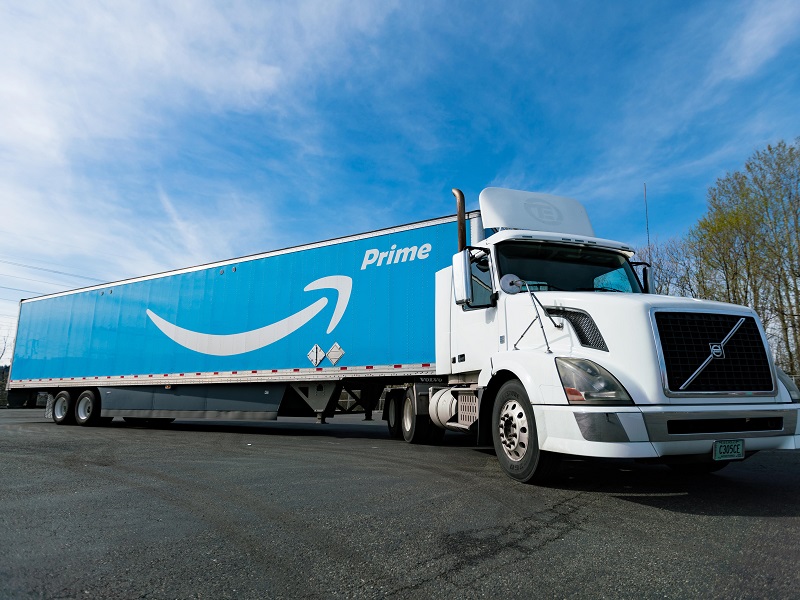
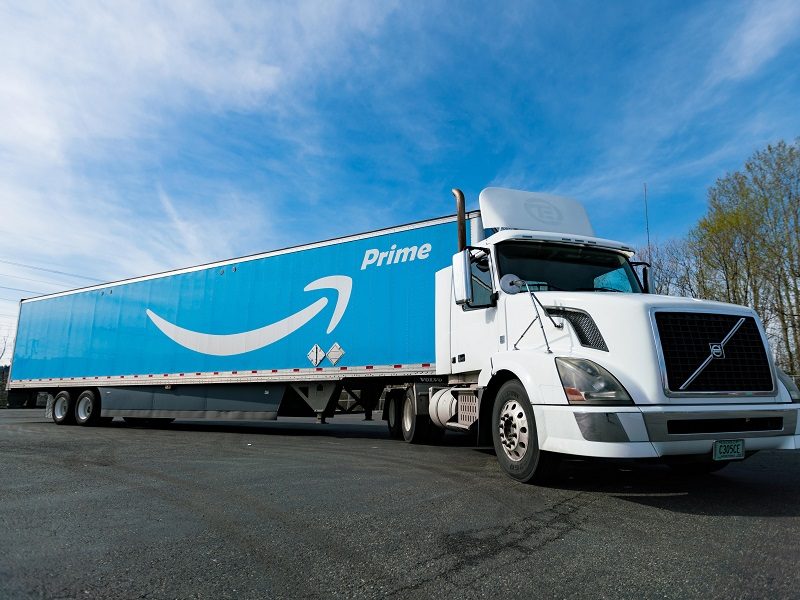
That’s the stark conclusion of a white paper entitled ‘Rail Optimisation: Carrier/Shipper/Investor Relationships”. Published by supply chain and operations consultancy Maine Pointe in association with Michigan State University (MSU), it warns that carriers, shippers and investors may face an uncertain future as the ‘Amazon effect’ continues to transform buyer purchasing behaviour and freight traffic patterns, as well as adding an increased level of complexity into the supply chain.
With the US Department of Transportation (DOT) predicting an 88% increase in total freight demand by 2035, rail stakeholders must eschew entrenched business models in favour of collaboration and embrace new digital technologies if they are to compete with intermodal container shipping.
“The future of the freight rail industry depends on the rail companies actively listening to shippers and other members of the transportation eco-system in order to come up with win-win scenarios – until they do that, there will be stalemate,” states Michael Notarangeli, executive vice-president and engagement partner at Maine Pointe.
“One of the many parallels between the freight rail and ocean shipping industries is that they both contain a vast eco-system of suppliers and other value-added service providers. However, there is not a lot of communication, transparency or collaboration aimed at providing unified solutions.
“The white paper examines what the future of rail needs to look like from a shipper, carrier and investor perspective in order to fill the freight gap, and asks the question, ‘How do we get to 88% total freight growth by 2035 if rail doesn’t participate?’ The answer is that it is not possible.”
The Amazon effect: road and rail responses to the freight revolution
Freight tonnage is projected to grow by 40% by 2045 and rail has a critical role to play in creating this extra capacity, yet its ability to do so is undermined by the increasingly dysfunctional relationship between railroads, shippers, customers and suppliers, something that Maine Pointe aims to address using Total Value Optimisation™ (TVO), its proprietary integrated supply chain management model.
“Our legacy at Maine Pointe is operations, procurement and logistics,” Notarangeli explains. “TVO encapsulates all of that and then takes a deeper look at the end-to-end supply chain, working horizontally to identify gaps, inefficiencies and opportunities to build a seamless experience.”
He identifies a number of factors driving the explosion in total freight demand, chief among them GDP growth; put simply, as more people participate in the economy, the need for deliveries grows.
“Freight tonnage is projected to grow by 40% by 2045 and rail has a critical role to play in creating this extra capacity.”
“People can now place an e-commerce order no matter where they are in the world, so globalisation certainly plays a major part,” says Notarangeli. “On Amazon, you can find everything from foodstuffs to electronics and industrial machinery – and then decide exactly when, how and where it will arrive.
“Amazon has raised the bar in every industry, from online marketing to retail, and, of course, all of this additional choice inevitably puts more freight on the roads and the rail network.”
The US trucking industry identified early on the need to communicate and collaborate with its customers to meet this emerging consumer and supply side model, and is reaping the rewards.
“The way Amazon brings goods into the supply chain, as well as out to consumers, has also changed things, and of course truckload and parcel carriers are on both ends of that,” he says. “So, as the first ones in they had the ability to listen and be nimble, and thus better meet these new challenges.
“Truck drivers are also ambassadors, in that they see the shipper face to face every day and get to hear what their specific requirements are,” he adds.
Size matters: Class 1 railroads and smaller shippers
The so-called ‘Amazon effect’ has placed transportation and logistics supply chains, as well as those of individual companies, under increased stress, including the way in which inventories are managed.
“Companies no longer want to buy large quantities of inventory and have to store it,” Notarangeli explains. “So what they do is nibble; in other words, they buy things for the next week or month. Instead of having, say, one massive railcar shipment or two or three truckloads, they opt for load-to-load or parcel freight shipments – so you might have one big shipment split into ten smaller ones.”
“Themes that come up again and again in the white paper are commitment, investment, transparency, collaboration – they make change happen.”
Unlike the trucking industry, the rail sector has been somewhat behind the curve when it comes to embracing innovation and change, with many large railroads more preoccupied with operating ratios.
“Railroads tend to be 100% inward-looking and are more interested in moving as much freight as efficiently as they can, and utilising their assets as best they can,” confirms Notarangeli. “As a result, they focus on those type of shipments that will give them the operating ratio they are looking for.
“However, small shippers at the other end of the spectrum don’t generate a lot of interest from the big Class 1 railroads. Many shippers say that talking to a Class 1 railroad is almost intimidating in that they are monolithic organisations with hard and fast rules, templates and tariffs. So, if I am a smaller shipper that needs a reliable and cost-effective supplier, who do I approach to provide that service?”
Joint enterprise: digital transformation and stakeholder collaboration
This imbalance across the North American transport network is one of many identified by the Maine Pointe/MSU research, and these factors further complicated by unpredictable economic growth, a shortage of drivers, new environmental restrictions, and reduced capacity across both road and rail.
According to the white paper, digital transformation has become an essential component in bringing rail transportation into the modern era. Notarangeli points to one initiative – the Chicago Region Environmental and Transportation Efficiency (CREATE) programme – as a compelling example of how collaboration between rival industry stakeholders can provide cost and efficiency benefits for all.
“The future of the freight rail industry depends on the rail companies actively listening to shippers and other members of the transportation eco-system.”
“CREATE is unique in that it is a public-private partnership comprising Class 1 railroads working with each other in a collaborative manner with city-states and other stakeholders to identify the sources of congestion in Chicago and alleviate them through investment in operational efficiency,” he says.
In the Chicago Integrated Rail Operations Centre (CIROC), operators forecast inbound freight and notify the rail lines of problems – a stalled locomotive, for example – enabling them to reroute traffic and take proactive measure to ensure it does not cause a bottleneck elsewhere in the network.
“This type of collaboration has to take place between Class 1 railroads, the short lines, the shipping community and other rail stakeholders in order to create a similar, unified solution. That is where TVO and the future of rail intersect; how do you get those stakeholder groups together, get them to put down their swords and listen to each other, and proactively donate their IP to find a solution?
“However, the CIROC programme only exists because of commitment and investment; these are not short-term endeavours,” Notarangeli concludes. “Themes that come up again and again in the white paper are commitment, investment, transparency, collaboration – they make change happen. When you invest in those things, you can transform anything.”










