






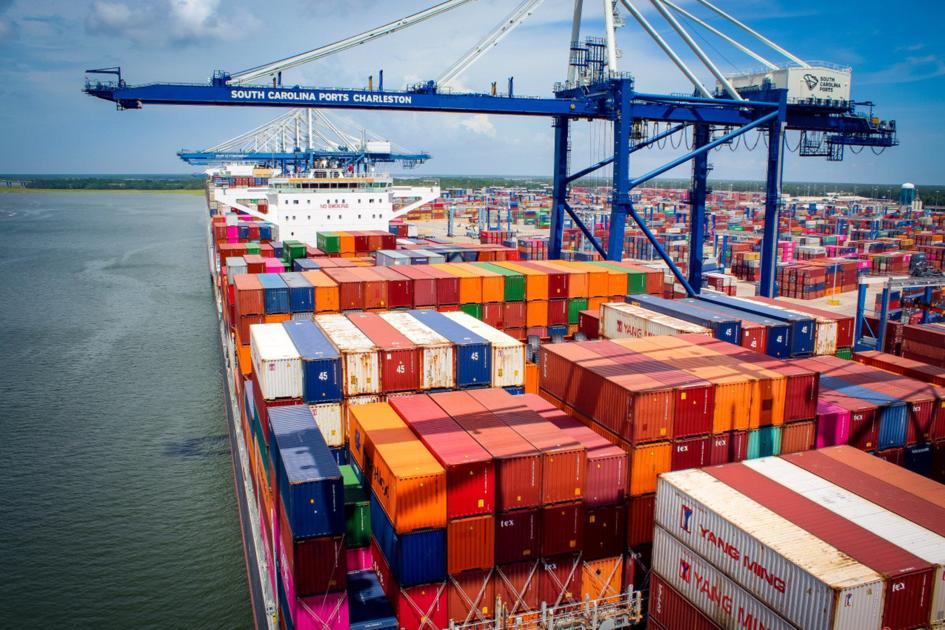
The amount of cargo moving through the Port of Charleston is about to take a dip because of coronavirus-related factory shutdowns in China, but the lull could be short-lived if the respiratory illness can be quickly contained.
“The whole supply chain in China is paralyzed right now,” said Jim Newsome, president and CEO of the S.C. State Ports Authority.
The outbreak — which has infected 72,528 people and killed nearly 1,900, according to the latest estimates from the World Health Organization — coincided with the Lunar New Year in late January, when millions of Chinese residents travel and factories shut down.
The virus — dubbed COVID-19 — has grown worse since then, and most of the country’s manufacturers have not yet reopened.
It takes a containership roughly 30 days to reach the U.S. East Coast from China, meaning the manufacturing shutdown will start to be felt in Charleston by mid-March.
“There’s no way to do anything short-term except to gut it out,” Newsome said, adding China typically sends about 210,000 cargo containers to the U.S. each week.
Some sailings to Charleston have already been canceled.

Newsome said shoppers will likely see items missing from store shelves because most Chinese factories aren’t open. China does one-fourth of the world’s manufacturing and is South Carolina’s top global trading partner.
Ships that are leaving China are carrying a fraction of the cargo they’re designed to hold — some just 10 percent full, The Wall Street Journal reported.
The virus is also affecting some imports to China. American Shipper reported that refrigerated cargo is being diverted from some Chinese ports because a shortage of electrical outlets needed to keep the containers cool and a dearth of truckers to move the products. U.S. poultry and pork are among the Charleston port’s biggest export commodities.
Volvo Cars, which builds its S60 sedan at a $1.1 billion plant in Berkeley County, said it will lose at least two weeks of production at its Chinese plants because of the virus.
“We’re following the recommendations of local authorities, which means we avoid bringing people together, the factories have not opened, and people are requested to stay home and avoid contact,” Hakan Samuelsson, Volvo’s CEO, told Automotive News Europe. “It’s like time has stopped.”
Some carmakers that rely on Chinese-made parts say they are just weeks from shutting down their U.S. factories because of shortages. Automotive parts are the No. 1 import commodity at the Charleston port but BMW, the port’s top auto customer, told The New York Times its supply chain hasn’t been affected.
Reach David Wren at 843-937-5550 or on Twitter at @David_Wren_










