






The first cluster of earnings reports for cloud supply chain vendors did not mention the 2019 novel coronavirus (COVID-19). That changed in mid-February as vendors assessed its impact.
Early assessments that COVID-19 impact would be limited to China’s internal markets, that it would be limited to Chinese data center supply chain continuity or that it would otherwise have a small worldwide impact are most likely short-sighted and are understating COVID-19’s probable long-term worldwide impact.
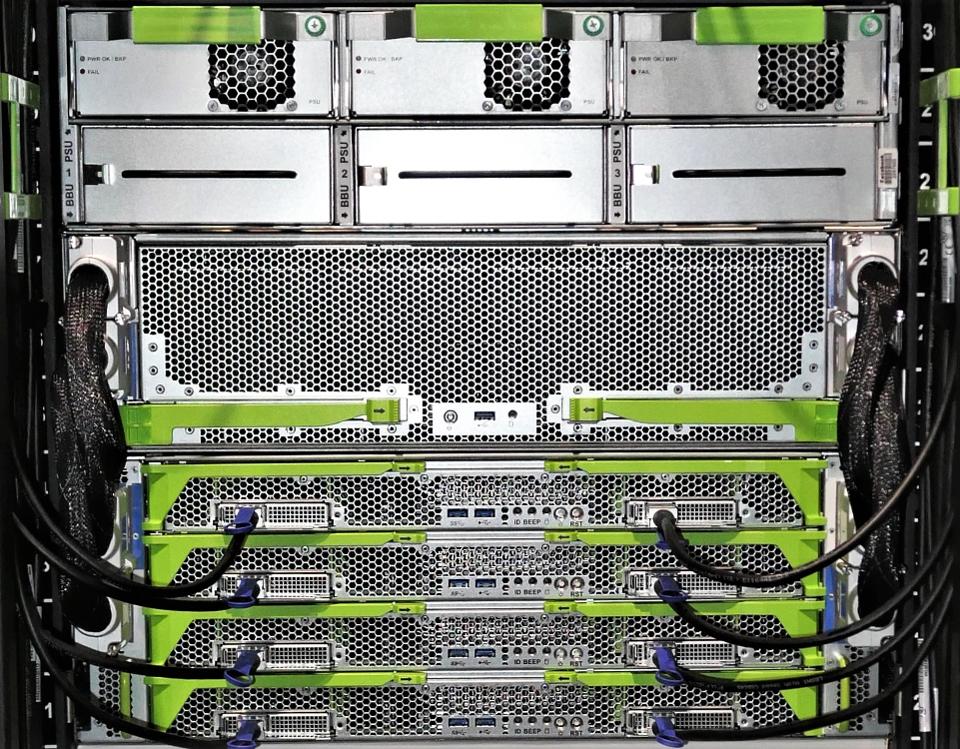
Open Compute Project cloud data center hardware
Paul R. Teich
There is an old story about a war being lost for the want of a horseshoe nail. The most substantial impact from COVID-19 seems to point to chemicals required to manufacture printed circuit boards (PCBs) and then to the supply chain to deliver those PCBs to market. For servers, networking gear, storage and cloud infrastructure in general, PCBs are the motherboards and add-in cards that host processors, accelerators, memory, network interfaces and local storage. In other words, without PCBs, there is no data center infrastructure.
However, while supply chains for consumer electronics may be substantially affected, the data center market represents comparatively small manufacturing and shipment volumes, with commensurately larger profit margins. The combination of small unit shipments and high margins should keep cloud data center products moving through the supply chain if manufacturing and logistics resume normal production and service levels over the next few weeks. Also, COVID-19 should boost the use of cloud services worldwide, while at the same time creating supply chain scarcity and logistics bottlenecks for other products.
Here is how cloud-related earnings reports and financial analyst calls unfolded over the past few weeks, starting with the first mentions of COVID-19.
Feb 12 – Cisco Systems
Kelly Kramer, CFO, noted “Our guidance does not reflect any potential disruptions in our global supply chain that could result from the coronavirus.”
Chuck Robbins, CEO, then said “When I speak to the customers, they’re still fully planning on moving forward. They’re just a little cautious and trying to see what’s going on. We obviously have the virus now that we’ll see how it plays out. But overall, I don’t think it’s deep. And we expect that given some of this uncertainty has now dissipated, notwithstanding what we see obviously from the virus that hopefully, we’ll see our customers pick up again.”
There were no follow-up questions related to COVID-19 from the financial analysts on the call, even though Mr. Robbins hinted that Cisco had already seen some slowdown.
Feb 13 – Alibaba Group
Daniel Zhang, Executive Chairman and CEO, dedicated a large portion of the earnings call preamble to COVID-19, about 1,000 words, calling it a “black swan event.”
There were at least 1,000 more words in the earnings call transcript for other exec’s comments and a few analyst questions. COVID-19 was obviously top-of-mind for Alibaba Group.
Alibaba Group focused on last quarter growth in its Alibaba Cloud business, without specifically mentioning supply chain, revenue or margin impacts due to COVID-19 on its cloud business.
Alibaba Group did mention cloud-based healthcare monitoring and an uptick in demand for video conferencing and virtual classrooms as presenting potential upside. It stated that in the previous ten days it had expanded its cloud capacity, presumably to address COVID-19 related opportunities. Alibaba Group indicated that access to its data centers were currently prohibited or limited in some areas of China due to the virus.
Feb 13 – NVIDIA
NVIDIA, like Cisco, mentioned COVID-19 only briefly in its prepared remarks. However, NVIDIA reduced its Q1 2020 outlook by $100 million “to account for the potential impact.” When asked about that number in Q&A, NVIDIA indicated that it was a “best estimate at this time” due to ongoing discussions with its supply chain, add-in card partners and customers.
Feb 21 – Lenovo Group
Yang Yuanqing, CEO, dedicated about 500 words of his preamble to COVID-19, indicating that it “could lead to meaningful disruption in Chinese demand and supply chain” and that “definitely, coronavirus outbreak impacted our demand in China and our production capacity in China as well.”
While not specifically mentioning data center impacts, he specifically mentioned three impacts:
- Lenovo factory shutdowns and delayed re-openings,
- Delays in workers returning to factories, and
- Supply chain and increased cost of components, particularly from smaller manufacturers.
Kirk Skaugen, President of Lenovo Data Center Group, stated during Q&A “We are waiting week-by-week to look at where we do rely on ODMs for motherboards, how their factories are coming back.” He then stated that Lenovo factories in Hungary, Mexico and North Carolina were all operational.
Feb 27 – Dell Technologies
Dell Technologies did not address COVID-19 at all in its prepared remarks, nor did it mention any potential impact to revenue during Q&A. But it did field several questions related to COVID-19, mentioning two specific impact areas:
- Dell Technologies expects an impact on its China business, and
- Potential supply chain and lead time dynamics, specifically related to consumer products.
Feb 28 – Baidu
Baidu execs also devoted over 1,000 words of their prepared remarks to COVID-19. Robin Li, CEO stated that “the near-term impact on the business has been negative” but that a side-effect is that “people are staying home more, and they have the opportunity to get to know Baidu’s products and services better”. He specifically called out time spent using smart speakers, which depend on cloud services and increased Baidu App daily active users.
Mr. Li sent somewhat mixed messages:
- “The novel coronavirus situation in China is evolving, and business visibility is very limited. These forecasts are current and preliminary view, which is subject to substantial uncertainty.”
- “Our guidance is that from now until the end of the quarter that the growth on a week-over-week basis will continue to ramp up even faster than what we have seen in the last two weeks.”
Herman Yu, CFO, summed up Baidu’s position best during Q&A: “I think going into 2020, first, we’ve got to deal with the coronavirus and then try to get our business to go back to growth again.”
Mar 3 – HPE
HPE, seeing “see uneven and unpredictable demand due to macro uncertainty,” revised its 2020 free cashflow outlook down by $300 million. HPE further stated “[COVID-19] is causing disruption to both supply and demand and we cannot quantify the real impact at this time” and “there are too many unknowns at this point to provide second quarter guidance,” citing:
- Longer sales cycles and delayed customer decisions,
- Commodity supply constraints (perhaps a reference to tight supply of Intel processors) which disrupted ability to meet customer demand, particularly in compute and high-performance compute businesses, and
- Impacts to component manufacturing due to COVID-19 supply chain constraints.
The largest impact for HPE is higher quarter-end backlog worldwide. Antonio Neri, CEO, specifically called out supply of PCBs as a near-term challenge.
—
The author is an employee of Liftr Insights. The author and Liftr Insights may, from time to time, engage in business transactions involving the companies and/or the products mentioned in this post. The author has not made an investment in any company mentioned in this post. The views expressed in this post are solely those of the author and do not represent the views or opinions of any entity with which the author may be affiliated.