






The views expressed here are solely those of the author and do not necessarily represent the views of FreightWaves or its affiliates.
Vroom, that onomatopoeic word which evokes such good things in for-hire transportation, does not apply so well when it comes to digitization of the industry. In fact, things seem to decelerate into guarded caution when it comes to its adoption. The vroom factor seems to be concentrated in the disruptors like Uber and Lyft in the taxi market and Flexport and Convoy in freight forwarding. Is digitization simply technology for technology’s sake or is there long-term value-add in its adoption? If there is, then why the hesitancy and is it justified? Perhaps it is; but tough decisions will have to be made over the next few years. Cyber-innovations are moving super-sized data sets (i.e., Big Data) at literally the speed of light. They have a role to play in for-hire transportation.
Digitization, artificial intelligence and deep learning
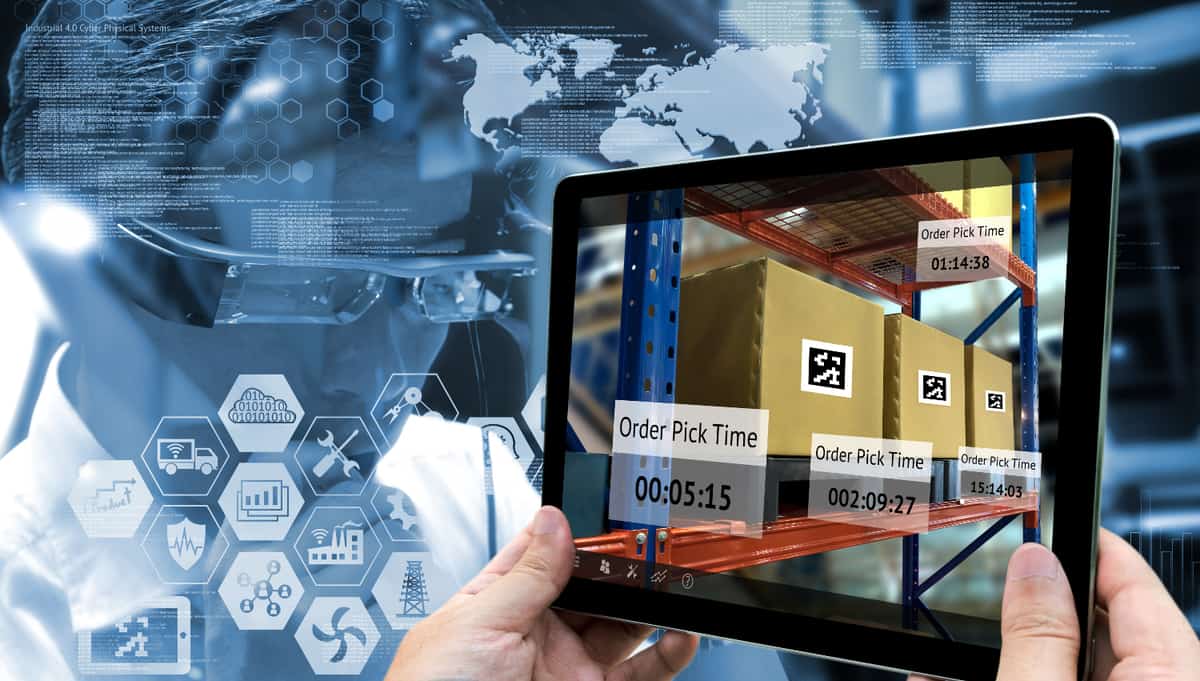
Acquiring technology is one thing; capturing a sustainable return on investment (ROI) from it is another. Digitization is about turning information into digital bytes – thereby making it computer readable. Once readable it is now actionable, especially when used in an artificial intelligence (AI) setting. Decision-making through AI is dependent on the structure of the algorithms (i.e., rules) into which these Big Data sets are fed. This is called deep learning. These various algorithms, when used in tandem, form a neural network or artificial brain that “learns” tasks based on the “experiences” it gathers through identifying patterns in the data. Of course, the larger the data set the larger is the set of computer-based experiences. The more sophisticated the neural network, the more the computer learns.

After a while, the computer can take these accumulated “experiences” and aggregate them into statistics. Of course, statistics are always representations of reality and not reality itself. For example, if a motor carrier’s average (technically, mean) travel time between points A and B is 38 hours it is just a representation of the “typical” travel time. It is possible that none of the actual trips in that calculation were 38 hours. In fact, in statistician-speak, if the sample of trips skewed heavily in terms of either quick or slow trips, or it had a high degree of variance, it is possible that most of the trips were nowhere near 38 hours. What to do? The solution is for the computer to calculate many other statistics and compare them, apply rules of logic, and map out different types of travel scenarios. If after doing all that a solution to a problem comes into focus – say, the chosen route from A to B is reliably the fastest – that is part of the power of AI. Its solutions and forecasts are likely better informed through subtleties that a human cannot discern out of a mountain of data. In other words, AI provides a richer analysis.
The ROI from AI is achieved when this mimicking of human decision-making power can be done with increasing speed while remaining scalable. In fact, once the data-gathering platform is in place it is highly scalable because website clicks from the customer base, signals from freight tracking devices, etc. have a marginal cost of uploading that is near-zero. This benefit is similar to how early industrialization relied on free-flowing water to spin watermills in order to work the machines used in flour milling, wood grinding, ore crushing, etc. Today a lot of customer data is free. Yet there is an ongoing public policy debate regarding the ownership and privacy of these cyber-streams of customer data.
For-hire transportation involves deploying conveyances to move freight within a defined network along a reliable infrastructure. Those are the tangibles. The time-utility and place-utility that consignors and consignees derive from a transportation job well-done is an intangible service. These tangibles and intangibles are inseparable. To say otherwise would be akin to saying that 18th century flour mills were automatically more efficient when they moved closer to sources of waterpower. This would only be true if there was equal access to transportation. After all, what would the point be of being more productive in milling flour if it could not be transported to market? Happily, flour millers made sure they had access to river barges. In other words, flour’s value derives in part from transportation.
Production of services are distinguished from the production of tangible items in that services are dependent on interactions between the buyer and the seller. Buying a muffin from a vending machine is routine compared to ordering a muffin for dessert at a fine restaurant. The greater the buyer-seller interaction the less routine and more subjective the transaction becomes. It also becomes more experiential for both parties. This leads to the concept of VRIN – an acronym for an input that is valuable, rare, inimitable and non-substitutable. Such inputs have strategic value. Is for-hire transportation a routine activity for the most part or is it more interactive requiring a lot of planning and negotiation? Of course, the answer would depend on a lot of things. But would there be value in digitizing information gathered from consignor-carrier interactions and those of their intermediaries? Would AI decision-making in for-hire transportation be a VRIN input? Since the quality of AI is tied to company-specific algorithms using secured data from particular players it certainly has the potential.
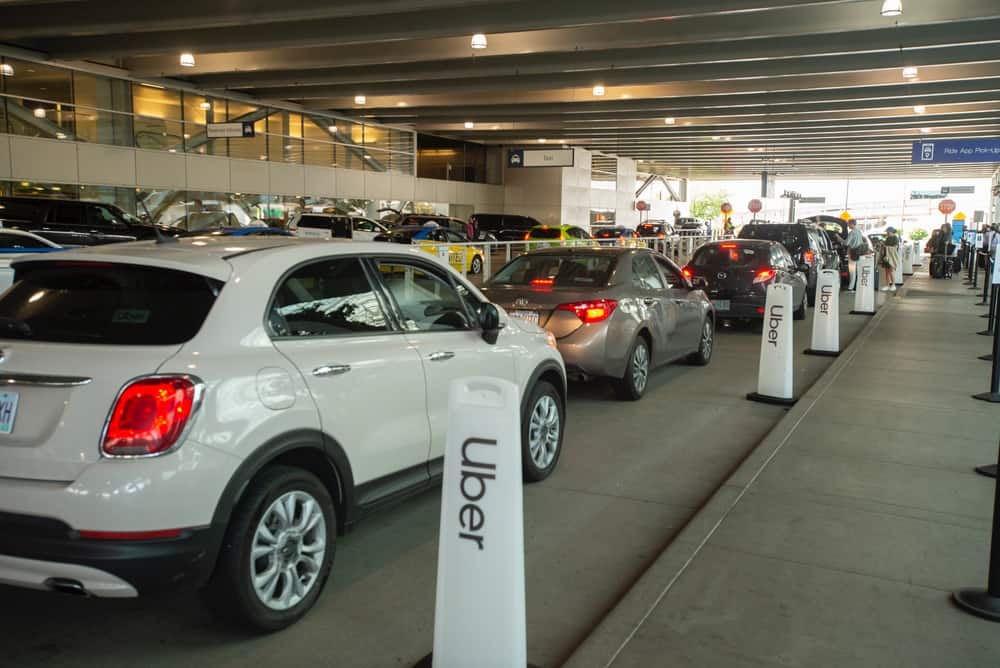
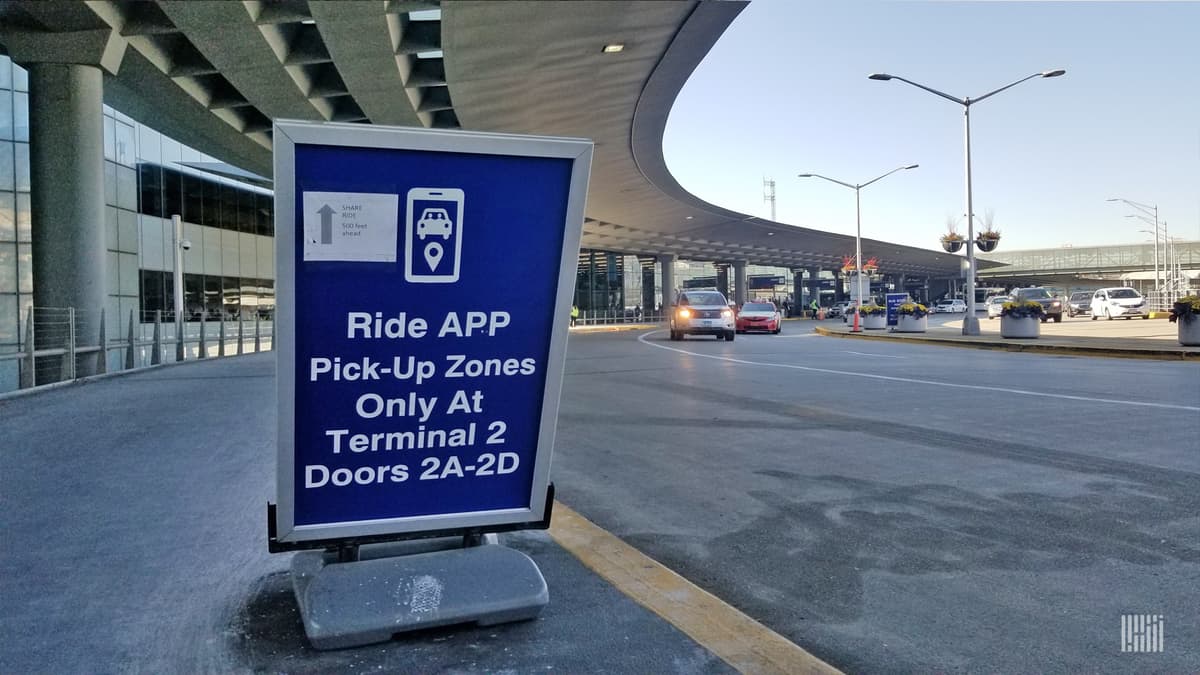
Consider Uber and how its tech-driven ride-sharing business is necessarily more interactive than traditional, quasi-monopolistic taxi services. It is not just about using smartphones to connect passengers and drivers in the ride-sharing market. Apart from the cost savings from low overhead and using gig-drivers, Uber is trying to leverage the digital world to improve its services. For example, in October 2019 its Uber Money division began offering digital wallets and mobile banking services to pay its drivers after each ride. With around 100 million rides per month that could add up to a lot of transactions. On the passenger side, it offers no-fee debit cards. Uber claims that 70% of its U.S.-based customers are now using this “instant pay” service.
Apart from becoming a publicly traded company in May 2019, Uber’s big bet is on its digital/financial experiments building brand loyalty on both sides of the ride-sharing market. If these services build VRIN, then Uber is on the right track. Consider that Uber also offers its drivers no-fee $100 overdrafts as part of its digital wallet service. That might be very attractive to drivers in poorer locales who need to fill their gas tanks in the morning before heading out to earn their fares. On the other hand, Uber increased its “tax” on drivers who use its destination mode feature. This allows drivers to be paired with sequential passengers heading along a desired route – say, homeward for a driver nearing the end of the workday.
The challenge not long ago was how to turn data into information and information into knowledge. A veritable avalanche of data is being gathered from customers and vendors; and from items in storage and in transit. The challenge was how humans could sift through this unending flow in order to make meaningful decisions. AI offers the promise of matching massive and rapid data flows with massive computations and rapid decision-making.
What will be the future of work? It is a real debate. If AI decision-making combined with robots is better for a given company, it will switch-out labor productivity for AI-robotic productivity. But if AI complements a worker’s task, it makes sense to use a combination of both. Economists call this an increase in total factor productivity. In other words, the two inputs complement each other with je ne c’est quoi – a certain something that releases innovation and creativity. Nevertheless, the substitution vs. complimentary effects of technology and labor are in battle within many industries. Another caveat is to make sure that any je ne c’est quoi is real rather than the product of venture capital leading to inflated valuations. Theranos is an extreme example. Of course, part of Uber’s dip in valuation since going public reflects this kind of reality-check to some degree.
Lessons from Flexport
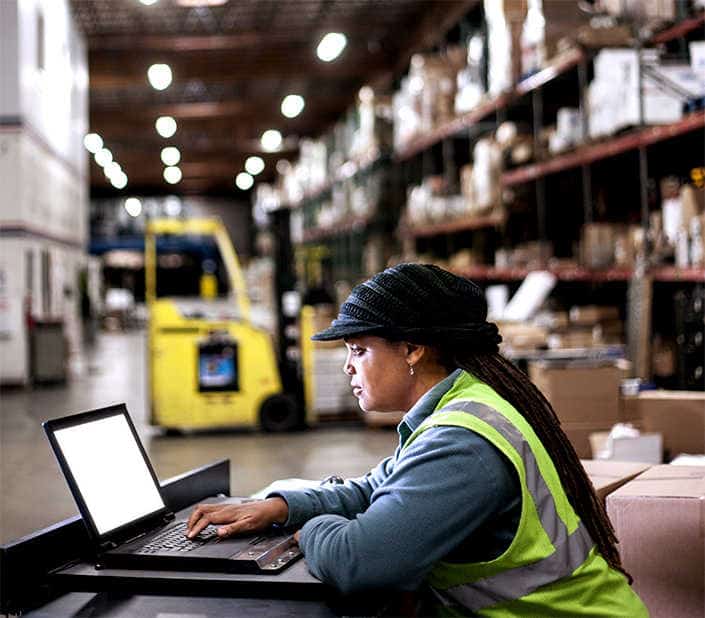
Flexport, the digital freight forwarder founded in 2013, has attracted a great deal of venture capital. In fact, over 80% of the seed money that reached the maritime sector in 2019 went to the company according to Thetius, a supply chain intelligence firm. Flexport offers secure, cloud-based visibility by connecting multiple parties involved in the movement of freight. Consignors, carriers, customs agencies, ports and terminals can collaborate on its platform called Operating System for Global Trade. The intent is to get the paper out of import-export documentation and streamline e-communication through standardization of documents.
As one might expect, Flexport uses machine learning to add value to its intermediary function. If consignors and for-hire carriers do not feel AI is a core competency, then intermediaries may add value. Again, access to more of their data means more computer-based “learning” and “experiences.” Yet learning is a particular challenge for Flexport because of the lack of standardization which is prevalent in domestic and international trade. Uber’s use of smartphones in the ride-sharing market gives it much greater control over how information is received.
Invoices, packing information, waybills, etc. in container transport come in multiple formats from multiple parties. Digitization requires turning these multiple formats into one. Therefore, optical character recognition software must be used to make the documents computer readable. If the data is in one format, it can be processed faster and, presumably, Flexport can manage its bookings on ocean vessels, air freighters and trucks much faster than traditional freight forwarders. The same can be said for its OceanMatch portal, which matches consignors of less-than-container-load (LCL) freight in order to fill excess container capacity. A challenge, typical in LCL traffic, would be in coordinating the types of shipments and their consignors’ trade histories. This would reduce the chance of the container being stopped by customs officers due to odd-looking cargo manifests.
Flexport’s services combined with cloud-based visibility for its customers are quite similar to how Uber is VRIN-differentiated from a standard taxi company. As an intermediary, Flexport is offering digitization for users across multiple locales. Other organizations are less wide-ranging. The Port of Los Angeles, in collaboration with GE Transportation, developed a “single window” cloud-based system in 2016 called Port Optimizer. It is designed to gather information to be shared among users of the port. With enough participation from importers, container terminal operators, ocean carriers, motor carriers, railroads and freight forwarders this often-congested port could provide them with better information related to vessel arrivals, container availability and gate clearance times.
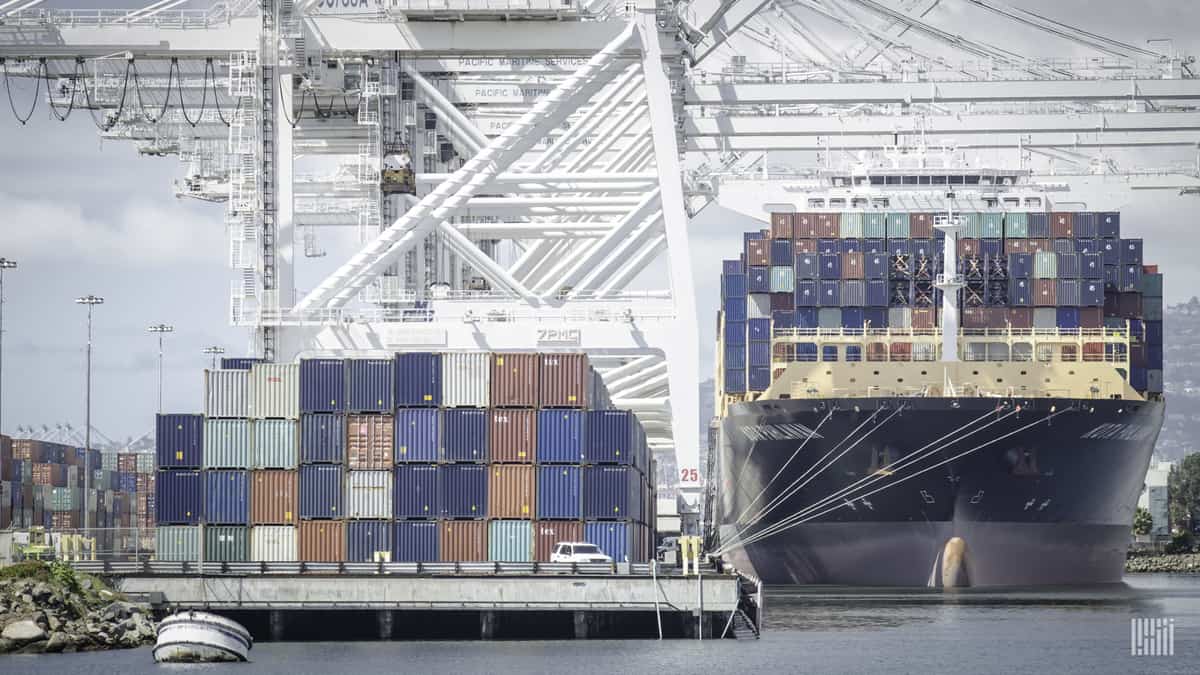
Improved predictability ought to improve how users of the Port of Los Angeles schedule their arrivals and departures. This can help lower drayage costs and environmental impact among other cost savings. But there are growing pains. Currently, the problem is in reluctance to share data. Typical reasons relate to the feeling that the information should remain proprietary or that if it is released it can be stolen. Supply chains made up of private organizations use contracts to enhance trust. Since Big Data management is so new to many of the players, they do not know how to use their own data let alone be willing to share it.
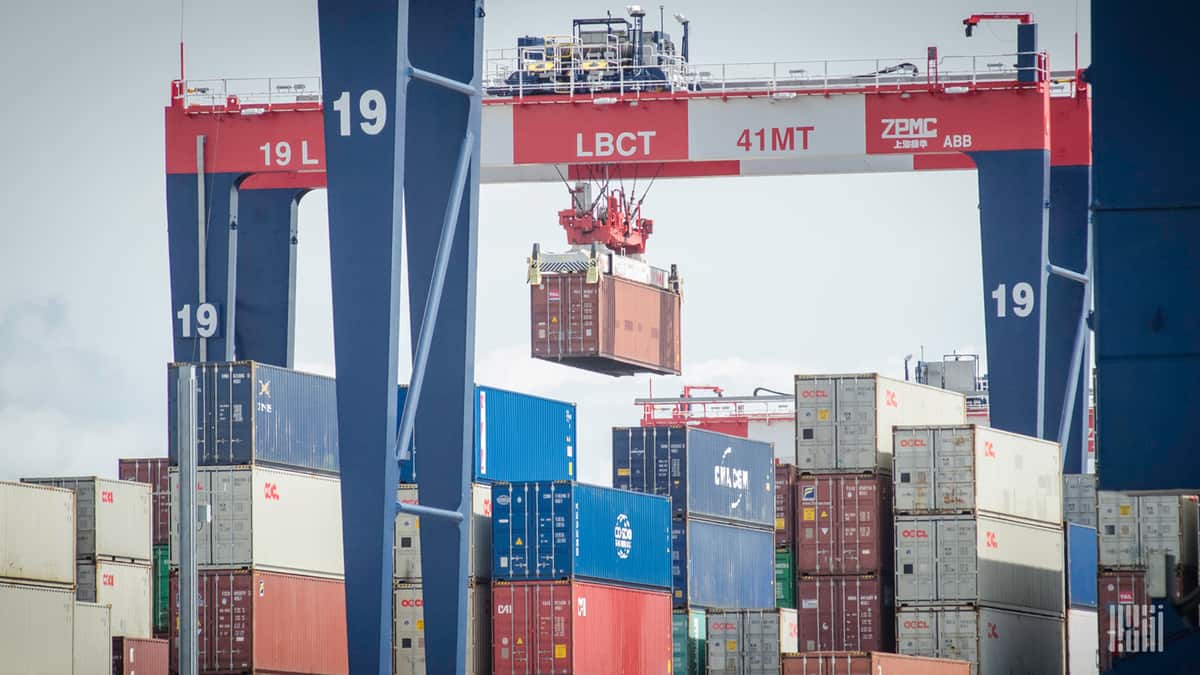
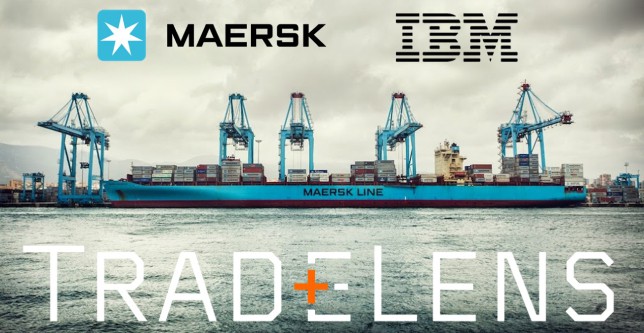
Maersk took a different approach. In this case the world’s largest container carrier teamed up with tech-giant IBM in 2018 to launch a blockchain platform called TradeLens. Their service is an electronically distributed ledger of immutable, time-stamped transactions along supply chains which are visible to their partners. While Maersk is a part owner of the platform’s intellectual property it has made it available for other carriers to use. Apart from Maersk’s subsidiaries (e.g., APM Terminals) the addition of the other giants, CMA-CGM, Hapag-Lloyd, MSC and ONE means that the status of more than half of the world’s ocean container capacity is encoded in TradeLens. What will that mean for freight forwarders – the bulk of which have been slow to adopt digitalization? The twin pressures coming from Flexport and Maersk look similar to the twin pressures Sears felt from Amazon and Walmart.
Social network giant Facebook once had a motto for its platform developers – “Move Fast and Break Things.” That may be fine for the cyber-world but it is hard to imagine a for-hire carrier adopting such a motto for its conveyances. Yet in 2014, Facebook, with an eye to improved service, changed its internal motto to “Move Fast With Stable Infra.” It is nice to know that Silicon Valley is trying to learn what haulers have known for centuries. In the meantime, however, will the promise of AI and Big Data in for-hire transportation become balkanized with a few “single windows” or will data be seen as the free-flowing waterpower of old? Whether data is free-and-shared or monetized-and-traded these options are better than simply hoarding it.