






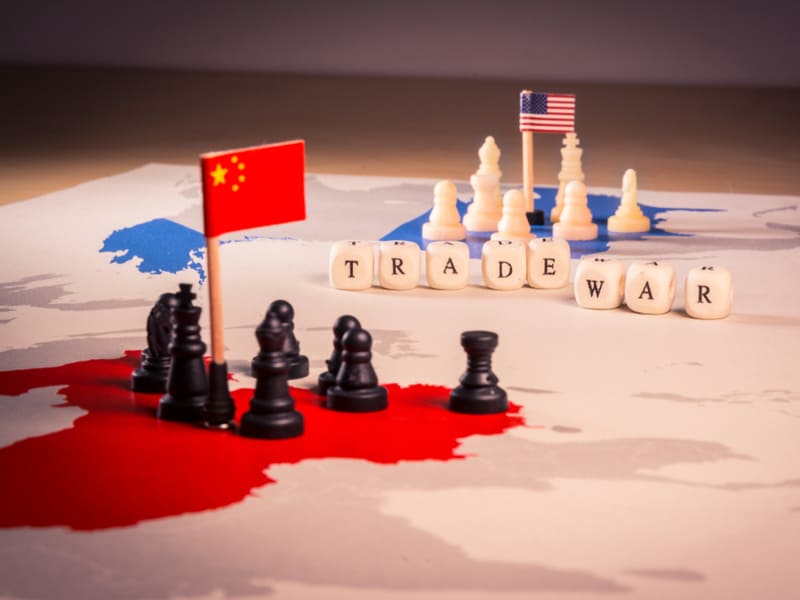
The United States and China have been imposing import tariffs on each other systematically since the first set was announced by the U.S. in March 2018. During subsequent months both countries have also been searching for a trade deal to relieve the pressure. Relief may be in sight now that both countries completed “Phase 1” of a larger prospective deal on Dec. 13. Current tariffs will remain in place for the near-term, while further punitive tariffs that were set to begin on Dec. 15 were cancelled.
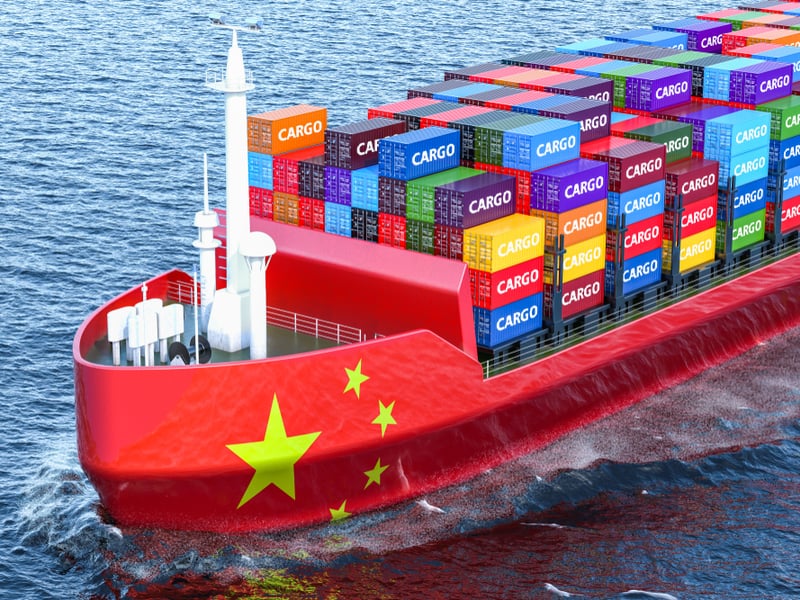
Canada and Mexico went through much shorter tariff disputes with the U.S. and those will likely be resolved if, and when, the United States-Mexico-Canada Agreement (USMCA) is ratified by all parties in order to replace the North American Free Trade Agreement, or NAFTA, which has been in place since 1994.
Also, the recent re-election and expansion of the Conservative Party majority in the United Kingdom is likely to bring about Brexit in 2020 and open an option for the U.S. to fashion a bilateral trade deal with the U.K. independent of the negotiations with the European Union.
As the various trade wars, negotiations and trade agreements roll on, it is worthwhile to remember that tariffs apply, like a sales tax, to a limited subset of trade flows. They apply to trade in tangible items like raw materials, manufactured parts, sub-assemblies and finished goods. Of course, there are other types of trade flows that directly affect the balance of trade as well. There is trade in services (i.e. intangible items); transfers of income (technically, returns earned on foreign-owned assets); and gifts of money (known as unrequited transfers). Cross-border mobility of workers, data transfers and wiring of financial capital (e.g., stocks and bonds) are trade flows as well. Even cross-border for-hire transportation is a trade flow.
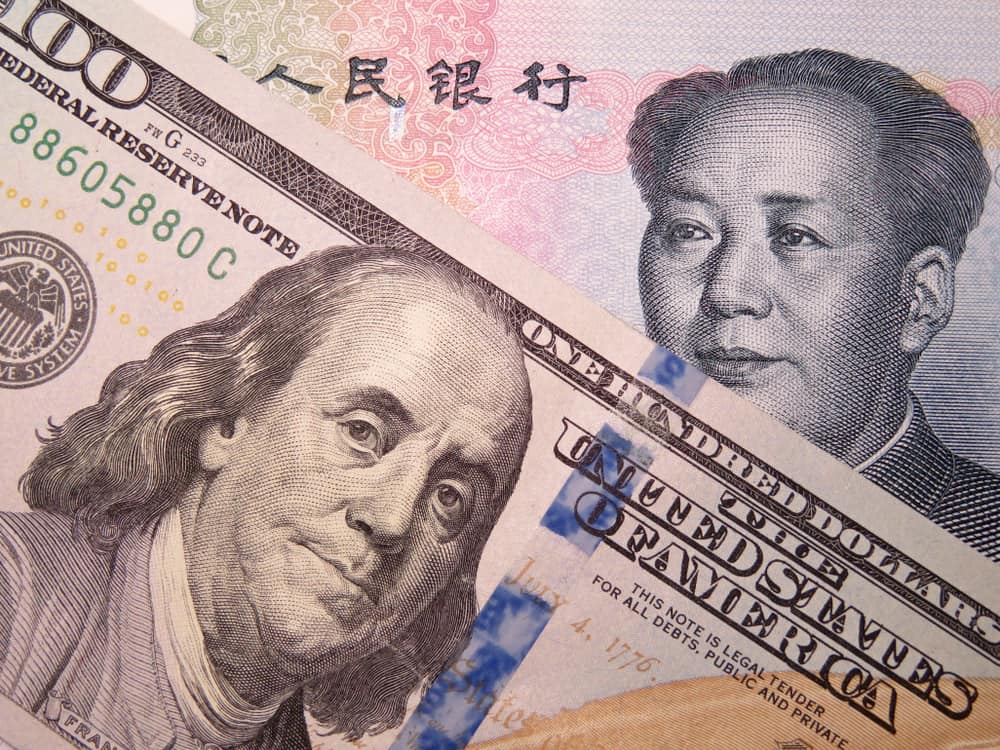
The balance of trade is the net monetary value of the flow of exports minus imports. Again, each side of the equation includes tangible items, services, income and unrequited transfers over a given period (e.g., monthly, quarterly and yearly). The Trump Administration has a mercantilist view of international trade and, therefore, prefers to see its balance of trade with China become a net positive. In 2018, the net monetary value for the U.S. was about -$380 billion – meaning a trade deficit with China. One can argue the merits of mercantilist policy and the relationship between the balance of trade and domestic economic growth, stock market performance, etc. The bottom line is that the U.S. desires a new understanding with its largest trade partners that is not necessarily in line with free and unfettered trade flows. Of course, no matter what one thinks of the geo-political effects of international trade one thing that remains the same is that for-hire transportation is a critical part of the process.
Trade in tangible items is not a self-contained activity. When buyers and sellers are separated by considerable distance, their transaction must be facilitated by the act of transportation. If for-hire carriers are used, then cross-border trade of the tangible item includes cross-border trade in transportation. The question, however, is how to categorize this act of cross-border for-hire transportation.
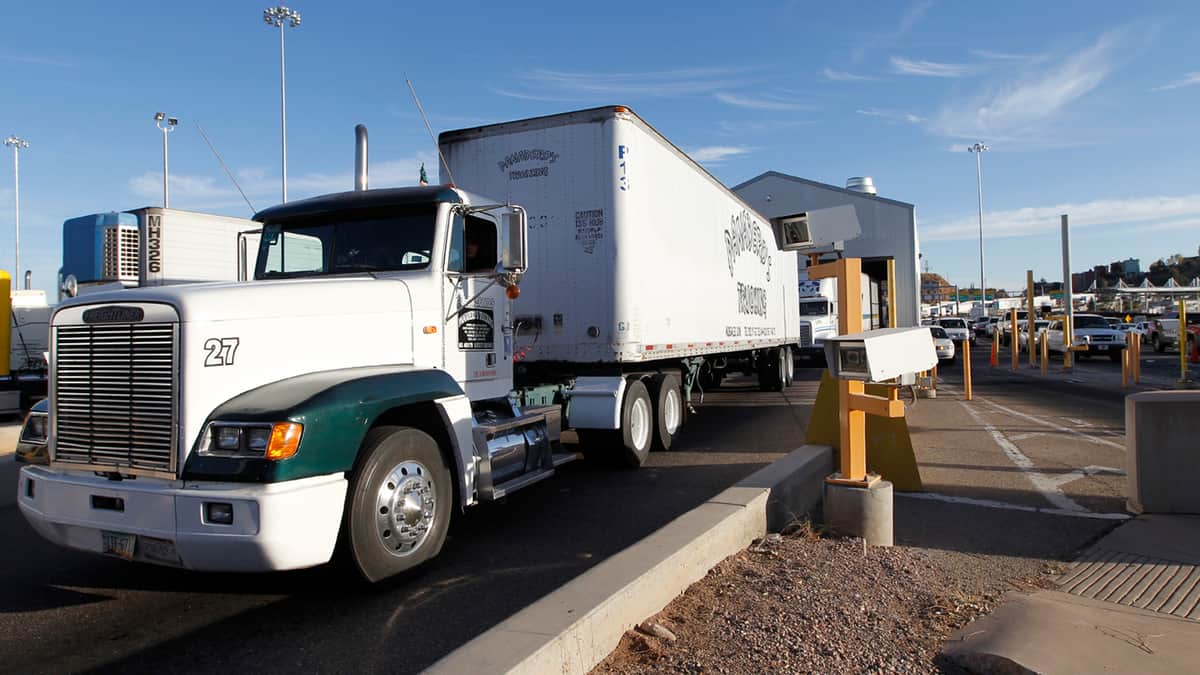
Consider a truck traveling from Canada to the United States with a load of freight. The import of the freight into the U.S. includes the import, albeit temporarily, of a Canadian truck and its driver. Of course, if the truck and driver were domiciled in the U.S. and had merely traveled into Canada to pick up the freight then there is no extra trade flow on top of the freight import as far as the U.S. is concerned. For Canada it would be a different matter. Canada temporarily admitted entry of the U.S. truck and driver into its economy to facilitate an export activity involving Canadian freight. This is straight-forward trade documentation regarding the truck and the driver.
But another question is: who arranged for the for-hire transportation (i.e., who is the consignor of the freight and a party on the bill of lading)? Was it the Canadian seller of the freight (i.e., the exporter of record) or was it the U.S. buyer (i.e., the importer of record)? This could be further complicated if one of these two parties hired a freight forwarder and if more than one for-hire carrier was needed to complete the delivery. But let us keep things reasonably simple. It is important to know who pays for the transportation, because if money crosses a border it is an act of international trade. If the Canadian seller of the freight hired the U.S. for-hire carrier, then the former has imported a U.S. service provided by the latter in order to facilitate a Canadian export. From the U.S. perspective, a U.S. service was exported to facilitate a U.S. import.
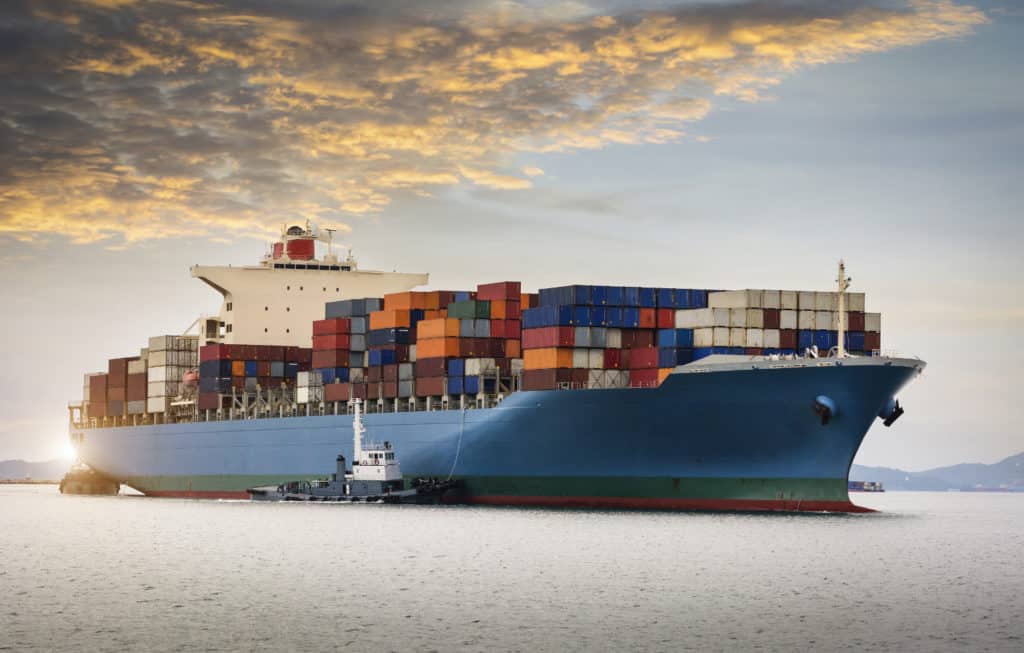
Now consider a good imported from China. What about its transportation? Is the for-hire carrier (e.g., ocean vessel or air freighter) from China or the U.S.? Is the consignor from China or the U.S.? How we put those pieces together determines whether the U.S. is importing or exporting a service to facilitate a tangible import. Remember, the balance of trade is made up of tangible goods and intangible services.
The news we read about tariffs imposed by the U.S. on China apply to more than half of all tangible imports transported from China. Services are not subject to tariffs though they could be subject to more opaque non-tariff barriers (NTBs). Of course, China’s economy has a great deal of opaqueness. When the yuan depreciates relative to the U.S. dollar, is that based on market forces or currency manipulation? Is China unfairly subsidizing an industry if it is really an arm of the government? It was hoped that China, since it joined the World Trade Organization (WTO) in 2001, might have become more free market-focused on trade, but the opposite has happened. This is not China’s fault – it is the WTO’s fault for not enforcing its rules.
Transportation is a double-edged sword in international trade. It is necessary to facilitate trade but if it is too expensive for the consignor and/or the consignee to bear then the transaction will not take place. Tariffs are a blunt instrument and add to trade frictions between countries. The same can be said for transportation when markets are not competitive or are highly regulated. To paraphrase a famous Chinese curse, when it comes to international trade we are living in interesting times.










